 Seattle Siding
 Why Ballard Windows Take More Punishment Than Most
Ballard sits right up against Puget Sound, and that location shapes what a window has to survive here. Salt-laden air off the water works into hardware and seals in a way that inland neighborhoods never deal with. Add Seattle's long stretch of driving rain each fall and winter, plus a moss season that can run for months on shaded north- and west-facing walls, and you've got a combination that ages a window fast if it wasn't built or installed with that exposure in mind.
None of this means Ballard needs exotic materials or gimmicks. It means the frame material, the hardware finish, the flashing detail, and the sealant choice all need to match the job they're actually doing — not just what's cheapest or what's sitting in a warehouse. That's the difference between a window that looks fine for two years and one that still operates smoothly after fifteen.
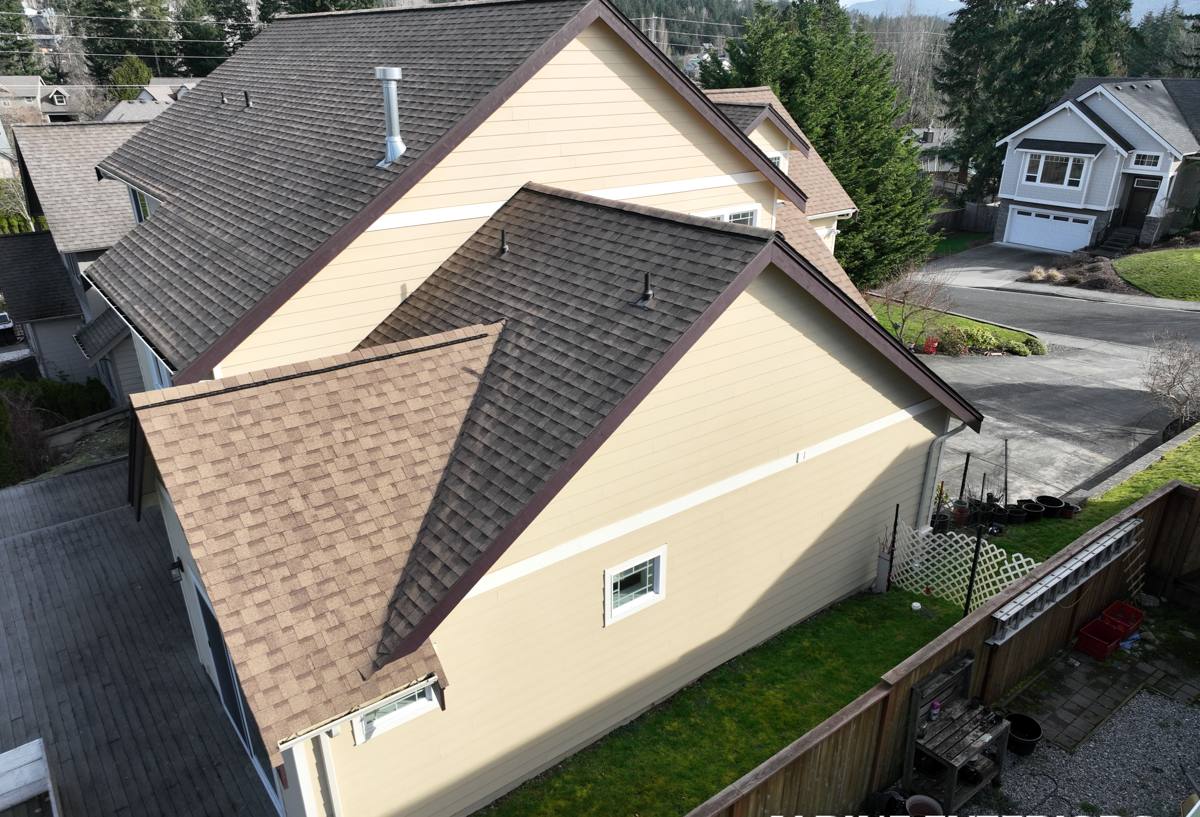
What the Local Housing Stock Means for Window Work
A lot of Ballard's homes go back to the early-to-mid 1900s — craftsman bungalows, Dutch colonials, and modest post-war builds — mixed in with a growing number of newer townhomes and infill construction. That range matters for window work in a few practical ways:
- Older homes often still have original wood window openings that have settled or shifted slightly over decades, so stock replacement sizes rarely drop in without adjustment.
- Many older sills and casings show early signs of moisture damage even when the glass itself still looks okay — the frame is usually the first thing to go, not the pane.
- Newer construction in the neighborhood tends to have tighter, more standardized openings, but still needs flashing and sealant work done correctly the first time, since call-backs on new builds are harder to justify to a buyer.
- Additions and remodels sometimes mix window eras on the same wall, which creates flashing and trim transitions that need real attention, not a one-size fix.
We don't assume every Ballard house is the same job. A window package that's right for a 1920s bungalow with settled framing is often the wrong call for a 2015 townhome, and vice versa.
What a Correct Custom Window Job Actually Involves
It starts with the opening, not the window
Custom windows exist because stock sizes don't fit every opening — but "custom" only pays off if the opening itself is prepped right. That means checking the framing for square and level, addressing any soft or rotted wood before anything new goes in, and confirming the rough opening is actually sized correctly rather than just close enough.
Flashing and drainage come before the window goes in
In a climate that gets as much sideways rain as Seattle does, the flashing plane is arguably more important than the window itself. Water needs a clear path down and out, behind the siding and away from the sheathing — never trapped behind the window where it can sit against wood framing. This is the step that gets rushed on cheap jobs and is the single biggest cause of the rot and mold problems we get called out for later.
Sealant and hardware need to match the exposure
Near salt air, standard hardware finishes can corrode faster than inland installs, and cheap sealants dry out and crack under repeated freeze-thaw and UV cycling faster than they should. We spec sealants and hardware finishes with that exposure in mind rather than defaulting to whatever's cheapest.
Glass and frame performance should match the wall it's going in
Not every wall needs the same glass package. A shaded, moss-prone north wall has different moisture behavior than a sun-exposed south wall, and we factor that into glass and frame recommendations rather than quoting the same spec across the whole house.
Comparing Frame Materials for a Puget Sound Climate
There's no single "best" window material — each one trades off differently once you factor in salt air, moisture, and maintenance tolerance. Here's how the common options stack up for a Ballard install:
| Material | Moisture & Salt-Air Behavior | Maintenance | Typical Lifespan | Relative Cost |
|---|---|---|---|---|
| Vinyl | Won't rot or corrode; hardware quality varies by manufacturer | Low | 20–30 years | Lower |
| Fiberglass | Very stable in moisture and temperature swings; holds paint well | Low to moderate | 30+ years | Mid to higher |
| Wood (properly clad or maintained) | Excellent look and insulation, but exposed wood needs upkeep near driving rain | Higher | Decades, with upkeep | Higher |
| Aluminum | Strong but prone to corrosion pitting in salt air unless properly finished | Moderate | 20–30 years | Mid |
For most Ballard homes within a few miles of the water, we lean toward vinyl or fiberglass for the bulk of the house, and reserve solid or clad wood for spots where the look matters most and upkeep is realistic. That's a maintenance and moisture-behavior call, not a statement that any material is "bad" — it's about matching the product to the exposure it'll actually see.
Our Process, Start to Finish
- On-site assessment. We look at the actual openings, framing condition, existing flashing, and sun/shade exposure on each wall before recommending anything.
- Custom measurement. Every opening is measured on its own — we don't assume older Ballard homes are square, because most aren't after decades of settling.
- Material and glass selection. We walk through frame material, glass package, and hardware finish options based on that wall's exposure and your budget, not a default package.
- Removal and prep. Old windows come out carefully, and any soft framing or sill damage gets addressed before the new unit goes in — not papered over.
- Flashing and installation. Proper flashing sequence, air-sealing, and insulation around the frame, set up to shed water correctly for the long haul.
- Final sealing and cleanup. Exterior trim and sealant work finished to shed rain, interior and exterior cleaned up, and the site left the way we found it.
- Walkthrough and warranty paperwork. We walk the job with you, confirm every window operates the way it should, and go over what's covered.
Signs a Ballard Home Needs Window Attention
Because the climate here works on windows year-round, problems tend to show up gradually rather than all at once. Common things we get called out for in Ballard specifically:
- Moss or dark staining building up on sills and lower sashes, especially on shaded sides of the house
- Hardware — locks, cranks, hinges — that's stiff, corroded, or won't latch cleanly anymore
- Foggy or cloudy glass between panes, which means the seal has failed and the insulating gas is gone
- Soft or spongy wood at the sill or lower corners of the frame, usually from years of driving rain intrusion
- Noticeable drafts or cold spots near the window even when it's fully closed and latched
- Windows that are hard to open or close smoothly, often from swelling, settling, or warped sashes
Any one of these on its own might just need a repair. Several of them together, especially on an older window, usually means it's time to talk about replacement before the frame damage spreads into the surrounding wall.
A Quick Self-Check Before You Call Anyone
- Run your hand along the bottom of the sill, inside and out — does it feel soft anywhere?
- Open and close each window fully — does it move smoothly, or does it stick or drag?
- Check for condensation or fogging between the panes on a cold morning
- Look for moss or green staining building up at the bottom corners
- Feel for a draft along the frame edge when it's windy outside
Why It Matters That We Already Work in Ballard
A crew that regularly works Ballard homes already has a feel for what's common here — the settled openings on older bungalows, the drainage challenges on shaded lots, the flashing details that hold up against wind-driven rain off the Sound. That's not something you can fully substitute with a generic install crew that's never worked this specific stretch of King County before.
It also means we're not guessing at permitting or typical construction in the area, and we're realistic with you about what a given house actually needs instead of upselling a package that doesn't fit the home or the budget. We'd rather tell you a repair will hold for a few more years than sell you a full replacement you don't need yet.
Get a Free, No-Pressure Estimate
If you're weighing a window repair against a full replacement, or just want an honest read on what your Ballard home actually needs, we're glad to take a look. Fill out the form below for a free estimate — no pressure, no obligation, just a straight answer about your windows and what it would take to get them right.