 Seattle Siding
 Storm Damage Roof Repair Built for Ballard's Weather
Ballard sits close to the water, and that changes what a roof deals with over the years. Homes here take on salt-tinged air off Puget Sound, exposure to wind coming across open water with little to slow it down, and a wet season that can stretch on for months at a time. When a windstorm rolls through or a heavy atmospheric river event dumps rain for days, Ballard roofs often show damage that a homeowner further inland might not see for years, if ever.
This page is about one job done right: storm damage roof repair for Ballard homes. Not a full re-roof pitch, not a generic checklist — what actually needs attention after a storm hits a roof in this specific part of Seattle, and what a correct repair looks like when the goal is to stop the problem instead of just covering it up.
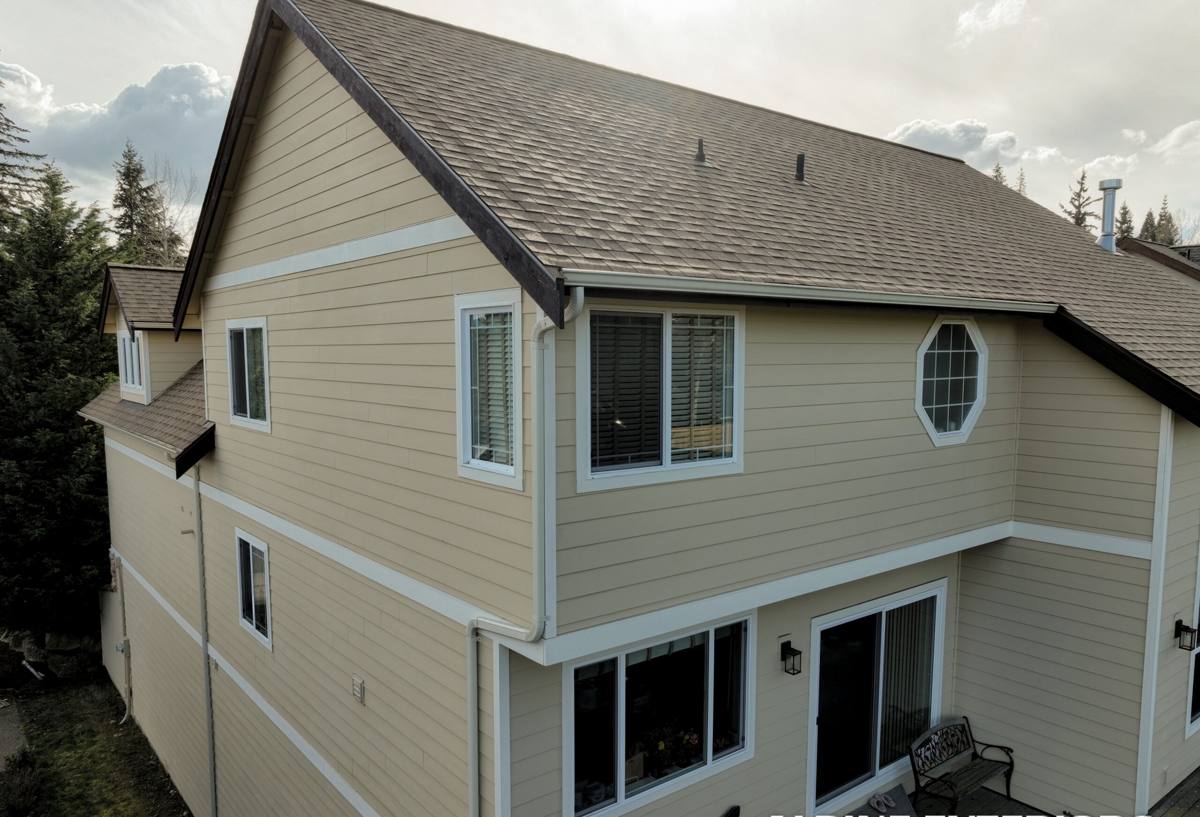
What Ballard's Climate Does to a Roof Over Time
Every roofing material has a design life, but that number assumes average conditions. Ballard's conditions aren't average. A few things stack up here that matter for storm repair specifically:
Salt Air and Metal Fatigue
Homes closer to Salmon Bay and the Sound get low-level salt exposure carried on the wind. It's not the same as a beachfront property, but over years it accelerates corrosion on exposed metal — flashing, fasteners, gutter hangers, and any exposed roof vents or caps. A storm that pulls at already-corroded metal will do more damage than the same storm would to fresh materials, because the failure point is weaker to begin with.
Driving, Wind-Driven Rain
King County gets a lot of rain, but the damaging kind for roofs isn't steady vertical rainfall — it's wind-driven rain during storm events, when water gets pushed sideways and upward under shingle edges, around flashing laps, and into valleys that were never built to handle water moving against gravity. This is the mechanism behind most storm-related leaks we're called out for in Ballard: not a single dramatic failure, but water finding a path that a calm-weather rain never would.
A Long Moss Season
Ballard's tree cover, shade patterns, and damp months give moss a long runway to establish itself — often eight or nine months of the year with conditions favorable to growth. Moss holds moisture against the roof surface, lifts shingle edges as it grows, and creates a foothold for wind to get underneath a shingle it otherwise couldn't. A roof with active moss growth is measurably more vulnerable to storm damage than a clean one, which is why moss condition is one of the first things we check after a storm call, even if the homeowner didn't mention it.
Common Types of Storm Damage We See in Ballard
Not all storm damage looks dramatic. Some of the most costly damage is the kind that doesn't show up from the ground.
- Wind-lifted or creased shingles — edges and corners are the first to go, especially on older roofs or ones with existing moss undermining the seal.
- Flashing displacement — around chimneys, skylights, and roof-to-wall transitions, where wind-driven rain finds the smallest gap.
- Valley damage — Ballard's mix of roof pitches and additions means a lot of valleys, and valleys concentrate water flow during heavy rain.
- Gutter and downspout damage — pulled fasteners, bent sections, and debris blockages that back water up under the roof edge instead of away from it.
- Impact damage from limbs and debris — mature trees are common in Ballard's older residential blocks, and wind events bring down branches that crack or puncture roofing material.
- Fastener and flashing corrosion accelerated by the storm — a weak point that was slowly failing gets pushed past the breaking point in one event.
What a Correct Storm Repair Actually Involves
A lot of storm repair work is done fast and cheap — a tarp, a patch, a tube of sealant over the visible problem. That approach can hold for a while, but it doesn't address why the damage happened, and on a Ballard roof with salt exposure and moss pressure, the same failure point often comes back within a season or two.
A correct repair starts with figuring out the actual extent of the damage, not just the part that's leaking. Wind and water don't damage roofs in neat, visible patterns — a stain on a ceiling can trace back to a flashing failure several feet away from where the water is dripping. That means:
- A full inspection of the affected roof plane, not just the reported leak point
- Checking adjacent flashing, valleys, and penetrations for related or pre-existing weakness
- Matching replacement shingles and materials to the existing roof as closely as possible, so the repair doesn't stand out or create a new weak seam
- Re-sealing and re-flashing with materials rated for the exposure, not just whatever patches the hole fastest
- Checking gutters and drainage paths near the repair, since a repaired roof section can still fail if water isn't being carried away properly
If moss contributed to the failure, a proper repair also addresses that contributing factor — treating and clearing growth in the area, not just replacing the shingle it compromised. Fixing the shingle without addressing the moss just resets the clock on the same failure.
Our Process for a Ballard Storm Repair Call
1. Inspection and Documentation
We look at the whole roof, not just the spot that's leaking, and document what we find with photos before any work starts. If damage is storm-related, this documentation is also what you'll want on hand if you're filing a claim.
2. A Clear Explanation Before Any Work
We walk you through what we found, what caused it, and what the repair actually involves — including what's cosmetic versus what's a real water-intrusion risk. No pressure to upsell into a full roof replacement if a targeted repair is the honest answer.
3. The Repair Itself
Matched materials, proper flashing detail, and attention to the surrounding roof area — not just the failure point — so the repair holds up through the next storm season, not just until the next one.
4. Cleanup and Follow-Up
Debris and old material removed, site left clean, and a straightforward explanation of what to watch for going forward — particularly around moss, gutters, and any other soft spots we flagged during inspection.
Repair Approach Comparison
Homeowners dealing with storm damage often get quotes that look very different in scope and price. Here's a general breakdown of what separates them:
| Approach | What It Typically Includes | Common Trade-Off |
|---|---|---|
| Quick patch / sealant only | Covers the visible leak point with sealant or a single shingle swap | Fastest and cheapest short-term, but doesn't address flashing, moss, or adjacent damage — often needs redoing within a season or two |
| Targeted section repair | Replaces damaged shingles, flashing, and underlayment in the affected area with matched materials | Solves the actual problem at moderate cost; the right fit for isolated storm damage on an otherwise sound roof |
| Full roof replacement | Entire roof system replaced | Makes sense when storm damage is widespread or the roof was already near end of life — unnecessary expense if the rest of the roof is sound |
Most storm calls in Ballard land in that middle category — a repair that's more involved than a quick patch, but doesn't require replacing a roof that still has years of life left in it.
Insurance Considerations
Many storm-related roof repairs are covered under standard homeowners policies in Washington, particularly when the cause is a specific wind or storm event rather than gradual wear. That said, coverage details, deductibles, and how a claim gets adjusted vary by policy and insurer, and we're not in a position to promise coverage outcomes. What we can do is document the damage clearly at the time of inspection — dated photos and a written description of cause and extent — which gives you something solid to work with if you choose to file a claim. We recommend reviewing your specific policy or talking to your agent before assuming what will or won't be covered.
A Homeowner's Post-Storm Checklist
After a significant wind or rain event, a few minutes of ground-level checking can catch problems early:
- Check gutters and downspouts for debris, sagging, or separation from the fascia
- Look for shingle granules collecting in gutters or at downspout outlets — a sign of accelerated wear or impact
- Scan the roofline from the ground for obviously lifted, missing, or displaced shingles
- Check ceilings and attic spaces (if accessible) for new staining, especially after multi-day rain events
- Note any fallen branches or debris on the roof, even small ones, and have them removed rather than left to sit
- If you notice active moss growth, don't wait for a storm to address it — it's a standing vulnerability
None of this replaces a proper inspection after real storm damage, but it helps you know when to call sooner rather than later.
Why Local Ballard Experience Matters
A roofer who mainly works drier, inland parts of King County isn't wrong about roofing in general — but they may not have a feel for how quickly moss re-establishes near the water, how much salt exposure matters for fastener and flashing choices, or how Ballard's mix of older homes and additions tends to create valley and transition points that need extra attention. Working this neighborhood regularly means recognizing the difference between a roof that's fine and one that's quietly one storm away from a real problem — and being honest with you about which one you have.
If you've had a recent storm move through Ballard and you're noticing a leak, missing shingles, or just want a roof checked out before the next one hits, we're happy to come take a look. The estimate is free, there's no pressure attached to it, and you'll walk away with a clear, honest picture of what your roof actually needs — use the form below to get started.