 Seattle Siding
 Deck Repair Built for Beacon Hill's Climate
Beacon Hill sits on a ridge above the rest of Seattle, and that elevation cuts both ways. Homes up here often catch better light and views than lower neighborhoods, but the same marine air that rolls in off Puget Sound blankets the whole city in moisture nine months out of the year. Add in mature tree canopy over many of Beacon Hill's older lots, and you get decks that stay damp long after the rain has stopped. That combination of driving rain, salt-tinged marine air, and a moss season that can run from October through May is exactly the environment that wears out deck framing and decking boards faster than manufacturers' warranties assume.
We repair decks across King County, but Beacon Hill's mix of older bungalows, split-level homes on sloped lots, and view decks built out over grade means the repair problems we see here follow a fairly consistent pattern. Knowing that pattern is what separates a repair that lasts from one that fails again in two winters.
Why Local Decks Fail Here Specifically
Shade and moss
Tree cover keeps decking boards from drying out between rains. Moss and algae take hold on the shaded north and east sides of a deck first, and they hold moisture directly against the wood surface. Left alone, that moisture works its way into checks and fastener holes and starts softening the wood underneath a coating that still looks fine on top.
Slope and grade
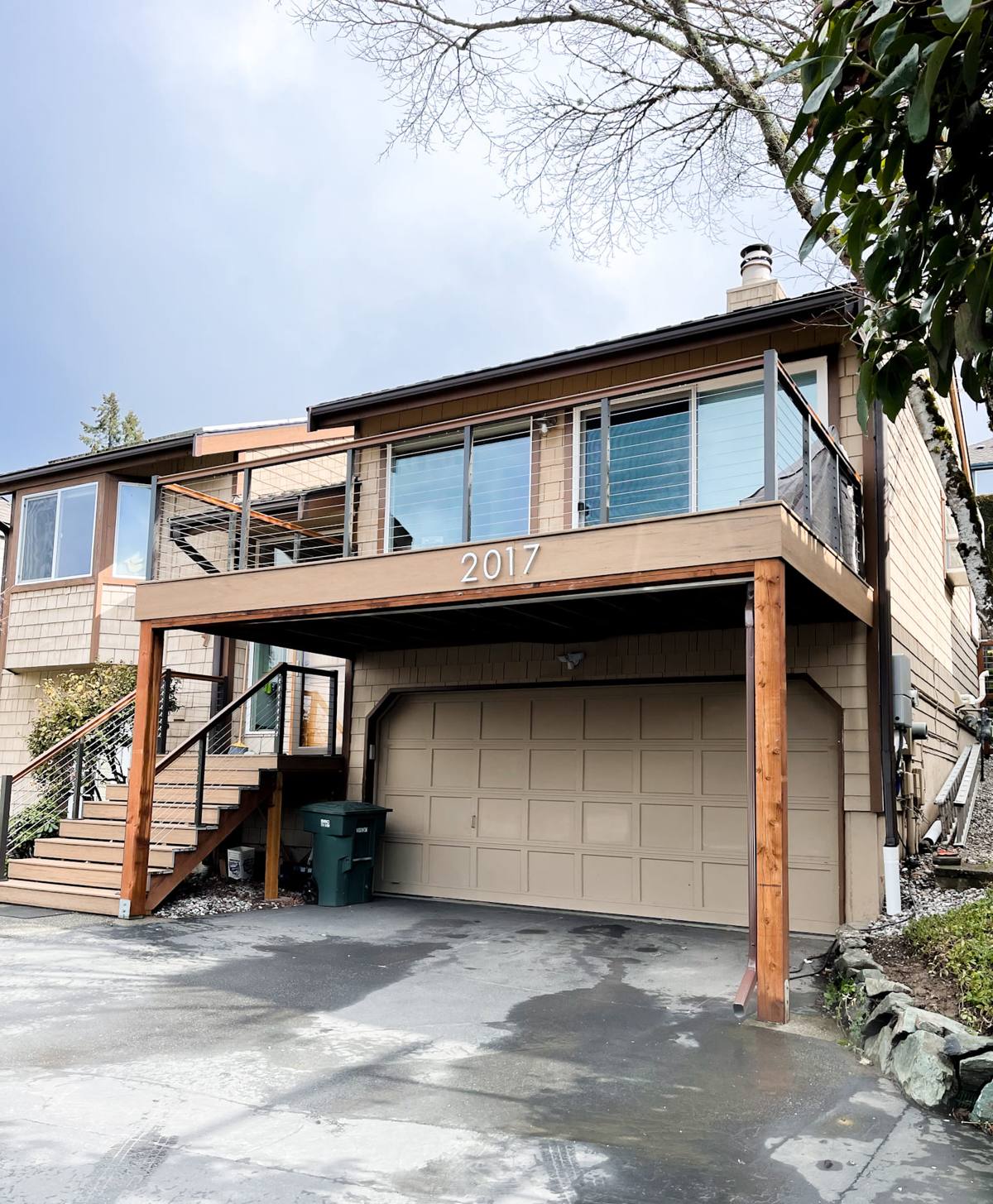
Many Beacon Hill homes are built on sloped lots, which means decks are often elevated well above grade with tall support posts, stepped footings, or cantilevered framing. That's more structural complexity than a flat-lot deck, and more places for water to collect at post bases, ledger connections, and beam-to-post hardware.
Rain volume and freeze-thaw cycling
Seattle's rainfall is frequent rather than intense, but it's relentless. Wood that never fully dries out is far more vulnerable to the occasional hard freeze King County gets in winter — trapped moisture expands and accelerates splitting in boards and framing that are already compromised.
Signs Your Deck Needs Repair
- Soft or spongy spots when you press on decking boards, especially near the house or in shaded corners
- Persistent green or black staining that comes back within weeks of cleaning
- Nails or screws backing out, or fastener heads leaving dark, wet-looking rings around them
- Gaps opening up where the deck meets the house (ledger board pulling away)
- Wobble in the guardrail when you lean on it
- Visible sagging between joists or a "bounce" underfoot that wasn't there before
- Cracked, split, or crumbling wood at post bases near the ground
Any one of these on its own might be minor. Several together, especially near the ledger or at post bases, usually mean the damage has moved past the surface and into structural members.
What a Correct Deck Repair Actually Involves
A repair that's done right doesn't stop at replacing the boards you can see. We work through the deck in the same order water actually causes damage:
Ledger board and flashing
The ledger — where the deck attaches to the house — is the single most common source of hidden rot, because it sits directly against the siding and takes the brunt of wall runoff. We check the flashing above it and the fasteners holding it, since a ledger that's improperly flashed will keep failing no matter how many times the boards on top get replaced.
Framing and joist hangers
We inspect joists, beams, and hangers for rust, rot, and undersized or missing hardware. Older Beacon Hill decks were sometimes built before current joist-hanger and fastening standards, and upgrading hardware during a repair is often the difference between a fix that lasts one season and one that lasts fifteen years.
Posts, footings, and guardrails
Post bases at or near grade are where we most often find rot on elevated Beacon Hill decks. We check that posts are properly isolated from standing water and that footings haven't settled or heaved. Guardrail posts get the same scrutiny — a rail that wobbles is a safety issue, not a cosmetic one, and King County building code has specific requirements for guardrail attachment that older repairs sometimes miss.
Decking surface
Only after the structure underneath is sound do we address the decking boards themselves — replacing what's damaged, resetting fasteners, and correcting board spacing so water sheds properly instead of pooling.
Repair or Replace? How We Help You Decide
Not every deck problem calls for a full rebuild, and not every deck is worth patching. The honest answer usually comes down to how much of the structure is still sound.
| Factor | Leans toward repair | Leans toward replacement |
|---|---|---|
| Ledger and framing | Solid when probed, isolated soft spots | Widespread rot at ledger or multiple joists |
| Age of deck | Under 15-20 years, built to a reasonable standard | Older deck, outdated hardware or footing style |
| Extent of damage | Localized to a few boards or one post | Damage spread across the deck's footprint |
| Code compliance | Guardrails and stairs already meet current requirements | Rail height, spacing, or attachment doesn't meet code |
| Your plans | You're happy with the current size and layout | You want a different footprint, materials, or added features |
We'll tell you plainly which category your deck falls into. If a repair is genuinely the right call, that's what we'll recommend — a full rebuild isn't automatically the "better" answer just because it's bigger work.
Our Deck Repair Process
- On-site inspection. We probe suspect areas, check the ledger and post bases, and test the guardrail and stairs by hand.
- Written scope and estimate. You get a clear breakdown of what needs to be replaced, what hardware needs upgrading, and what it costs — no vague allowances.
- Structural repairs first. Ledger, framing, hangers, and posts are addressed before any decking goes back down.
- Decking and rail work. Damaged boards and rail components are replaced and properly fastened and spaced.
- Final check. We walk the deck with you, test the rail and stairs, and point out any maintenance items worth watching.
Materials: What We Use and Why
For structural framing — ledger, joists, beams, posts — we use pressure-treated lumber rated for ground contact where it's near grade, paired with fasteners and hardware rated for treated wood. Modern treated lumber uses copper-based preservatives that corrode standard steel fasteners over time, so mismatched hardware is a common cause of repeat failures we see on older repairs. We use connectors and fasteners sized and coated for that lumber, not whatever was on hand.
For decking surfaces, wood and composite each have honest trade-offs. Wood decking is less expensive up front and easier to spot-repair board by board, but it needs regular cleaning and refinishing to hold up in a shaded, damp climate. Composite decking resists moisture and moss better and needs less maintenance, but it costs more initially and, because it's installed as full boards, isolated repairs are harder to blend in if a section is damaged years later. We'll walk you through which fits your deck, your budget, and how much upkeep you want to do.
After the Repair: Keeping It That Way
A repaired deck still needs seasonal attention in this climate — that's the trade-off of building outdoors in the Pacific Northwest. A short annual routine goes a long way:
- Sweep leaves and debris off the deck surface regularly through fall, especially in shaded corners
- Clean moss and algae with an appropriate deck cleaner before it re-establishes each spring
- Check and re-tighten guardrail connections once a year
- Reapply sealant or stain on wood decking on the manufacturer's recommended schedule, not just when it looks faded
- Keep gutters and downspouts near the deck clear so runoff isn't draining directly onto it
- Do a quick visual check of post bases each spring for new staining or softness
Why Hire a Crew That Already Works Beacon Hill
Deck repair advice that's generic for "the Pacific Northwest" misses a lot of what actually matters on a specific lot. A crew that regularly works Beacon Hill's sloped, tree-covered properties already knows to check elevated post bases first, expects ledger issues on homes of a certain age, and doesn't treat moss staining as purely cosmetic. That local pattern recognition means less time spent diagnosing and more time spent fixing the parts that actually fail here — the ledger, the hardware, the post bases near grade — instead of just swapping out the boards that are easiest to see.
If your deck has soft spots, a wobbly rail, or moss that keeps coming back no matter how often you clean it, we're happy to take a look. Fill out the form below for a free, no-pressure estimate — we'll tell you honestly whether you're looking at a repair or something bigger, and what it will take to get it right for the long run.