 Seattle Siding
 Beacon Hill sits on one of Seattle's higher ridgelines, with sightlines toward the Duwamish valley on one side and downtown on the other. That elevation and exposure mean the neighborhood's older homes — a mix of early-1900s bungalows, mid-century ramblers, and newer infill construction — take a steady beating from wind-driven rain, salt-laden air moving up from the Sound, and the long gray stretch of moss season that runs from fall through spring. We install James Hardie fiber cement siding on Beacon Hill homes because it's the one product we trust to hold up to all three without turning into a maintenance project for the homeowner.
What Beacon Hill's Climate Actually Does to Siding
Seattle's marine climate isn't just "rainy." It's rain that comes in sideways during winter storms, humidity that never fully drops even in the dry months, and long shoulder seasons where surfaces stay damp for days without direct sun to dry them out. On a ridge like Beacon Hill, homes catch more wind exposure than sheltered valley lots, which pushes moisture into seams, corners, and anywhere the siding meets trim or flashing.
Add in the salt air carried inland from Puget Sound — not as harsh as a beachfront property, but real over decades — and you get a combination that's hard on wood-based products and unforgiving of sloppy installation on any product. Moss and algae growth is the most visible symptom: north-facing walls and anything shaded by mature trees (common throughout this neighborhood's older lots) stay damp long enough for organic growth to take hold if the siding surface and coating don't resist it.
Why This Matters More Here Than in Drier Climates
In a dry inland climate, a siding material's moisture resistance is a secondary concern. In King County, it's often the deciding factor. Siding that absorbs water swells, and swelling is what causes paint failure, warping, and eventually rot at the fiber level. Siding that stays dimensionally stable when wet holds its finish and its shape for decades instead of years.
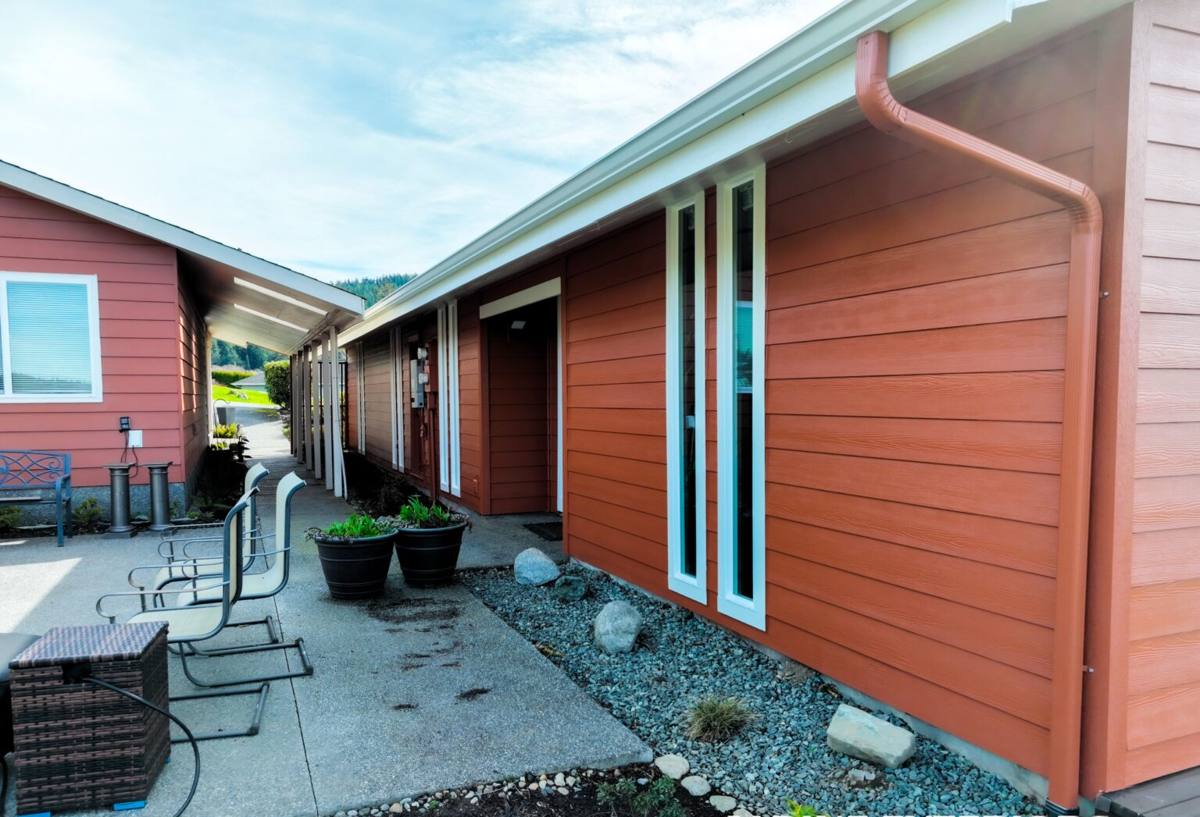
Why We Install Only James Hardie Fiber Cement Here
Fiber cement is a mix of cement, sand, and cellulose fibers, engineered to be non-combustible and dimensionally stable in a way that wood-based and wood-alternative products can't match. James Hardie takes that base material further with region-specific engineering — the HZ5 product line is formulated for the Pacific Northwest's damp, marine climate rather than a generic national spec.
That regional formulation matters on Beacon Hill specifically because it's engineered around moisture cycling — the repeated wet-dry-wet pattern our winters put every wall through. A siding product that isn't engineered for that cycle can look fine for a season or two and then start failing at the seams.
ColorPlus Finish vs. Field-Applied Paint
James Hardie's ColorPlus finish is baked on at the factory under controlled conditions, not brushed or sprayed on-site after installation. That matters in a climate where field-applied paint has a narrow window of dry weather to cure properly. A factory finish also resists fading and holds its color consistency across an entire home, which is harder to guarantee with site-applied coatings exposed to Seattle's UV and moisture swings during application.
What a Correct Fiber Cement Job Involves
Fiber cement siding is only as good as its installation. The material itself resists moisture and fire, but a poorly installed job can still let water behind the siding — and once water gets behind any siding in this climate, it doesn't dry out quickly.
- Correct rainscreen or drainage plane behind the siding so any moisture that does get past the surface can drain and evaporate rather than sit against the sheathing
- Proper flashing at every window, door, and roofline intersection — the majority of siding failures we see on older Beacon Hill homes trace back to flashing details, not the siding material itself
- Correct fastener spacing and type, matched to Hardie's published installation specs (not generic nail schedules)
- Proper clearance at grade and at horizontal surfaces like decks and porches, so siding isn't sitting in standing water or snow-melt runoff
- Caulking and sealant only where Hardie's install guide calls for it — over-caulking traps moisture just as badly as under-caulking lets it in
- Field-cut edges sealed per manufacturer spec to protect the factory finish at every cut
Skipping any of these doesn't show up on day one. It shows up in year three or four, as staining, soft spots, or paint failure at specific points on the wall — usually right where a corner, window, or roof line meets the field.
Reading Your Beacon Hill Home's Exposure
Not every wall on a house takes the same abuse. Before we quote a job, we look at each elevation separately.
| Exposure | Typical Beacon Hill Issue | What We Check |
|---|---|---|
| North-facing walls, shaded lots | Persistent moss and algae growth | Coating condition, gaps for airflow, tree canopy overhang |
| West and southwest walls | Direct wind-driven rain exposure | Flashing integrity, caulk joints, panel seams |
| Areas near grade or downspouts | Splash-back and prolonged dampness | Clearance height, drainage, staining at the base course |
| Upper stories, ridge-facing | Higher wind loading and salt exposure | Fastener integrity, panel attachment, trim condition |
This kind of elevation-by-elevation read is part of why a crew that already works this neighborhood is worth having on the job — we've seen how these exposure patterns play out on real Beacon Hill lots, not just in a general training manual.
Our Process for a Beacon Hill Fiber Cement Project
1. On-Site Assessment
We walk the exterior with you, elevation by elevation, and look at what's actually happening on your walls — moss lines, paint failure patterns, soft spots, existing flashing condition. This tells us whether you're looking at a full re-side, targeted repair and replacement, or something in between.
2. Scope and Product Selection
We spec the correct Hardie product line and profile for your home's style and exposure, and walk you through ColorPlus options versus other choices. We also confirm what's happening underneath — sheathing condition, existing drainage plane, and whether it needs to be added or corrected as part of the job.
3. Installation to Manufacturer Spec
We install to James Hardie's published specifications, not a generalized approach — fastener schedule, flashing details, clearances, and sealant locations all follow the manufacturer's guide for our climate zone.
4. Final Walkthrough
We walk the finished job with you before we consider it done, checking trim lines, caulking, and finish consistency across every elevation.
What This Costs — and What Drives the Range
Every fiber cement project is priced around the specific home, but a few factors consistently move the number on Beacon Hill jobs:
- Whether existing siding needs removal versus a full tear-off to bare sheathing
- Condition of the sheathing and drainage plane once old siding comes off — hidden moisture damage isn't uncommon on older homes here
- Home size, number of stories, and roofline complexity (more corners and transitions mean more flashing detail work)
- Product line and profile selected — lap siding, panel systems, and shingle-style profiles all price differently
- Access — steep lots and narrow side yards, both common on this ridge, can affect staging and labor
We give a firm, itemized quote after the on-site assessment rather than a ballpark over the phone, because the condition under the old siding is often the biggest variable.
Why a Local Crew Matters for This Job
Fiber cement installation isn't complicated in concept, but it's unforgiving of shortcuts, and the right approach shifts depending on climate and exposure. A crew that installs Hardie siding across Seattle and King County day in and day out has already worked through how the region's rain patterns, moss pressure, and older housing stock interact with the manufacturer's specs. That's different from a crew installing the same product in a dry climate where drainage details and moisture cycling matter far less.
We also know this neighborhood's mix of housing stock — older single-story bungalows with original wood siding still on them, mid-century homes that have already been re-sided once with a product that didn't hold up, and newer builds that need their first exterior refresh. Each of those starting points changes the scope of the job.
Ready to Talk About Your Home
If your Beacon Hill home is showing moss buildup, paint failure, soft spots, or you're just planning ahead for a re-side, we're happy to take a look and give you a straight assessment — no pressure, no upsell to a product we don't stand behind. Request a free estimate below and we'll walk your home's exterior with you in person.