 Seattle Siding
 Window Replacement in Beacon Hill: Built for a Hilltop, Marine Climate
Beacon Hill sits up on one of Seattle's higher ridgelines, and that elevation cuts both ways for the homes up there. It's part of what gives the neighborhood its views, but it also means houses catch more direct wind and weather than homes tucked into a sheltered valley or a low-lying block closer to the water. The neighborhood's housing stock is a mix — a good number of early- and mid-20th-century bungalows and craftsman-style homes alongside newer infill and multi-family construction — and a lot of the older windows still in service were never built or installed to handle what King County's marine climate throws at a hillside exposure over several decades.
We work on siding, roofing, windows, and decks for homes across Seattle and the wider King County area, and window jobs get the same level of attention to flashing and installation detail as the window unit itself. That matters more on an exposed hill than it does in a sheltered spot. A well-known window brand installed with rushed or incomplete flashing will eventually leak in this climate. A solid, correctly installed mid-grade window will usually hold up better and longer.
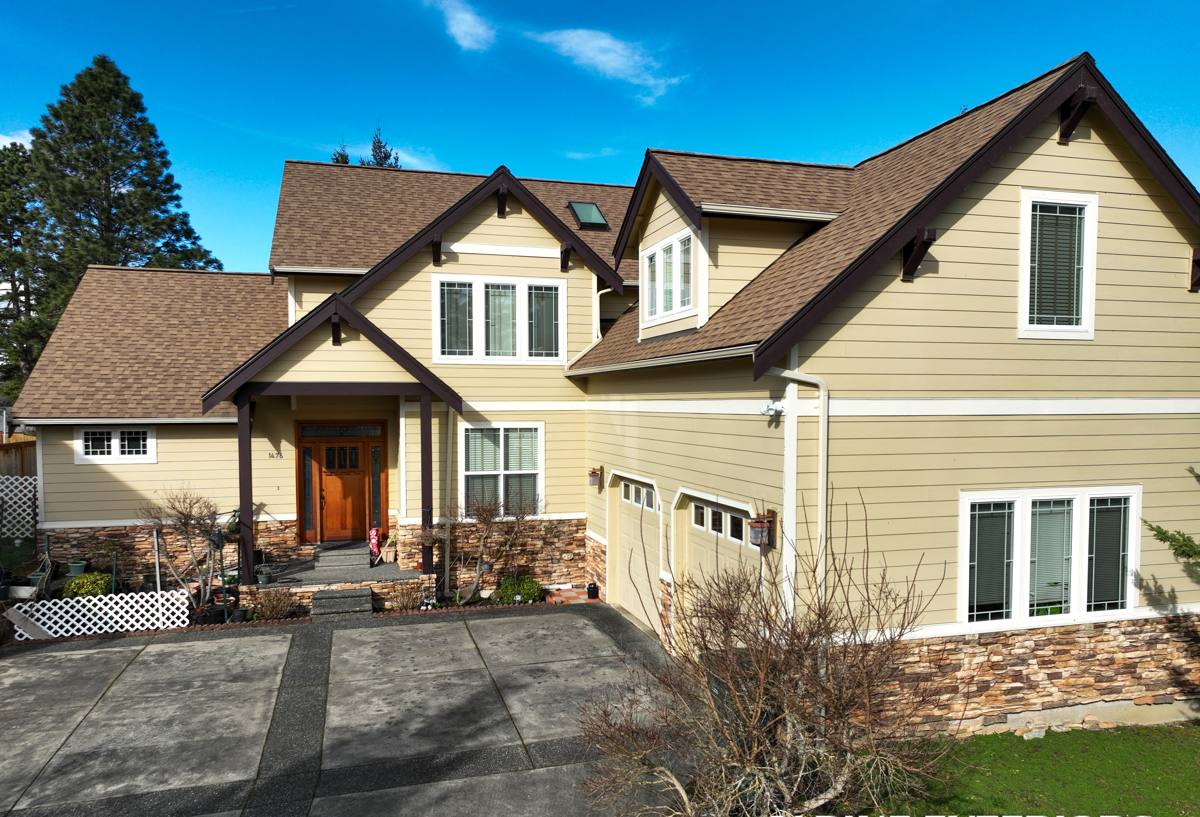
What This Climate Does to Windows on a Hill Over Time
Wind at Elevation
Homes on Beacon Hill's ridge are more exposed to wind than houses in low-lying, tree-sheltered parts of the city. West- and south-facing walls in particular can take a harder, more direct hit from storms moving in off Puget Sound, and that extra wind pressure pushes rain into gaps and seams that would stay dry on a more sheltered elevation. Windows on exposed faces of a hillside home need flashing and seals that are actually up to that added load, not just a standard, minimum-code installation.
Salt-Tinged Marine Air
Beacon Hill isn't waterfront, but it's close enough to Puget Sound and Elliott Bay that homes still pick up marine-influenced air, and that air is harder on window hardware and fasteners than a dry inland climate would be. Lower-grade hinges, locks, and frame components tend to show pitting, stiffness, or seal failure noticeably sooner out here than they would somewhere drier.
Driving Rain and Flashing Failure
Seattle storms rarely fall straight down, and on an exposed hill that sideways push is even more pronounced. Wind-driven rain reaches seams and transitions that a calmer climate would never test. The window unit is only one part of keeping that water out — flashing that laps correctly into the surrounding wall and siding is what actually stops it from tracking behind the trim and into the framing.
A Long Moss and Mildew Season
Mild temperatures and near-constant fall-through-spring moisture give moss and mildew a long growing season across King County, and window sills, trim, and the wood framing around older units are prime spots for it to take hold. Shaded, tree-covered stretches of the neighborhood and windows tucked under eaves with poor drainage tend to show growth earliest and worst.
Signs a Beacon Hill Home Needs Window Attention
- Fog or trapped moisture visible between the panes of a double-pane window
- Drafts or cold spots at the frame even when the window is fully closed and locked
- Soft, discolored, or visibly rotted sills and trim
- Windows that stick, won't hold open, or are getting harder to lock
- Visible daylight or gaps where the frame meets the siding
- Paint or finish failing faster on window trim than on the rest of the exterior, especially on west- or south-facing walls
Repair vs. Replacement: How We Make the Call
Not every window on a Beacon Hill property needs to come out. A window with a failed seal but a sound frame and working hardware is often a reasonable repair or reglaze candidate. A window with rotted framing, a warped sash, or hardware that's been failing for years usually isn't — the cost of repeated patch jobs on that kind of window adds up past what a proper replacement would have cost.
| Condition | Repair Usually Makes Sense | Replacement Usually Makes Sense |
|---|---|---|
| Fogged glass, sound frame | Yes — reglaze or seal replacement | Only if the frame is also compromised |
| Stiff, corroded, or broken hardware | Yes — hardware replacement | Not on its own |
| Soft or rotted wood framing | Rarely a lasting fix | Yes |
| Persistent drafts on an exposed wall | Sometimes, if flashing is the real cause | Yes, if the unit itself is the source |
| Single-pane, no storm window | Possible short-term patch | Yes, for real comfort and energy gains |
Common Mistakes We Find on Older Beacon Hill Homes
When we open up water damage around older windows in this neighborhood, it almost never traces back to the window itself failing — it traces back to flashing that was never lapped correctly to begin with, or caulk that was relied on as the primary seal instead of a backup to proper flashing. Caulk cracks and breaks down over time. On an exposed, hillside wall catching direct wind-driven rain, a caulk-only seal fails faster than it would somewhere more sheltered.
Flashing: The Detail That Actually Determines Performance
We spend more time with homeowners talking about flashing than about window brand names, because on a wind-exposed property like a lot of what's up on Beacon Hill, flashing is the real difference between a window that stays dry for decades and one that starts leaking within a few wet seasons. Correct installation means the flashing laps properly with the weather-resistive barrier and siding around it, water is directed out and away from the rough opening instead of trapped behind it, and every seam is sealed with materials rated for sustained moisture exposure. That's standard practice on every window we install — not an upgrade a homeowner has to ask for separately.
Choosing Frame Materials and Glazing for This Climate
We install vinyl and fiberglass window systems built for the Pacific Northwest's wet, mild conditions, and we're upfront with homeowners about the real trade-offs rather than pushing one product as the only right answer. On an exposed Beacon Hill property, what matters most is a tight, well-engineered frame, glazing that handles both energy performance and condensation control, and hardware rated for sustained wind and marine air — not which name is stamped on the corner of the frame.
- Frame material: Vinyl and fiberglass both resist rot in a way uncladded wood frames don't, which matters given how much sustained moisture this region carries through the year.
- Glazing package: Double-pane with a good low-E coating covers most Beacon Hill homes; triple-pane can make sense on a particularly exposed wall but isn't automatically the right upgrade for every window.
- Hardware grade: Corrosion-resistant hardware holds up longer against King County's marine-influenced air, especially on windows facing prevailing wind and weather.
- Warranty structure: A manufacturer warranty only covers the product — we stand behind our installation work separately, since installation is what actually determines whether that product warranty ever gets tested.
How Window Replacement Connects to the Rest of Your Home's Exterior
Windows rarely fail in isolation. A replacement done without attention to the surrounding siding, trim, and drainage plane can look fine for a season or two and still leak, because water that gets past a poorly integrated window travels into the wall assembly instead of showing up somewhere obvious. We treat window work as connected to siding and roofing, not a standalone job, which is part of why we handle all four exterior trades — it means whoever is detailing the window flashing already understands exactly how it needs to tie into the siding and roof-to-wall details around it, on a hillside property where those details are doing extra work.
A Checklist Before Hiring for Window Work in Beacon Hill
- Ask specifically how they handle flashing integration with your existing siding, not just which window brand they carry
- Confirm current Washington contractor licensing and active liability insurance
- Get a written scope that separates the product warranty from the installation warranty
- Ask for a repair-or-replace recommendation on each affected window individually, not a blanket answer for the whole house
- Ask about lead times — window orders for this region can run several weeks depending on size and configuration
Why a Local Crew That Already Works Beacon Hill Matters
A contractor who works this neighborhood and the rest of Seattle regularly already knows how wind-driven rain and marine air behave differently on an exposed hilltop block than they do a few streets down in a more sheltered spot. That shows up in the small calls — how much lap a flashing detail gets on a west-facing wall, whether a given hardware grade is enough for that exposure, how much margin to build in around an older frame that's been fighting hillside wind for decades. It also means fewer surprises around permitting and realistic scheduling through the wetter months, since that's the rhythm of work in this part of King County.
We start every window job with an on-site look at the existing units — checking frame condition, seal integrity, hardware function, and how the current flashing ties into the siding around each opening. From there we give a straightforward read on which windows are reasonable repair candidates and which make more sense to replace, with a written scope before any work begins. Flashing and drainage detailing are standard on every job we do, not an optional add-on.
If you're dealing with drafty, foggy, or stubborn windows on a Beacon Hill property — or you're just not sure whether repair or replacement is the right call — we're happy to take a look and give you an honest, no-pressure read. Reach out below for a free estimate.