 Seattle Siding
 A deck in Bellevue takes a beating that most homeowners never see until it's too late. The surface looks fine from a distance while the framing underneath quietly absorbs moisture through nine months of the year. By the time boards start cupping, railings feel loose, or a contractor pulls up decking to find soft joists, the deck has usually been failing for a long time. Deck replacement in this area isn't just about swapping old boards for new ones — it's about correcting the moisture and drainage problems that caused the failure in the first place, so the new deck doesn't repeat the same slow decline.
We build and replace decks throughout Bellevue and the greater Seattle area, and we see the same patterns on almost every job: ledger boards attached without proper flashing, joists sitting in standing water, and decking installed tight against the house with no way for water to escape. None of that is unusual — it's just how a lot of decks got built. Our job is to fix it permanently, not patch around it.
Why Bellevue Decks Fail Faster Than the Manufacturer's Warranty Suggests
Every deck material sold in this region comes with a warranty written for average conditions across the whole country. Bellevue doesn't have average conditions. Between the marine air pushing in off Puget Sound, the long stretch of driving rain from fall through spring, and the shaded, moss-prone yards common in this part of King County, decks here are wet far more often than the warranty math assumes.
The practical effect is that fasteners corrode earlier, wood fibers stay saturated longer between dry spells, and any spot where water pools — a low joist, a tight board gap, a poorly flashed ledger — becomes a rot starting point years before it would in a drier climate. Moss and algae add another layer: they hold moisture directly against the wood or composite surface and make boards slick and slippery underfoot, which is as much a safety issue as a cosmetic one.
The Specific Failure Points We See Most
- Ledger board attached directly to the house rim joist with no flashing, letting water track behind the siding and into the wall framing
- Joists and beams with no ground clearance or airflow, sitting in a damp crawlspace-like microclimate under the deck
- Decking boards installed with tight or no gaps, trapping debris and moisture between boards
- Fasteners that aren't rated for treated lumber's chemical makeup, leading to corrosion and black staining
- Railing posts bolted through decking without blocking, creating a weak point that loosens as wood fibers compress and swell over repeated wet-dry cycles
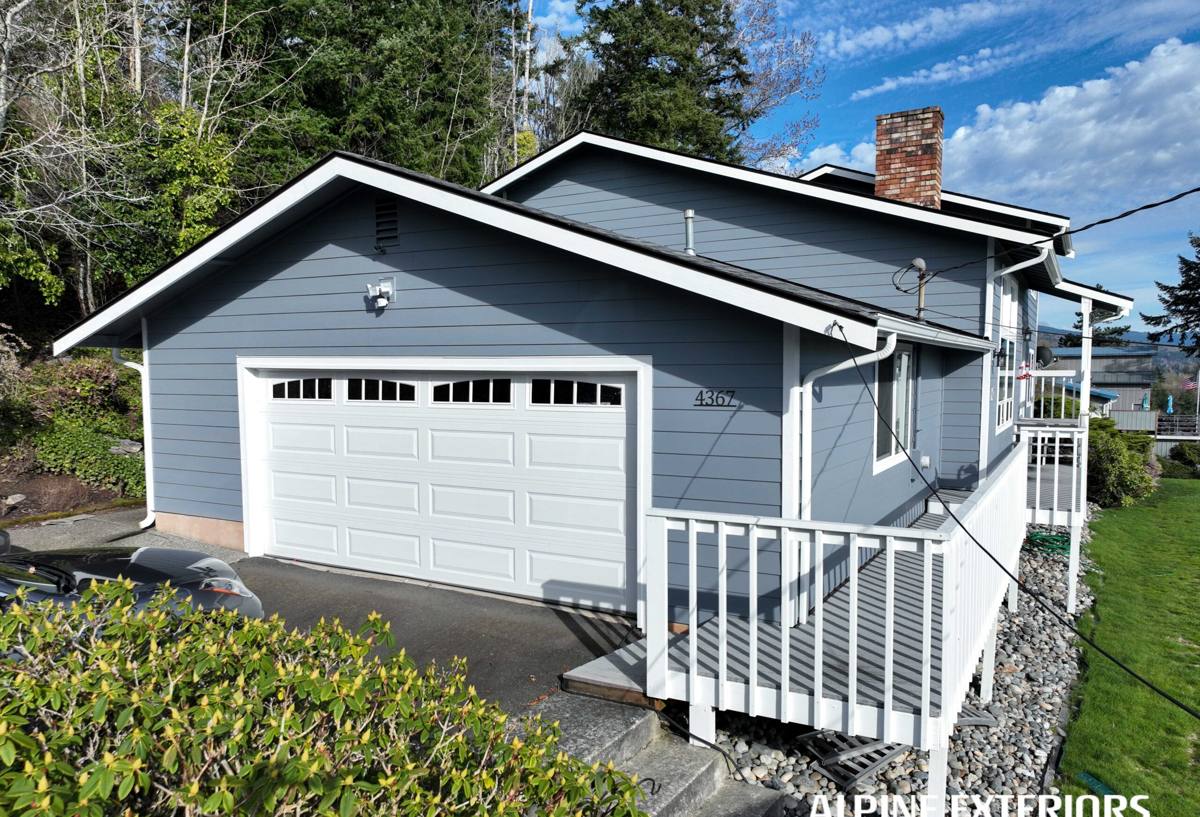
What a Correct Deck Replacement Actually Involves
Replacing a deck the right way starts below the surface, not with board selection. If we don't fix the structure and drainage, a new deck built on the same footings and framing will eventually show the same problems, just on a longer timeline.
Structural Assessment First
Before we talk material choices, we check the ledger connection, footing condition, post spacing, and joist sizing against current code requirements. Older Bellevue decks — especially those built before local jurisdictions tightened ledger attachment and guardrail rules — often need structural upgrades regardless of what decking material goes on top. This isn't upselling; it's the difference between a deck that's actually safe to stand on in twenty years and one that isn't.
Flashing and Water Management
The ledger-to-house connection is the single most important detail on any deck attached to a structure. We install proper flashing that directs water away from the rim joist and wall assembly, rather than relying on caulk or sealant alone — sealant fails, flashing sheds water by design and keeps working after the caulk has cracked. We also grade and space the framing so water has somewhere to go instead of collecting under the deck.
Material Selection Based on How the Yard Actually Sits
A deck in full sun with good airflow can often work with a wider range of materials than a shaded, tree-covered lot that stays damp into the afternoon. We look at sun exposure, tree cover, and how close the deck sits to grade before recommending decking, because the "best" material genuinely depends on the site.
Decking Material Comparison for This Climate
| Material | How It Handles Wet, Shaded Conditions | Maintenance Burden | Typical Lifespan Here |
|---|---|---|---|
| Pressure-treated lumber | Prone to moss growth and surface checking if not sealed regularly | Annual cleaning and re-sealing recommended | 10-15 years with upkeep |
| Cedar | Naturally rot-resistant but still needs sealing in shaded, damp spots | Sealing every 1-2 years, moss removal | 15-20 years with upkeep |
| Composite decking | Handles moisture well; some early-generation products trap moss on the surface | Periodic washing, no sealing needed | 25-30 years, varies by product |
| PVC/capped composite | Best moisture resistance of common options; sheds moss with occasional washing | Low — occasional washing | 25-30+ years |
We don't push one material as universally "best" — each has real trade-offs in cost, appearance, and how much upkeep the homeowner is actually willing to do. What we won't do is install decking over framing that hasn't been corrected, regardless of which material is chosen, because the material can't compensate for a structural or drainage problem underneath it.
Our Deck Replacement Process
- On-site assessment — We inspect the existing deck's framing, ledger connection, footings, and drainage, and check for soft spots, corrosion, and code compliance issues.
- Written scope and estimate — You get a clear breakdown of what's structural, what's cosmetic, and what material options fit your site and budget, with no vague allowances.
- Demolition and disposal — Old decking, framing, and any compromised ledger material is removed and hauled off.
- Structural correction — Footings, posts, beams, and joists are repaired or upgraded to current code, and proper flashing is installed at the ledger.
- Decking and railing installation — New material is installed with correct fastener spacing, board gaps for drainage and airflow, and code-compliant railings.
- Final walkthrough — We go over the finished deck with you, including basic care guidance specific to the material installed.
Permits and Bellevue-Area Code Requirements
Deck replacement work that involves structural changes — new footings, ledger reattachment, or railing height changes — typically requires a permit and inspection in Bellevue and surrounding King County jurisdictions. We handle the permit process as part of the job rather than leaving it to the homeowner, and we build to the guardrail height, baluster spacing, and stair requirements that apply locally. Skipping permits on structural deck work isn't just a paperwork risk — it can create real liability if something fails later and there's no inspection record showing it was built to code.
Signs Your Bellevue Deck Needs Replacement, Not Repair
- Soft or spongy spots in the decking, especially near the house or around post bases
- Visible gaps, rust streaks, or movement at the ledger board where the deck meets the house
- Railings or posts that flex or wobble under normal pressure
- Persistent moss or algae that returns within weeks of cleaning
- Fasteners that are heavily corroded, missing, or backed out of the wood
- A deck more than 20-25 years old that has never had structural upgrades
If only a section shows damage and the framing underneath is otherwise sound, repair can make sense. But once the ledger connection, footings, or a large portion of the framing is compromised, replacement is usually more cost-effective than chasing repairs on a structure that's still going to have the same underlying moisture problems.
Cost Factors for Bellevue Deck Replacement
| Factor | Why It Affects Cost |
|---|---|
| Deck size and shape | More square footage and complex angles mean more material and labor |
| Framing condition | Extensive footing or joist replacement adds cost beyond surface materials |
| Decking material | Composite and PVC cost more upfront than wood but less in long-term maintenance |
| Railing style | Cable, glass, or custom railing systems cost more than standard baluster railing |
| Height and access | Multi-level decks or difficult site access increase labor time |
| Permit and inspection scope | Structural changes require permitting that adds time and coordination |
We give a firm, itemized estimate after the on-site assessment rather than a rough number over the phone, because framing condition — which you often can't see until decking comes up — has a real effect on final cost.
Why Hire a Crew That Already Works in Bellevue
Deck work in this part of King County isn't the same as deck work in a dry climate, and it isn't quite the same as deck work in downtown Seattle either — lot sizes, tree cover, and drainage patterns in Bellevue's neighborhoods have their own quirks. A crew that already works locally knows which framing details hold up against the region's rain and moss cycle, knows the local permitting process, and isn't learning those lessons on your project. We're not guessing at what "wet climate" means in the abstract — we're building for the specific conditions your deck sits in every day.
If your deck is showing rot, softness, moss that won't quit, or railings that don't feel solid, it's worth having it looked at before another wet season makes the problem worse. We offer free, no-pressure estimates for deck replacement in Bellevue — fill out the form below and we'll take a look.