 Seattle Siding
 Bellevue's Climate Is Harder on Roofs Than It Looks
Bellevue sits in the Puget Sound basin, and that comes with a specific set of roofing problems most homeowners never think about until they're staring at a stain on the ceiling. Marine air moves through the region most of the year, carrying moisture and trace salt that slowly work on exposed metal — nail heads, flashing seams, vent caps. Add long stretches of driving rain that comes in sideways during winter storms, and you have weather that tests every seam, lap, and flashing detail on a roof, not just the field of shingles.
Then there's the shade. King County's tree canopy keeps a lot of Bellevue roofs damp for days after a storm has already cleared everywhere else, which is exactly the condition moss and algae need to take hold. None of this means a roof in Bellevue needs anything exotic — it means the ordinary parts of the job (ventilation, underlayment, flashing) have to be done right, because this climate finds every shortcut eventually.
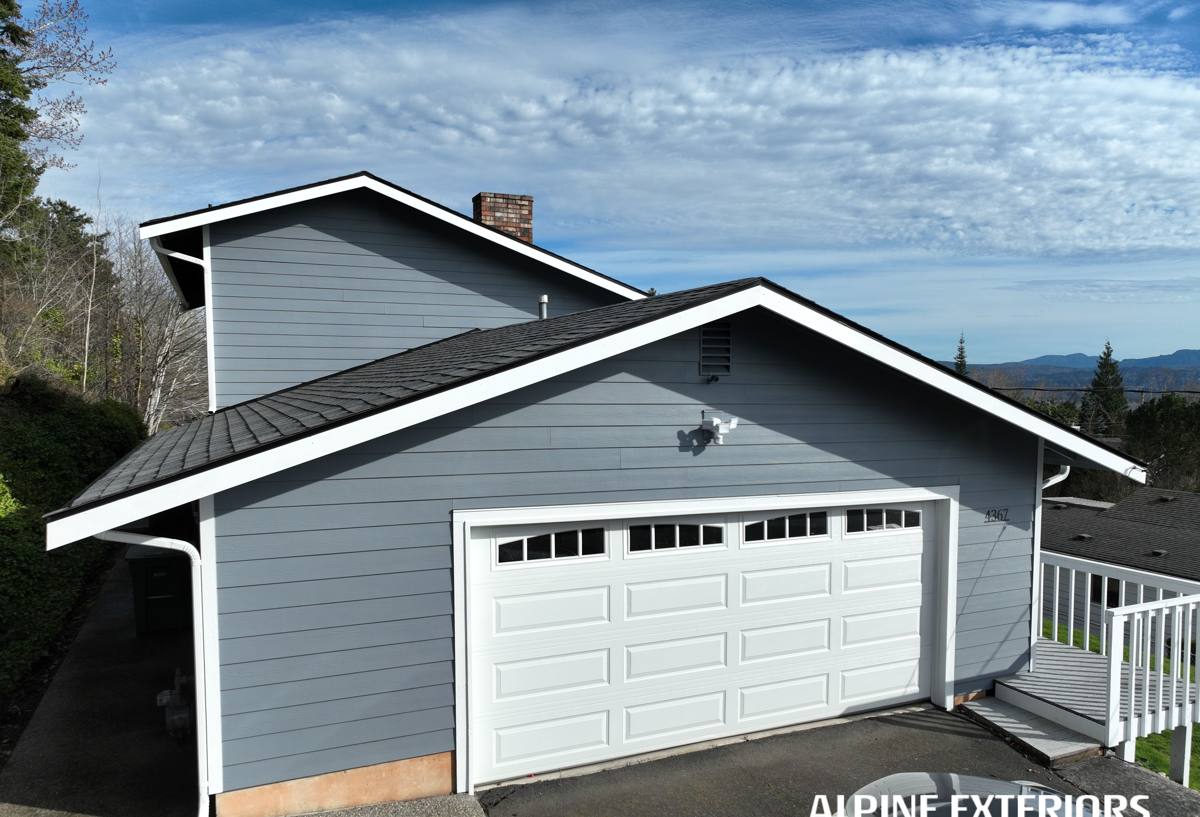
Repair or Replace? Signs It's Time for a New Roof
Not every roofing problem calls for a full tear-off. But there's a point where patching becomes throwing money at a roof that's already failed underneath. Signs worth taking seriously:
- Granules collecting in gutters and downspouts, or shingles that look bald in patches
- Shingle edges curling, cupping, or lifting — especially where moss has worked underneath
- Soft or spongy spots when walking the roof, which usually means the decking is compromised
- The same spot leaking more than once, even after a repair
- Roof age near or past the material's expected service life, especially on the sun- and rain-exposed slopes
- Flashing that's rusted, cracked, or pulling away at chimneys, skylights, or wall intersections
One or two of these might mean a targeted repair is still worth it. Several at once, or a roof that's already 20-plus years old, usually means the smarter money is a full replacement rather than another round of patches on a system that's aging out.
What a Correct Roof Replacement Actually Involves
A roof replacement is more than swapping old shingles for new ones. Done right, it's a full rebuild of the system underneath what you can see.
Tear-Off and Deck Inspection
Everything comes off down to the decking — old shingles, old underlayment, old flashing. That's the only way to actually see the plywood or plank sheathing underneath. Any section that's soft, delaminated, or water-stained gets cut out and replaced before anything new goes down. Skipping this step and roofing over questionable decking is one of the most common shortcuts in the trade, and it's the one that causes the worst problems years later.
Underlayment and Flashing
In a region with this much sustained rain, the underlayment is doing real work, not just serving as a formality. Ice-and-water shield belongs at eaves, valleys, and around penetrations where water is most likely to back up or pool, with synthetic underlayment across the rest of the deck. Flashing at chimneys, skylights, sidewalls, and roof-to-wall transitions gets replaced, not reused — old flashing is one of the top sources of slow, hard-to-trace leaks.
Ventilation
Intake and exhaust ventilation have to be balanced, not just present. Under-ventilated attics trap moisture, which shortens the life of the decking from underneath and encourages the same damp conditions that grow moss on top. This is one of the most under-discussed parts of a roof replacement, and it's often the difference between a roof that lasts its full rated life and one that doesn't.
Choosing the Right Roofing Material for a Bellevue Home
There's no single "best" material — the right choice depends on budget, roof pitch, and how much long-term maintenance you want to take on. Here's how the common options actually compare in this climate.
| Material | Typical Lifespan | Maintenance in This Climate | Best For |
|---|---|---|---|
| Architectural asphalt shingle | 25–30 years | Moderate — benefits from algae-resistant granules and periodic moss removal | Most homes; best balance of cost, appearance, and durability |
| Standing seam metal | 40–60 years | Low — sheds moss and debris well, but fastener and sealant details need to be installed correctly | Homeowners planning to stay long-term and wanting minimal upkeep |
| Cedar shake | 20–30 years, highly dependent on upkeep | High — needs regular treatment and cleaning to resist the moisture and moss this region produces | Homeowners committed to the maintenance for the traditional look |
Our default recommendation for most Bellevue homes is a quality architectural asphalt shingle with algae-resistant granules — it holds up well against moss and driving rain without demanding constant upkeep. We'll walk through metal if you want a longer-term, lower-maintenance option, and we'll be straight with you about cedar's maintenance burden in a climate this wet rather than talk you into it and disappear.
Our Roof Replacement Process, Start to Finish
- Inspection and measurement — we walk the roof, check the decking where accessible, and measure for an accurate material take-off.
- Written estimate — a clear scope covering materials, tear-off, disposal, and any decking allowance, so there are no surprise line items later.
- Material order and scheduling — we confirm a install window and pull the necessary permit before work starts.
- Site protection — landscaping, siding, and windows get covered or tarped before tear-off begins.
- Tear-off and deck repair — old roofing comes off, decking is inspected, and any bad sections are replaced.
- Underlayment, flashing, and shingle installation — installed to manufacturer spec, not just "close enough."
- Cleanup and magnetic sweep — debris hauled off and the yard swept for stray nails.
- Final walkthrough — we go over the finished roof with you before calling the job done.
Moss, Algae, and Long-Term Roof Care
Moss doesn't just look bad — it holds moisture against the shingle surface and works its way under the edges, which speeds up granule loss and, eventually, leaks. Shade from mature trees, north-facing slopes, and debris buildup in valleys are the usual culprits, and Bellevue's tree cover gives moss plenty of opportunity across a long wet season.
A correctly ventilated roof with algae-resistant shingles resists moss better from the start, but no roof is maintenance-free in this climate. The basics that actually matter: keep gutters and valleys clear of needles and leaves, trim back branches that shade the roof, and remove moss with a soft-brush or low-pressure method rather than a pressure washer, which strips granules and does more damage than the moss itself. Zinc or copper strips near the ridge can help slow regrowth on shaded slopes if you want a low-effort long-term option.
Permits and Local Code Basics
Most jurisdictions in King County, including Bellevue, require a permit for a full roof replacement, and an inspection is typically part of that process. Requirements can vary by scope and by specific property, so we handle the permit application as part of the job rather than leaving it for the homeowner to sort out. If your home is in an area with additional design or HOA review, that's worth flagging early so it doesn't hold up scheduling once materials are ordered.
Why a Crew That Already Works Bellevue Matters
Roofing crews that work this area regularly build a feel for it that generic estimates can't replicate — how steep pitches drain in a hard rain, which slopes hold moss longest, how much ventilation a given attic actually needs given the tree cover around it. That translates into fewer surprises mid-job and a roof that's built for the conditions it will actually face, not a generic spec sheet.
It also matters after the job is done. If a warranty question or a storm-related concern comes up two years down the road, you want a crew that's still working in the area and easy to reach — not one that did a single job in Bellevue and moved on.
What to Ask Before You Hire
- Are you licensed, bonded, and insured in Washington State — and can you provide proof?
- Is the estimate a detailed written scope, or a vague one-line price?
- What's included in the tear-off — decking inspection and replacement if needed, or shingles only?
- What warranty applies to workmanship, separate from the manufacturer's material warranty?
- Who pulls the permit, and is that included in the price?
- How is debris and cleanup handled, including a nail sweep of the yard?
- What happens if weather delays the install partway through?
A contractor who answers these clearly and in writing, without pressure, is usually the one worth hiring.
If your Bellevue roof is showing its age or you just want an honest read on where it stands, we're happy to take a look. The estimate is free, there's no pressure to sign anything on the spot, and you'll get a straight answer about whether it's time to replace or whether a repair will still hold.