 Seattle Siding
 Fiber Cement Siding for West Seattle: Built for Salt Air, Driving Rain, and a Long Moss Season
West Seattle sits on a bluff above Puget Sound, which gives a lot of homes here real water views and real water exposure at the same time. Salt-tinged marine air moves in off the Sound, wind-driven rain hits exposed western and southern walls harder than it does more sheltered blocks, and the mature tree canopy that makes this part of Seattle so green also keeps plenty of siding shaded and damp for months at a time. That combination is tougher on exterior materials than most homeowners realize until they're dealing with a wall that's failing years ahead of schedule.
We install James Hardie fiber cement siding exclusively on West Seattle homes and across the rest of our Seattle and King County service area. That's not a brand preference picked off a supplier list — it's a standard we settled on after seeing which materials actually hold up in this specific climate and which ones quietly don't.
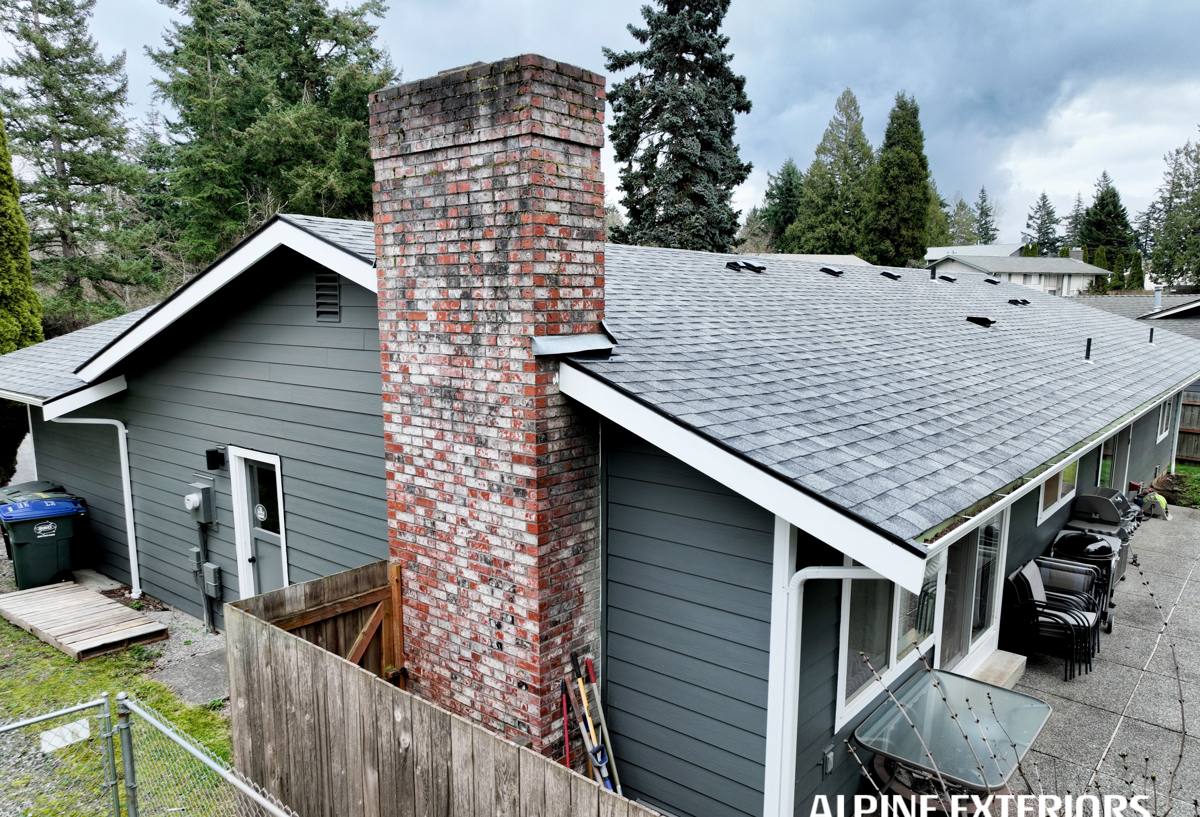
What West Seattle's Climate Does to Siding
Salt Air and Marine Exposure
Homes on the bluffs and slopes facing Puget Sound get a steady dose of salt-laden air, and even properties set back from the water pick up some of it as it moves inland. Salt accelerates corrosion in fasteners, flashing, and trim, and it breaks down lower-grade finishes faster than you'd see in a drier, more inland part of King County. A siding system that isn't built with that corrosion risk in mind tends to show its age early, usually starting at the trim and fastener heads before the field of the wall itself looks bad.
Wind-Driven Rain on Exposed Elevations
Seattle's rain rarely falls straight down for long. Wind off the Sound pushes it sideways into west- and south-facing walls, lap joints, and window trim, which is a more demanding load than a simple annual rainfall total suggests. West Seattle's elevation and open exposure toward the water make this worse on view-oriented walls than on siding tucked behind hillsides or dense landscaping elsewhere in the city. A siding system that would perform fine in a calm, dry climate can still fail here specifically because water is finding its way in sideways, not just from above.
Moss, Mildew, and Shade from Mature Tree Canopy
Mild year-round temperatures, heavy tree cover, and consistent moisture add up to a long moss and mildew season across most of Seattle, and West Seattle's older, tree-lined residential streets are no exception. Any siding material that's even slightly porous, or that holds moisture against the substrate, becomes a growth surface over time. It typically shows up first on north-facing walls and sections shaded by mature trees or neighboring structures, well before it's visible from the street or the sidewalk.
Why We Install Only James Hardie Fiber Cement Siding
We don't offer a menu of siding brands and let homeowners pick based on price alone. We install one system, and the reason is practical rather than promotional: what we've seen on tear-offs and service calls in this exact climate pushed us toward the one product line we can fully stand behind.
- Non-combustible core: Fiber cement doesn't feed a fire the way wood-based siding products can, which matters for household safety and can matter for insurance underwriting too.
- Factory-applied ColorPlus finish: The color is baked on under controlled factory conditions rather than brushed on in the field, so it resists fading, chalking, and moisture damage far longer than site-applied paint.
- Climate-engineered HZ product lines: Hardie's HZ5 formulation is engineered for regions with heavy moisture exposure and freeze-thaw cycling, which describes marine West Seattle better than a generic, one-size-fits-all siding spec.
- Dimensional stability: Fiber cement doesn't swell, cup, or warp the way engineered wood siding can after repeated wet-season moisture cycles.
- Strong transferable warranty: Hardie backs its products with one of the more robust warranty structures in the industry, provided the installation follows spec.
We won't install LP SmartSide, vinyl siding, Cemplank, Allura, primed spruce, or cedar. Each of those products has a legitimate place in the market, and plenty of homeowners are satisfied with them elsewhere. But we made a professional call that in a climate with this much sustained moisture and salt exposure, standing fully behind one system beats offering a cheaper option that quietly shifts maintenance risk onto the homeowner a few years down the road.
What a Correct Fiber Cement Installation Involves
Material choice is only half the job. A James Hardie installation that performs the way the product is actually engineered to requires correct fastening patterns, proper clearances from grade, decks, and roof lines, correctly lapped and sealed joints, and house wrap and flashing details that work with the siding rather than against it. Skipping any of those steps is one of the most common ways a good product ends up with callbacks, and it's why we treat installation detail as seriously as the material spec itself.
Prepping Older Homes for New Siding
A lot of West Seattle's residential streets carry housing stock that's decades old, and older homes often reveal surprises once the existing siding comes off: outdated or missing house wrap, undersized flashing, or sheathing that's absorbed moisture over the years without showing it on the surface. We inspect the substrate before we commit to a scope, because installing new fiber cement over a compromised wall assembly just locks the existing problem in behind a nicer surface.
Detailing for View Lots and Exposed Elevations
Homes built to take advantage of Puget Sound and Olympic Mountain views often have larger expanses of exposed wall and more window and door openings facing straight into the weather. Those openings are where wind-driven rain finds its way in first if flashing and trim details are rushed. On exposed elevations we pay particular attention to head flashing, kick-out flashing at roof-wall intersections, and sealed joints, since those are the details that separate siding that lasts decades from siding that needs attention again in five or six years.
Repair, Recoat, or Full Replacement — Choosing the Right Scope
Not every siding problem calls for a full tear-off. Localized damage, a section that took storm or impact damage, or trim that's failed around a window can often be repaired and matched into existing Hardie siding. But when moisture has been tracking behind the wall for a while, or the existing material is an older product that's reached the end of its service life, patching it usually just delays a bigger job and a bigger bill. We'll tell you honestly which situation you're in rather than defaulting to whichever option is more profitable for us.
Siding Cost Factors for West Seattle Homes
| Factor | What It Affects | Why It Matters Here |
|---|---|---|
| Home size and wall complexity | Total material and labor | More gables, dormers, and corners mean more joints where wind-driven rain can intrude |
| Tear-off vs. overlay | Labor scope and substrate access | Tear-off reveals hidden moisture damage that's common under original siding on older homes |
| Substrate condition | Repair costs before new siding goes on | Years of trapped moisture behind failing siding can rot sheathing and framing |
| Elevation and exposure | Flashing and detailing time | West-facing, view-oriented walls take more direct wind-driven rain and need extra attention |
| Trim and color selection | Material cost and finish longevity | ColorPlus factory finishes hold up better against salt air and UV than field-applied paint |
| Site access | Labor time and equipment needs | Sloped lots and mature landscaping common in West Seattle can add setup and staging time |
Exact numbers depend on the specific home, which is why we walk the property in person before giving a real estimate instead of quoting off a generic price sheet.
Signs Your West Seattle Siding Needs Attention
- Moss or dark staining that returns quickly after cleaning, especially on shaded, north-facing walls
- Soft or spongy siding, particularly low on the wall or around window and door trim
- Peeling paint, bubbling, or visible warping on siding boards
- Cracked, chipped, or missing sections after wind or storm events
- Visible gaps at seams, corners, or trim joints where water can track in
- Rising energy bills that may point to a wall assembly no longer sealing properly
Why a Local West Seattle Crew Matters
A crew that works across Seattle neighborhoods regularly sees how salt air, wind-driven rain, and moss actually behave on real houses over a full year, not just how a product performs on a spec sheet. That repeated, local exposure shapes practical decisions on install day: which elevations take the worst of the weather, where extra flashing attention pays off, and which details are worth the extra time so a homeowner isn't dealing with a callback two winters later. West Seattle's mix of bluff-top view exposure, older housing stock, and heavy tree cover isn't identical to every other King County neighborhood, and a crew with local experience accounts for that instead of applying a one-size-fits-all approach.
Get a Free, No-Pressure Estimate
If your West Seattle home needs new siding, repair work, or an honest second opinion on what's going on behind an aging wall, we're glad to take a look. Reach out using the form below to schedule a free estimate, no pressure and no upsell script.