 Seattle Siding
 Capitol Hill Homes Face a Specific Kind of Weather Wear
Capitol Hill's mix of early-1900s Craftsman and Victorian-era houses, denser infill construction, and mature street trees creates a siding environment that's different from a wide-open suburban lot. Homes here sit close together, often shaded for long stretches of the day, and surrounded by landscaping that holds moisture against exterior walls longer than it would in full sun. Add in Seattle's marine air, driving rain that comes in sideways during fall and winter storms, and a moss season that can stretch from October through April, and you've got a climate that punishes siding materials that can't handle sustained dampness.
We install James Hardie fiber cement siding exclusively — not vinyl, not LP SmartSide, not cedar, not other fiber cement brands. On a hill this dense, with this much shade and this much rain exposure, we've seen which products hold their line and finish over time and which ones don't. This page covers what Capitol Hill homes specifically need from their siding, what a correct Hardie installation involves in this setting, and how our process works from first look to final walk-through.
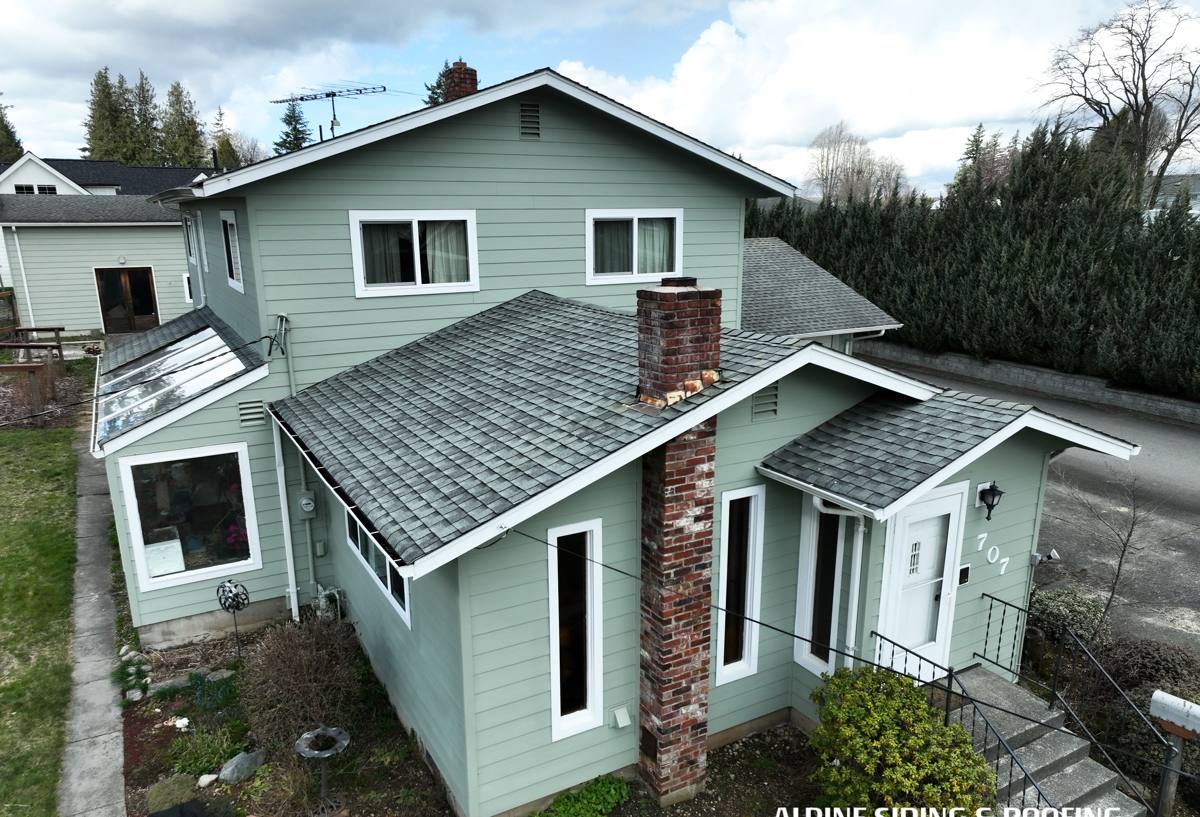
Why the Local Climate Matters More Than People Think
Salt Air and Driving Rain
Seattle sits close enough to Puget Sound that homes across the city, including elevated neighborhoods like Capitol Hill, get some degree of salt-laced moisture in the air. Combined with wind-driven rain that hits walls at an angle rather than falling straight down, siding here takes on water at seams, laps, and penetrations that drier climates never stress-test. Materials that swell, wick moisture, or rely on paint film alone to stay sealed will show it first at these joints.
The Moss Season
Shaded lots, tree cover, and consistent damp air mean moss and algae growth on north- and west-facing walls is a near-guarantee on Capitol Hill if the siding surface and the wall assembly behind it don't manage moisture correctly. Moss itself isn't just cosmetic — it holds water against the surface, which becomes a real problem for any siding material that isn't dimensionally stable or that has exposed, unsealed cut edges.
Why James Hardie Handles This Better
James Hardie fiber cement doesn't rot, doesn't swell with moisture the way wood-based products can, and isn't a food source for the organisms that cause moss and mildew staining. Its factory-applied ColorPlus finish is baked on under controlled conditions, which holds up to repeated wet-dry cycling far better than field-applied paint. That's the core reason we standardized on it — not as a sales point, but because it's the product that actually performs through a Seattle winter, year after year.
What a Correct Installation Looks Like Here
Fiber cement siding is only as good as the installation behind it. On Capitol Hill's older housing stock in particular, a rushed or generic install is where problems start — most siding failures we get called to inspect trace back to installation shortcuts, not the material itself.
- Proper drainage plane and weather-resistive barrier behind the siding, not just siding nailed over old sheathing
- Correct fastener type, spacing, and depth per Hardie's published installation specs — over-driven nails are a common failure point
- Flashing at every window, door, and roofline transition, sized and lapped to shed water downward and outward
- Minimum clearance from grade, decks, and roof lines so the bottom edge of the siding never sits in standing water or debris
- Caulked and sealed butt joints and cut edges, since exposed raw fiber cement edges are the one part of the product that needs field protection
- Ventilation behind the cladding so trapped moisture has somewhere to go instead of sitting against the wall
Every one of those items matters more in a climate that stays wet for months at a stretch than it would somewhere dry. Skipping any of them doesn't show up immediately — it shows up two or three winters later as staining, soft trim, or paint failure.
Older Homes, Tight Lots, and City Permitting
A lot of Capitol Hill's housing predates modern siding and moisture-barrier standards. That means re-siding often uncovers old sheathing, out-of-date flashing details, or trim that needs attention before new siding goes on — issues a house in a newer development typically doesn't have. We check for this at the estimate stage, not after demo has started, so there aren't surprise change orders mid-project.
Tight lots and shared property lines also change how a crew has to stage material, scaffolding, and debris removal. A crew that already works this neighborhood plans for narrow access, on-street parking constraints, and keeping a jobsite tidy next to neighbors who are close by. Seattle's permitting requirements for exterior work apply the same way here as anywhere in the city — we handle that as part of the job rather than leaving it to the homeowner to sort out.
Our Process, Start to Finish
1. On-Site Assessment
We walk the exterior, check the current siding and trim condition, look at what's happening at grade level and roof transitions, and identify any moisture damage before quoting the job. On older Capitol Hill homes this step matters — it's where we catch sheathing or framing issues early.
2. Product and Line Selection
We help you choose the right Hardie product line and profile for the house — lap siding, shingle-style panels, or trim board combinations — based on the home's architecture and your budget, and walk through ColorPlus finish options versus field-painted options.
3. Prep and Removal
Old siding comes off, sheathing and framing get inspected and repaired as needed, and the weather-resistive barrier and flashing details get installed or corrected before a single piece of new siding goes up.
4. Installation to Spec
Siding, trim, and flashing go in following James Hardie's installation requirements, not shortcuts — this is what keeps the manufacturer's warranty valid and keeps the wall assembly dry long-term.
5. Final Walk-Through
We review the finished work with you, confirm caulking, seams, and clearances, and make sure you understand basic care going forward.
Comparing Siding Options for a House Like Yours
| Factor | James Hardie Fiber Cement | Vinyl | Cedar / Untreated Wood |
|---|---|---|---|
| Moisture and moss resistance | Strong — non-organic, dimensionally stable | Doesn't rot, but seams and gaps can trap moisture behind panels | Susceptible to rot and moss without diligent maintenance |
| Finish durability in wet climates | Factory-baked ColorPlus finish resists fading and wear | Color is through-body but can chalk, warp in heat/cold cycling | Requires repeated staining or painting to hold up |
| Fire resistance | Non-combustible | Combustible, can melt/deform near heat sources | Combustible |
| Typical maintenance | Occasional wash, caulk check | Low, but damage is hard to spot-repair invisibly | Regular sealing/staining, moss and mildew treatment |
| Long-term cost picture | Higher upfront, lower lifetime repaint/repair burden | Lower upfront, panels can crack and fade over time | Moderate upfront, high ongoing maintenance cost |
We don't install vinyl or untreated wood siding, but we think homeowners deserve to see the honest trade-offs rather than just be told "no." The short version: in a climate that stays wet for months, the products that need the least ongoing intervention are the ones that make the most sense on the wall.
Maintenance and What to Expect Long-Term
James Hardie siding installed correctly needs relatively little from you — periodic washing to keep moss and pollen from building up, an annual look at caulking around windows and trim, and prompt attention if you notice any impact damage. It won't need repainting on the same cycle that wood siding does, since the ColorPlus finish is engineered to hold color far longer than field-applied paint. That said, no siding is maintenance-free — the goal is that the maintenance it does need is minor and infrequent rather than constant.
Why a Crew That Already Works Capitol Hill Matters
Installation quality is the single biggest factor in how long fiber cement siding performs — more than the product line, more than the color. A crew that regularly works Capitol Hill's older homes, tight lots, and shaded, damp conditions already knows what to check for before a bid turns into a change order, how to stage a job on a narrow street without disrupting neighbors, and what this specific microclimate does to a wall assembly over time. That familiarity is what keeps a project on schedule and keeps the finished siding performing the way it's supposed to for decades, not just for the first few winters.
What to Ask Before You Hire
- Are they certified or factory-trained to install James Hardie products to manufacturer spec?
- Will they inspect and repair sheathing and flashing before installing new siding, not just cover what's there?
- Do they provide a written scope covering flashing, clearances, and fastener specs — not just "siding replacement"?
- Can they explain how the installation protects against your specific site conditions — shade, tree cover, grade?
- Do they handle the required city permitting as part of the project?
- Is the manufacturer's warranty transferable, and do they explain what voids it?
If your Capitol Hill home's siding is showing moss staining, soft trim, peeling paint, or you're just planning ahead for a replacement, we're happy to take a look and walk you through what we'd recommend — no pressure, no obligation. Fill out the form below for a free estimate.