 Seattle Siding
 Why Siding Replacement Looks Different in Bellevue
Bellevue's growth over the past few decades means a lot of homes on the Eastside are hitting the age where their original siding is due for replacement, not another round of caulk and touch-up paint. Whether the home sits close to Lake Washington, backs up to a greenbelt, or sits in one of Bellevue's older established neighborhoods with mature tree cover, the siding on it has been dealing with the same relentless combination of factors: long stretches of driving rain, humidity that lingers under tree canopy, and a moss and algae season that in King County can run most of the year. Add in the salt-tinged air that moves through the broader Puget Sound region, and you have an environment that is hard on any exterior material that isn't built for it.
Siding replacement done right in this climate isn't just a materials swap. It's an opportunity to correct whatever the original installation got wrong, address moisture that may already be behind the old siding, and put a product system in place that's actually engineered for what the Pacific Northwest throws at it year after year.
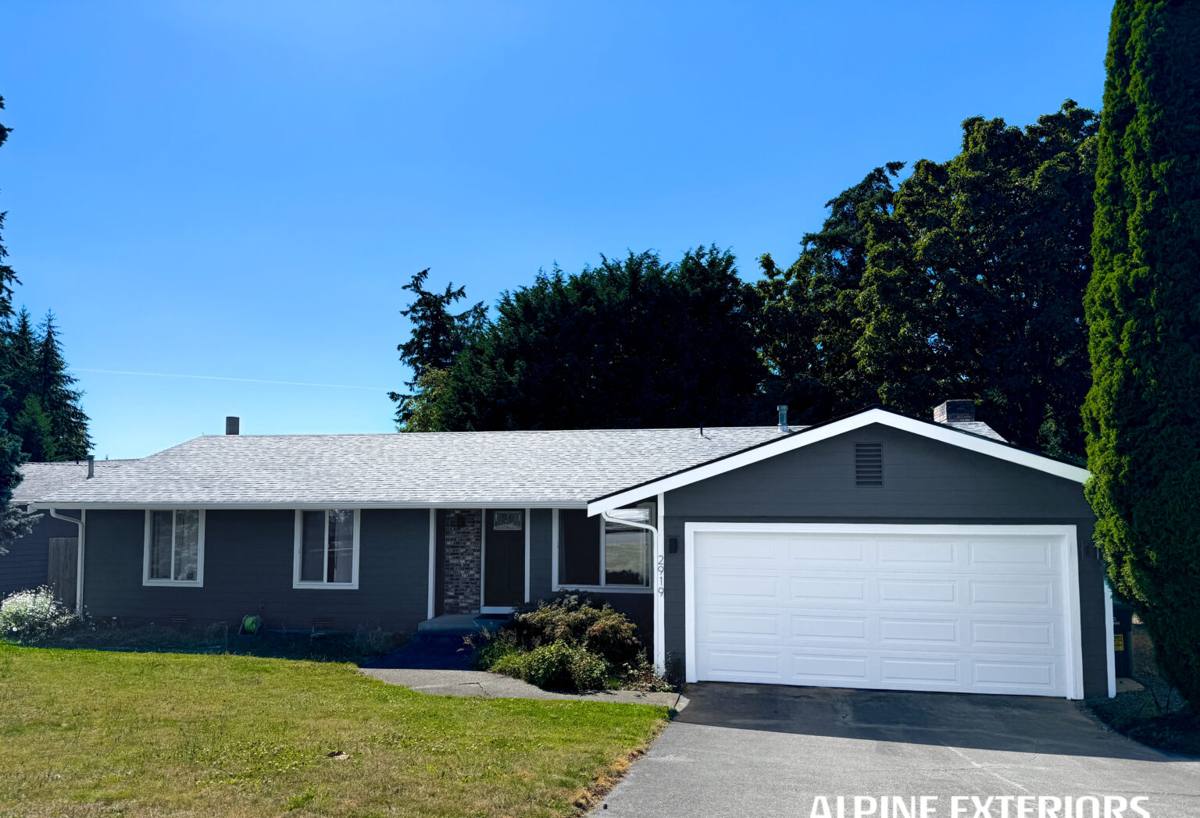
What Bellevue's Climate Does to Exterior Siding
Three things drive most of the siding failures we see on Eastside homes:
Driving Rain and Wind-Driven Moisture
Bellevue doesn't get the heaviest rainfall totals in the state, but storms here often come with wind that pushes water sideways into wall assemblies, lap seams, and anywhere flashing was skipped or under-built. Over years, that wind-driven rain finds every weak seam in a siding system.
Shade, Humidity, and Moss
Neighborhoods with mature trees and lots of tree cover, which describes a large share of Bellevue, hold moisture longer than open, sun-exposed lots. Shaded north- and west-facing walls stay damp for days after a storm, which is exactly the environment moss, algae, and mildew need to take hold. Left alone, that growth holds moisture against the siding surface and accelerates whatever decay process has already started underneath.
Salt-Tinged Marine Air
Across the greater Puget Sound region, homes closer to open water deal with a steady trace of salt air that speeds up corrosion on fasteners, trim, and any siding material that isn't rated for it. Even homes further inland get some of this exposure carried in on marine weather systems moving through King County.
Signs a Bellevue Home Needs Replacement, Not Repair
Not every siding problem calls for a full tear-off. But there's a point where patching stops making sense, and pushing past that point usually means paying for the same repair twice. Look for:
- Soft or spongy spots when you press on the siding, especially near the bottom courses and around windows
- Paint that won't hold no matter how often it's redone, a sign moisture is moving through the material itself
- Persistent moss or algae staining that returns within a season of cleaning
- Visible warping, buckling, or gaps opening up between panels or boards
- Cracking or crumbling at butt joints and corners
- A musty smell or visible staining on interior walls that share an exterior wall with damaged siding
- Siding that's original to a home built more than 20-25 years ago, particularly if it's never been fully replaced
If more than one or two of these show up during a walk-around, it's worth having someone look at the wall assembly, not just the surface.
What a Correct Siding Replacement Actually Involves
A siding replacement is only as good as what happens between the old siding coming off and the new siding going on. That window is where most long-term problems get created or prevented.
Full Tear-Off and Inspection
We remove the old siding down to the sheathing so the wall can actually be inspected, not guessed at. This is when rot, hidden water damage, or old framing issues from a previous installation show up, and it's the only time they can be fixed without cutting into finished walls later.
Weather-Resistive Barrier and Flashing
A correctly lapped weather-resistive barrier, properly integrated window and door flashing, and attention to every penetration point (vents, hose bibs, light fixtures) matter more in a climate like Bellevue's than almost anywhere else in the country. Skipping or rushing this step is the single most common cause of siding failure we see on homes that are otherwise still structurally sound.
Product Selection Built for This Climate
This is where we're direct with homeowners: we install James Hardie fiber cement siding exclusively. We don't install vinyl, LP SmartSide, cedar, primed spruce, or other fiber cement brands. That's not a marketing position, it's a standard we hold because of what we've seen play out on homes in this climate over time, and we're happy to walk through the reasoning with any homeowner who wants it.
Proper Installation to Manufacturer Spec
James Hardie's warranty and performance depend on installation to their specification, including correct fastening, clearances, and caulking at the right joints (and not at joints that shouldn't be caulked at all). A product engineered for this climate still fails if it's hung like a generic siding job.
Why We Standardized on James Hardie
James Hardie fiber cement is non-combustible, dimensionally stable in wet-dry cycling, and holds a factory-applied ColorPlus finish that's formulated to resist fading and moisture intrusion far better than field-applied paint. Hardie also builds region-specific HZ product lines engineered for climates like ours, where sustained moisture exposure is the norm rather than the exception. Combined with a strong, transferable manufacturer warranty, it's the product we're willing to put our own installation standards behind. We're not going to tell homeowners that every other product is worthless; we'll simply explain, product by product, why the trade-offs didn't hold up to what we've seen on King County homes.
Comparing Siding Options for a Bellevue Home
| Factor | Vinyl | Cedar / Wood | James Hardie Fiber Cement |
|---|---|---|---|
| Moisture resistance | Doesn't absorb, but seams and expansion gaps allow water behind it | Absorbs moisture, needs consistent sealing and maintenance | Engineered to resist moisture damage and won't rot |
| Moss and algae resistance | Surface growth possible in shaded areas, hard to fully clean | Prone to moss and mildew without regular treatment | Factory finish resists staining better long-term |
| Fire resistance | Can melt or deform under heat | Combustible | Non-combustible material |
| Finish longevity | Color can fade, can't easily repaint | Needs repainting or restaining every few years | Factory ColorPlus finish holds color much longer than field paint |
| Warranty | Varies widely by manufacturer and installer | Typically no manufacturer warranty on wood itself | Strong transferable manufacturer warranty |
What Drives the Cost of a Bellevue Siding Replacement
Every home is different, so we won't quote a number without seeing the house, but these are the factors that move the price up or down:
| Cost Factor | Why It Matters |
|---|---|
| Extent of hidden water damage found during tear-off | Rotted sheathing or framing has to be repaired before new siding goes on |
| Home size and wall complexity | More corners, dormers, and trim details mean more labor and material cuts |
| Siding profile chosen | Lap, shingle, and panel styles differ in material and install time |
| Trim and accessory scope | Fascia, soffit, and trim work often gets bundled into a full replacement |
| Access and site conditions | Tight lots, mature landscaping, and multi-story walls affect staging and scaffolding needs |
| HOA or design review requirements | Some Bellevue neighborhoods have color and material approval processes that affect timeline |
How We Work on Bellevue Homes
We've done enough siding work across the Eastside and greater Seattle area to know what tends to come up here specifically: mature landscaping that needs protecting during tear-off, HOA design guidelines that affect color and material choices, and the reality that a job started in the wrong week of a wet stretch can lose days waiting on dry conditions. We plan around King County's weather patterns rather than fighting them, sequence tear-off so open wall sections aren't left exposed longer than necessary, and coordinate with any neighborhood approval process before material shows up on site.
A crew that's worked Bellevue before also knows the difference between a lot shaded most of the day and one that gets full afternoon sun, and adjusts moisture-barrier detailing and product recommendations accordingly. That local familiarity is worth more than it sounds like on paper.
Questions to Ask Before Hiring a Siding Contractor
- Do they do a full tear-off, or do they install over existing siding?
- Will they show you what they find once old siding and sheathing are exposed?
- Do they follow the manufacturer's written installation instructions for flashing and fastening?
- Are they manufacturer-certified or trained on the specific product they're installing?
- What does the warranty actually cover, and is it transferable if you sell the home?
- Can they explain, in plain terms, why they recommend one product over another for your specific home?
- Do they carry proper licensing and insurance for work in King County?
If a contractor can't answer these clearly, that's worth noticing before any contract gets signed.
Get a Straight Answer About Your Siding
If your Bellevue home's siding is showing signs of wear, staining that won't clean off, or you're just not sure whether repair or replacement makes more sense, we're glad to take a look. We'll tell you honestly what we find, walk you through what a correct replacement involves, and explain why we install what we install. Reach out for a free, no-pressure estimate using the form below.