 Seattle Siding
 Why Bellevue's Climate Changes the Window Replacement Equation
Bellevue sits in a marine climate zone, and that shapes what a window replacement job actually needs to accomplish. Moist air moving in off Puget Sound, months of driving rain, and a long moss and algae season put steady pressure on every window opening in King County. It's rarely a dramatic storm that causes window failure here — it's the slow, cumulative effect of moisture finding its way behind trim, into frame corners, and under improperly lapped flashing, year after year.
A window that's a perfectly reasonable choice in a dry climate can be the wrong choice here if it isn't installed with this region's weather in mind. The product matters, but the installation details — flashing sequence, sealant placement, drainage path — matter just as much, sometimes more. That's the lens we bring to every Bellevue window project.
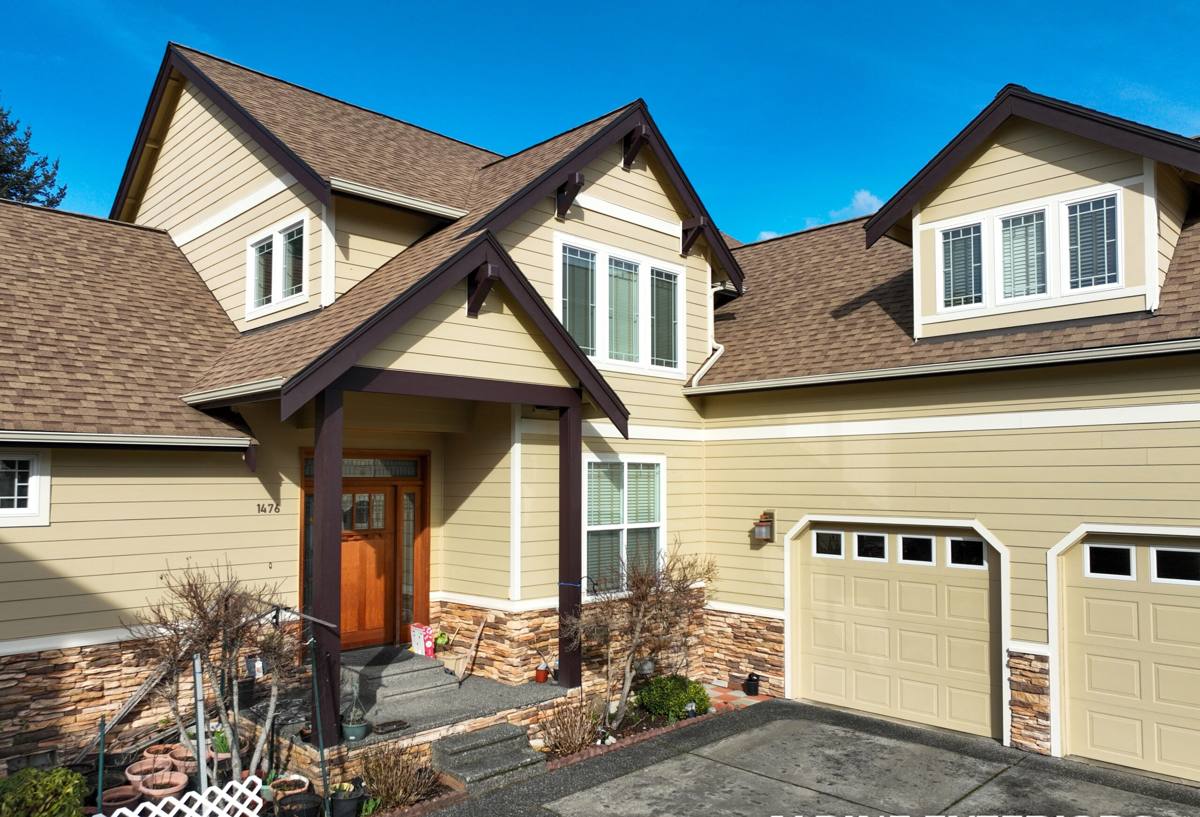
Signs Your Bellevue Home Needs Window Replacement
Most homeowners don't wake up one day and decide they need new windows — they notice small things that add up. In a climate this wet, those small things tend to point to moisture already at work behind the scenes.
- Soft, discolored, or crumbling wood on the interior or exterior window frame
- Persistent condensation or fogging between panes on double-pane units (a sign the seal has failed)
- Windows that are noticeably harder to open, close, or lock than they used to be
- Visible gaps, cracked caulk, or peeling paint around the frame's edge
- Moss, algae, or dark streaking building up on sills and lower frame sections
- Drafts near the window even when it's fully closed and locked
- A noticeable difference in room temperature near the window compared to the rest of the house
- Rising heating bills without any other clear explanation
Any one of these on its own might not mean much. Several together, especially moisture-related signs, usually mean it's time for a real assessment rather than another round of caulk and paint.
What a Correct Window Replacement Job Actually Involves
Flashing and Weatherproofing Integration
The window itself is only part of the system. What actually keeps water out of the wall cavity is how the window integrates with the house's weather-resistive barrier and flashing. Water needs a continuous, shingle-lapped path down and out — head flashing above the window, jamb flashing at the sides, and a sill pan underneath that directs any water that does get in back to the exterior instead of into the framing. Skip or shortcut any one of these layers and you've built in a slow leak that won't show up as a problem for a year or two, which is exactly why it's so often missed by crews that don't specialize in this region's construction.
Insulation and Air Sealing
The gap between a new window frame and the rough opening needs to be filled with an insulating material that stays flexible and doesn't trap moisture — not just packed with fiberglass and forgotten. Done right, this step closes off drafts and cold spots without creating a hidden pocket where condensation can collect.
Matching the Window to the Opening
Replacement windows need to be measured and ordered to fit the existing opening precisely, accounting for the home's actual wall assembly, siding type, and any settling or slight irregularity that's crept in over the years. A window that's slightly undersized gets shimmed and caulked to compensate — which is a maintenance liability waiting to happen in a climate this wet.
Choosing the Right Window Material for Pacific Northwest Weather
There's no single "best" window material for every home — the right choice depends on the home's exposure, the homeowner's maintenance appetite, and budget. Here's how the common options actually compare in this climate.
| Material | Moisture Resistance | Maintenance | Typical Lifespan |
|---|---|---|---|
| Vinyl | Very good — won't rot, resists moss and mildew | Low — occasional cleaning | 20-30 years |
| Fiberglass | Excellent — dimensionally stable in wet/dry cycles | Low | 30-40 years |
| Wood-clad | Good exterior protection, but exposed wood interior needs care | Moderate to high | 20-30 years with upkeep |
| Aluminum | Fair — prone to condensation without a thermal break | Low | 20-30 years |
We steer most Bellevue homeowners toward vinyl or fiberglass for general use, simply because they hold up with the least ongoing maintenance in a wet climate. Wood-clad windows can still be the right call for a specific architectural look, but it's worth going in with clear eyes about the extra upkeep the exposed wood elements will need over time. We'll walk through the honest trade-offs for your specific home rather than pushing one product line across the board.
Energy Performance Ratings That Actually Matter in King County
Every window carries an NFRC label, but not every number on it is equally important here. In our climate — mild, wet, and heating-dominated rather than cooling-dominated — two ratings deserve the most attention:
- U-factor: measures how well the window resists heat loss. Lower is better, and this is the number that matters most for keeping heating costs down through a Bellevue winter.
- SHGC (Solar Heat Gain Coefficient): measures how much solar heat passes through the glass. Since our region doesn't deal with intense, sustained summer heat, moderate SHGC values are usually fine and can even help offset heating costs on sunny days.
Triple-pane windows advertise better numbers on paper, but the added cost doesn't always pencil out for a marine climate like ours the way it might in a region with harsher winters. In most cases, a quality double-pane, low-E window with proper gas fill and a well-executed installation delivers the better return.
Our Window Replacement Process
- On-site assessment: we look at each opening, check for existing moisture or rot damage, and discuss what's actually going on with your current windows.
- Product selection: we go over material, style, and performance options honestly, including what we would and wouldn't recommend for your home's exposure.
- Careful removal: old windows come out without unnecessary damage to surrounding siding or trim, and we inspect the framing underneath for any hidden moisture issues before moving forward.
- Flashing and waterproofing: sill pans, jamb flashing, and head flashing go in with a proper drainage path before the new window is set.
- Installation and sealing: the window is set square and level, insulated around the frame, and sealed with the right materials for a wet climate — not just a bead of caulk.
- Trim and finish work: interior and exterior trim is reinstalled or replaced to a clean, finished appearance.
- Final walkthrough: we check operation, seals, and finish with you before calling the job done.
What Affects the Cost of Window Replacement in Bellevue
Every home is different, and we'd rather walk your specific project than throw out a number that doesn't hold up. That said, these are the main factors that move the price up or down.
| Factor | Why It Matters |
|---|---|
| Number of windows | Whole-house replacements typically bring a better per-window cost than one-off swaps |
| Material chosen | Vinyl, fiberglass, and wood-clad carry different material and installation costs |
| Window size and style | Large picture windows, bays, and custom shapes cost more than standard double-hung units |
| Hidden framing repair | Rot discovered once old windows come out adds labor and material to fix properly before the new window goes in |
| Access and home height | Second-story or hard-to-reach windows take more time and equipment |
| Permitting | Structural changes to an opening size typically require permitting, which adds time and a fee |
We give straightforward, itemized estimates so you can see exactly what's driving the cost — not a flat number with no explanation behind it.
Why Hire a Crew That Already Works in Bellevue
Window replacement done wrong doesn't usually fail on day one — it fails quietly, two or three winters later, once water has had time to work its way into places it shouldn't be. A crew that works throughout King County and understands this specific climate knows to build in the flashing and drainage details that a lot of general handyman work skips, because they've seen what happens when it's left out.
Local experience also means fewer surprises on permitting and inspection, since we're familiar with what Bellevue's process typically requires for window replacement work. And if a question comes up after the job is done — a squeak, a settling noise, a spot you want us to take another look at — you're calling a crew that's actually local and easy to reach, not a name that shows up once and disappears.
If your Bellevue home has windows showing any of the signs above, or you're just ready to stop losing heat and money through outdated windows, we're happy to take a look and give you a straightforward, no-pressure estimate. Use the form below to get started.