 Seattle Siding
 Why Capitol Hill Decks Wear Out Faster Than Homeowners Expect
Capitol Hill sits up on a ridge above downtown Seattle, which means decks here catch more wind-driven rain than homes tucked into lower, more sheltered parts of King County. Between the long stretch of gray, wet months and the salt-tinged air that rolls in off Puget Sound, any exposed wood surface on the hill is fighting a slow battle from October through May. Add in the moss season that shows up every fall and lingers into spring, and you get a deck surface that's constantly damp, shaded, and slow to dry out between storms.
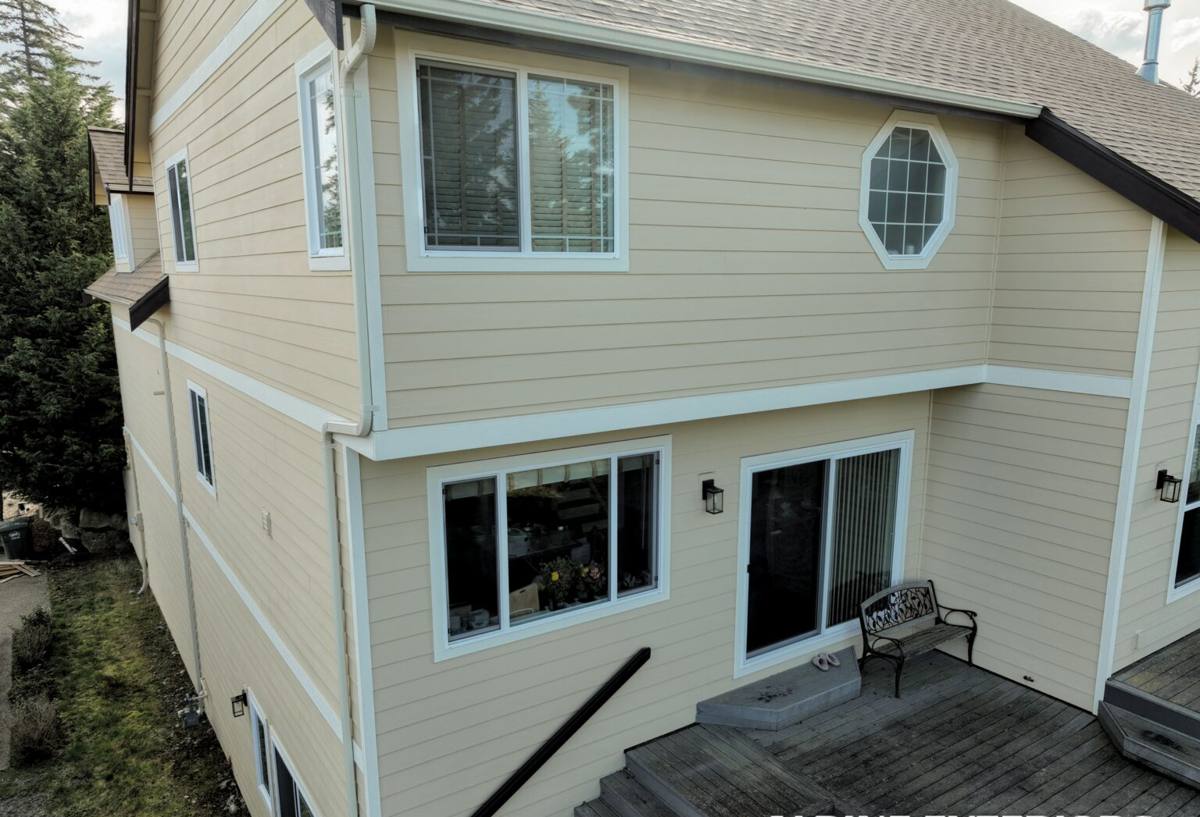
That combination is hard on standard wood decking. Boards cup, splinter, and grow mossy footing within a couple of seasons if they're not stained and sealed on a strict schedule. Composite decking was designed for exactly this kind of climate — it doesn't absorb water the way wood does, it doesn't need annual staining, and it resists the slow rot that eventually undermines wood boards from the inside out. But composite is only as good as the job underneath it. A poorly built substructure or bad drainage plan will cause problems no matter what decking material sits on top.
What a Correct Composite Deck Build Involves
Composite boards themselves are low-maintenance, but the frame, fasteners, and flashing underneath them are what actually determine whether a deck lasts. This is where a lot of decks — composite or wood — run into trouble in a wet climate like ours.
Substructure and Ledger Attachment
Where the deck attaches to the house (the ledger board), proper flashing is non-negotiable. Water that gets behind an improperly flashed ledger doesn't just damage the deck — it can work its way into the wall framing and siding of the house itself. On Capitol Hill's mix of older craftsman homes and newer builds, we pay close attention to how the ledger ties into existing siding and trim so water is directed away from the structure, not into it.
Joist Protection
Composite decking manufacturers generally recommend a joist tape or protective barrier over the framing lumber, even though the visible boards are composite. This keeps standing moisture from sitting on top of the joists, which is exactly the kind of slow, hidden damage that shows up years later as soft spots or sagging.
Airflow and Spacing
Board spacing and ventilation underneath the deck matter more here than in drier climates. Decks built low to the ground or over patios with poor airflow trap moisture and encourage moss and algae growth on the underside and gaps of the boards. We plan spacing and, where possible, sub-deck ventilation with our wet season in mind, not just a generic install spec.
Fasteners and Hardware
All hardware — screws, joist hangers, structural connectors — should be rated for ongoing exposure to moisture, not just treated lumber compatibility. Mismatched or under-rated hardware is a common shortcut that causes staining, corrosion, and loosening well before the decking itself shows wear.
Composite vs. Wood for a Capitol Hill Deck
Homeowners on the hill often ask us to walk through the real tradeoffs rather than just pushing one product. Here's how the two options generally compare in our climate:
| Factor | Wood Decking | Composite Decking |
|---|---|---|
| Moisture absorption | Absorbs water, prone to cupping and splitting | Resists water absorption, dimensionally stable |
| Moss and algae resistance | Rougher grain holds moisture, moss takes hold faster | Denser surface sheds moisture, slower moss growth |
| Maintenance | Annual sanding, staining, sealing | Periodic washing, no staining or sealing |
| Upfront cost | Lower material cost | Higher material cost |
| Long-term cost | Higher over time due to recoating and repairs | Lower over time, fewer repairs |
| Appearance consistency | Weathers and fades unevenly without upkeep | Color-fast, consistent over the warranty period |
Wood still has a place — some homeowners want the specific look and feel of natural wood and are willing to keep up with the maintenance. Our job is to be honest about what each option actually requires in a climate that rarely gives a deck more than a few dry weeks in a row.
Our Installation Process
- On-site assessment: We look at existing structure (if replacing a deck), grade and drainage around the foundation, ledger condition, and sun/shade exposure specific to your lot.
- Structural plan: We size and space joists to the composite manufacturer's span tables — composite decking is heavier and behaves differently under load than wood, so generic wood-spec framing isn't always adequate.
- Flashing and waterproofing: Ledger flashing, house wrap integration, and any needed sealant work happens before a single deck board goes down.
- Framing and joist protection: Pressure-treated framing lumber, joist tape or barrier, and corrosion-resistant hardware throughout.
- Board installation: Hidden or color-matched fastening system per the product line chosen, with attention to expansion gaps — composite expands and contracts with temperature more than most homeowners expect.
- Edge and stair detailing: Fascia, stair stringers, and railing posts finished to match, with the same attention to water management at every seam.
- Final walkthrough: We go over care basics with you before we leave the job.
Moss, Mildew, and Long-Term Care in a Wet Climate
Even composite decking needs a little seasonal attention here — it's low-maintenance, not maintenance-free. The biggest issue on Capitol Hill decks isn't the boards themselves, it's organic buildup: leaf litter, pollen, and moss spores that settle into board grooves and shaded corners during our long wet stretch.
- Sweep debris off the deck regularly, especially in fall when leaf litter is heaviest.
- Rinse or lightly wash the deck surface a couple of times a year to prevent moss and algae from getting a foothold, particularly in shaded areas under trees or overhangs.
- Keep gutters and downspouts near the deck clear so water isn't dumping directly onto or under the decking.
- Check railing posts and stair connections annually for any movement — hardware can loosen slightly with seasonal temperature swings.
- Avoid pressure-washing at close range or high PSI, which can damage the surface texture of some composite products; a garden hose and soft brush is usually enough.
Permits and Capitol Hill's Older Housing Stock
Deck work in Seattle often requires permitting depending on height, size, and whether it's attached to the structure — this is true citywide, not just on the hill. What's specific to Capitol Hill is the age and variety of the housing stock: a lot of homes here have additions, remodels, or foundation work done in different decades, which means what's actually holding up an existing deck ledger isn't always obvious until we open things up. We factor that uncertainty into our assessment rather than assuming a straightforward tie-in, and we handle the permitting conversation as part of the job rather than leaving it for the homeowner to sort out separately.
What Affects the Cost of a Composite Deck
| Cost Factor | Why It Matters |
|---|---|
| Deck size and shape | More linear feet of framing, fascia, and board cuts |
| Height off grade | Taller decks need more substantial framing and may require railings and stairs |
| Composite product tier | Capped vs. uncapped composite, and different manufacturer lines, vary in material cost and warranty terms |
| Existing structure condition | Rebuilding a failing substructure adds cost beyond just replacing boards |
| Site access | Hillside lots and tight urban setbacks can slow material staging and add labor time |
| Railing and stair complexity | Custom railing systems and multi-level stairs add both material and labor |
We don't quote decks off a square-footage rule of thumb — every one of these factors gets looked at on-site before we give you a number, and we'll explain what's driving the cost rather than just handing you a total.
Questions Worth Asking Before You Hire
- Does the crew carry current Washington contractor licensing and insurance, and will they show it to you without being asked twice?
- Will they explain their flashing and waterproofing approach at the ledger, or just talk about the decking brand?
- Do they follow the composite manufacturer's span and fastening specs, or use generic wood-framing rules?
- Do they use joist protection tape or a moisture barrier under the boards?
- Will they put the material tier, warranty terms, and scope of work in writing before starting?
- Have they worked on homes in your specific neighborhood, with its particular mix of older and newer construction?
Why a Crew That Already Works Capitol Hill Matters
Composite decking is a product that performs consistently almost anywhere — what varies is the build quality underneath it and how well the crew understands the specific water, drainage, and structural realities of the site. A crew that regularly works Capitol Hill and the rest of Seattle already knows how our wet season behaves against a deck, how moss and algae take hold in shaded, low-airflow spots, and how the age and variety of King County housing stock affects what's really going on behind an existing ledger board. That local pattern recognition is the difference between a deck that's still solid in fifteen years and one that starts showing soft spots or drainage problems well before its warranty is up.
If you're weighing a new composite deck or a replacement for a wood deck that's not holding up to our winters anymore, we're happy to come take a look and walk you through what your specific site needs. Reach out for a free, no-pressure estimate using the form below.