 Seattle Siding
 Capitol Hill's Housing Stock Meets Seattle's Wet Climate
Capitol Hill is one of Seattle's older, denser neighborhoods, and it shows in the mix of homes on any given block: early-1900s Craftsman bungalows and Victorian-era houses standing shoulder to shoulder with newer infill construction. Lots are narrow, houses sit close together, and a lot of the original exterior cladding on the older homes was never built to survive a century of Pacific Northwest weather without help.
That weather is the real issue. Seattle sees driving rain that comes in sideways off Puget Sound, a marine climate that keeps humidity high even between storms, and a moss season that can stretch from fall through spring on shaded, north-facing walls. Add in the salt-laden air that moves through the region off the Sound, and you have a combination that steadily breaks down anything on a house that isn't designed to shed water and resist rot. Siding here isn't just cosmetic — it's the first and most important line of defense against a climate that doesn't let up for long.
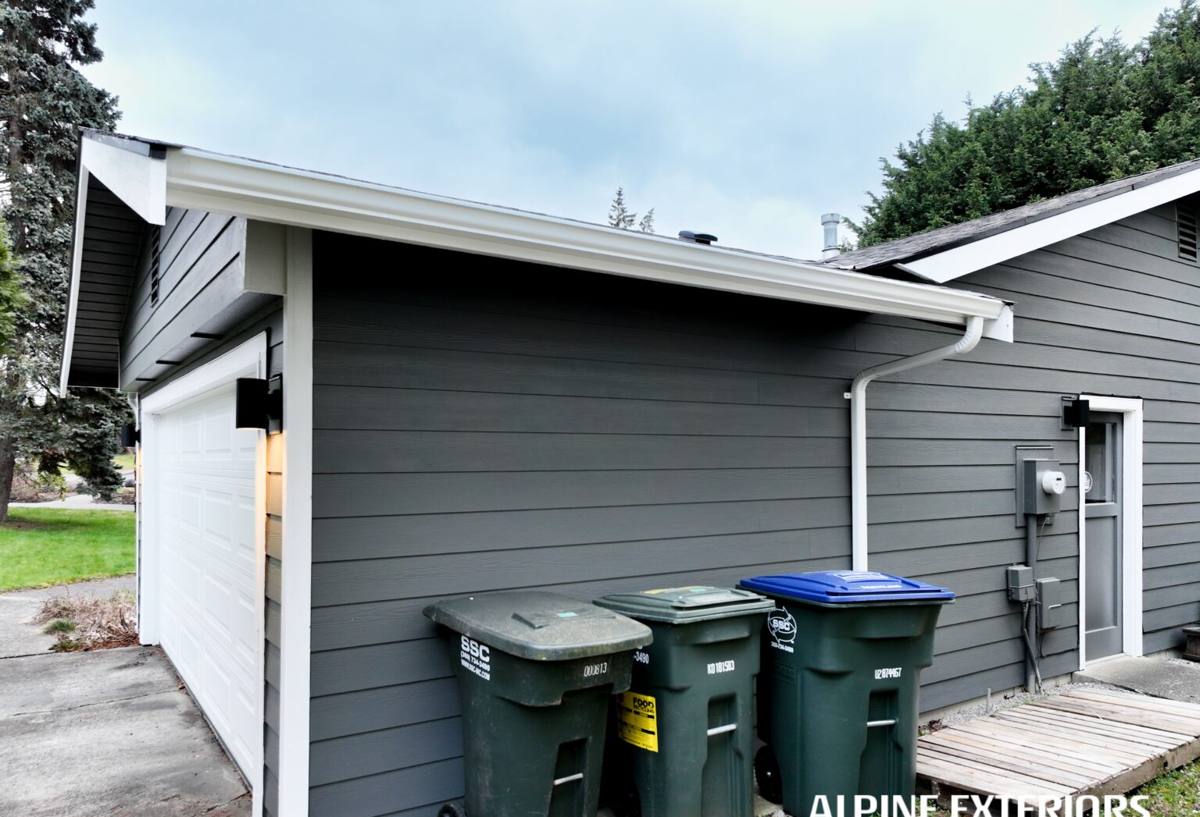
What Capitol Hill Homes Need From Their Siding
Homes in this neighborhood need cladding that does three things well: sheds water instead of absorbing it, resists the moss and mildew growth that comes with constant shade and moisture, and holds its finish without needing repainting every few years. Wood siding and many composite products struggle with at least one of these, especially on the older homes where the original siding has already taken decades of moisture cycling.
Fiber cement addresses all three. It's a cement-and-cellulose composite that doesn't swell, cup, or rot the way wood does, it doesn't feed moss and mildew the way wood fiber does, and when it comes factory-finished, the paint job isn't dependent on field conditions the day it's installed — which matters in a city where a dry week is never guaranteed.
Why We Only Install James Hardie
We install James Hardie fiber cement exclusively — not because it's the only fiber cement product on the market, but because Hardie engineers its siding by climate zone, and the Pacific Northwest falls under a formulation built for regions with heavy year-round moisture and freeze-thaw cycles. That's not marketing; it's a different mix design for a different climate problem than, say, a hot, dry region would need.
Hardie's ColorPlus finish is baked on at the factory under controlled conditions, not brushed or sprayed on-site. That matters here specifically, because field-applied finishes on any siding material are only as good as the weather on installation day, and a factory finish sidesteps that problem entirely. It also carries a longer, more consistent warranty against fading and wear than most site-applied paint jobs can offer.
Fiber cement is also non-combustible, which is a real, practical benefit in a neighborhood like Capitol Hill where houses sit close to their neighbors' property lines. It won't contribute fuel to a fire spreading from an adjacent structure the way wood siding can.
Choosing the Right Hardie Profile for This Neighborhood's Architecture
Capitol Hill's mix of home styles means one siding profile doesn't fit every house. Part of doing this job right is matching the product to the architecture instead of defaulting to whatever's easiest to install.
Lap Siding for Craftsman and Bungalow-Style Homes
Hardie Plank lap siding in a standard or wide exposure reads correctly on the Craftsman bungalows common in this part of Seattle, keeping the horizontal lines the style calls for while giving the house a clean, durable exterior that won't need attention for years.
Shingle Siding for Victorian and Detailed Facades
Older Victorian-influenced homes with decorative shingle patterns or varied trim details are better served by Hardie Shingle siding, which replicates that staggered or straight-edge shingle look without the maintenance burden of the wood shingles those homes originally had.
Trim and Accessories
Matching HardieTrim boards around windows, corners, and fascia keeps the whole exterior system consistent — same manufacturer, same finish process, same expected lifespan — instead of mixing fiber cement field siding with mismatched wood or composite trim that will age differently.
What a Correct Installation Actually Involves
Fiber cement is only as good as its installation. A rushed or incorrect install can trap moisture behind the siding, which defeats the entire point of switching to a rot-resistant material. This is where a lot of siding jobs go wrong, and it's the part homeowners can't easily judge just by looking at the finished wall.
Weather Barrier and Flashing First
Before any siding goes up, the wall needs a proper water-resistive barrier and correctly integrated flashing at every window, door, and roofline intersection. On Capitol Hill's older homes, this is also the point where we find out what condition the sheathing underneath is actually in — something that only shows up once the old siding comes off.
Fastening, Gapping, and Sealing
Hardie specifies fastener type, spacing, and penetration depth, and those specs exist for a reason — under-driven or over-driven nails are one of the most common causes of early siding failure. Panels also need the correct gap at joints and terminations, sealed with a compatible sealant, so the assembly can handle the wall's normal expansion and contraction without cracking or letting water in.
- Water-resistive barrier installed and lapped correctly before the first panel goes up
- Flashing integrated at every window, door, and roof-to-wall intersection
- Fasteners driven to manufacturer spec — not too shallow, not too deep
- Correct gaps maintained at butt joints and trim, sealed with compatible caulking
- Factory-cut edges primed or field-painted per Hardie's finishing requirements
- Clearance maintained between siding and grade, decks, and roofing to keep the bottom edge dry
Our Process on Capitol Hill Projects
We start with an on-site assessment, not a phone estimate — on a neighborhood with this many older homes, we want eyes on the current siding, the trim condition, and any visible signs of moisture damage before we quote anything. From there, tear-off exposes the sheathing so we can address any rot or damage before it gets covered up again, which is the only point in the whole job where that's possible.
Installation follows the sequence above: barrier, flashing, panels, trim, caulking, and touch-up painting at cut edges and fastener heads. We also plan around the realities of working in this neighborhood — narrow lots, tight setbacks, on-street parking, and close neighbors — so the job stays organized and doesn't turn into a disruption for the block. A final walkthrough covers the finished work before we consider the job done.
What We Often Find Behind Old Siding in This Neighborhood
Tearing off older siding on Capitol Hill homes turns up a fairly consistent set of problems, mostly tied to how long moisture has had to work on the wall assembly. Trapped moisture behind old wood or composite siding — often held in place by moss growth or failed caulk joints that were never resealed — is the most common finding, and it's frequently worse than what shows from the street. Sheathing softened by long-term water exposure, rotted trim at window sills and corners, and gaps where old flashing was never properly installed also turn up regularly, especially on homes that have had one or two prior siding jobs done without addressing the water management underneath.
None of this is unusual for a neighborhood with this much housing stock built before modern moisture-barrier practices were standard. It's exactly why the tear-off and prep stage matters as much as the siding itself — covering these issues back up with new siding doesn't fix them.
Cost Factors for a Capitol Hill Fiber Cement Project
Every house is different, so we don't quote off square footage alone. The factors below are what actually move the price on a typical Capitol Hill job.
| Factor | Why It Matters |
|---|---|
| Tear-off vs. overlay | Removing old siding costs more up front but is the only way to inspect and repair sheathing underneath |
| Sheathing or framing repair | Moisture damage found during tear-off adds cost, but skipping repairs undermines the new siding's lifespan |
| Home age and trim complexity | Victorian-era detailing and multiple trim profiles take more labor than a simple modern facade |
| Number of stories and roof lines | Taller homes and complex rooflines mean more flashing, staging, and cut work |
| Siding profile chosen | Shingle-style siding generally takes longer to install than standard lap siding |
| Lot access and setbacks | Narrow lots and tight side yards common on Capitol Hill can slow material staging and setup |
Why Hire a Crew That Already Works This Neighborhood
A crew that regularly works Capitol Hill and the rest of Seattle already knows how King County permitting for exterior work typically runs, how to plan around narrow streets and tight lot access without turning the job into a headache for neighbors, and what condition to expect under a given decade of siding based on the home's age. That familiarity shows up in fewer surprises mid-project and a smoother experience overall, compared to a crew learning the neighborhood's quirks on your job.
It also shows up in the finished product. Matching the right Hardie profile to a Craftsman bungalow versus a Victorian-detailed home isn't guesswork when you've installed both types across the same streets — it's knowing what actually looks right on this housing stock and holds up against this specific climate, year after year.
If you're weighing a siding project on your Capitol Hill home, we're happy to take a look and walk you through what we'd recommend — no pressure, no obligation. Use the form below to request a free estimate.