 Seattle Siding
 New-Construction Windows and Capitol Hill's Wet Climate
Capitol Hill sits close enough to Puget Sound and Lake Union that homes here take on a steady diet of salt-laced air, wind-driven rain, and long stretches of gray, damp weather. That combination doesn't just wear down paint and gutters — it works its way into wall assemblies through gaps most homeowners never see, until a window opening starts leaking two or three winters after it was installed. New-construction windows are the method built to prevent that from happening in the first place.
"New-construction" refers to how the window is set into the wall, not how old the house is. These units have a nailing fin around the perimeter and get installed into a framed, open rough opening — as part of a new build, an addition, an accessory dwelling unit (ADU), or a remodel where the wall is opened down to the sheathing. That's different from a replacement (retrofit) window, which gets inserted into an existing frame with the exterior trim left in place. Because Capitol Hill has a steady mix of century-old character homes and ongoing infill construction — additions, DADUs, and full-gut remodels driven by Seattle's push for more housing density — both approaches come up regularly in this neighborhood, and getting the right one matters.
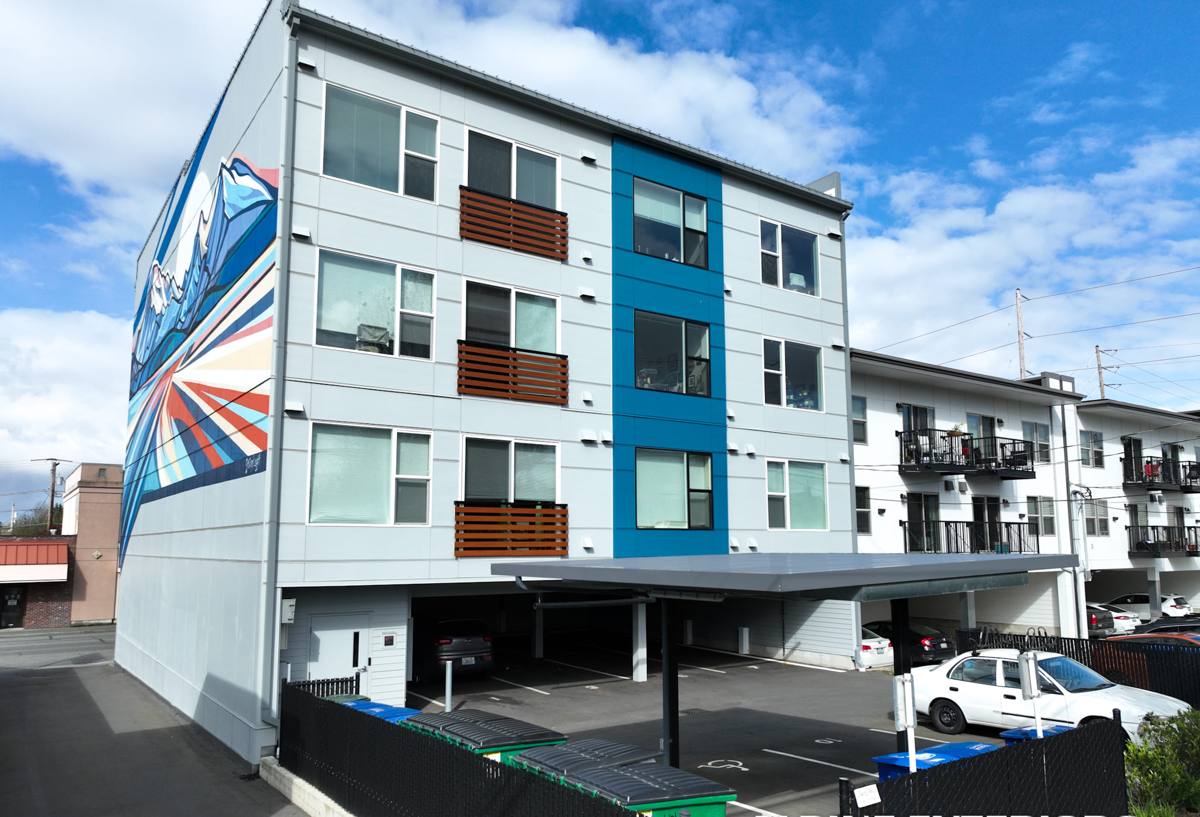
What Capitol Hill Homes Are Up Against
A few things about this part of King County make window work here less forgiving than in a drier climate:
- Driving rain: Storms off Puget Sound push rain sideways against west- and southwest-facing walls, not just straight down. Flashing details that would be fine in a dry climate can still let water in here.
- Salt air: Proximity to the Sound accelerates corrosion on cheap fasteners, hardware, and flashing metal, which is why material choice at the window opening isn't a minor detail.
- Long moss season: Roughly October through May, shaded and north-facing walls stay damp long enough for moss and algae to take hold, especially under Capitol Hill's mature tree canopy. Moss holds moisture against siding and trim, and if it's allowed to creep onto window casing it accelerates rot at exactly the joint that's hardest to inspect.
- Tight lots, less overhang protection: Many Capitol Hill homes and new infill builds sit close to their neighbors with modest roof overhangs, meaning walls and window openings get more direct weather exposure than a house with deep eaves.
None of this is unique to Capitol Hill within Seattle, but the density of older housing stock mixed with new construction means a contractor working here needs to be comfortable with both current code-driven flashing methods and the quirks of older wall assemblies that never had a proper weather-resistive barrier to begin with.
New-Construction vs. Replacement Windows
Homeowners sometimes assume these are interchangeable products with different price tags. They're not — they're two different installation systems, each suited to a different situation.
| Factor | New-Construction Windows | Replacement (Retrofit) Windows |
|---|---|---|
| Best used when | New builds, additions, ADUs, or remodels where the wall is open to the sheathing | Existing openings staying the same size, exterior trim remaining intact |
| How it attaches | Nailing fin fastens directly to the framed wall, sealed under the weather-resistive barrier | Frame inserts into the old window's existing frame |
| Moisture control | Full sill pan, jamb, and head flashing integrated with the house wrap — the most thorough option | Relies on the condition of the existing frame and flashing, which isn't always visible or original |
| Exterior appearance | Trim and siding are rebuilt around the new opening | Original trim and cladding stay as-is |
| Typical Capitol Hill scenario | New ADU, second-story addition, full re-side down to sheathing | Swapping old single-pane windows in a home that isn't otherwise being opened up |
If your project involves opening the wall for any reason — an addition, a gut remodel, a new ADU — new-construction windows are almost always the better long-term choice, because you only get one chance to flash that opening correctly before it's covered back up with siding.
What a Correct New-Construction Window Install Involves
The window itself is rarely where problems start. Leaks almost always trace back to how the opening was flashed and sequenced before the window ever went in.
Sill Pan and Sloped Drainage
Every opening should get a sill pan — a flashing membrane at the bottom of the rough opening, built or shaped so any water that gets past the window drains back outside instead of pooling on the sill and soaking into the framing. This is the single most common corner cut on rushed jobs, and it's the detail most likely to cause slow, hidden rot.
Weather-Resistive Barrier Integration
The house wrap or building paper has to be lapped correctly around the opening — like shingles, so water always sheds downward and outward, never into a seam. The window's nailing fin gets taped or flashed into this layer in a specific order: sill first, then jambs, then the fin, then the head flashing last, overlapping everything below it.
Nailing Fin Sealing and Head Flashing
The fin needs continuous contact and sealant or flashing tape at the right layers — not just a bead of caulk around the trim afterward. Head flashing (or a drip cap) over the top of the window directs driving rain around the opening rather than letting it run down behind the siding, which matters more in a climate where rain regularly comes in sideways.
Interior Air Sealing and Insulation
The exterior gets the most attention, but the interior side needs low-expansion foam or backer rod and sealant around the frame too. Skipping this creates a cold spot and a path for interior moisture to condense inside the wall cavity — a slower, quieter problem than a leak, but one that causes real damage over a few wet seasons.
A correctly installed new-construction window should include:
- A sloped sill pan flashing, not just a bead of sealant
- Weather-resistive barrier lapped shingle-style around the full opening
- Nailing fin fully sealed to the WRB on all four sides
- Head flashing or drip cap installed last, over everything below it
- Proper shimming and fastening per the manufacturer's installation instructions
- Low-expansion foam or backer rod and sealant on the interior side
- Photos taken before the opening is covered by siding, so the work is documented
Choosing Materials for a Marine Climate
Frame material matters more here than in a drier region, because the frame is dealing with sustained moisture and, closer to the water, salt-laden air.
| Cost Factor | How It Affects the Job |
|---|---|
| Frame material (vinyl, fiberglass, wood-clad) | Fiberglass and quality vinyl resist moisture and hold up well with low maintenance; wood-clad offers a traditional look but needs more upkeep on any exposed wood surfaces |
| Number and size of openings | More openings and larger units mean more flashing detail work, not just more window cost |
| Wall assembly complexity | Older homes without an existing WRB, or unusual siding types, take more time to integrate correctly |
| Access and site conditions | Narrow Capitol Hill lots, limited parking, and close neighboring structures can add setup and staging time |
| Glazing and performance package | Double-pane with Low-E coatings and good U-factor ratings cost more upfront but perform noticeably better against our damp, mild-but-persistent climate |
We don't push one brand or material on every job. The right call depends on your budget, the style of the house, and how much long-term maintenance you're willing to take on — a wood-clad window looks great but needs periodic attention on any exposed exterior wood, while a quality fiberglass or vinyl unit trades a bit of that traditional look for lower upkeep in a climate that doesn't give surfaces much time to dry out.
Our Process for Capitol Hill Projects
- Site visit and wall assessment. We look at the framing, existing wall assembly (if any exists), sun and rain exposure on each elevation, and how the window openings tie into the rest of the project.
- Product selection. We walk through frame material, glazing package, and sizing options based on your budget and the home's exposure.
- Sequencing with your project. On a new build or addition, we coordinate rough opening framing and timing with your general contractor or framer so windows go in at the right point in the build.
- Flashing and installation. Sill pan, WRB integration, nailing fin sealing, and head flashing, done in the correct order and per the manufacturer's instructions to keep the warranty intact.
- Siding integration. Trim and cladding get built back around the finished opening so the window reads as part of the wall, not an add-on.
- Final check and documentation. We inspect every opening and photograph the flashing details before they're covered, so there's a record of what's behind the siding.
Why Hiring a Crew That Already Works Capitol Hill Matters
New-construction window work isn't just a technical exercise — it's also a logistics and coordination job, and Capitol Hill has its own version of both challenges.
Lots here tend to be narrow, parking is limited, and many projects are additions, ADUs, or gut remodels happening alongside a general contractor's schedule rather than a standalone job. A crew that regularly works this neighborhood knows how to stage materials and equipment on a tight urban lot, coordinate scheduling with a GC's framing crew, and work efficiently around close-set neighboring structures. Some Capitol Hill blocks also fall within Seattle's historic districts, which can affect what's allowed on street-facing elevations — worth checking early, before window selection, not after ordering.
Older homes in this neighborhood also come with wall assemblies that don't always match current standards — balloon framing, no existing weather-resistive barrier, or trim details that need to be matched rather than replaced wholesale. A crew that's done this work across many Capitol Hill homes has already seen most of these variations and knows how to adapt the flashing sequence without cutting corners, rather than treating every house like a brand-new build with a clean, code-standard wall.
Caring for New Windows Through Seattle's Wet Season
A correctly installed new-construction window shouldn't need much attention, but a little seasonal care extends its life in this climate:
- Rinse pollen, dirt, and early moss growth off sills and sashes a couple of times a year, especially on shaded elevations
- Check exterior sealant joints annually, ideally before the fall rains start, and have any cracked or shrunken sealant redone
- Keep gutters and downspouts clear so overflow doesn't run down across window heads and trim
- Trim back branches and vegetation that shade walls and trap moisture against siding and casing
- Watch for condensation or fogging between panes or on interior frames — an early sign a seal needs attention, not something to ignore through another wet season
If you're planning an addition, a new ADU, or a remodel that will open up exterior walls anywhere in Capitol Hill, we're happy to take a look and talk through what the window openings will need for this climate. Reach out for a free, no-pressure estimate using the form below.