 Seattle Siding
 Roof Repair in Columbia City: Built for Seattle's Weather, Not Just Any Weather
Columbia City sits inside one of the wettest, mossiest climates in the continental United States, and the roof over your head takes the brunt of it. Between the long fall-to-spring rain season, the humid marine air that rolls in off Puget Sound, and the shade from mature trees that keeps roof surfaces damp long after a storm passes, King County roofs age differently than roofs almost anywhere else in the country. A repair that would hold up fine in a dry climate can fail here in a single wet season if it isn't done with this specific weather in mind.
We repair roofs in Columbia City on a regular basis, and the failures we see are rarely random. They follow patterns tied directly to how this neighborhood's housing stock and climate interact: aging flashing that was never sealed for this much standing moisture, moss colonies that hold water against shingles for months at a time, and gutters that back up during heavy rain events and send water under the roofline instead of off of it. A correct repair addresses the actual cause, not just the visible symptom.
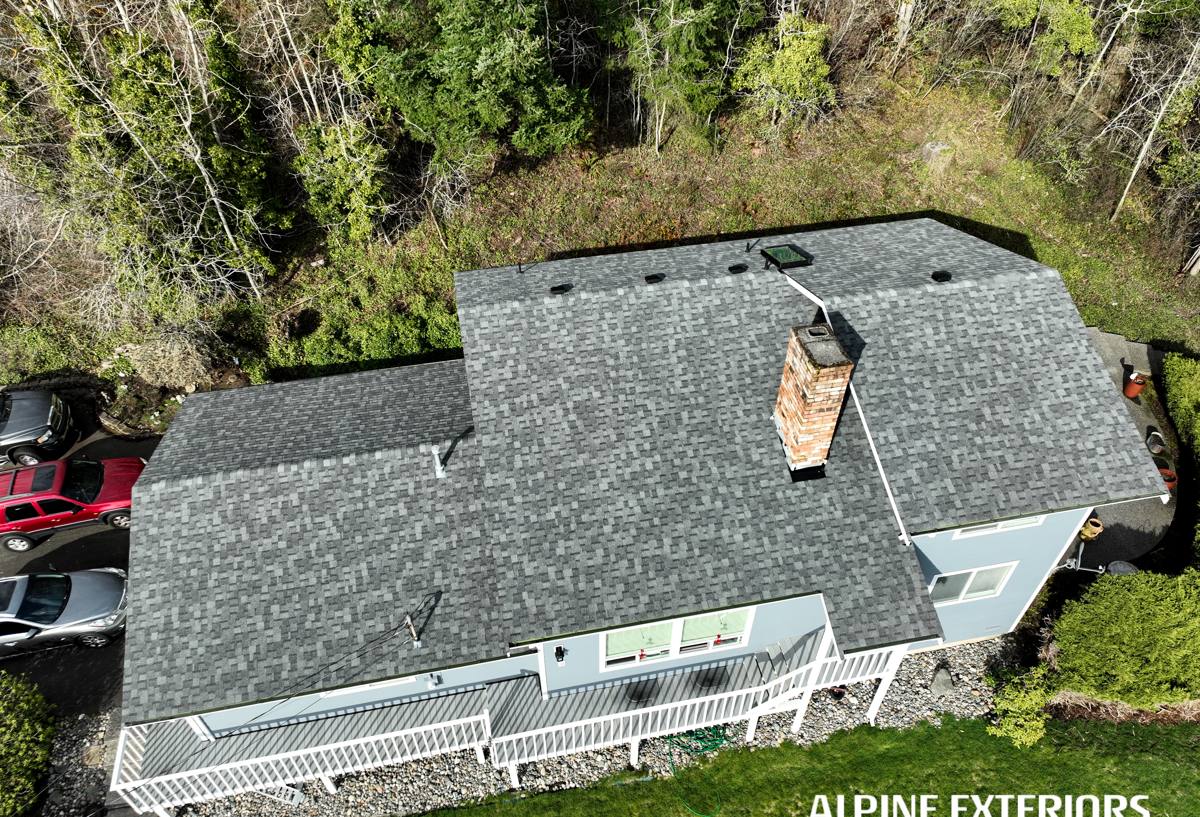
Signs a Columbia City Roof Needs Repair
Most roof problems don't announce themselves with a dramatic leak. They show up as small, easy-to-ignore signs first. If you catch them early, a repair is usually a modest, contained job. If you wait, water finds its way into decking, insulation, and framing, and the job gets bigger and more expensive.
- Dark streaking, green or black moss growth, or a spongy feel when you walk on any accessible section of roof
- Shingles that are cracked, curling at the edges, or missing entirely after a windstorm
- Water stains on interior ceilings or upper-floor walls, especially near chimneys, skylights, or where two roof planes meet
- Sagging or uneven rooflines, which can indicate saturated or rotting decking underneath
- Granules from asphalt shingles collecting in gutters or at the base of downspouts
- Daylight visible through the roof deck from inside an attic or crawlspace
- Moss buildup that never fully dries out, even during summer breaks in the rain
If you see more than one of these at once, it's worth having someone look at the whole roof system rather than just the spot that's bothering you, since moisture problems in this climate rarely stay isolated.
What Makes Roof Repair Different in a Climate Like This
Moss Is a Structural Problem, Not Just a Cosmetic One
Moss doesn't just look bad. It holds water against the roof surface long after rain stops, which keeps shingles wet for days at a time and accelerates granule loss, wood rot, and fastener corrosion. In a neighborhood with as much shade and moisture as Columbia City, moss isn't an occasional nuisance, it's a recurring maintenance item. A repair that doesn't include moss removal and treatment on the surrounding area is usually a short-term fix.
Salt-Tinged Marine Air Shortens the Life of Metal Components
Seattle's marine climate carries a mix of moisture and salt-tinged air off the Sound, and that combination is hard on exposed metal: flashing, fasteners, gutter hardware, and vent caps corrode faster here than they would inland. When we repair flashing or replace fasteners, we use materials rated for this kind of exposure rather than whatever is cheapest, because the wrong metal in the wrong spot is often the reason a "repaired" leak comes back within a year or two.
Driving Rain Finds Weak Points, Not Just Open Holes
Wind-driven rain doesn't just fall straight down, it gets pushed sideways and upward under shingle edges, around chimneys, and into valleys. A repair has to account for that, which is why proper flashing, underlayment overlap, and sealant placement matter more here than in drier regions where a simple patch might hold.
What a Correct Roof Repair Actually Involves
A roof repair done right is more than swapping out a few damaged shingles. Here's what we check and address on every repair call in Columbia City:
- Diagnosis of the actual water path, not just the spot where the stain appeared, since water often travels along decking before it shows up inside
- Decking condition underneath the damaged area, checked for soft spots, rot, or delamination before any new material goes down
- Flashing at all transitions, including chimneys, skylights, vent pipes, and roof valleys, since flashing failure is one of the most common causes of repeat leaks
- Underlayment in the repaired section, matched to what's already on the roof or upgraded where the existing material has failed
- Moss and debris removal from the surrounding area so the new work isn't undermined by the same conditions that caused the original damage
- Matching materials as closely as possible in color, profile, and weight so the repair doesn't stand out or create an uneven wear pattern
Skipping any of these steps is how a "quick fix" turns into a callback six months later.
Repair or Replace? How We Help You Decide
Not every roof problem needs a full replacement, and not every roof is a good candidate for another round of patching. The right call depends on the roof's age, how much of it is affected, and what's happening underneath the surface.
| Factor | Leans Toward Repair | Leans Toward Replacement |
|---|---|---|
| Roof age | Under 15-20 years, depending on material | Near or past the material's expected service life |
| Extent of damage | Isolated to one section or feature | Spread across multiple slopes or recurring in several spots |
| Decking condition | Solid, no soft spots found | Rot or delamination found during inspection |
| History of repairs | First or second repair on this roof | Third or more repair in the same general area |
| Moss/algae staining | Surface growth only | Growth has caused visible granule loss or shingle lift |
We'll walk you through where your roof falls on this scale honestly, including telling you when a repair is the smarter financial move even if a replacement would be the easier sale for us.
Our Roof Repair Process
- Inspection. We look at the reported problem area and the roof as a whole, including attic access where available, to understand both the symptom and the cause.
- Written scope and estimate. You get a clear explanation of what's wrong, what we recommend, and what it costs before any work starts.
- Site protection. We protect landscaping, gutters, and walkways before work begins, which matters on the tighter lots common in this part of Seattle.
- Repair work. Damaged materials come out, decking is checked and repaired if needed, and new materials go in matched to your existing roof.
- Cleanup and debris removal. We clear the site of old materials, nails, and debris, including a magnetic sweep where shingles or metal roofing were involved.
- Final walk-through. We show you the completed work and explain what was done and why, so you're not left guessing.
Materials We Use, and What We Steer Away From
For repairs on asphalt shingle roofs, which make up most of the housing stock in this part of Seattle, we match existing shingles as closely as possible and use self-adhering ice-and-water membrane at vulnerable points like valleys, eaves, and flashing transitions, even if the original roof didn't have it. For metal flashing and fasteners, we use materials rated for coastal and marine exposure rather than standard-grade hardware, since the cost difference is small compared to the cost of redoing a repair that failed early.
There are a few things we generally avoid as a matter of professional standard, not because a product is inherently bad, but because of how it tends to perform in this specific climate over time:
- Roofing over an existing layer without removing it. It hides decking problems instead of solving them, which is a bad trade-off in a climate this wet.
- Caulk or roof cement as a stand-alone fix for flashing failures. It can buy a little time, but it isn't a repair, and it tends to fail faster in a climate with this much sustained moisture and temperature swing.
- Staple-only fastening on shingle repairs. Proper nailing patterns hold up far better against the region's wind-driven rain events than staples do.
These aren't dramatic differences on a sunny day. They're the difference between a repair that lasts through several wet seasons and one that needs to be redone.
Why It Matters to Hire a Crew That Already Works in Columbia City
Roofing conditions vary block by block in Seattle depending on tree cover, elevation, and how exposed a home is to weather off the Sound. A crew that regularly works this neighborhood already has a feel for which roofs tend to hold moss the longest, which older homes commonly need flashing upgrades during a repair, and how local permitting and inspection expectations apply to roofing work in King County. That familiarity shortens the diagnosis phase and reduces the chance of a repair that misses something a first-time visitor to the area wouldn't think to check.
It also matters for scheduling. Roof repairs in this region are weather-dependent, and a crew that already knows the rhythm of Seattle's rain patterns can plan repair work around realistic dry windows instead of promising a timeline that gets pushed back repeatedly.
What Roof Repair Typically Costs
Every roof and every repair is different, but the factors below are what actually drive the price up or down on most jobs we look at in this area.
| Cost Factor | Why It Matters |
|---|---|
| Size of the affected area | A single section costs less than repairs spread across multiple slopes |
| Roof pitch and accessibility | Steep or hard-to-access roofs take longer and require more safety setup |
| Decking condition | Rotted decking found during the repair adds material and labor to replace it |
| Material match | Discontinued or specialty shingles can cost more to source than standard product |
| Number of penetrations | Chimneys, skylights, and multiple vent pipes each add flashing work |
As a general range, small, isolated repairs are a modest expense, while repairs involving flashing replacement, decking repair, or multiple roof sections cost more. We give you a firm number in writing after inspecting the actual roof, not a rough guess over the phone.
If you're noticing moss buildup, a stain on a ceiling, or damage after a storm, we're glad to come take a look. We offer free, no-pressure estimates for roof repair in Columbia City and the surrounding Seattle area, use the form below to get started.