 Seattle Siding
 Siding Installation Built for Columbia City's Climate
Columbia City sits inland from Puget Sound, but the Sound's influence still reaches this Rainier Valley neighborhood. Salt-tinged marine air rolls in with the marine layer, mixes with King County's long wet season, and settles under the mature tree canopy that shades so many of the area's streets. That combination — moisture, shade, and salt-carrying air — is exactly the environment that wears out the wrong siding material fast and turns a mediocre installation into a maintenance headache within a few years.
Siding installation here isn't just about picking a product homeowners like the look of. It's about choosing a material and installation method that can shrug off driving rain, resist moss and mildew growth, and hold its finish without cracking, warping, or absorbing water over a Pacific Northwest winter. That's the lens we bring to every Columbia City project.
Driving Rain and Wind-Driven Moisture
Seattle rain rarely falls straight down. Wind off the Sound pushes it sideways into wall assemblies, which means siding has to do more than shed water on a vertical face — it has to resist water being driven horizontally into seams, joints, and fastener penetrations. Materials and installation details that work fine in drier climates often fail here specifically because they weren't engineered for wind-driven rain.
A Long Moss Season
Between the shade, the humidity, and the mild temperatures, King County's moss season runs long — often close to year-round on north-facing and shaded walls. Moss and algae don't just look bad; they hold moisture against the siding surface, which accelerates rot in wood products and can degrade the finish on lower-grade materials. Siding that can't handle sustained dampness is siding that will need repainting, patching, or early replacement.
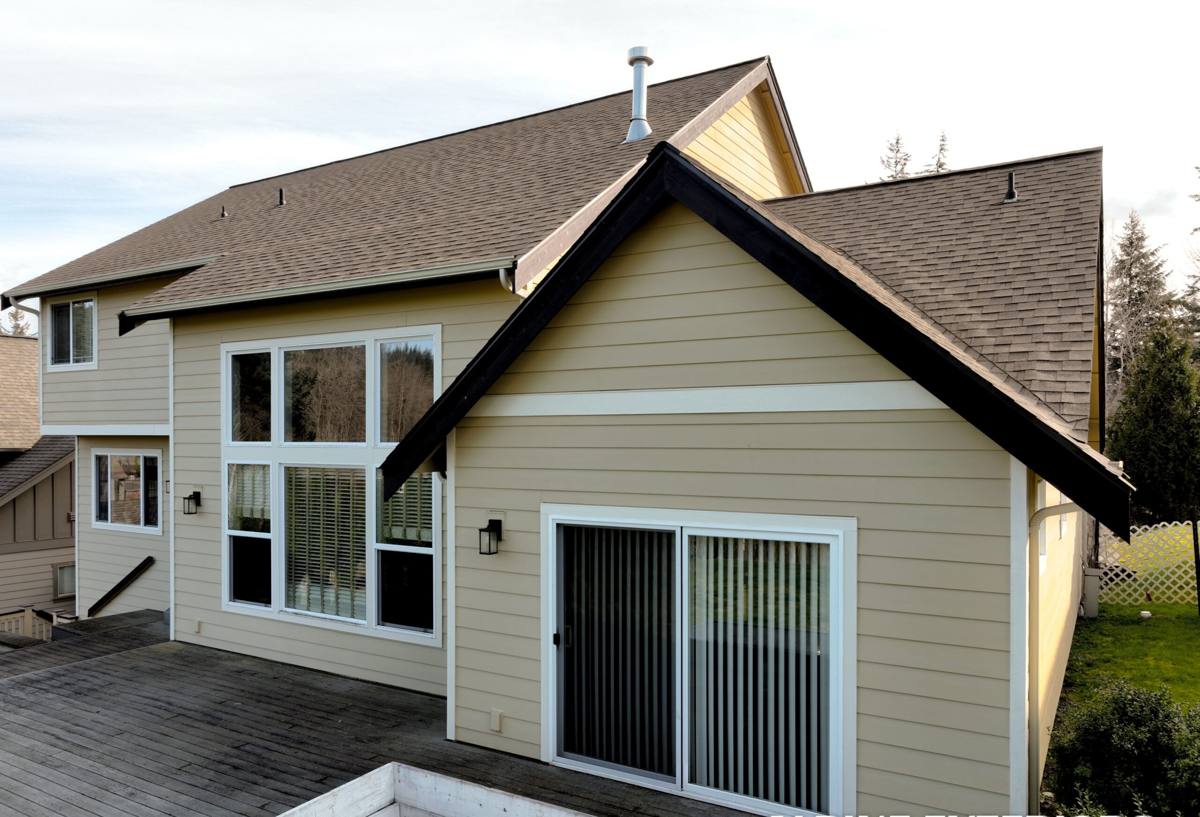
What a Correct Siding Installation Actually Involves
A siding job that looks right on install day but fails in three to five years almost always traces back to shortcuts in the parts homeowners can't see once the siding is up. In a climate like Columbia City's, these details aren't optional extras — they're the difference between siding that lasts decades and siding that needs rework.
- A continuous, properly lapped weather-resistive barrier behind the siding, with every penetration (vents, pipes, fixtures) correctly flashed and sealed
- A drainage plane or rainscreen gap that lets any moisture that gets behind the siding drain and dry out instead of sitting against the sheathing
- Correct flashing at every horizontal transition — window and door heads, trim boards, roof-to-wall intersections — so water is directed out, not into the wall
- Manufacturer-specified fastener type, spacing, and placement, since undersized or misplaced fasteners are a leading cause of siding failure
- Proper clearance between the bottom of the siding and grade, decks, or roofing to keep splash-back and standing water away from the material
- Caulking and sealant only where the manufacturer calls for it — over-sealing traps moisture just as badly as under-sealing lets it in
Skip any one of these and the siding itself becomes almost irrelevant — water will find its way in behind even the best material if the assembly underneath it is wrong.
Why We Only Install James Hardie Fiber Cement
We install James Hardie fiber cement siding exclusively, and Columbia City's climate is a big part of why. Fiber cement is a cement, sand, and cellulose fiber composite — it doesn't absorb and swell with moisture the way wood does, and it doesn't expand and contract with temperature swings the way vinyl does. Under a marine layer that keeps humidity elevated for months at a time, that stability matters more than it does in drier regions.
James Hardie's HZ5 product line is engineered specifically for climate zones like ours, with a formulation and finish designed to resist moisture intrusion and hold up under sustained damp conditions rather than just occasional rain. The factory-applied ColorPlus finish is baked on under controlled conditions and backed by its own finish warranty, which means the color coat isn't fighting the same battle against moss staining and UV fade that a field-applied paint job on wood siding is fighting every year.
Fiber cement is also non-combustible, which matters increasingly in the Pacific Northwest as wildfire smoke seasons stretch later into the year and ember exposure becomes a real consideration even in urban neighborhoods. It's not something we lead with for every homeowner, but it's a genuine, material difference between Hardie and combustible siding options.
What We Don't Install, and Why
We don't install vinyl, LP SmartSide, Cemplank, Allura, or primed wood siding, and we're upfront about why. Vinyl expands and contracts with temperature and can crack or warp over time; it's also difficult to repair invisibly and doesn't hold paint if a homeowner ever wants to change the color. Engineered wood products like LP SmartSide perform reasonably well when installed and maintained precisely, but they're still wood-based and more sensitive to sustained moisture exposure than fiber cement — a real liability given how long our wet season runs. Primed spruce and cedar require the most ongoing maintenance of any option and are the most vulnerable to the rot and moss issues this climate produces. We'd rather install one product exceptionally well than stretch our crews across five products we can't fully stand behind in this climate.
Our Columbia City Installation Process
- On-site evaluation. We walk the property, check the current siding and sheathing condition, and note drainage, grading, and shade patterns that affect moisture exposure on each wall.
- Removal and inspection. Old siding comes off and we inspect the sheathing and framing underneath for hidden rot or water damage before anything new goes up — this is often where problems from a prior installation surface.
- Weather barrier and drainage plane. We install a continuous weather-resistive barrier and drainage gap system suited to the wall assembly, correctly lapped and sealed at every seam and penetration.
- Flashing. Every window, door, and horizontal trim transition gets flashed to direct water outward, following James Hardie's published installation details.
- Siding installation. Panels or planks go up using manufacturer-specified fasteners and spacing, with attention to clearances at grade, decks, and roof lines.
- Trim, caulking, and final inspection. Trim work is completed, sealant is applied only where specified, and we walk the finished job against Hardie's installation checklist before calling it done.
Comparing Siding Materials for a Columbia City Home
| Factor | James Hardie Fiber Cement | Vinyl | Wood / Engineered Wood |
|---|---|---|---|
| Moisture resistance in wet climate | Strong — engineered for damp regions | Doesn't rot, but water can trap behind panels | Vulnerable without diligent maintenance |
| Moss and algae resistance | Finish resists staining well | Moderate; can discolor over time | Poor without frequent cleaning/treatment |
| Combustibility | Non-combustible | Combustible, can melt/warp near heat | Combustible |
| Finish longevity | Factory-baked, long warranty | Can fade, not repaintable to same finish | Requires repainting/staining cycles |
| Typical maintenance | Periodic washing, minimal upkeep | Low, but repairs are visible | Regular painting, sealing, spot repair |
Cost Factors for Siding Installation
Every Columbia City home is different, so we don't quote pricing sight unseen — but the same handful of factors drive most of the cost variation we see on projects in this neighborhood.
| Factor | Why It Affects Cost |
|---|---|
| Home size and wall complexity | More square footage and more corners, dormers, or gables mean more material and labor |
| Existing siding removal | Tear-off and disposal add time, especially with multiple layers of old siding |
| Sheathing or framing repair | Hidden rot found during removal has to be repaired before new siding goes on |
| Trim and detail work | Window casings, corner boards, and fascia detailing add labor beyond flat wall panels |
| Access and site conditions | Narrow lots, slopes, and mature landscaping common in older Columbia City blocks can affect staging and access |
Maintaining Siding in a Moss-Prone, Salt-Air Climate
Fiber cement is low-maintenance compared to wood or vinyl, but "low-maintenance" doesn't mean "no maintenance" in a climate like this one. A short annual routine keeps siding performing the way it's designed to over the long run.
- Rinse siding annually with a garden hose or low-pressure wash to remove pollen, dust, and early moss growth, especially on shaded and north-facing walls
- Check and clear gutters and downspouts each fall so water isn't overflowing directly onto siding during heavy rain events
- Trim back shrubs and tree limbs that hold moisture against the wall or block airflow across the siding surface
- Inspect caulking around windows, doors, and trim once a year and have any cracked or missing sealant addressed promptly
- Watch for soft spots, staining, or bubbling paint on trim boards, which can signal a flashing or drainage issue worth investigating early
Why a Crew That Already Works Columbia City Makes a Difference
Siding installation details that work in Eastern Washington or the Southwest can be the wrong call here. A crew that installs siding across a range of climates without adjusting for ours may follow generic manufacturer minimums instead of the details that actually matter under King County's rain load and moss pressure. A crew that works Columbia City and the greater Seattle area regularly has already seen what fails in this climate — which flashing details actually keep water out, which drainage approaches hold up through a full wet season, and which shortcuts show up as callbacks two or three years later.
That local pattern recognition doesn't replace following the manufacturer's installation specs — it's what makes sure those specs get applied correctly to the wall assemblies, roof lines, and moisture exposures actually found on homes in this neighborhood.
Get a Free Estimate for Your Columbia City Home
If your siding is showing moss staining, soft spots, or peeling paint, or if you're planning ahead for a replacement, we're happy to take a look and walk you through what correct James Hardie installation would involve for your specific home. There's no pressure and no obligation — just a straightforward assessment from a crew that installs this product, and only this product, throughout the Seattle area. Use the form below to request a free estimate.