 Seattle Siding
 Columbia City's Housing Stock and What Good Window Installation Requires
Columbia City is one of Seattle's older residential pockets, with a housing mix that runs from early-1900s craftsman bungalows to mid-century infill and newer construction squeezed onto smaller lots. That mix matters for window work. An older bungalow usually has original wood-frame openings that have been reworked, painted over, or partially repaired more than once over the decades. A newer build may have vinyl or fiberglass units that are only a decade or two old but were installed to a builder-grade minimum rather than a long-term standard. Neither situation calls for a one-size-fits-all approach. Getting window installation right in this neighborhood means reading the specific opening — its framing, its flashing history, its exposure to weather — before recommending a product or a method.
This page is about window installation specifically, in Columbia City specifically. It's not a general "why replace your windows" pitch. It's what actually needs to happen at the opening, in this climate, on this kind of housing stock, so the work holds up.
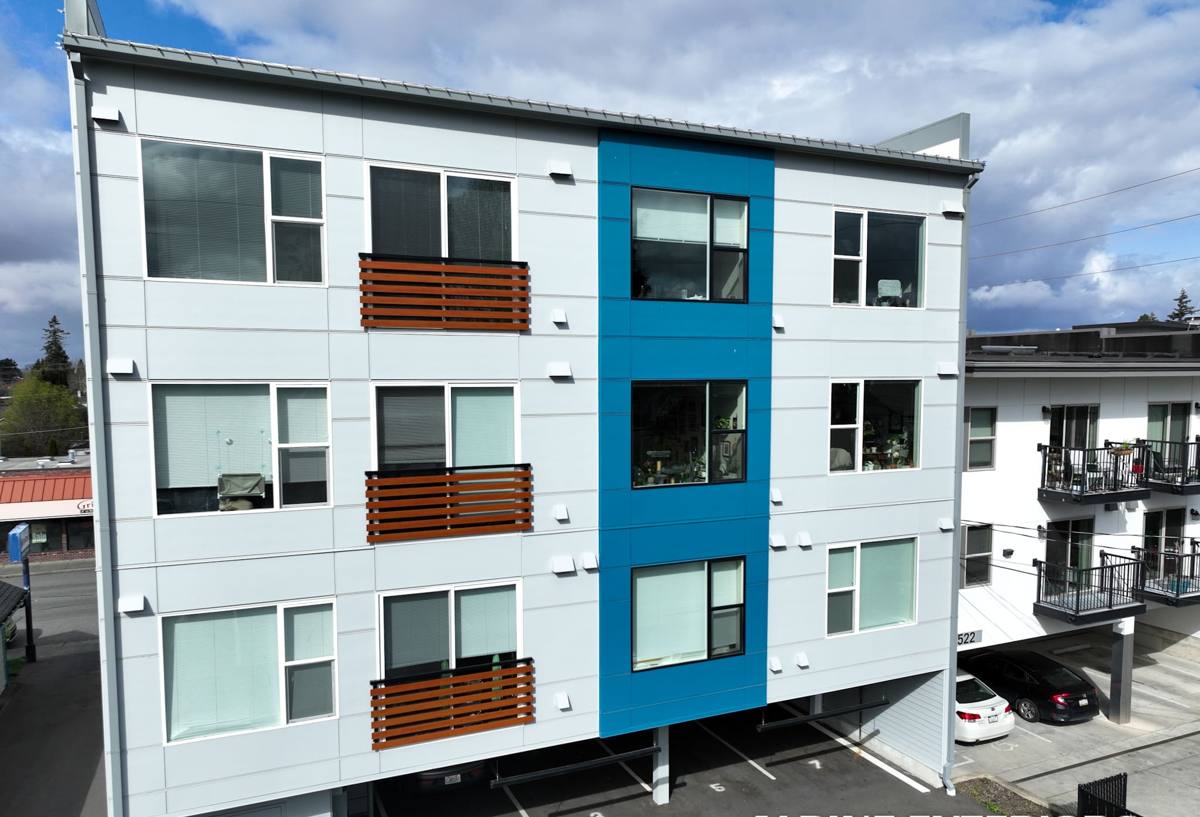
How Seattle's Climate Actually Wears Down a Window Opening
Window failure in this region rarely starts with the glass. It starts at the edges — the flashing, the sealant joints, the sill — where water and moving air find their way in. Seattle and greater King County put a few specific stresses on that perimeter.
Driving Rain
Pacific storms here don't just fall straight down; wind pushes rain sideways into wall assemblies, especially on west- and southwest-facing elevations. A window that was installed with minimal flashing or a bead of caulk instead of a proper drainage plane will eventually let that wind-driven water past the frame and into the wall cavity, where it can sit unnoticed for a long time before it shows up as soft trim or a stain on an interior sill.
Marine Air
Being close to Puget Sound means the air carries more moisture and salt than an inland climate does, even away from the immediate waterfront. That moist, mildly corrosive air accelerates fastener corrosion, breaks down cheap sealants faster, and keeps wood trim damp for longer stretches between dry spells — all things that shorten the useful life of a window installation that wasn't detailed with this climate in mind.
Moss Season
Seattle's long wet season, roughly fall through spring, is also moss and algae season. Moss doesn't just grow on roofs — it takes hold on window sills, in trim profiles, and in any spot where water sits instead of draining. Left alone, it holds moisture against wood and paint far longer than open air would, which is exactly the condition that leads to rot around a window frame.
Signs a Columbia City Window Needs Attention or Replacement
Homeowners usually notice one of these first, and any of them is worth a look before it becomes a bigger repair:
- Visible gaps, soft spots, or peeling paint at the sill or the bottom corners of the frame
- Moss or dark staining building up on the exterior sill or trim year over year
- Noticeable drafts or a cold spot near the window in winter
- Condensation forming between the panes (a sign the seal on a double-pane unit has failed)
- Windows that are hard to open, close, or lock, especially older wood double-hungs
- A noticeable rise in heating costs with no other explanation
Any one of these can be a minor fix. Several at once, especially on a home with original wood windows, usually means it's time to weigh repair against full replacement.
What a Correct Window Installation Actually Involves
The window unit itself is only part of the job. The install detailing around it is what determines whether the window performs for 20+ years or starts failing in five.
Flashing and Weather Barrier Integration
The opening needs a proper flashing sequence — sill pan, jamb flashing, and head flashing — integrated with the home's existing weather-resistive barrier, not just caulked over the top of it. This is the single most important detail for a climate with as much driving rain as Seattle's. A window can be expensive and well-made and still leak if the flashing behind it is done wrong.
Air Sealing and Insulation
The gap between the window frame and the rough opening needs to be sealed and insulated correctly — not overpacked with rigid foam, which can bow the frame, and not left loose, which leaves a path for drafts and moisture-laden air. Low-expansion foam or backer rod and sealant, applied correctly, keeps the unit performing the way it's rated to.
Sill Slope and Drainage
Exterior sills need a slight outward slope so water sheds away from the home instead of pooling against the glass or trim. On older Columbia City homes with settled framing, this sometimes means correcting an opening that's shifted out of level before the new window ever goes in.
Trim and Weatherproofing at the Exterior Face
Whatever trim or cladding meets the window — wood, fiber cement, vinyl — needs to be re-integrated with proper sealant joints and, where it's exposed to weather, back-primed or capped so moss and moisture don't have a place to take hold right at the edge of the frame.
Choosing a Window Material for This Climate
There's no single "best" window material — the right choice depends on the home's age, its exposure, and how much upkeep the owner wants to take on. Here's the honest trade-off breakdown for what we see most often in this area.
| Material | Moisture Resistance | Maintenance | Typical Lifespan | Best Fit |
|---|---|---|---|---|
| Vinyl | Good, won't rot | Low | 20–30 years | Budget-conscious replacements, rental properties |
| Fiberglass | Very good, stable in temperature swings | Low | 30–40+ years | Long-term owners wanting minimal upkeep |
| Wood (factory clad exterior) | Good if the exterior cladding is intact | Moderate | 25–35 years | Craftsman and period homes where interior wood look matters |
| All-wood, site-finished | Depends entirely on maintenance | High | Varies widely | Historic accuracy projects with an owner committed to upkeep |
We don't push all-wood, site-finished windows on homes where the owner isn't planning to keep up with regular repainting and sealant checks — not because the material is bad, but because in a climate with this much rain and this long a wet season, an unmaintained wood window will fail at the joints faster than the owner expects. We'll always tell you that trade-off plainly rather than let you find out the hard way.
Our Installation Process
- On-site assessment. We look at each opening individually — framing condition, existing flashing, signs of past water intrusion — rather than quoting off a photo or a floor plan.
- Honest scope and options. We tell you which openings are straightforward replacements and which ones need extra flashing or framing repair first, with pricing that reflects the real scope, not a lowball number that grows once work starts.
- Removal and opening prep. Old units come out carefully to protect interior finishes and siding; the opening gets inspected and repaired if there's rot or damaged sheathing underneath.
- Flashing and weather barrier tie-in. Sill pan, jamb, and head flashing go in and integrate with the existing barrier before the new window is set.
- Setting, shimming, and sealing. The unit is leveled, shimmed, insulated, and sealed to spec — not just screwed in and caulked.
- Exterior trim and finish work. Trim is reinstalled or replaced and sealed at every joint that faces the weather.
- Final check. Operation, locks, and seals are tested before we call the job done.
Why It Matters That We Already Work in Columbia City
A crew that already does work in this part of Seattle has seen this neighborhood's housing stock repeatedly — the settled framing in older bungalows, the way certain exposures take the brunt of driving rain, how quickly an unsealed sill grows moss in a wet winter. That's not a marketing point, it's a practical one: it means fewer surprises once an opening is actually cut open, and a more accurate estimate the first time, instead of a change order halfway through the job.
It also means we're not guessing at code or permitting expectations for the City of Seattle and King County. Window replacement generally doesn't require the same level of permitting as a structural change, but if a job involves resizing an opening, egress requirements for a bedroom window, or work on a home with any historic designation, that's something we flag up front rather than after the fact.
Questions Worth Asking Before You Hire Anyone
- Will you show me the flashing detail you plan to use at the sill and head, not just the window brand?
- What happens if you open up my wall and find rot or water damage — is that a change order or is it already priced in as a possibility?
- Are you licensed and insured to do exterior work in Seattle, and can I see proof?
- What's the warranty on the installation labor, separate from the manufacturer's warranty on the window itself?
- Will the same crew that gives the estimate be the crew doing the install?
- How do you handle disposal of old windows, especially if they're original wood units?
If a contractor can't answer the flashing and moisture questions specifically, that's worth noticing — it's usually a sign the installation detailing is an afterthought rather than the main event.
Keeping New Windows Performing After Installation
A correctly installed window still benefits from basic upkeep in this climate. Clear moss and debris off exterior sills a couple of times during the wet season so water doesn't sit against the frame. Check exterior caulk joints once a year, since UV and constant damp cycles break sealant down faster here than in a drier climate. Wipe down interior condensation promptly in cold snaps so it doesn't sit on the sill or sash. None of this is heavy maintenance — it's the difference between a window that looks and performs well at year 15 and one that starts showing wear at year 6.
If you're weighing a repair against full replacement, or just want a straight answer on what your Columbia City home's windows actually need, we're glad to take a look. Estimates are free, there's no pressure to move forward, and you'll get a clear breakdown of what we'd actually recommend and why — use the form below to get started.