 Seattle Siding
 Building Decks for Renton's Real Weather, Not a Showroom Climate
Renton sits low along the Cedar River and the south end of Lake Washington, which means moisture doesn't just fall here — it lingers. Homes in this part of King County deal with a long wet season, heavy driving rain off the water, and enough humidity most of the year to keep moss and algae in business on any surface that stays shaded or damp. A deck built with generic, one-size-fits-all methods might look fine the day it's finished and still cause problems two winters later once water finds its way into a ledger board or a joist that was never properly protected.
A deck that's actually built for this area starts with the assumption that it will get rained on for months at a stretch, that moss will try to grow wherever it can, and that salt-laden air moving inland off Puget Sound will slowly work on any exposed metal fastener that isn't rated for it. None of that is exotic — it's just what Renton weather does, year after year. Building around it from day one is the difference between a deck that needs real repairs by year eight and one that's still solid at year twenty-five.
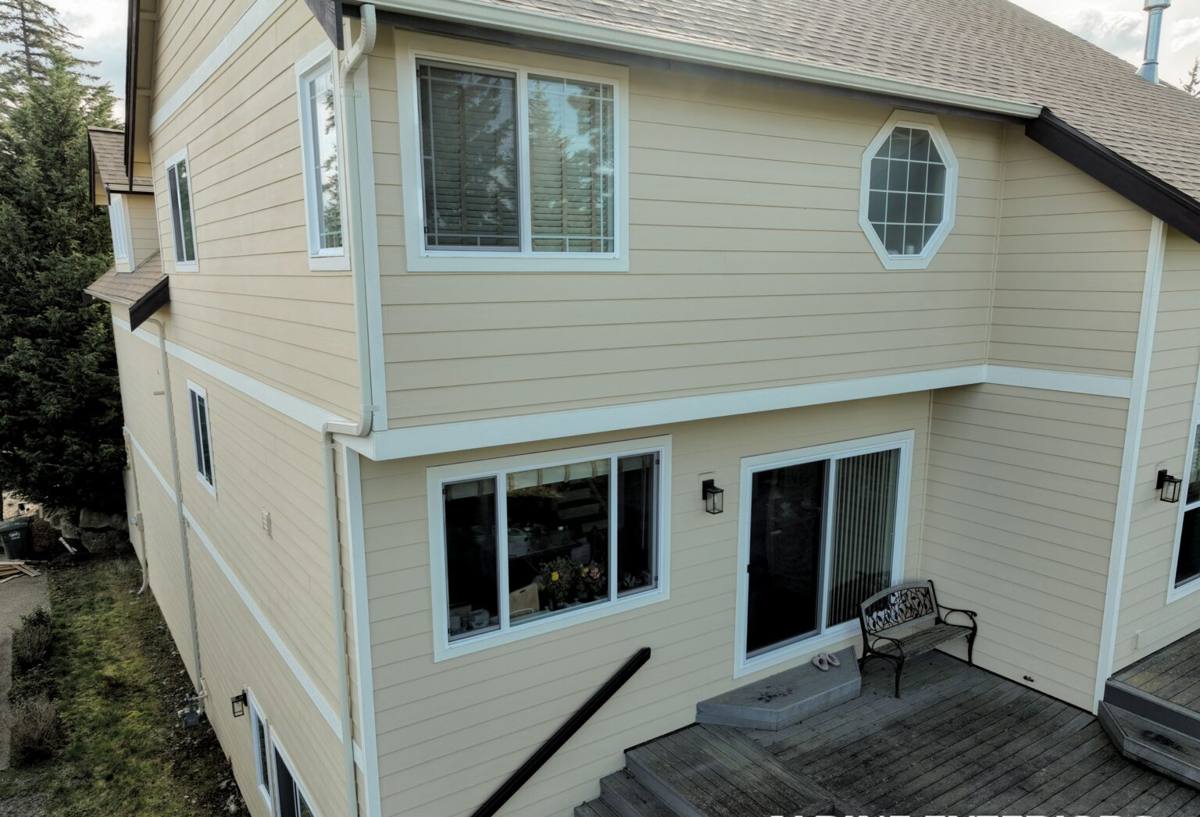
What Renton's Climate Actually Does to a Deck
It helps to be specific about the failure points we see most often on older or poorly built decks in this area:
- Ledger board rot — where the deck attaches to the house is the single most common point of hidden water intrusion if flashing wasn't installed correctly.
- Moss and algae buildup — shaded decks under tree cover or on the north side of a house hold moisture longer, and moss on decking boards gets slick and dangerous underfoot.
- Corroded fasteners — screws and joist hardware that aren't rated for coastal/wet exposure can rust and weaken over years of damp cycles.
- Standing water on joists — horizontal top surfaces on framing members trap water unless they're properly flashed or crowned.
- Cupping and warping decking boards — happens when boards absorb moisture unevenly, often from poor spacing or ventilation underneath.
Every one of these is preventable with correct material choices and installation detail — it's not that decks in Renton are doomed to fail, it's that they need to be built with this specific climate in mind rather than a generic set of plans.
What a Correctly Built Deck Involves
Structural Basics Done Right
Footings need to go below frost depth and bear on solid, undisturbed soil — something worth confirming rather than assuming on lots with fill dirt or heavy clay, which is common in parts of the Renton area. Post bases should be set above grade with proper standoff hardware so posts aren't sitting in standing water after a storm.
Ledger Attachment and Flashing
Where the deck meets the house, we install proper flashing that directs water away from the wall sheathing, not just a bead of caulk and a hope. This single detail prevents the majority of the rot problems we get called out to fix on existing decks in this region.
Joist Protection
Every cut end and the top of every joist gets sealed or capped, since a fresh cut through pressure-treated lumber exposes untreated wood underneath. Left bare, that's exactly where rot starts under a wet PNW winter.
Fastener and Hardware Selection
Given the salt air moving inland from Puget Sound, we use fasteners and structural connectors rated for coastal or wet-climate exposure rather than standard-grade hardware that corrodes faster in this environment.
Choosing the Right Decking Material for This Area
There's no single "best" decking material — it depends on how much upkeep a homeowner wants to do, the budget, and how much sun or shade the deck gets. Here's how the common options actually perform in a climate like Renton's:
| Material | Upfront Cost | Maintenance in Wet PNW Climate | Realistic Lifespan Here |
|---|---|---|---|
| Pressure-treated wood | Lowest | Needs cleaning and re-sealing every 1-2 years to resist moss and moisture | 15-20 years with regular upkeep |
| Cedar | Mid-range | Naturally moisture-resistant but still needs periodic sealing and moss removal | 20-25 years with upkeep |
| Composite decking | Higher | Low maintenance — occasional washing to keep algae from taking hold on the surface | 25-30+ years, manufacturer-warrantied |
Composite has become popular in this area specifically because homeowners are tired of the annual moss-and-mildew scrub-down that wood decking demands. That said, wood and cedar are still solid, honest choices for homeowners who prefer the natural look and don't mind the maintenance rhythm — we install and stand behind all three, and we'll walk through the real trade-offs rather than push whatever has the best margin.
Design Choices That Fight Moss and Standing Water
A deck's design has as much to do with long-term moisture problems as the materials do. A few things we build into every project in this area:
- Proper board spacing so water drains through instead of pooling on the surface.
- Adequate clearance and airflow underneath the deck so the framing can dry out between rain events instead of staying damp for weeks.
- Slight slope away from the house on the substructure so water sheds instead of collecting near the ledger.
- Grooved or ridged board profiles in heavily shaded spots, which resist moss growth better than smooth-faced boards.
- Avoiding dense, low-clearance skirting on the north or shaded side of a deck, which traps humidity right where moss thrives.
None of this changes the look of the finished deck in any noticeable way — it's just paying attention to the details that determine whether the deck ages well through a normal Renton winter or turns into a slippery, green-tinged maintenance headache by year three.
Permits and Local Code Considerations
Most new decks in Renton and unincorporated King County require a building permit, particularly if the deck is attached to the house, elevated above a certain height, or involves structural framing changes. Permit requirements also cover things like guardrail height, stair geometry, and footing depth — all details that get inspected, not just suggested. We handle the permit process as part of the job so homeowners aren't left chasing paperwork or guessing whether their project needs sign-off. Skipping permits on a deck that requires one can create real problems later, from failed home inspections at resale to insurance complications if something goes wrong.
Our Process, Start to Finish
- On-site assessment — we look at the actual lot: drainage, sun/shade exposure, soil conditions, and how the deck will tie into the house.
- Design and material walkthrough — honest pros and cons of wood versus composite for that specific spot, with a straightforward estimate.
- Permitting — we pull the necessary permits and coordinate inspections so nothing gets built out of code.
- Site prep and footings — proper excavation and footing depth, verified before any framing goes up.
- Framing and flashing — ledger attachment, joist protection, and hardware installed to the standards this climate actually requires.
- Decking and railing installation — final surface, railings, and any stairs, built to code and finished cleanly.
- Final walkthrough — we go over care and maintenance specific to the material chosen before calling the job done.
Maintaining a Deck Through a Renton Winter
Even a well-built deck needs some seasonal attention in this climate. A simple checklist we give homeowners:
- Sweep leaves and debris off the deck surface regularly in fall — trapped organic matter holds moisture and feeds moss.
- Rinse or wash the decking surface at least once or twice a year to keep algae and moss from getting established.
- Check and clear gaps between boards so water can drain rather than pool.
- Inspect the ledger flashing area annually for any signs of staining or soft wood on the adjacent siding.
- Re-seal wood or cedar decking on the manufacturer-recommended schedule — don't wait for visible graying to start.
- Look at fasteners and hardware periodically for rust streaks, which can signal it's time to replace a connector before it fails.
Why Hire a Crew That Already Works in Renton
A contractor who only occasionally works in this specific part of King County is guessing at soil conditions, local permit requirements, and how a given lot drains through a wet winter. A crew that regularly builds in Renton already knows which details matter most on this side of Lake Washington — where footings tend to need extra attention, how local inspectors expect flashing to be documented, and which decking profiles actually hold up against the area's moss season instead of just looking good in a showroom. That local familiarity shows up in fewer surprises during the build and a deck that performs the way it's supposed to once the rain sets in.
If you're planning a new deck or replacing one that's showing its age, we're happy to walk the site with you and put together a straightforward, no-pressure estimate — just fill out the form below to get started.