 Seattle Siding
 Why Custom Windows in Shoreline Are a Different Job Than a Catalog Swap
Shoreline sits right on Puget Sound, and that location shapes what a window has to survive here. Homes closer to the water deal with salt-laden air working into metal hardware and finishes. The rest of the city still gets the same driving rain off the Sound and the long gray stretch every fall through spring when moss, algae, and constant dampness sit against siding, trim, and window frames for months at a time. A "custom" window job isn't about fancy shapes or oversized glass — it's about sizing, flashing, and sealing a window correctly for the specific opening, wall assembly, and exposure of a particular Shoreline home. That's a different scope than ordering a standard size off a shelf and caulking it into place.
Custom work also matters because Shoreline's housing stock is mixed. There are a lot of mid-century ranch and split-level homes from the 1950s and 60s, along with newer infill construction and a good number of remodels that changed wall thickness or siding type along the way. Original openings are rarely a standard modern size, and the wall behind the trim isn't always what the age of the house suggests. Getting an accurate measurement and understanding what's actually in that wall cavity is the first real step in a correct install — not an afterthought.
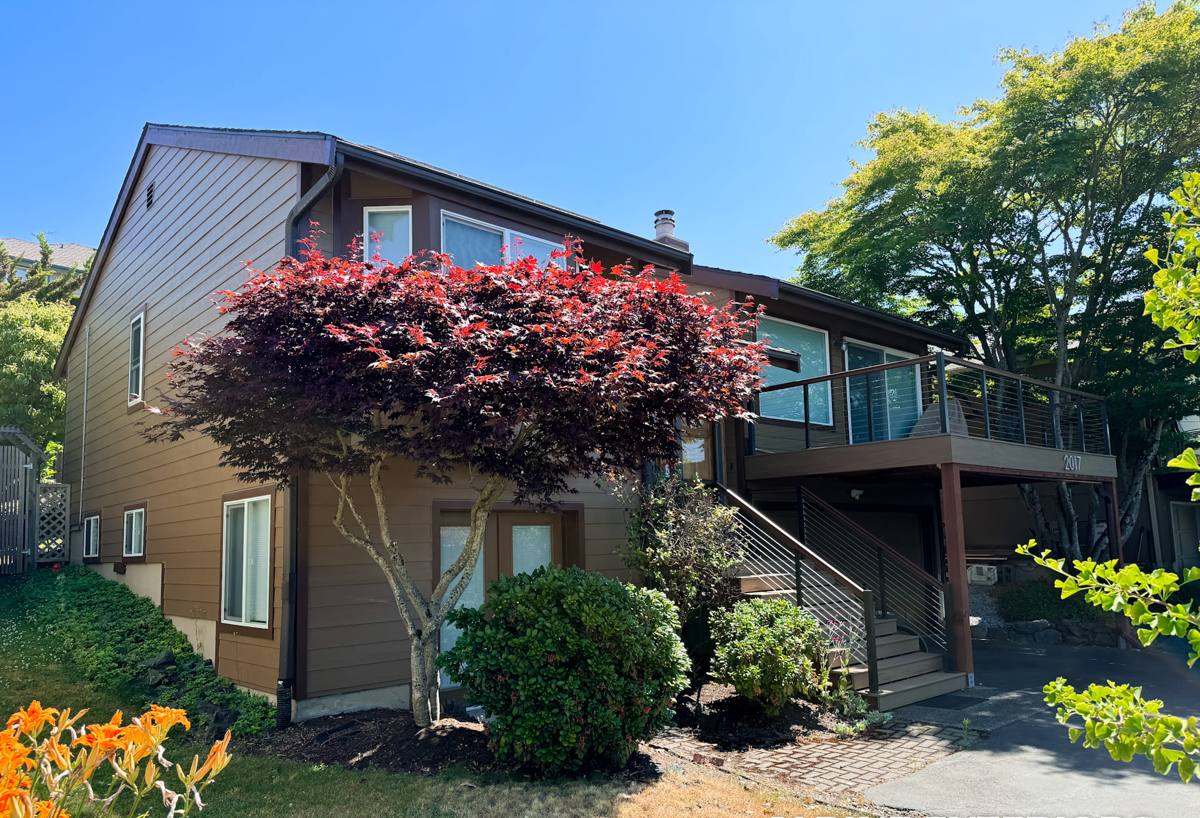
What Shoreline's Climate Does to Windows Over Time
Salt Air and Metal Fatigue
Homes within a mile or two of Puget Sound take in fine salt aerosol carried on the wind. Over years, that air accelerates corrosion on window hardware, screen frames, and any exposed fasteners that aren't rated for coastal exposure. Aluminum cladding and lower-grade hardware show pitting and stiffness well before an equivalent window would fail further inland. This is a real factor in material choice for west- and south-facing windows closer to the water, not a marketing point.
Driving Rain and Wind-Driven Moisture
King County storms off the Sound don't just fall straight down — wind pushes rain sideways into wall assemblies, especially on exposed elevations. A window that's watertight in calm rain can still leak under wind-driven conditions if the flashing and sill pan weren't detailed for that load. This is one of the most common reasons a "leaky window" turns out to be a flashing problem rather than a window problem at all.
Moss Season and Sustained Dampness
From roughly October through April, moisture sits on north-facing walls, trim, and sills for extended stretches. Moss and algae take hold on anything porous or slow to dry, and that sustained dampness is hard on wood trim, unsealed end grain, and any gap where water can collect instead of shedding. Frames and sills that don't drain well become long-term moisture reservoirs — and that's when rot and interior damage show up, sometimes years after a bad install.
What a Correctly Installed Window Actually Involves
A window replacement or new custom opening is really a small waterproofing project with a window in the middle of it. Skipping steps here is the single biggest reason for callbacks and hidden damage in this climate.
Opening Prep
Old sealant, damaged trim, and any compromised sheathing get removed and inspected before anything new goes in. If there's rot or old water staining, that gets addressed now — not covered up behind new trim.
Sill Pan and Flashing
A sloped sill pan gives any water that gets past the window a way out instead of a place to pool. Flashing tape and house wrap integration are layered shingle-style — upper layers over lower ones — so water is always directed outward and down, never trapped behind the cladding.
Air and Moisture Sealing
Low-expansion foam or backer rod and sealant fill the gap between the window frame and rough opening without over-compressing the frame, which can distort it and cause operational problems. Interior air sealing matters as much as exterior weatherproofing — a gap on the inside lets warm, moist household air condense inside the wall cavity.
Exterior Trim and Sealant
Trim gets set with a drainage gap where needed, and sealant joints are tooled properly rather than just smeared on. In a market with this much rain exposure, sealant choice and joint design matter more than they would in a drier climate.
Choosing the Right Window Materials and Glass
There's no single "best" window material — the right call depends on exposure, budget, and how much upkeep an owner wants to take on. Here's how the common options stack up for a Puget Sound climate specifically:
| Material | Moisture Behavior | Coastal/Salt Exposure | Maintenance |
|---|---|---|---|
| Vinyl | Doesn't rot; handles sustained damp well | Generally stable; check hardware quality | Low — occasional cleaning |
| Fiberglass | Very stable dimensionally in wet/dry cycles | Strong resistance to corrosion | Low |
| Wood-Clad | Interior wood needs protection from any interior condensation | Cladding protects exterior face if detailed well | Moderate — finish upkeep on interior wood |
| Aluminum-Clad | Good structural stability | More prone to corrosion in salt air over time | Moderate |
For homes closer to the water, we lean toward materials and hardware finishes with better long-term corrosion resistance and steer clients away from lower-grade aluminum hardware on that exposure — not because it's a bad product everywhere, but because it's a poor match for that specific condition. For glass, a dual-pane unit with a low-E coating and an appropriate gas fill is standard for this climate; the coating helps manage heat loss during the cold, wet months without needing an unusual or expensive glass package.
Frame Color and UV/Weathering
Darker frame colors absorb more heat and can expand and contract more through the freeze-thaw-damp cycle Shoreline sees each winter. That's not a reason to avoid dark frames, but it's worth knowing when picking a finish, especially on larger custom units where thermal movement is more noticeable.
Common Window Problems We See in Shoreline Homes
Before quoting a replacement, we check for these — they change the scope of the job:
- Soft or discolored trim and sill boards, often from years of trapped moisture rather than a recent leak
- Fogged or failed double-pane glass (seal failure), sometimes on only one or two windows in a whole set
- Hardware that's stiff, corroded, or won't latch fully — common on west-facing units nearer the Sound
- Moss or algae buildup on horizontal trim surfaces and sills that never fully dry between storms
- Drafts or cold spots at the frame that point to failed air sealing rather than the glass itself
- Condensation forming on the interior frame or between panes during cold snaps
- Settling or minor structural movement in older homes that's shifted the opening out of square
Some of these are cosmetic; some point to real water intrusion behind the wall. Part of our job on the first visit is telling an owner honestly which is which before any work is scoped.
Our Process, Start to Finish
- On-site assessment: we measure each opening, check the wall assembly where accessible, and look for existing moisture damage or settling.
- Honest scoping: we tell you what's a straightforward swap versus what needs opening repair first — no surprise change orders for problems we should have caught up front.
- Material and glass selection: matched to the exposure of that specific wall, not a one-size answer for the whole house.
- Install: proper sill pan, flashing, air sealing, and trim detail as described above, done in a sequence that keeps the opening protected from weather during the work.
- Walkthrough and cleanup: operation check on every window, debris removed, and a clear explanation of anything you should watch for as the house settles into the new units.
What Custom Windows Typically Cost — and Why
Pricing depends on size, material, glass package, and how much opening repair is needed — we won't quote a number without seeing the actual openings. In general terms, here's what moves the price:
| Factor | Effect on Cost |
|---|---|
| Standard vs. non-standard size | Custom sizing costs more than stock sizes; older Shoreline homes often need it |
| Material (vinyl vs. fiberglass vs. wood-clad) | Vinyl is typically the most economical; fiberglass and wood-clad cost more upfront |
| Glass package | Low-E coatings and upgraded gas fill add modest cost for real efficiency gain |
| Hidden rot or sheathing damage | Adds labor and material once the opening is actually exposed |
| Number of openings done at once | Doing several windows in one visit is more efficient than one at a time |
Permits and Energy Considerations
Window replacement in Shoreline and greater King County can require a permit depending on scope — particularly if the opening size changes or it's part of a larger remodel. We handle that conversation up front so there are no surprises partway through the job. On the energy side, a properly sealed and flashed window with a decent low-E glass package makes a real difference in a climate where homes run heat for most of the year — not because of any single miracle feature, but because the whole assembly (frame, glass, sealing) is working together instead of leaking air and moisture at the edges.
Why a Crew That Already Works in Shoreline Matters
A contractor who works this specific area regularly has already seen how the local housing stock is built, which elevations take the worst of the wind-driven rain, and what condition to expect behind trim on a house of a given age. That's not something you get from a general install checklist — it comes from doing the work here, repeatedly, on the kinds of homes and wall assemblies that are actually common in Shoreline. It also means we're not guessing at code or permit requirements specific to King County, and we're not learning the local climate's failure points on your house.
If you're dealing with drafty, foggy, or hard-to-close windows, or you're planning ahead for a remodel, we're happy to take a look and give you a straightforward, no-pressure estimate — just fill out the form below.