 Seattle Siding
 Siding Built for Rainier Valley's Wet Side of the Year
Rainier Valley runs from Mount Baker down through Columbia City, Hillman City, and Rainier Beach, and the housing stock reflects nearly a century of Seattle growth — craftsman bungalows, 1940s and 1950s ramblers, and newer infill homes sitting side by side on the same block. What almost all of them share is exposure to the same wet Pacific Northwest weather pattern: long stretches of steady rain from fall through spring, humid air off Lake Washington and Puget Sound, and short winter days that leave north- and east-facing walls damp for weeks at a time. Siding here isn't just a look — it's the layer standing between that moisture and your framing, sheathing, and insulation.
We install James Hardie fiber cement siding exclusively. Not because it's the only decent product on the market, but because after years of servicing homes across King County, it's the one system that consistently holds up to this specific climate without the maintenance headaches or moisture failures we've seen from the alternatives.
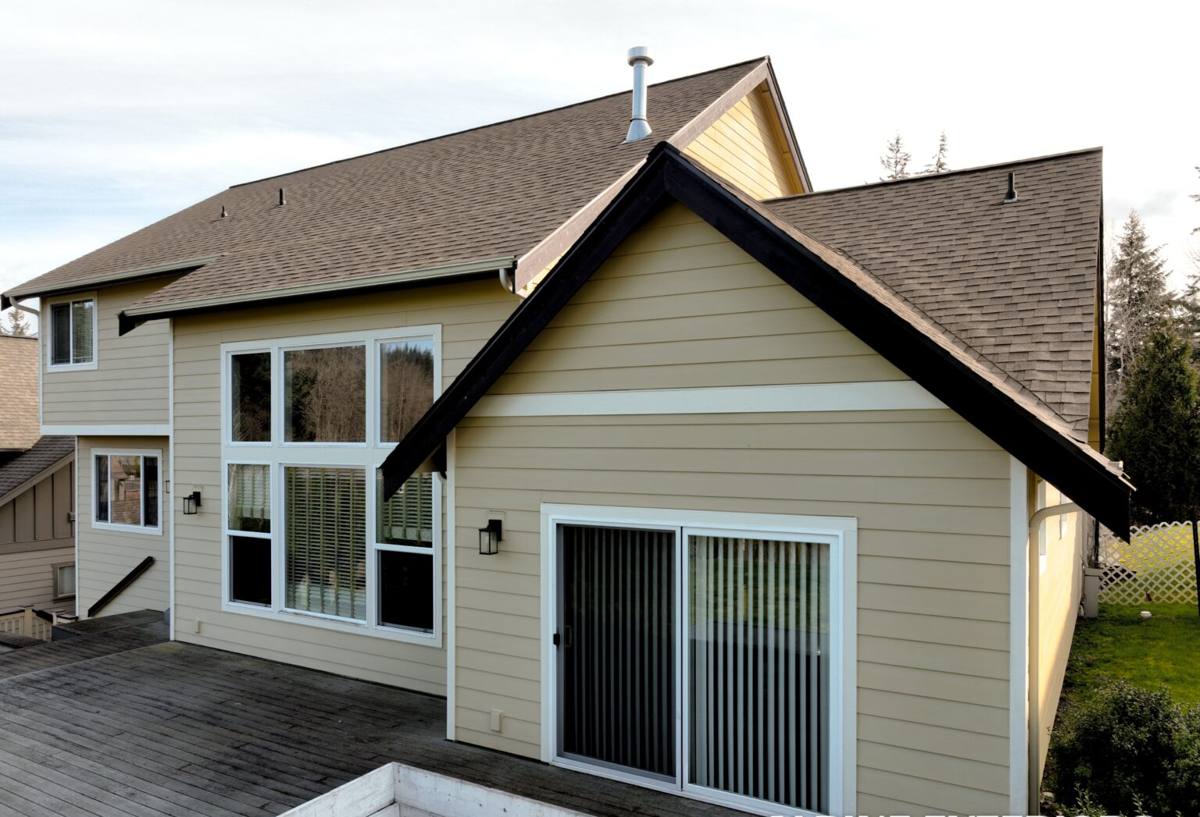
What Seattle's Climate Actually Does to Siding
Homeowners often think of Seattle weather as "just rain," but the bigger issue for siding is duration and humidity, not intensity. A few things matter more here than in drier climates:
- Moss and algae growth — shaded, north-facing walls and anything under tree cover stay damp long enough for moss and mildew to take hold, especially on wood-based or textured products with more surface porosity.
- Driving rain — wind off the water can push rain sideways into wall assemblies, which means flashing, house wrap, and caulking details matter as much as the siding material itself.
- Salt-tinged, humid air — proximity to Puget Sound and Lake Washington keeps ambient humidity higher than inland climates, which accelerates corrosion of poor-quality fasteners and speeds up rot in any wood-based product that loses its protective coating.
- Freeze-thaw cycling — not extreme here, but frequent enough in winter that any siding holding moisture at the time of a freeze is at risk of cracking or delaminating.
None of this is unique to Rainier Valley specifically — it's the reality across most of Seattle and King County — but it's worth stating plainly because it's the entire reason material choice matters more here than in a dry climate where almost anything survives.
Why We Standardized on James Hardie
Fiber cement as a category is engineered from sand, cement, and cellulose fiber — it doesn't rot, it isn't a food source for insects, and it's non-combustible. James Hardie is the manufacturer we chose to build our business around, for a few concrete reasons:
Climate-Engineered Product Lines
Hardie makes region-specific formulations (its HZ5 line is engineered for climates like ours, with wetter, more freeze-prone conditions than the Southern HZ10 line). That's a level of climate-matching most competing fiber cement products don't offer.
ColorPlus Factory Finish
Rather than field-applied paint, ColorPlus is baked on at the factory in multiple coats, which resists fading and chipping far better than a job-site paint job — and it means fewer repaint cycles over the life of the siding, which matters when your painting window is limited by our rainy season.
Warranty Backing
Hardie's product warranty is transferable and among the strongest in the category, which protects resale value — a real consideration in a neighborhood like Rainier Valley where turnover and renovation activity have both been steady.
We get asked why we don't also install LP SmartSide, vinyl, or cheaper fiber cement alternatives like Cemplank or Allura. The honest answer: engineered wood products depend entirely on an intact factory coating to resist moisture, and any breach — a saw cut, a nail pop, a gap at a joint — becomes an entry point for water in a climate that doesn't dry out quickly. Vinyl expands and contracts with temperature swings and can warp or crack over time, and it isn't repairable in a way that blends invisibly. Other fiber cement brands may perform reasonably, but we'd rather run one product line, know it inside and out, and stand behind it fully than spread our crews thin across four systems we know less well.
What a Correct Fiber Cement Install Actually Involves
Fiber cement siding fails prematurely almost exclusively because of installation mistakes, not the material itself. The product is only as good as the water management system built behind it. A correct job includes:
- A properly lapped weather-resistant barrier (house wrap) with all seams taped
- Correct flashing at every window, door, and roof-to-wall intersection — the single most common failure point we find on re-sides
- Minimum clearances from grade, roofing, and decks so the siding never wicks standing moisture
- Proper nailing pattern and fastener depth — overdriven nails crack the board's face and create moisture entry points
- Factory-cut or field-cut edges sealed per Hardie's specifications, not left raw
- Correct joint spacing and caulking at butt joints, using sealants rated for the product
- Rain screen or furring strips where the wall assembly calls for a drainage gap, common on the shadier, slower-drying walls typical in tree-lined Rainier Valley blocks
Skipping any one of these doesn't show up immediately. It shows up in year three or four as staining, soft spots at trim boards, or paint failure — long after the crew that installed it is gone.
Our Process on a Rainier Valley Job
Every home is a little different, but the sequence stays consistent:
- Walkthrough and assessment — we look at existing siding condition, sheathing, trim, and any visible moisture damage before quoting anything.
- Tear-off and sheathing check — once old siding is off, we inspect the sheathing itself. Any soft or water-damaged sections get flagged and addressed before new siding goes on, not covered over.
- Weather barrier and flashing — house wrap, flashing, and drainage details go in first, since this is the layer that actually keeps water out.
- Hardie installation — panels or lap siding installed to Hardie's fastening and clearance specifications for our climate zone.
- Trim, caulking, and touch-up — finish details sealed and any factory-finish touch-up handled with Hardie-matched product.
- Final walkthrough — we go over the finished job with you before calling it done.
Cost Factors on a Rainier Valley Home
Every quote is specific to the house, but these are the variables that move the number most:
| Factor | Why It Matters |
|---|---|
| Home size and wall complexity | More corners, gables, and dormers mean more cutting, flashing, and labor time |
| Siding profile chosen | Lap siding, shingle-style panels, and board-and-batten all carry different material and install costs |
| Sheathing condition | Rot or water damage found during tear-off adds repair scope before siding can go on |
| Trim and detail work | Window and door trim, corner boards, and fascia detailing add time on older bungalow-style homes |
| Access and site conditions | Narrow lots, mature trees, and tight side yards common in the neighborhood can slow staging and scaffolding |
We provide itemized, written estimates so you can see exactly what's driving the cost rather than a single lump number.
Maintenance: What Ongoing Care Actually Looks Like
One reason we like recommending Hardie to Rainier Valley homeowners specifically is how little upkeep it demands compared to wood-based or vinyl alternatives:
- Rinse siding annually to keep pollen, moss spores, and grime from building up, especially on shaded walls
- Keep gutters clear so overflow doesn't run down the siding face repeatedly
- Trim back vegetation that keeps a wall section shaded and slow to dry
- Recaulk joints if you notice cracking or gaps over the years
- Repaint only when the ColorPlus finish is genuinely due — typically well beyond what field-painted products need
That's a materially lighter maintenance list than a wood-based product needs in this climate, where recoating and spot-treating moss and mildew can become a near-annual chore.
Why Hiring a Crew That Already Works This Neighborhood Matters
Fiber cement installation is unforgiving of shortcuts, and every neighborhood in Seattle has its own quirks — lot sizes, tree cover, home vintage, and typical wall assemblies. A crew that regularly works Rainier Valley has already seen the sheathing conditions common to its older housing stock, understands how shaded, tree-lined lots affect drying time, and knows what permitting and inspection expectations look like in this part of Seattle. That familiarity shows up in fewer surprises mid-project and a tighter, more predictable install.
If you're considering a re-side in Rainier Valley, we're happy to walk the exterior with you, look at what's there now, and give you a straight assessment of what it would take to do it right with James Hardie siding. Reach out for a free, no-pressure estimate — there's no obligation, and you'll walk away with a clear picture of the project either way.