 Seattle Siding
 Why Renton Homes Need the Right Siding System
Renton sits in a spot that takes weather from two directions. You get the marine influence pushing in off Puget Sound with salt-laden air, and you get the long, wet stretch of Western Washington fall and winter that keeps exterior walls damp for weeks at a time. Add in tree cover common in older Renton neighborhoods, and you've got a climate that's genuinely hard on siding. This isn't a page about siding in general — it's about what fiber cement siding needs to do, specifically, on a Renton house, and how we install it so it actually holds up.
We work throughout the greater Seattle area and King County, and Renton jobs are a regular part of our schedule. That matters more than it sounds like it should. A crew that already knows the moisture patterns, the typical wall assemblies, and the permitting expectations in this part of King County isn't guessing on your project — they're applying what they've already confirmed works here.
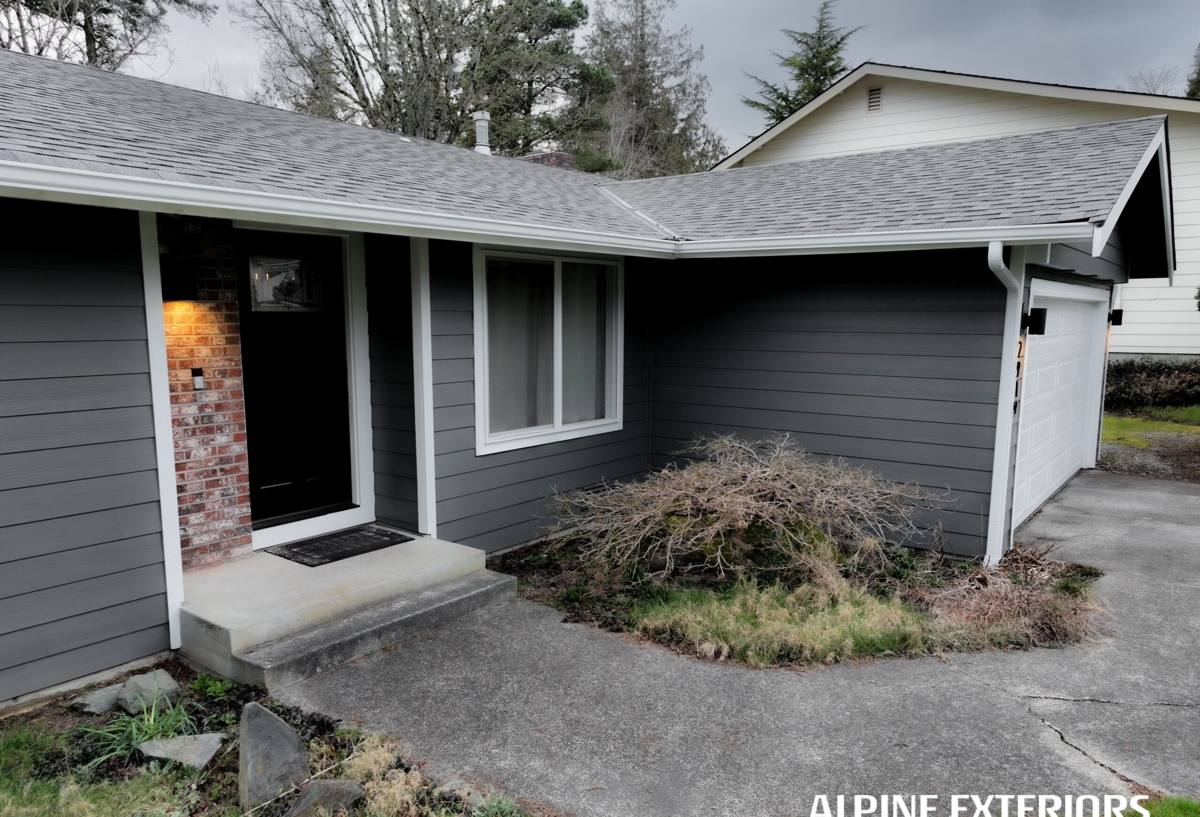
What Renton's Climate Actually Does to Siding
Salt Air and Corrosion
Renton's proximity to Puget Sound and Lake Washington means airborne salt and moisture reach exterior surfaces year-round, not just on stormy days. Over years, that salt exposure accelerates corrosion on fasteners, trim flashing, and any metal components in the wall assembly. Siding materials and hardware that aren't rated for coastal-adjacent exposure show it early — chalking, rust streaking below fastener heads, and premature finish breakdown.
Driving Rain
Rain here doesn't just fall straight down. Wind-driven rain off the Sound pushes moisture sideways into wall assemblies, especially on west- and southwest-facing elevations. That means the water-resistive barrier, flashing details, and siding overlaps have to work together as a system — not just look good from the street. A siding job that's watertight on a calm day but leaks during a windy November storm isn't actually done right.
The Long Moss Season
Shade, humidity, and mild temperatures make Renton (like most of the Puget Sound lowlands) prone to a moss and algae season that can run eight months or more. Moss holds moisture against the siding surface and, over time, can degrade paint film and caulking on materials that aren't built to resist it. This is one of the biggest visible differences between siding systems in this climate — some hold up to organic growth and repeated cleaning, and some don't.
Climate Stress Checklist for Renton Siding
- Fasteners and flashing rated for coastal/marine-adjacent exposure, not just standard interior-grade hardware
- A continuous, correctly lapped water-resistive barrier behind the siding
- Factory-applied finish that resists moss, mildew, and UV fading through repeated wet-dry cycles
- Proper clearance from grade, decks, and roof lines to avoid standing moisture
- Caulking and sealant joints that stay flexible through freeze-thaw swings and constant humidity
- Ventilation gap or rainscreen detailing where wall assembly and code call for it
Why We Install James Hardie Fiber Cement — and Nothing Else
Seattle Siding Company installs James Hardie fiber cement siding exclusively. We don't install vinyl, LP SmartSide, primed wood, cedar, or other fiber cement brands like Cemplank or Allura. That's not a marketing line — it's a standard we hold because of what we've seen play out over years of siding replacements in this exact climate.
Fiber cement itself is a proven category: it's non-combustible, dimensionally stable, and holds paint far better than wood over time. James Hardie is the manufacturer we've standardized on within that category for a few concrete reasons:
| Factor | Why It Matters in Renton |
|---|---|
| ColorPlus factory finish | Baked-on finish resists the fading and peeling that field-applied paint struggles with under constant damp/UV cycling |
| HZ5 climate engineering | Formulated for moisture, freeze-thaw, and moss/mildew resistance suited to the Pacific Northwest |
| Non-combustible core | Doesn't feed a fire the way wood-based siding products can, and won't soften or swell from prolonged moisture exposure |
| Transferable warranty | Protects resale value if you sell the home before the warranty term is up |
| Track record | Decades of installed product in wet coastal climates similar to King County, with known long-term performance |
We won't tell you other products are junk — some perform reasonably well in the right application. But we've made a professional call: in a climate that combines salt air, driving rain, and near year-round moisture, we'd rather install one system extremely well than juggle several and hope each one holds up. Hardie is what we're willing to put our name behind.
What a Correct Fiber Cement Job Involves
The material is only part of the equation. Most siding failures we get called to look at in Renton and nearby neighborhoods aren't material failures — they're installation failures. Here's what has to happen for fiber cement siding to actually perform for its full service life:
Wall Prep and Moisture Barrier
Old siding comes off, sheathing gets inspected for rot or damage, and a code-compliant water-resistive barrier goes on with correct overlaps and taped seams. This step is invisible once the siding is up, which is exactly why it's the step that gets skipped by crews trying to move fast.
Flashing at Every Penetration
Windows, doors, vents, hose bibs, light fixtures — every penetration in the wall is a place water can get behind the siding if it's not flashed correctly. In a driving-rain climate like Renton's, this detail work is where long-term watertightness is actually decided.
Fastening and Clearances
Hardie has specific fastener spacing, type, and embedment requirements, plus minimum clearances from roof lines, decks, and grade. Skipping these doesn't show up as a problem on install day — it shows up as moisture damage two or five years later.
Caulking and Trim
Joints and trim transitions need the right sealant, applied correctly, at the right gaps. Overcaulking is almost as bad as undercaulking — it can trap moisture instead of letting the assembly breathe and drain as designed.
Our Process on a Renton Project
- On-site assessment — we look at your current siding, wall condition, exposure (which elevations take the worst wind-driven rain), and any moss or moisture staining already present.
- Written estimate — a clear scope covering tear-off, wall prep, flashing, Hardie product line and color, and timeline. No vague allowances.
- Material order and scheduling — Hardie product ships to spec; we schedule around Renton's wetter months where possible to keep the wall assembly dry during install.
- Tear-off and inspection — old siding removed, sheathing checked, any rot or damage addressed before anything new goes on.
- Barrier, flashing, and installation — water-resistive barrier, flashing at every penetration, then Hardie siding installed to manufacturer spec.
- Final walkthrough — we go over the finished job with you, including care and cleaning notes specific to this climate.
Why Hiring a Crew That Already Works Renton Matters
A siding crew that mostly works dry, inland climates can do a technically fine install and still miss details that matter here — under-flashing a window because "it usually doesn't rain sideways," or spacing fasteners for a climate zone that isn't this one. A crew that regularly works Renton and the surrounding Seattle area already knows:
- Which elevations in this area typically take the worst wind-driven rain and need extra flashing attention
- How King County's permitting and inspection process works for siding replacement
- What moss and algae growth patterns look like on homes with mature tree cover, and how to detail against them
- Realistic install windows around the region's wet season
That local familiarity isn't a guarantee against every possible issue, but it does mean fewer surprises and fewer assumptions borrowed from a different climate.
Cost Factors for a Renton Fiber Cement Project
Every home is different, so we don't publish blanket per-square-foot numbers — the right way to get a real cost is a site visit. That said, here's what actually moves the price on a project like this:
| Factor | Why It Affects Cost |
|---|---|
| Wall condition underneath old siding | Rot or sheathing damage found during tear-off adds repair scope |
| Home size and wall complexity | More corners, dormers, and penetrations mean more flashing and labor time |
| Hardie product line chosen | Lap siding, shingle-style panels, and board-and-batten differ in material and labor cost |
| Height and access | Multi-story sections or difficult access require more staging and time |
| Trim and detail work | Window and door trim replacement adds scope beyond field siding |
Maintaining Fiber Cement Siding in This Climate
Even the right product needs basic upkeep in a climate like this one. A yearly rinse-down to knock back moss and grime buildup, prompt attention to any caulking that starts to separate, and keeping gutters clear so water isn't sheeting down the wall face all go a long way. Hardie's factory finish is built to handle Pacific Northwest moisture far better than field-painted alternatives, but no siding is entirely maintenance-free.
If you're weighing a siding replacement in Renton, we're glad to come take a look and give you a straightforward, no-pressure estimate — no obligation, just an honest read on your home's current siding and what it would take to do it right.