 Seattle Siding
 Why Fremont Homes Need Siding Built for This Climate
Fremont sits inside one of the more demanding exterior climates in the country, even by Pacific Northwest standards. It isn't hurricane weather or desert heat that wears down siding here — it's the slow, relentless combination of salt-tinged marine air, driving rain that comes in sideways off the water more often than people expect, and a moss season that can stretch from fall through spring. None of these forces are dramatic on their own. Together, over years, they find every weak point in an exterior: an unsealed joint, a fastener driven at the wrong angle, a piece of trim without proper flashing.
That's the frame we bring to every James Hardie installation in Fremont. This isn't a page about siding in general — it's about what James Hardie fiber cement specifically needs to do right by a Fremont home, and what a correct installation actually looks like in this part of King County.
The moisture cycle that damages siding here
Seattle doesn't get the heaviest annual rainfall in the country, but it gets some of the most persistent — long stretches of steady, low-intensity rain combined with high humidity and limited direct sun to dry things out between storms. Siding here spends more time damp than siding in almost any other U.S. market. Add salt-laden air moving in off Puget Sound, which accelerates corrosion on exposed fasteners and metal flashing, and you have an environment where materials and details that would hold up fine in a drier climate start failing years ahead of schedule.
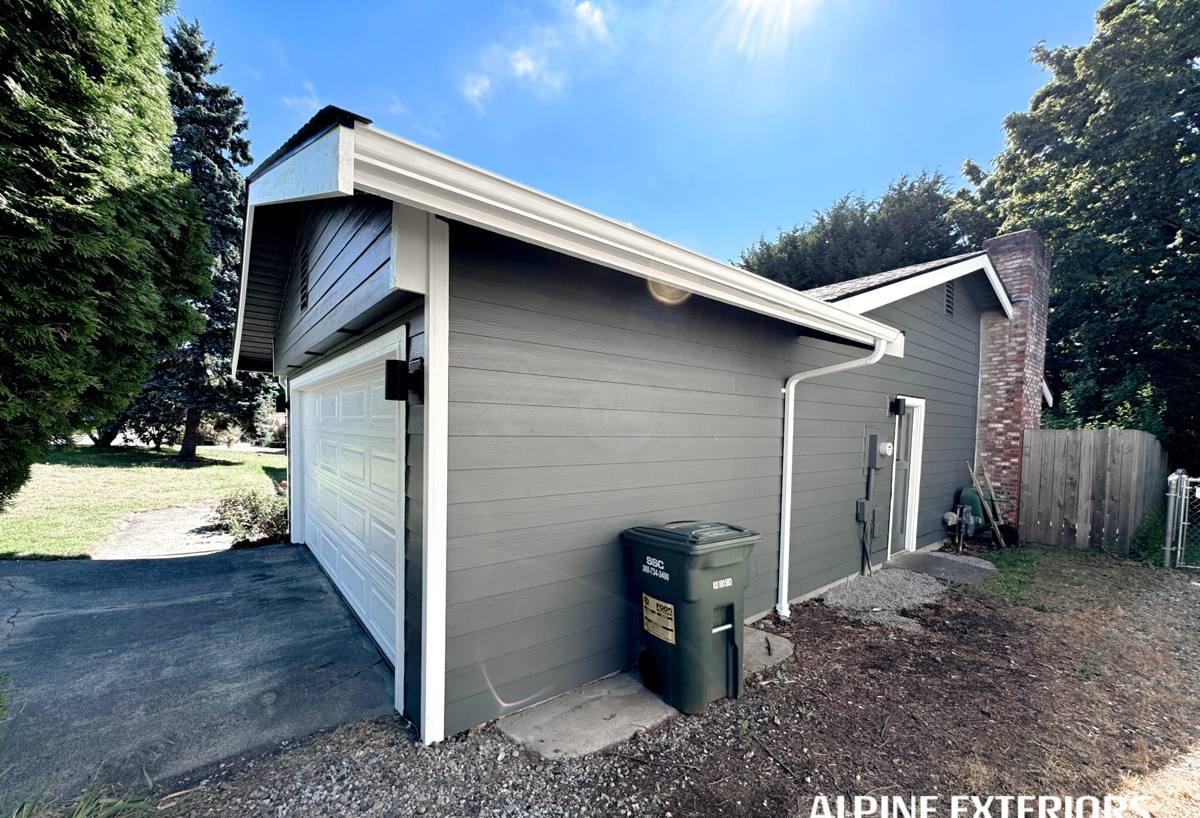
What Correct James Hardie Installation Requires in This Climate
James Hardie fiber cement is engineered to resist moisture, pests, and fire far better than wood-based alternatives, but the product is only half the equation. In a climate like Fremont's, the installation details matter as much as the material itself. A rushed or generic install on a great product still fails early here.
A functioning rain screen and drainage plane
Behind the siding, there needs to be a continuous weather-resistive barrier and, ideally, a drainage gap that lets any moisture that gets behind the cladding drain and dry out instead of sitting against the sheathing. In a climate that stays damp for months at a time, skipping or shortcutting this layer is one of the most common causes of hidden rot behind siding that looks fine from the street.
Fastening and clearances
James Hardie publishes specific fastener types, spacing, and penetration requirements, along with minimum clearances from grade, roof lines, decks, and other siding. Those clearances aren't cosmetic guidelines — they're what keeps splash-back, ponding, and wicking moisture away from the bottom edge of the boards. In a market with this much rainfall, a half-inch of ignored clearance can be the difference between siding that lasts decades and siding that starts absorbing moisture at the bottom course within a few wet seasons.
Trim, flashing, and joint details
Every window, door, corner, and butt joint is a place where two materials meet — and every one of those meeting points is a potential entry point for water. Correct flashing at horizontal trim, properly caulked and painted cut ends, and factory-primed or ColorPlus-finished edges kept out of direct ground contact all matter more here than in a mild, dry climate where a sloppy detail might go unnoticed for years.
Fremont's Housing Stock and What It Means for the Job
Like much of inner Seattle, Fremont has a mix of older homes — early-1900s craftsman and foursquare-style construction, mid-century bungalows — alongside newer infill construction and townhomes built more recently as the neighborhood has grown denser. Each of these building types brings a different starting point for a siding project.
Older homes often have layers of history under the existing cladding: past patch repairs, older insulation choices, and sheathing that may or may not still be sound after decades of Northwest weather. Before we ever price a James Hardie job on an older Fremont home, we want to know what's underneath — not guess at it. Newer construction usually has more consistent underlying materials, but that doesn't mean the original installation was done with this climate's demands fully respected; production-scale builds sometimes cut corners on flashing and clearance details that only show up as problems years later.
Choosing the Right James Hardie Product Line
James Hardie makes several distinct siding profiles, and the right one for a given home depends on its architecture, exposure, and the look the homeowner wants — not just personal preference.
| Product | Best Fit | Look | Notes for This Climate |
|---|---|---|---|
| HardiePlank lap siding | Craftsman, foursquare, traditional homes | Classic horizontal lap | Most common choice; performs well with correct clearance and fastening |
| HardieShingle | Craftsman detailing, accent gables | Staggered or straight-edge shingle look | More joints and edges to detail correctly — installer precision matters more |
| HardiePanel | Modern and mid-century homes | Smooth or textured vertical panel | Fewer horizontal laps means fewer water-entry points, a real advantage in high-rainfall areas |
| HardieTrim | Used alongside any of the above | Corner boards, fascia, window trim | Correct trim detailing is where most moisture problems start or get prevented |
We also select from Hardie's climate-engineered HZ product lines, which are formulated for specific regional conditions rather than a one-size-fits-all national spec. For a home in this part of King County, that distinction is worth understanding rather than skipping past.
What Drives Cost on a Fremont Siding Job
Every estimate is specific to the home, but a few factors consistently move the price up or down on real Fremont projects.
| Factor | Why It Matters |
|---|---|
| Condition of the sheathing underneath | Hidden rot or moisture damage found during removal changes the scope before the new siding ever goes up |
| House complexity | Dormers, multiple gables, bump-outs, and tall walls all add cutting, flashing, and labor time |
| Product line and profile | Shingle-style siding takes longer to install correctly than plank or panel siding of the same square footage |
| Trim and detail work | Corner boards, window trim, and fascia work add cost but are where long-term performance is won or lost |
| Access and site conditions | Narrow lots, tight setbacks, and limited staging space — common in denser Seattle neighborhoods — can affect labor time |
We won't quote a number without seeing the home. Anyone who does is guessing, and guesses on a job like this tend to turn into change orders later.
Our Process, Start to Finish
- On-site evaluation: We look at the existing siding, sheathing condition where accessible, trim, flashing, and any signs of past moisture problems.
- Honest scope and estimate: We walk through what we found, what it means for the job, and a clear estimate — no pressure, no inflated urgency.
- Tear-off and inspection: Once the old siding comes off, we inspect the sheathing directly and flag anything that needs repair before new siding goes on top of it.
- Weather barrier and drainage plane: Installed to spec, not shortcut, since this layer does the real work of keeping moisture out of the wall assembly.
- James Hardie installation: Fastened, spaced, and flashed to manufacturer specification and this climate's real conditions, not a generic national install.
- Final trim, caulking, and walkthrough: Every cut edge sealed and finished, every detail checked before we call the job done.
Why a Crew That Already Works Fremont Matters
Siding installation isn't uniform across the country, and it shouldn't be treated that way. A crew that mostly works drier, milder climates can install James Hardie by the book and still leave a Fremont home vulnerable, because "by the book" nationally and "correct for this rainfall and salt exposure" aren't always the same standard. Crews familiar with King County's weather patterns know which details can't be shortcut here — clearance heights, drainage planes, fastener corrosion resistance — because they've seen what happens on the homes where those details were skipped.
There's also a practical side: a local crew understands permitting norms, typical lot and access constraints in denser Seattle neighborhoods, and how to sequence a job around the wet-season windows that define much of the working calendar here.
Signs Your Current Siding May Already Be Failing
- Soft or spongy spots when you press on the siding, especially near the bottom courses
- Visible moss or persistent green staining that keeps returning after cleaning
- Paint that's peeling, bubbling, or failing faster than a normal repaint cycle
- Gaps opening up at seams, corners, or trim joints
- Warping, buckling, or boards that no longer sit flat against the wall
- A musty smell or visible staining on interior walls near exterior corners
Any one of these on its own isn't necessarily an emergency, but they're worth having looked at before the underlying sheathing is compromised — that's when a siding job turns into a much bigger repair.
Living With James Hardie Siding in a Marine Climate
James Hardie siding with a factory ColorPlus finish is designed to hold its color and resist the damage that repainting cycles create, which matters in a climate where a poorly timed exterior paint job can fail to cure properly in persistent damp weather. Maintenance still matters, though: periodic washing to keep moss and mildew from taking hold, prompt attention to any caulking that starts to crack or pull away, and keeping gutters and downspouts functioning so water is directed away from the wall assembly rather than running down it. None of that is heavy maintenance — it's the kind of upkeep any exterior in this climate needs, and it's far less than what wood-based sidings demand here.
If you're weighing a siding project on a Fremont home, we're glad to come take a direct look and give you a straightforward, no-pressure estimate — including what we find about the condition underneath, not just a number based on square footage.