 Seattle Siding
 Fremont's Roofs Face a Tough Climate
Fremont sits close to the water, and that proximity shapes what a roof has to deal with year after year. Between the Lake Washington Ship Canal nearby, the marine air that moves through the Puget Sound region, and Seattle's long wet season, roofing materials here take on a different kind of stress than they would inland. Add King County's short, low-angle winter sun that leaves shaded roof sections damp for days at a time, and you've got a climate that rewards durable materials and punishes anything installed with shortcuts.
Metal roofing has become a popular answer for homeowners in this part of Seattle who are tired of re-treating moss, patching shingle wear, or replacing a roof every couple of decades. Done correctly, a metal roof can outlast several shingle roofs on the same house. Done poorly — wrong fasteners, missed flashing details, panels that trap moisture instead of shedding it — it fails in ways that are expensive to fix. This page covers what Fremont homes specifically need from a metal roof, what a correct job looks like, and how we handle it.
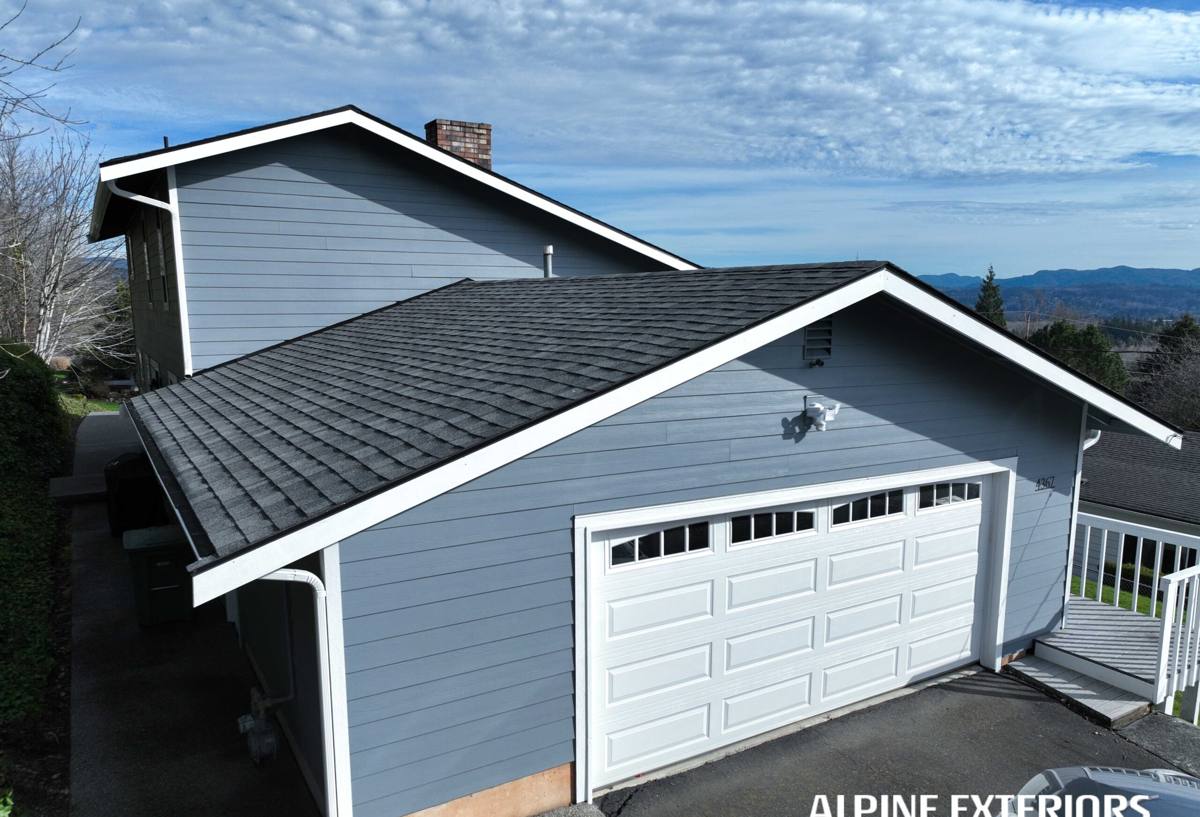
What Rain, Moss, and Salt Air Do to a Roof Over Time
Driving Rain and Wind
Seattle doesn't just get a lot of rain — it gets a lot of wind-driven rain, where water is pushed sideways under laps, around vents, and into any gap that a fastener or flashing detail left open. On a roof with dozens of penetrations (vents, chimneys, skylights), every one of those is a spot where water can find a way in if the detail wasn't done right the first time. This matters more on a metal roof than people expect, because metal sheds bulk water fast — but that speed only helps if the underlayment and flashing underneath are actually able to handle it.
Moss and Organic Growth
King County's wet season runs long, and shaded, north-facing roof sections stay damp for extended stretches. That's exactly what moss and algae need to take hold. On asphalt shingles, moss roots into the granules and lifts them, shortening the roof's life. Metal doesn't give moss the same foothold — there's no organic material for it to grip — but debris and needles caught in valleys or against a poorly designed transition can still hold moisture against the surface longer than they should.
Salt-Tinged Air and Corrosion
Homes closer to the water pick up trace salt in the air, and that air is corrosive to unprotected or mismatched metal. This shows up as premature rust at cut edges, fastener heads, and flashing seams — not because metal roofing is a bad choice near the water, but because the coating, alloy, and fastener selection have to be matched to the exposure. This is one of the biggest differences between a metal roof installed by a crew that thinks about local conditions and one that just uses whatever panel and screw combination they'd use anywhere else.
Why Metal Roofing Holds Up Better Here
The appeal of metal in a climate like Seattle's comes down to a few practical points, not marketing claims:
- Steep water-shedding profile that doesn't rely on granule wear resistance the way asphalt does
- No organic surface for moss to root into, which cuts down on the cleaning and treatment cycle
- Long service life when the coating and fastener system are matched to a marine-influenced climate
- Better performance under sustained wind-driven rain when seams and laps are engineered correctly
- Lower long-term maintenance compared to repeated shingle repair and moss treatment cycles
None of that is automatic, though. A metal roof is only as good as its weakest detail — usually a valley, a penetration, or a fastener that wasn't rated for the exposure. That's why the installation process matters as much as the material choice.
Choosing the Right Metal Roofing System
Not all metal roofing is the same, and the right choice for a Fremont home depends on the home's exposure, roof pitch, and budget. Here's how the common options compare:
| System | Best For | Trade-Offs |
|---|---|---|
| Standing seam steel | Most homes; long-term durability | Higher upfront cost, hidden fasteners reduce leak points |
| Exposed-fastener steel panel | Budget-conscious projects, outbuildings | Fastener heads need periodic inspection and eventual replacement |
| Aluminum standing seam | Homes closer to water or exposed to salt air | Costs more than steel, but resists corrosion better in marine exposure |
| Metal shingle/shake panel | Homes wanting a traditional look with metal performance | More seams and profile detail than standing seam, slightly more labor-intensive install |
For homes with real salt exposure, we typically steer clients toward aluminum or a high-quality coated steel with a proven finish system, because the maintenance burden and corrosion risk of an under-specified material shows up years down the road, not on installation day. This is a professional judgment call based on trade-offs — coating chemistry, fastener compatibility, and long-term warranty structure — not a knock on any single manufacturer.
What a Correct Installation Involves
Underlayment and Moisture Barrier
Metal panels are the visible layer, but the underlayment underneath is what actually keeps a home dry if wind-driven rain gets past a seam. In a climate like this, we don't treat underlayment as an afterthought — self-adhered membrane at eaves, valleys, and penetrations is standard, not an upgrade.
Fasteners and Flashing That Match the Metal
Mixing incompatible metals — for example, the wrong fastener alloy against a panel — sets up galvanic corrosion that eats away at the contact point over time. Every fastener, flashing piece, and trim detail needs to be compatible with the panel material, especially on homes with salt-air exposure where that reaction accelerates.
Ventilation
Metal roofs perform best over a properly ventilated deck. Trapped moisture underneath the panel from poor attic or roof-deck ventilation can cause problems that have nothing to do with the roofing material itself but get blamed on it anyway. We check ventilation as part of any metal roofing job, not just the panels.
Valleys and Transitions
Valleys carry the most water on any roof, and they're where driving rain and debris collect together. Correct valley detailing — width, underlayment, and how the panels terminate into it — is one of the clearest signs of whether a metal roof was installed by someone who understands this climate or someone following a generic install sheet.
Signs Your Current Roof Needs Attention
Homeowners in Fremont often call us after noticing one or more of these signs. If you're seeing any of the following, it's worth having it looked at before the wet season makes it worse:
- Rust streaking below fasteners, flashing, or panel seams
- Moss buildup concentrated on shaded, north-facing roof sections
- Granule loss or bald patches on an aging asphalt roof (if considering a switch to metal)
- Staining on interior ceilings, especially near chimneys, skylights, or valleys
- Loose, lifted, or "oil-canning" panels that flex or ripple in wind
- Gutters and downspouts consistently clogged with granules, moss, or debris
- A roof over 20-25 years old that hasn't had a professional inspection recently
How Our Process Works
- Inspection and assessment — we look at the existing roof, deck condition, ventilation, and any problem areas before recommending anything.
- Material selection — based on your home's exposure, pitch, and budget, we recommend a panel and fastener system suited to your specific site, not a one-size-fits-all package.
- Written estimate — a clear scope of work and cost range before any commitment.
- Installation — proper underlayment, flashing, fastening, and ventilation work, done in the sequence that keeps the roof dry through every stage of the project.
- Final walkthrough and cleanup — we review the finished work with you and clear the site of debris and packaging.
Maintaining a Metal Roof in Seattle's Climate
Metal roofing is lower-maintenance than shingles, but "lower" doesn't mean "none." In King County's climate, a few habits go a long way:
- Clear debris from valleys and gutters at least once or twice a year, more often under overhanging trees
- Have fastener heads and sealant points checked periodically on exposed-fastener systems
- Watch for moss or algae buildup on adjacent surfaces that could hold moisture against roof edges
- Schedule a professional look after major windstorms, which are common in this region during the fall and winter
Standing seam systems with hidden fasteners generally need the least attention, which is part of why they're a popular choice for homeowners who want to stop thinking about their roof once it's installed.
Why Local Experience in Fremont Matters
A metal roof installed by a crew unfamiliar with this specific climate can look fine on day one and still fail early — usually from an underlayment choice, fastener mismatch, or ventilation gap that wouldn't cause problems in a drier region but does here. Working regularly in Fremont and the broader Seattle area means we've seen how local exposure, tree cover, roof pitch, and older home construction interact with metal roofing over time, and we specify materials and details accordingly rather than guessing.
It also means practical familiarity with the realities of these neighborhoods — narrower lots, mature trees close to rooflines, and the permitting expectations that come with working in the City of Seattle and King County. That local knowledge shows up in fewer surprises during the job and a roof that's built for the conditions it will actually face.
If you're weighing a metal roof for a Fremont home — whether it's new construction, a full replacement, or repair work on an existing metal roof — we're happy to take a look and walk you through your options. Reach out for a free, no-pressure estimate using the form below.