 Seattle Siding
 Composite Decking in Green Lake: Built for the Climate, Not Just the Look
Green Lake is one of the shadiest, greenest neighborhoods in Seattle, and that's exactly why decking here needs more thought than a standard installation. Mature tree canopy around the lake, homes tucked close together under maple and cedar, and the general damp of a Puget Sound winter all combine to keep deck surfaces wet and shaded far longer than in sunnier parts of King County. Add in driving rain that comes sideways off the water during a fall storm, and you have a set of conditions that will find every weak point in a deck within a few wet seasons. Composite decking, installed correctly for this climate, is one of the more sensible ways to get a deck that still looks good in year eight instead of year two.
This page is specifically about composite decking for Green Lake homes — not a general decking overview. The moss, the shade, the moisture, and the drainage challenges around here shape almost every decision, from substructure spacing to which composite product actually makes sense.
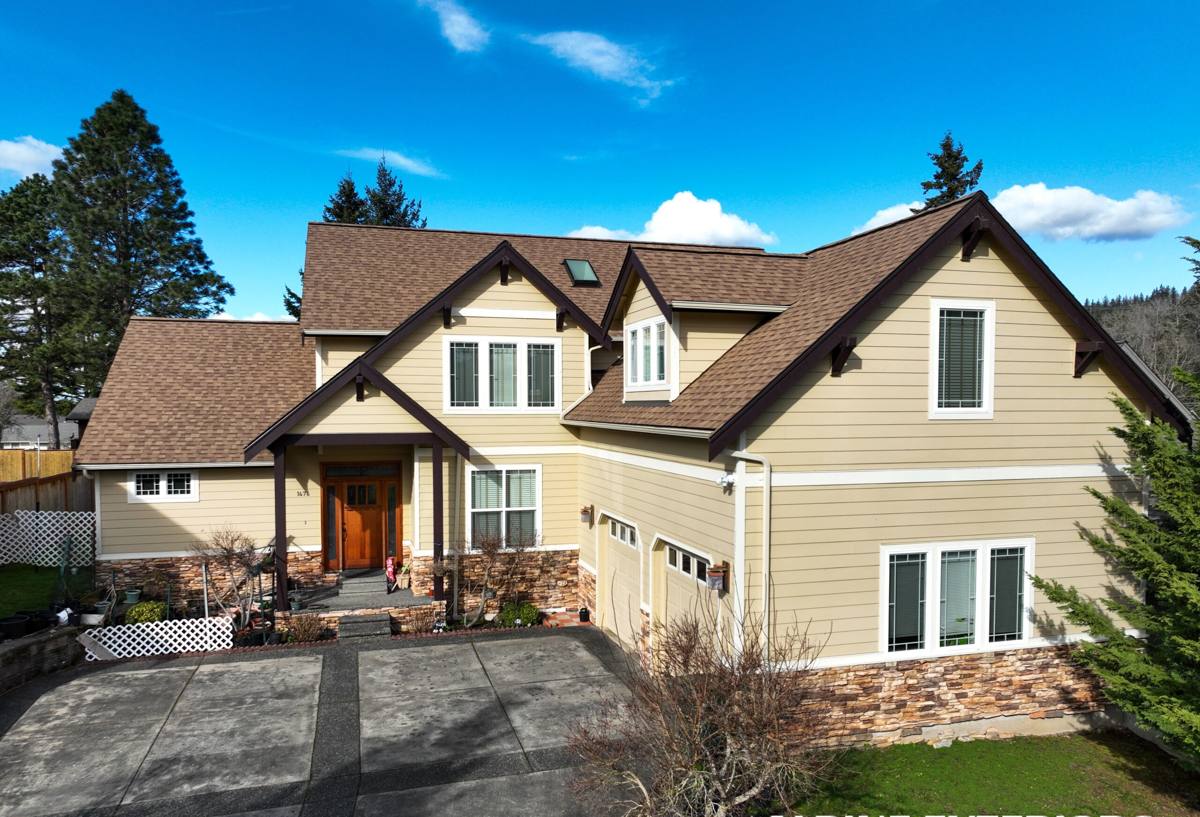
What Green Lake's Climate Actually Does to a Deck
Seattle's marine climate means long stretches of overcast, wet weather rather than short heavy storms. In Green Lake specifically, tree cover around the lake and in surrounding yards keeps decks shaded and slow to dry, which is the single biggest factor in how fast moss, algae, and mildew take hold on any outdoor surface. A few things we see consistently on Green Lake decks:
- Moss and algae buildup on shaded boards, especially the north- or lake-facing side of a house, where sun never really hits the deck in winter.
- Slippery surfaces from a combination of moss, wet leaf debris, and standing moisture — a real concern on stairs and near doorways.
- Slow-drying substructure when joists and ledger boards sit under a deck that rarely gets direct sun or airflow.
- Salt-tinged marine air moving in off Puget Sound, which over years accelerates corrosion on lower-grade fasteners and hardware, even this far from open water.
- Debris accumulation from bigleaf maple and cedar, which traps moisture against boards and rail posts if it's not cleared regularly.
None of this means composite decking is a cure-all. It means the installation details — drainage, ventilation, fastener choice, and board spacing — matter more here than they would in a drier climate.
What a Correct Composite Deck Installation Involves
Substructure First
The composite boards on top get all the attention, but the framing underneath is what determines whether a deck lasts. In a wet climate like ours, we pay close attention to:
- Proper ledger flashing where the deck attaches to the house, so water is directed away from the wall assembly instead of behind it.
- Joist tape or a comparable protective barrier on the tops of joists, since composite boards trap moisture against wood framing more than open wood decking does.
- Correct joist spacing for the specific composite product — many boards require tighter spacing than standard wood decking, especially on diagonal patterns or stair treads.
- Stainless steel or coated corrosion-resistant fasteners and hardware, given the marine air that reaches this far inland off the Sound.
- Adequate under-deck ventilation and a slight slope away from the house so water doesn't pool under low-clearance decks, which is common on older Green Lake lots.
Board Selection and Layout
Composite boards vary in how they handle moisture, shade, and organic debris. Capped composite (a wood-plastic core with a protective polymer shell) resists moisture absorption and staining far better than older uncapped composite, which matters directly in a shaded, mossy environment. Board orientation, expansion gaps, and picture-frame trim details also need to account for our wetter shoulder seasons — composite expands and contracts with temperature and moisture more than people expect.
Composite vs. Wood vs. PVC Decking
Homeowners in Green Lake usually end up choosing between three practical options. Here's an honest comparison based on how each performs in our specific climate:
| Material | Moisture & Moss Resistance | Maintenance | Typical Lifespan |
|---|---|---|---|
| Pressure-treated wood | Absorbs moisture, prone to moss/algae in shade, needs regular sealing | Annual cleaning, periodic staining/sealing | 10–15 years before major repairs |
| Capped composite | Good — polymer cap resists moisture and staining, though shaded areas still need cleaning | Periodic washing, no sealing or staining required | 25–30 years (manufacturer-dependent) |
| PVC decking | Excellent — fully synthetic, essentially immune to moisture absorption | Lowest maintenance, occasional washing | 25–30+ years |
We install composite for most Green Lake homeowners because it strikes a reasonable balance of upfront cost, low upkeep, and moisture performance. PVC is worth considering for decks in especially shaded, low-airflow spots where moss is a constant fight, but it costs more and has a different look and feel underfoot that not everyone prefers. We don't push one product line over another without walking your specific lot first — a fully shaded lakeside yard and a sunnier side-street lot can call for different answers.
Our Process for a Green Lake Composite Deck
- On-site assessment — we look at sun exposure, tree cover, existing drainage, and how the deck ties into the house before recommending a board or substructure approach.
- Substructure inspection or rebuild — if you're replacing an old deck, we check ledger flashing, joist condition, and footing depth rather than just building over what's there.
- Framing to spec — joist spacing, blocking, and fastening matched to the specific composite product's installation requirements, not a generic wood-deck layout.
- Board installation — proper expansion gaps, hidden or face fastening per product spec, and attention to drainage at the perimeter.
- Rail, stair, and trim work — finished with the same moisture and corrosion standards as the deck field.
- Final walkthrough — we go over cleaning and seasonal care specific to a shaded, mossy lot before we consider the job done.
Keeping a Composite Deck Clean Through Our Long Moss Season
Composite decking is genuinely lower-maintenance than wood, but "low-maintenance" doesn't mean "no maintenance" — especially under Green Lake's tree canopy. A basic seasonal routine keeps a good deck good:
- Sweep leaves and organic debris off the deck regularly through fall — trapped debris holds moisture against boards and is the main driver of moss growth.
- Wash the deck at least once or twice a year with a soft-bristle brush and a composite-safe cleaner; avoid pressure washing at close range, which can damage the cap layer on some products.
- Check gaps between boards and along the perimeter for debris buildup that blocks drainage.
- Inspect railing posts and stair connections annually for loosening, especially after freeze-thaw swings.
- Address any moss or algae as soon as it appears rather than waiting — it's far easier to remove light growth than an established patch.
- Keep nearby shrubs and low branches trimmed back to let in what sun and airflow the lot does get.
What Affects the Cost of a Composite Deck in Green Lake
| Cost Factor | Why It Matters Here |
|---|---|
| Substructure condition | Older Green Lake homes often need ledger, joist, or footing repair before new decking goes on — this is invisible until we open things up |
| Deck height and access | Sloped lots common around the lake basin can mean more complex framing or footing work |
| Board tier | Entry-level capped composite vs. premium composite or PVC changes material cost significantly |
| Railing and stair complexity | Multi-level decks and code-required guardrails add labor and material |
| Permitting | Seattle permitting requirements for attached or elevated decks add time and a line-item cost |
We'd rather walk your property and give you a real number than throw out a broad range that doesn't reflect your lot, your existing structure, or the product tier you actually want.
Why Hire a Crew That Already Works in Green Lake
Decking crews that mostly work drier, sunnier parts of King County can miss the details that matter here — under-sized joist spacing for a shaded lot, missing joist tape, or fasteners that aren't rated for the marine air moving through Seattle neighborhoods near the Sound. We work throughout Seattle, including Green Lake, and we build every composite deck assuming it will spend a good part of the year wet, shaded, and under a layer of maple leaves. That assumption changes real decisions: flashing details, fastener grade, drainage slope, and the maintenance conversation we have with you before we leave the job site.
It also means we're not guessing about how a given composite product actually holds up on a shaded Green Lake lot versus a sunny one across town — we've seen both.
Get a Straightforward Estimate
If you're considering a new composite deck or replacing an aging wood deck in Green Lake, we're glad to take a look and give you an honest assessment of what your lot needs — no pressure, no upsell. Fill out the form below for a free estimate.