 Seattle Siding
 Why Green Lake's Climate Is Hard on Siding
Green Lake homes sit under some of the heaviest tree canopy in Seattle, right next to a body of water that keeps humidity high well into the dry months. That combination — shade, moisture, and limited direct sun on large sections of most roofs and walls — is exactly the environment where lesser siding materials struggle. Add in the marine air that moves through the whole Puget Sound region, driving rain that comes in sideways during winter storms, and a moss season that can stretch from October into May, and you have a climate that punishes anything less than a properly installed, moisture-tolerant siding system.
We're not describing a hypothetical. It's the same pattern on house after house in this neighborhood: north- and west-facing walls that stay damp longer, soffit and trim areas shaded by mature trees that never fully dry out, and paint or caulking that fails years before it should because the substrate underneath couldn't handle the exposure. Siding here isn't just a cosmetic choice — it's the first line of defense against a climate that never really stops testing it.
Why We Install Fiber Cement, Not Vinyl or Wood
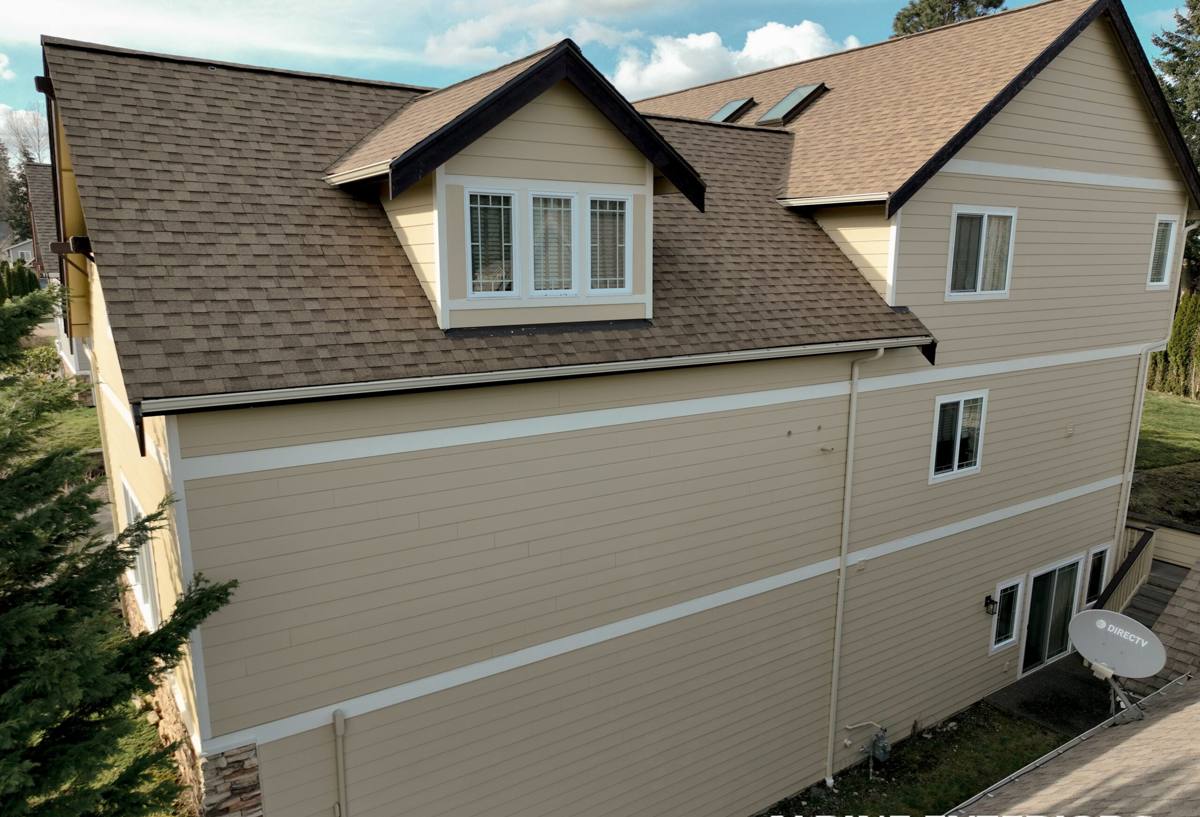
We standardized on James Hardie fiber cement siding for Green Lake and the rest of Seattle because it's engineered for exactly this kind of exposure. It doesn't rot when it stays wet, it doesn't feed moss and mildew the way bare wood does, and it holds its shape and finish through decades of freeze-thaw cycles and driving rain without the warping, cracking, or swelling that shorten the life of cheaper alternatives.
We made a deliberate decision not to install vinyl siding, LP SmartSide, or other composite and fiber cement products. Vinyl can warp and crack in temperature swings and doesn't hold paint if a homeowner ever wants to change the color. Engineered wood products are more moisture-sensitive at cut edges and seams than fiber cement, which matters a great deal in a climate where wood-based materials rarely get a real chance to dry out between rain events. None of these are "bad" products in every application — but for the wet, shaded, moss-prone conditions common around Green Lake, we don't think they hold up as well as fiber cement over the long run, and we'd rather stand behind one material we trust completely than install several we have reservations about.
What a Correct Fiber Cement Installation Actually Involves
Fiber cement siding is only as good as the installation behind it. A huge share of the siding failures we get called out to inspect in this area aren't material failures at all — they're installation shortcuts that let water get behind the siding, where it has nowhere to go.
Moisture Barrier and Flashing
Every wall gets a weather-resistant barrier installed correctly — lapped shingle-style, taped at seams, and integrated with flashing at every window, door, and roofline intersection. In a climate where wind-driven rain is a near-annual event, flashing details are not optional trim work; they're the difference between a wall that sheds water and one that traps it.
Rainscreen Clearance
We maintain proper clearance between the siding and the water-resistant barrier so air can circulate and any moisture that does get past the outer layer can dry out instead of sitting against the sheathing. This is especially important on the shaded, low-airflow walls that are common around Green Lake's mature tree lots.
Fastening, Gaps, and Caulking
Hardie panels need to be fastened to manufacturer spec — correct nail placement, correct gaps at butt joints and trim, and factory-recommended caulking only where it's actually needed. Over-caulking is a common shortcut that traps moisture instead of keeping it out; under-fastening leads to panels that work loose in high wind. We follow James Hardie's published installation guidelines exactly, because that's also what keeps the manufacturer's warranty intact.
The James Hardie Products We Use in This Neighborhood
James Hardie makes several siding profiles, and we select based on the specific house, its exposure, and the homeowner's style preference. All of it comes factory-finished with ColorPlus technology, which bakes the color into the panel rather than relying on a field-applied paint job that will need repainting far sooner in a climate this wet.
| Product | Best Use | Why It Fits Green Lake |
|---|---|---|
| HardiePlank lap siding | Most common full-wall application | Traditional look, factory finish holds up to constant damp exposure |
| HardiePanel vertical siding | Accent walls, modern facades | Clean lines, fewer horizontal joints for water to track along |
| HardieShingle siding | Craftsman and bungalow-style homes | Matches the character of many older Green Lake houses without the moisture risk of real wood shingles |
| HardieTrim boards | Corners, window and door trim | Resists the swelling and rot that affects wood trim in shaded, wet locations |
James Hardie also engineers its products by climate zone. Homes in our region are specified to the HZ5 formulation, which is built for areas with significant moisture exposure and freeze-thaw cycling rather than the drier, hotter conditions other HZ lines are engineered for. Using the correct zone-matched product isn't a minor detail — it's part of what makes the difference between siding that performs for decades and siding that doesn't.
Signs Your Current Siding Is Already Losing the Fight
Because so much of Green Lake's siding damage happens on shaded, low-visibility walls, problems often go unnoticed until they're expensive to fix. Walk your exterior and look for these signs, especially on north- and west-facing walls and anywhere tree branches hang close to the house:
- Persistent moss or algae growth that comes back within weeks of cleaning
- Soft or spongy spots when you press on wood siding or trim
- Paint that's peeling, bubbling, or chalking well ahead of its expected life
- Visible gaps, warping, or cupping in individual boards or panels
- Dark staining below window sills or at panel seams, a sign water is tracking behind the siding
- Interior drywall staining or a musty smell along exterior walls
Any one of these on its own might just need attention. Several at once, especially combined with soft trim or interior staining, usually means moisture has been getting behind the siding for a while — and that's a problem that gets more expensive the longer it sits.
How Our Process Works
We keep the process straightforward because homeowners deserve to know what's happening to their house and why.
- Free on-site estimate. We walk the full exterior, check trim, flashing, and any problem areas, and give you an honest assessment — not just a number.
- Detailed scope and product selection. We spec the right Hardie profile and color for your home and walk you through exactly what's included.
- Tear-off and substrate check. We remove the old siding and inspect the sheathing underneath for hidden rot or moisture damage before anything new goes up.
- Weather barrier and flashing installation. This is the step that determines how the wall performs for the next 30-plus years, and we don't rush it.
- Hardie siding installation to manufacturer spec. Correct fastening, spacing, and trim details, done to keep your warranty valid.
- Final walkthrough. We go over the finished work with you directly before we consider the job done.
What Affects the Cost of a Fiber Cement Siding Job
Every house is different, and we'll never quote a real number without seeing the property, but these are the factors that typically move the price up or down:
| Factor | Why It Matters |
|---|---|
| Amount of tear-off required | Removing old wood or vinyl siding adds labor before installation even starts |
| Hidden sheathing damage | Rot found during tear-off has to be repaired before new siding goes on |
| Home shape and trim complexity | Dormers, bays, and multiple roof lines mean more flashing and cutting |
| Product profile chosen | Lap, panel, and shingle siding have different material and labor costs |
| Access and lot conditions | Mature trees, tight side yards, and slopes common around Green Lake can affect staging and scaffolding needs |
Why It Matters That We Already Work in Green Lake
A crew that already works this neighborhood knows which walls take the worst weather, how much clearance mature trees need before siding work can start safely, and how the city's permitting and inspection process runs for exterior work. That's not something you get from a crew that's driving in from outside King County for a one-off job. We've seen how Green Lake's shade and moisture patterns actually play out on real houses, and we build our flashing and clearance details around that experience rather than a generic installation checklist.
It also means we're accountable locally. If a question comes up two years after installation, we're the same crew you can call, working the same neighborhood, standing behind the same install.
If your siding is showing signs of wear, or you're planning ahead for a replacement, we'd be glad to take a look. Reach out for a free, no-pressure estimate — we'll give you a straight assessment of what your home actually needs.