 Seattle Siding
 Why Bellevue Homes Need Siding Built for This Climate
Bellevue sits close enough to Puget Sound and Lake Washington that homes here deal with a specific combination of weather stress: salt-tinged marine air, long stretches of driving rain from fall through spring, and a moss and algae season that can run most of the year in shaded, north-facing spots. None of that is dramatic on its own, but layered together year after year, it's exactly the kind of slow, steady exposure that exposes weak siding systems. Paint that looked fine in year one starts chalking and peeling by year four. Seams that weren't flashed correctly let water track behind the cladding where nobody sees it until there's a soft spot on the wall. Moss doesn't just look bad — it holds moisture against the surface and accelerates whatever decay process is already underway.
Bellevue's mix of older neighborhoods with mature tree canopy and newer construction on tighter lots means shade patterns vary a lot from one property to the next, and shade is the single biggest driver of how much moss and mildew pressure a given wall sees. A west-facing wall with full sun and a north-facing wall under a stand of Douglas firs are basically living in two different climates, even on the same house. Siding that works for King County has to handle both conditions without babying.
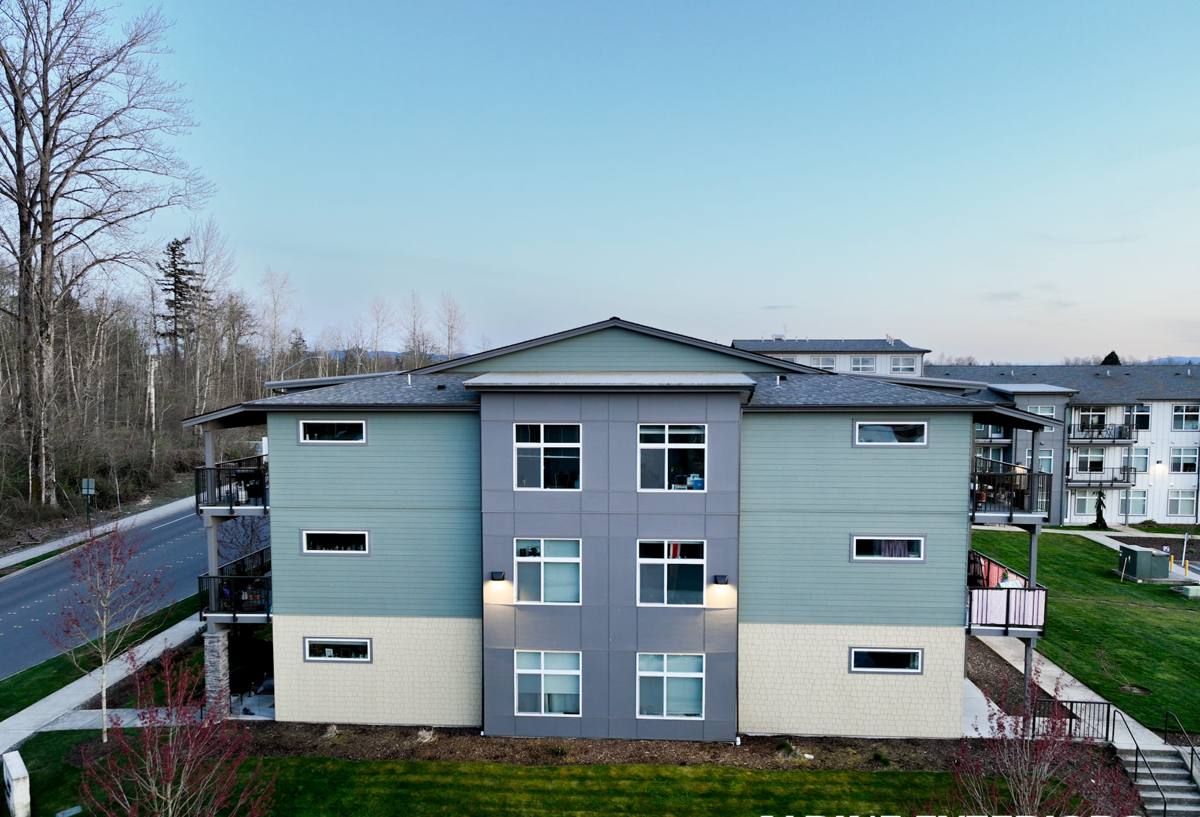
Why We Only Install James Hardie
We made a decision as a company to install James Hardie fiber cement exclusively — not vinyl, not LP SmartSide, not primed cedar or spruce, not other fiber cement brands. That's not a marketing position, it's a maintenance-and-performance call based on what actually holds up in this climate over the long run.
- It's non-combustible. Fiber cement doesn't feed a fire the way wood-based products can, which matters more every year as wildfire smoke seasons stretch into the Pacific Northwest.
- ColorPlus factory finish. The color is baked on in a controlled factory environment rather than field-painted, so it resists the fading, chalking, and peeling that job-site paint jobs are prone to under repeated wet-dry cycling.
- Engineered for moisture cycling. Hardie's HZ5 product line is formulated specifically for climates with freeze-thaw swings and sustained damp conditions — which describes a Bellevue winter well.
- Dimensionally stable. It doesn't swell, cup, or split the way wood-based sidings can when they take on and release moisture repeatedly.
- Transferable warranty. A meaningful, well-documented warranty backs the product when it's installed to spec — and installation quality is the part that determines whether that warranty means anything in practice.
We're not going to tell a homeowner that every other product is junk — vinyl and engineered wood sidings have legitimate use cases and price points. What we will say is that after years of installing and repairing siding in this exact climate, we stopped installing products that require more maintenance vigilance than most homeowners realistically keep up with, or that behave unpredictably when water inevitably finds a way behind the cladding. Hardie, installed correctly, is the product we're willing to put our name behind here.
What "Installed Correctly" Actually Means
James Hardie's own installation instructions are detailed for a reason — the material performs as advertised only when the details underneath it are handled right. A lot of the siding failures we get called out to inspect aren't product failures at all; they're installation shortcuts that let water get where it shouldn plate't belong.
The details that matter most
| Detail | Why it matters in Bellevue |
|---|---|
| Weather-resistive barrier (house wrap) installed and lapped correctly | This is the actual waterproofing layer — the siding is the weather deflector, the wrap is the backup, and Bellevue's rain volume means the backup gets tested often |
| Rainscreen / drainage gap behind the siding | Lets any moisture that gets behind the cladding drain and dry out instead of sitting against the wall sheathing — critical in a climate with limited hot, dry stretches to fully dry things out |
| Flashing at windows, doors, and horizontal trim | These are the highest-risk water entry points on any home; correct flashing sequencing (not just caulk) is what keeps driving rain out |
| Proper fastener type, spacing, and placement | Wrong fasteners or over-driven nails can crack panels or void warranty coverage, and Hardie is specific about this for a reason |
| Minimum clearance from grade, decks, and roof lines | Keeps the bottom edge of the siding out of standing water and splash-back, a common failure point we see on older homes in the area |
| Caulking and joint treatment per Hardie spec | Wrong caulk or skipped joint treatment lets water in exactly where two pieces of siding meet |
Skip any one of these and you can end up with a wall that looks perfect for a couple of years and then starts showing problems that are expensive to trace and fix, because the damage is happening behind the siding, not on the surface.
Moss, Algae, and the Bellevue Shade Problem
Moss and algae staining are cosmetic issues on Hardie siding — the material itself isn't harmed by surface growth the way untreated wood can be — but they're still worth planning for, especially on shaded north- and east-facing walls common in Bellevue's tree-covered neighborhoods. A few things reduce the long-term burden:
- Trimming back tree limbs and shrubs that keep a wall section damp and shaded longer than necessary
- Making sure gutters and downspouts aren't dumping water down a wall face or onto adjacent siding
- Periodic gentle washing (not high-pressure blasting, which can damage joints and caulking) on walls that stay shaded most of the year
- Choosing lighter ColorPlus finishes where moss staining would otherwise be more visually obvious against a dark color
None of this is unique to Hardie — any siding in a shaded, damp Puget Sound lot deals with the same growth pressure. The difference is that fiber cement doesn't rot or delaminate from that exposure the way some wood-based sidings can if maintenance lapses for a season or two.
Salt Air and Coastal Proximity
Bellevue isn't oceanfront, but its position near Lake Washington and the broader Puget Sound basin means homes here get more airborne moisture and mild salt exposure than inland King County locations. That combination accelerates corrosion on unprotected metal fasteners and trim, and it's part of why fastener selection and flashing material matter as much as the siding panel itself. It's also part of why a factory-applied finish holds up better than field paint over time — ColorPlus coatings are tested against exactly this kind of sustained environmental exposure, not just applied and hoped for.
Our Process on Bellevue Projects
1. On-site assessment
We walk the exterior, check for existing moisture damage, evaluate shade and drainage patterns on each elevation, and look at trim, window, and roofline details that will affect flashing and sequencing.
2. Product and color selection
We help homeowners choose the right Hardie line (typically HZ5 for this region) and ColorPlus finish, factoring in how each elevation's sun and shade exposure will affect long-term appearance.
3. Tear-off and substrate check
Old siding comes off and we inspect the sheathing underneath for any existing rot or moisture damage before anything new goes up — this is the point where hidden problems get caught and fixed, not covered over.
4. Weather barrier and drainage plane
House wrap and a rainscreen drainage gap go in per manufacturer spec, not as an afterthought.
5. Flashing and installation
Windows, doors, and horizontal trim get flashed correctly before siding installation begins, and panels go up following Hardie's fastening and clearance specifications.
6. Final walkthrough
We review the finished work with the homeowner, including basic care guidance specific to their property's shade and drainage conditions.
Why a Local Crew Matters for This Job
Siding installation instructions read the same everywhere, but the judgment calls on-site don't. Knowing that a particular Bellevue lot's north wall is going to stay damp for most of the winter, or that a certain roofline detail tends to concentrate runoff onto one section of wall, comes from having actually worked on homes in this area — not from a manual. A crew that installs Hardie regularly in King County has already seen how the product behaves through a full Puget Sound wet season, which shows up in smaller decisions: where to add extra flashing attention, which color finishes hold up best on shaded elevations, how tight to run clearances near grade on a sloped Bellevue lot. That local pattern recognition is part of what separates a siding job that looks good at handoff from one that still looks good in year ten.
A quick checklist for evaluating any siding contractor in this area
- Do they install to manufacturer specification, including rainscreen/drainage gap, not just "how it's always been done"?
- Can they explain their flashing approach at windows and trim in specific terms, not vague reassurance?
- Do they check and address substrate condition during tear-off rather than siding over existing damage?
- Do they have experience with the specific product line they're recommending, in this climate?
- Is the warranty they're offering actually transferable and tied to correct installation documentation?
If you're weighing a siding replacement or repair in Bellevue, we're glad to walk your property, point out what your specific exposure and shade conditions mean for the job, and give you a straightforward, no-pressure estimate — just fill out the form below.