 Seattle Siding
 Roofing Built for Kirkland's Wet, Wooded Climate
Kirkland sits in one of the wettest, greenest corners of King County, and that's exactly what makes roofing here different from roofing in a drier part of the country. Homes here sit under mature fir and cedar canopy, catch the marine air that moves through the Puget Sound region, and go months at a stretch under low clouds and steady rain. A roof that's correctly installed for this climate has to manage constant moisture, resist moss and algae growth, and shed water fast enough that it never gets the chance to sit, pool, or work its way under a shingle edge. A roof that's installed for a generic climate — or installed in a hurry — tends to show its weaknesses here faster than almost anywhere else.
New roof installation isn't just about picking a shingle color. It's a system: decking, underlayment, ventilation, flashing, and the final roofing material all have to work together. Get one piece wrong and the rest doesn't matter — water finds the gap. This page covers what that system actually needs to look like for a Kirkland home, and what to expect when you have one installed correctly.
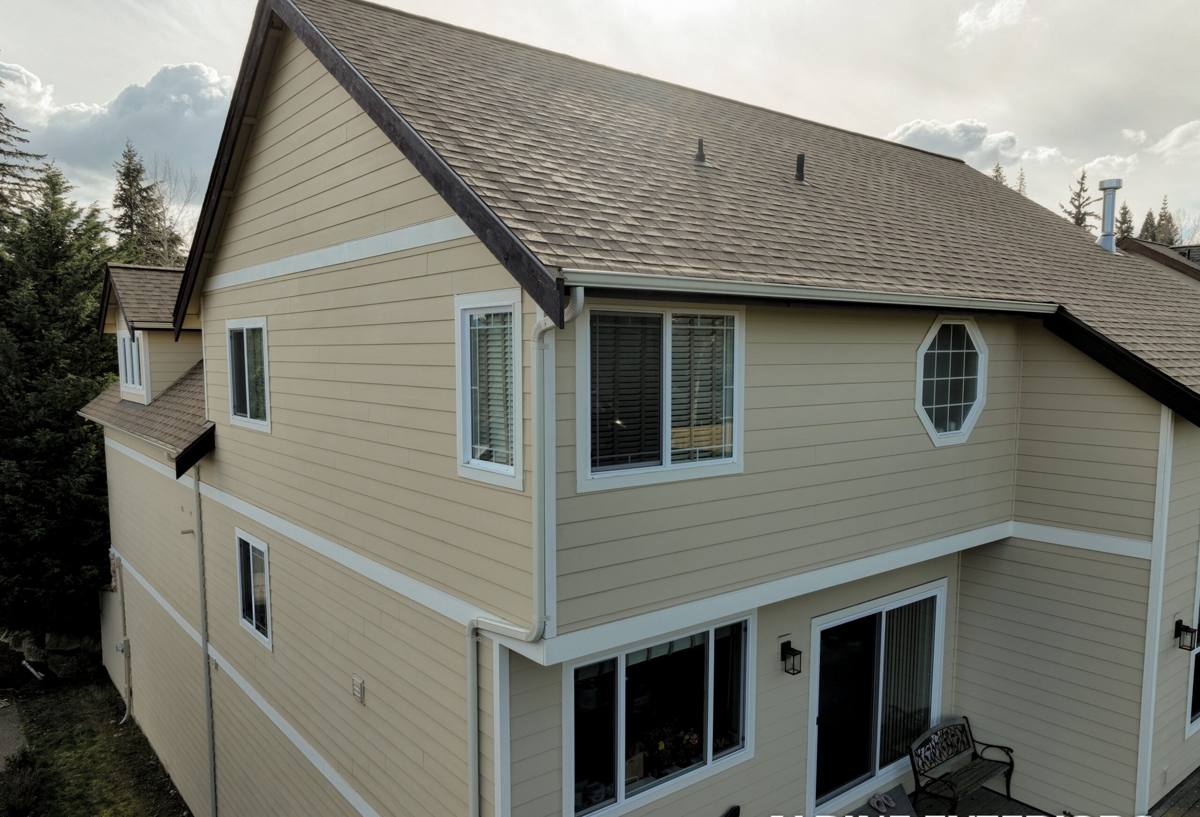
Signs a Kirkland Roof Needs Replacing, Not Just Patching
Not every roofing problem calls for a full replacement, but in this climate, small problems compound quickly once moisture gets past the surface layer. Here's what tends to signal that repair time has passed:
- Shingles that are cupping, cracking, or losing their granules in patches, especially on the north-facing slopes that stay shaded and damp longest
- Moss or dark algae streaking that keeps coming back within a season or two of cleaning
- Soft or spongy spots underfoot when walking the roof, which usually means the decking underneath has taken on water
- Daylight visible through the attic roof boards, or damp insulation after a heavy rain
- A roof that's 20+ years old on asphalt composition, or showing multiple past repair patches from different years
- Sagging rooflines, which point to structural or decking issues rather than a surface problem
If you're seeing one or two of these, a repair may still make sense. If you're seeing several at once, or the roof is old enough that a repair would just be a temporary patch on an aging system, replacement is usually the more honest answer — and the more cost-effective one over the next decade.
What a Correct New Roof Installation Actually Involves
A new roof is judged by what's underneath it as much as by what you see from the street. Here's what we consider non-negotiable on every installation.
Tear-Off and Deck Inspection
We remove the old roofing down to the decking rather than installing over it. That's the only way to actually inspect the plywood or plank sheathing underneath for rot, delamination, or soft spots — problems that are invisible from above but that will undermine even the best new roofing material if left in place. Any damaged decking gets replaced before anything new goes down.
Underlayment and Moisture Protection
Given how much rain Kirkland sees between fall and spring, underlayment matters as much as the visible roofing material. We use synthetic underlayment as the standard moisture barrier across the deck, with self-adhered ice-and-water membrane reinforcing the vulnerable spots — eaves, valleys, and anywhere water concentrates or moves slowly enough to back up under wind-driven rain.
Ventilation
A roof that can't breathe traps moisture in the attic, which shows up later as mold, rot, or premature failure of the roofing material from underneath. Balanced intake and exhaust ventilation is part of a correct installation, not an upsell — it protects the investment you're already making.
Flashing and Valleys
Most roof leaks don't happen in the middle of a shingle field — they happen at transitions: chimneys, skylights, sidewalls, and valleys where two roof planes meet. We install new metal flashing at every one of these points rather than reusing old flashing, since flashing is inexpensive compared to the water damage a failure there can cause.
Choosing a Roofing Material for the Pacific Northwest
There's no single "best" roofing material — there's the right material for your home's structure, your budget, and how much long-term maintenance you want to take on. Here's how the common options compare for a marine, moss-prone climate like Kirkland's.
| Material | Moisture & Moss Resistance | Typical Lifespan | Maintenance |
|---|---|---|---|
| Asphalt composition (3-tab) | Adequate with proper underlayment; more moss-prone over time | 15–20 years | Periodic moss/algae treatment recommended |
| Architectural/laminate shingle | Good; heavier profile sheds water better, many lines include algae-resistant granules | 25–30 years | Lower than 3-tab, still benefits from moss control |
| Metal (standing seam or panel) | Excellent; sheds water and moss has little to hold onto | 40–50+ years | Low; occasional debris clearing |
| Cedar shake | Requires diligent maintenance in wet climates; moisture-sensitive if not properly ventilated | 20–30 years with upkeep | High; regular treatment and inspection needed |
We install asphalt composition, architectural shingle, and metal roofing as our standard offerings. We're upfront that cedar shake demands a level of ongoing maintenance — regular cleaning, treatment, and ventilation checks — that many homeowners underestimate when they choose it for its appearance; if you're drawn to that look, we'll talk through what it actually takes to keep it performing well in a climate this wet before you commit.
Our Installation Process
- On-site inspection. We walk the roof and attic, check the decking condition, and measure the actual scope of work — not just a drive-by estimate.
- Written estimate. You get a clear scope of work and price before anything is scheduled, including material options at different price points.
- Permitting. We handle the permit process required for roof replacement so you don't have to navigate it yourself.
- Material delivery and site protection. Landscaping, gutters, and siding near the roofline are protected before tear-off begins.
- Tear-off and deck inspection. Old roofing comes off, decking is inspected and repaired as needed.
- Underlayment, flashing, and ventilation installation. The moisture and airflow system goes in before any visible roofing material.
- Roofing material installation. Installed to manufacturer specifications so warranty coverage stays intact.
- Cleanup and final walkthrough. Site debris and nails are cleared, and we walk the finished roof with you before calling the job done.
Moss, Algae, and Long-Term Care After Installation
Even a well-installed roof in Kirkland will face moss and algae pressure over time — it's a function of the shade, moisture, and tree cover common across this part of King County, not a sign that anything was done wrong. A few habits keep a new roof performing for its full expected lifespan:
Keep gutters and valleys clear of needles and leaf litter, since trapped debris holds moisture against the roofing material. Trim back overhanging branches where practical to reduce shade and debris load. Have the roof looked at every couple of years, especially after a particularly wet winter, so any moss growth or minor wear gets addressed before it becomes a leak. None of this is intensive work, but it makes a real difference in how long a roof lasts in this climate versus a drier one.
What Affects the Cost of a New Roof in Kirkland
Every roof is priced based on its own specifics, and we won't quote a number without seeing the job — but these are the factors that move the price up or down on most projects:
| Factor | Why It Matters |
|---|---|
| Roof size and number of planes | More square footage and more valleys/hips mean more material and labor |
| Roof pitch and access | Steep or hard-to-access roofs take longer and require more safety setup |
| Number of existing layers | Tearing off multiple old layers adds labor and disposal cost |
| Decking condition | Rot or soft spots found during tear-off require repair before installation continues |
| Material choice | Asphalt, architectural shingle, and metal carry different material and labor costs |
We'll walk you through which of these apply to your home during the on-site inspection, so the number you get reflects your actual roof rather than a generic average.
Why Hire a Roofing Crew That Already Works in Kirkland
Roofing rules and expectations aren't identical everywhere. A crew that regularly works in Kirkland already understands the local permit process, is used to the tree-heavy, hilly lots common to the area, and knows how to protect landscaping and drainage on properties that slope toward Lake Washington or a neighboring greenbelt. That familiarity shows up in fewer surprises during the job — not in shortcuts, but in a crew that's already solved the problems specific to this area on other roofs nearby.
It also matters for accountability. A contractor who works this community regularly has a reason to stand behind the work well past the day the crew packs up, because they're not driving in from out of the area for a one-time job.
Get a Free, No-Pressure Roof Estimate
If your roof is showing its age, or you just want an honest read on whether repair or replacement makes sense for your Kirkland home, we're glad to take a look. Fill out the form below for a free estimate — no pressure, no obligation, just a straight answer about what your roof actually needs.