 Seattle Siding
 Kirkland's Climate Is Hard on Siding
Kirkland sits on the shore of Lake Washington, inside the same marine weather pattern that shapes the whole Seattle and King County area. That means damp, moisture-laden air for most of the year, driving rain that comes in sideways off the water during fall and winter storms, and long stretches of gray, humid weather that never really lets siding dry out between storms. Add in the shade from mature trees that many Kirkland lots are known for, and you get a near-perfect environment for moss, algae, and slow moisture intrusion to take hold on exterior walls.
None of that is unique to one house. It's the baseline condition every siding system on the Eastside has to survive, year after year. Some materials handle it well. Others start showing stress within a handful of years — swelling at seams, paint failing, moss creeping up from the ground line, or soft spots where water has been quietly working behind the surface. Siding repair in Kirkland isn't just cosmetic touch-up work; done right, it's about catching and correcting moisture problems before they reach the wall framing underneath.
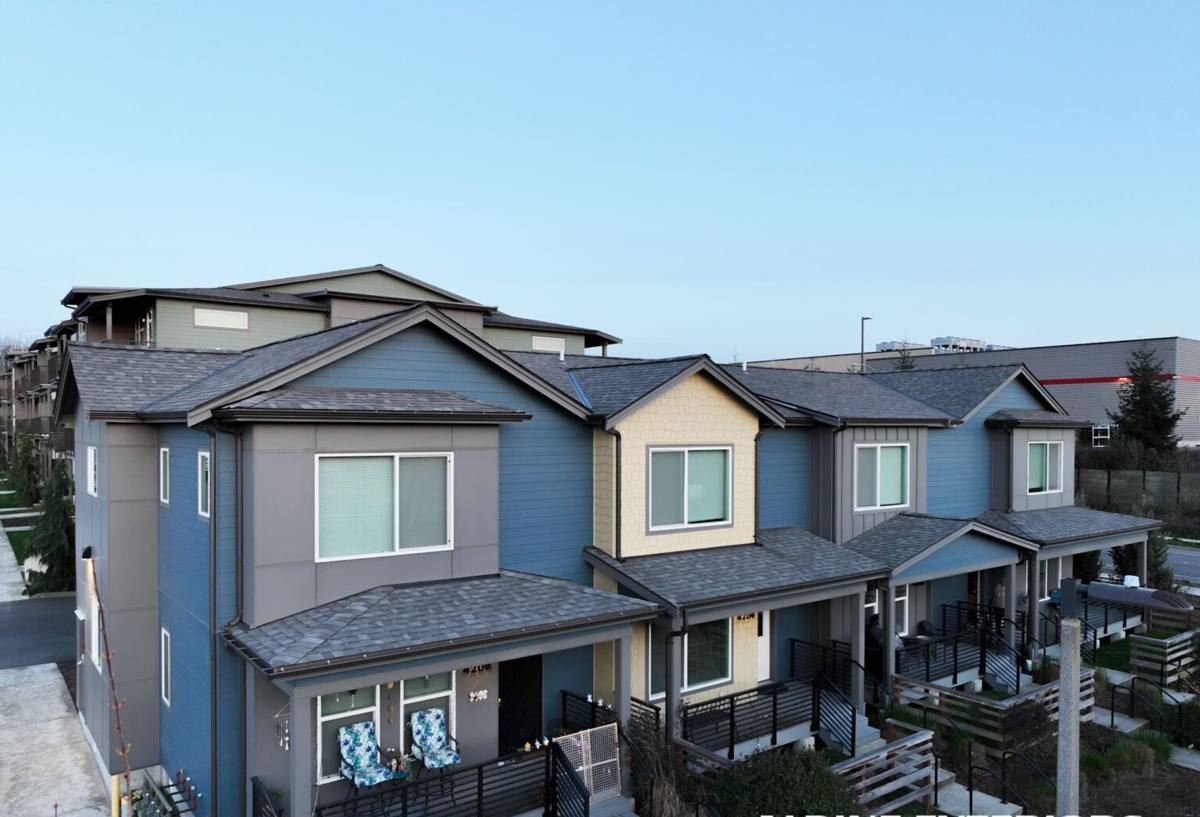
Signs Your Kirkland Home Needs Siding Repair
Most siding damage doesn't announce itself. It shows up as small, easy-to-dismiss details that get worse every wet season they're ignored. Homeowners in this area should walk their exterior at least once a year, ideally at the end of the wet months, and look for:
- Soft, spongy, or bubbling spots on siding panels or trim, especially near the bottom courses
- Visible moss or green-black algae streaking, particularly on north-facing or shaded walls
- Cracked, peeling, or bubbling paint that keeps coming back even after repainting
- Gaps opening up at seams, corners, or where siding meets window and door trim
- Warping, cupping, or buckling panels, common on older wood or engineered wood siding
- Staining or dark streaks running below nail heads or fastener lines
- Any musty smell or visible mold on interior walls that back up to exterior siding
Any one of these on its own might be minor. Several of them together, or damage that's spreading a little more every year, usually means moisture has already gotten past the surface and into the water-resistive barrier or sheathing behind it.
What Correct Siding Repair Actually Involves
Diagnosing the Moisture Path, Not Just the Symptom
Patching over a soft spot without knowing why it went soft is a temporary fix at best. A correct repair starts by finding where water is actually getting in: a failed caulk joint, a flashing detail that was never installed correctly, a panel edge that was cut on site and left unsealed, or ground contact that's been wicking moisture up into the bottom course for years. In a climate like this one, guessing wrong means the same repair fails again in a season or two.
Removing Damage Back to Sound Material
Repair work has to be cut back to material that's actually solid, not just to where the damage stops looking bad. That includes checking the sheathing and water-resistive barrier behind the removed siding for rot or saturation, since siding is only ever the first line of defense against weather, not the only one.
Matching Material and Finish
New siding sections need to match the existing profile, reveal, and color as closely as possible. That's far more reliable when the original siding is a factory-finished product with a documented color system than when it's field-painted wood or an off-brand product with no color-matching support behind it.
Sealing and Flashing Details That Actually Shed Water
Most repeat siding failures in this region trace back to flashing and sealant details, not the siding panel itself. A correct repair rebuilds those details so water sheds outward and downward, rather than just caulking a gap and hoping it holds through the next storm season.
Common Repair Issues We See on Kirkland Homes
| Issue | What's Usually Behind It | What a Correct Fix Looks Like |
|---|---|---|
| Moss and algae buildup | Shade, damp air, and infrequent cleaning letting spores establish on porous or textured surfaces | Clean and treat the surface, address the shade or moisture source where possible, and repair any siding softened underneath |
| Soft or swollen panels near the ground | Splash-back, poor grading, or siding installed too close to soil or hardscape | Cut back to sound material, correct the clearance, and re-flash before replacing panels |
| Paint failure that keeps recurring | Field-applied paint on a substrate that keeps absorbing and releasing moisture | Replace affected sections with a factory-finished product that isn't dependent on repeated repainting |
| Gaps at trim and corners | Original caulk joints that have shrunk, cracked, or were never detailed correctly | Remove failed sealant, correct any underlying gap or flashing issue, and reseal properly |
| Warped or buckled panels | Wood-based or engineered wood siding absorbing moisture unevenly | Replace with a stable, moisture-resistant material sized correctly for the application |
Repair or Replace? How We Help You Decide
Not every siding problem in Kirkland calls for a full re-side, and not every problem should be patched forever either. The right call usually comes down to a few practical factors:
| Factor | Leans Toward Repair | Leans Toward Replacement |
|---|---|---|
| Extent of damage | Isolated to one wall or a handful of panels | Spread across multiple elevations or recurring in the same spots |
| Age of existing siding | Siding is well within its expected service life | Siding is near or past the point where the material itself is failing |
| Underlying sheathing condition | Sheathing and barrier are dry and sound once opened up | Rot or saturation found behind more than a small area |
| Material type | Repairable, color-matchable, factory-finished product | Discontinued profile or color, or a product with known long-term moisture issues |
| Budget and timeline | Targeted repair fits the current budget and needs | Homeowner is already planning a broader exterior update |
We'll always tell you honestly which side of that table your house falls on. Sometimes the right answer really is a clean, well-executed repair; we don't push a full replacement when it isn't needed.
Why We Repair — and Replace — With James Hardie Fiber Cement Only
When a repair calls for new siding material, or when the damage points toward a full re-side instead of a patch, we only install James Hardie fiber cement. That's a deliberate standard, not a brand preference. Fiber cement doesn't absorb and swell the way wood-based products can in a wet, shaded climate like this one, and it isn't a food source for the moss and algae that thrive on damp exterior surfaces around Lake Washington and the greater Seattle area.
Hardie's factory ColorPlus finish also matters directly for repair work: because the color is baked on at the factory rather than applied on site, replacement sections match existing siding far more consistently than a can of exterior paint ever will, and they don't carry the recurring repaint cycle that drives so many of the repair calls we get in the first place. Hardie's HZ5 product line is engineered specifically for climates with extended moisture exposure, which describes the Puget Sound region about as well as anywhere in the country.
We don't install LP SmartSide, vinyl, Cemplank, Allura, primed spruce, or cedar. Each has legitimate uses elsewhere, but given what we see coming off Kirkland homes call after call, moisture-driven swelling, recurring paint failure, and moss-friendly surfaces, fiber cement from Hardie is what we're willing to put our name behind and warranty.
Our Process for a Kirkland Siding Repair Call
- On-site inspection. We look at the damaged area and the surrounding siding, checking how far the problem actually extends, not just where it's visible.
- Diagnosis. We identify the moisture path or mechanical cause before recommending any fix, opening up the area if needed to check the sheathing and barrier underneath.
- Honest recommendation. We tell you plainly whether this is a repair, a partial re-side of one elevation, or something that warrants a broader conversation, and why.
- Written estimate. You get a clear scope and price before any work starts, with no pressure to upsize the job.
- Correct repair. Damaged material comes out back to sound substrate, flashing and sealant details get rebuilt properly, and new material is matched and installed to manufacturer specification.
- Final walkthrough. We review the completed work with you before we consider the job done.
Why It Matters to Hire a Crew That Already Works in Kirkland
Siding repair is detail work, and the details that matter shift with the microclimate. A crew that regularly works Kirkland and the rest of the King County Eastside already knows which elevations take the worst of the driving rain, how much shade and moss pressure to expect on a given lot, and how local grading and landscaping tend to create splash-back problems at the base of a wall. That's knowledge you don't get from a general contractor who handles one siding job a year between other trades.
It also means faster, more accurate estimates, fewer surprises once a wall is opened up, and a crew that stands behind its repair work with real accountability, not a one-time patch job from someone who won't be back if it fails again next storm season.
If you're seeing moss, soft spots, gaps, or paint that won't stay fixed on your Kirkland home, we're happy to take a look and give you a straight answer, repair or replace, with a clear reason either way. Request a free, no-pressure estimate using the form below.