 Seattle Siding
 Siding Replacement in Kirkland: What the Climate Demands
Kirkland sits on the Eastside of Lake Washington in King County, inside one of the wettest, greenest, and most tree-covered residential belts in the greater Seattle area. That combination is hard on siding. Homes here deal with long stretches of driving rain off the Sound and the lake, humid marine air that never fully dries out between storms, and heavy tree canopy that keeps north- and west-facing walls shaded and damp for weeks at a time. Add in the salt-tinged air that moves inland off Puget Sound during winter storm systems, and you've got a climate that punishes any siding material with a weak moisture-management system.
This isn't a page about siding replacement in general. It's about what siding replacement actually needs to accomplish on a Kirkland house, given this specific climate, and how we approach that job when we're the crew doing it.
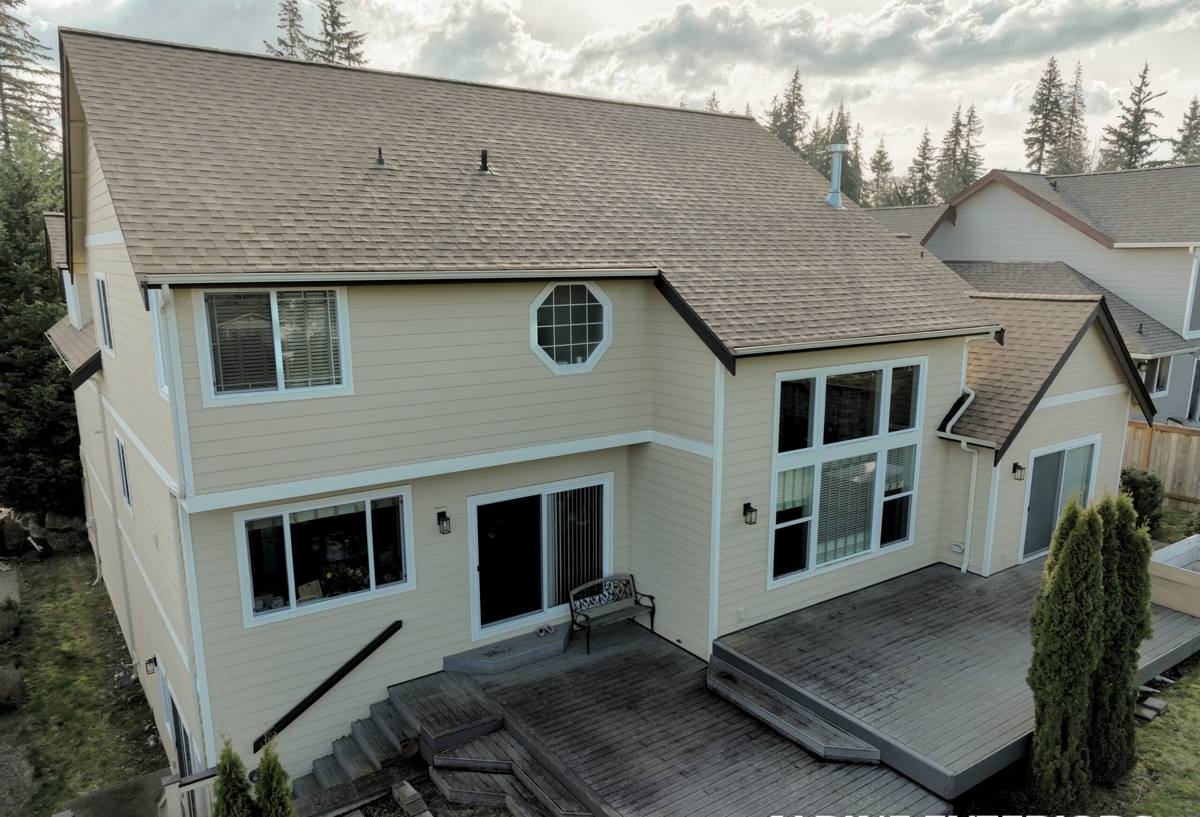
Why Kirkland Homes Wear Out Siding Faster Than Drier Climates
Moss and Mildew Season Runs Most of the Year
In a lot of the country, "moss season" is a few weeks in spring. In Kirkland, shaded siding can stay damp enough to grow moss and mildew for eight or nine months out of twelve. Moss holds water against the surface of the siding, which accelerates rot in wood-based products, discolors paint and factory finishes, and can work its way into seams and joints if it's left unaddressed.
Driving Rain Finds Every Weak Point
Wind-driven rain off the lake doesn't just fall — it gets pushed sideways into laps, seams, and trim joints. A siding system that relies on caulk and paint alone to keep water out will eventually fail here. What matters more is what's happening behind the siding: the water-resistive barrier, the flashing details, and the drainage gap that lets any water that does get in find its way back out instead of soaking into sheathing.
Temperature Swings Are Mild but Constant
Kirkland doesn't get brutal freeze-thaw cycles like colder climates, but the constant damp-to-dry cycling still stresses siding materials that expand, contract, or absorb moisture differently across seasons. Over ten or fifteen years, that slow cycling is what separates a siding job that ages gracefully from one that starts failing early.
Signs a Kirkland Home Needs Siding Replacement, Not Just Repair
- Soft, spongy, or crumbling siding when pressed — usually a sign of moisture damage underneath, not just on the surface
- Persistent moss or black streaking that returns within weeks of cleaning
- Paint that's peeling, bubbling, or failing faster than a normal repaint cycle
- Visible gaps, warping, or buckling in panels or lap boards
- Soft spots or discoloration on interior walls near exterior corners — a sign moisture has already gotten past the siding
- Siding that's original to a home built more than 20-25 years ago, especially with wood-based or older composite products
- Rising energy bills with no other explanation, which can point to a failing weather barrier behind the siding
One or two of these on their own might mean a repair is enough. Several at once, especially combined with age, usually means the underlying moisture barrier is compromised and full replacement is the more honest recommendation — patching siding over a failed barrier just delays the same problem.
What a Correct Siding Replacement Involves
Siding replacement isn't just swapping old boards for new ones. In a climate like Kirkland's, the parts you don't see matter as much as the finished product. A correct job includes:
- Full tear-off and inspection. Old siding comes off so the sheathing underneath can actually be checked for rot, soft spots, or existing water damage — problems that get hidden, not fixed, if new siding just goes over old.
- Sheathing repair where needed. Any damaged sheathing gets replaced before anything new goes up. Installing over compromised sheathing just locks the problem in.
- A properly installed water-resistive barrier. This is the layer that actually keeps bulk water out of the wall assembly. It has to be lapped correctly, sealed at penetrations, and integrated with flashing — not just stapled up and covered.
- Flashing at every transition. Windows, doors, roof lines, and deck ledgers are where most siding failures start. Correct flashing directs water out and away instead of behind the siding.
- A drainage gap. A small air space between the siding and the barrier lets any water that gets past the outer layer drain and evaporate instead of sitting against wood.
- Manufacturer-spec fastening and clearances. Nail placement, spacing, and ground clearance all affect how the siding performs over 20-plus years — not just how it looks the day it's installed.
Why We Only Install James Hardie Fiber Cement
We don't install vinyl, LP SmartSide, primed spruce, cedar, or other fiber cement brands. That's a deliberate standard, not a sales pitch. Vinyl can warp and fade in constant UV and temperature cycling and offers little real protection on its own — it's a rain screen, not a barrier system. Wood-based and OSB-core products are more vulnerable to the kind of sustained moisture exposure Kirkland gets every winter, especially at cut edges and seams where water can wick in over time. Other fiber cement brands exist, but we've standardized on James Hardie because of the consistency of its HZ5 product line (engineered for wetter, more humid climates like ours), its factory-applied ColorPlus finish, which holds color and resists the moss-and-mildew staining that plagues field-painted siding here, and a transferable warranty backed by a manufacturer with decades in the fiber cement category. It's non-combustible, holds up to driving rain and constant damp far better than wood-based alternatives, and doesn't rely on us or a future owner to keep up with painting to keep water out.
Our Kirkland Siding Replacement Process
Every home is different, but the process holds a consistent shape:
- On-site inspection. We look at the current siding, check for hidden moisture or rot, and assess trim, flashing, and roof-to-wall transitions — not just the siding itself.
- Written estimate. A clear scope of work and price, with the HZ5 Hardie product line and finish options spelled out, no vague allowances.
- Tear-off and sheathing check. Old material comes off, sheathing gets inspected and repaired as needed before anything new goes up.
- Barrier and flashing installation. This is the step that determines whether the siding actually performs for the next 20-30 years, and it's the step that's easiest for a rushed crew to shortcut.
- Hardie installation to manufacturer spec. Correct fastening, clearances, and joint treatment, installed by a crew that installs this product regularly rather than occasionally.
- Final walkthrough. We go over the finished work with the homeowner before calling the job done.
Cost Factors for Kirkland Siding Replacement
| Factor | Why It Moves the Price |
|---|---|
| Home size and wall complexity | More square footage, corners, and gables mean more material and labor |
| Extent of sheathing damage | Rot found during tear-off adds repair work that can't be scoped until the old siding is off |
| Siding profile and texture | Lap width, shingle-style panels, and board-and-batten each have different material and labor needs |
| ColorPlus vs. field-applied finish | Factory-applied color costs more upfront but removes the future cost and maintenance burden of painting |
| Access and site conditions | Steep lots, mature landscaping, and tight setbacks — common on older Kirkland lots — can add labor time |
| Trim and detail work | Window and door trim, corner boards, and fascia work add to the scope beyond flat wall area |
We'd rather walk a homeowner through these factors on-site than throw out a number that doesn't hold up once the old siding comes off.
Why Hiring a Crew That Already Works Kirkland Matters
Siding installed correctly for a drier climate doesn't necessarily perform here. A crew that works the Eastside regularly already knows how to detail flashing for driving rain, how to handle clearance and drainage on the shaded, tree-heavy lots common in this part of King County, and what moisture problems tend to show up first in homes of a given age and construction type. That local repetition matters more than it sounds like it should — it's the difference between a crew following a generic install guide and a crew that's already seen how Kirkland's climate finds the gaps in a bad installation.
After Your Siding Is Replaced
James Hardie siding with a factory ColorPlus finish is genuinely low-maintenance compared to wood or field-painted alternatives, but "low-maintenance" isn't "no-maintenance" in this climate. A yearly rinse to knock down moss and pollen buildup, a check of caulking at trim and penetrations every couple of years, and prompt attention to any landscaping that's grown in against the siding will keep a correctly installed system performing for decades. That's a fraction of the upkeep wood or field-painted siding demands here.
If your Kirkland home's siding is showing its age, or you just want an honest read on whether repair or replacement makes sense, we're happy to take a look. Reach out for a free, no-pressure estimate using the form below.