 Seattle Siding
 Kirkland's Climate and What It Does to Windows
Kirkland sits on Lake Washington, but the same marine weather that soaks the rest of the Puget Sound lowlands reaches this side of the lake too. Wind off the water drives rain sideways into window frames rather than straight down, salt-tinged air moves inland on westerly systems, and the long stretch of gray, wet months from fall through spring gives moss and mildew months to work on anything that holds moisture. None of that is dramatic on its own, but window openings are one of the most common places where it adds up into real damage.
A window is a hole cut into your home's weather barrier. Every seam, flange, and sealant line around it either sheds water or eventually lets it in. In a dry climate, a mediocre installation might go unnoticed for years. In King County, gaps in flashing or sealant show up faster — as staining, soft trim, fogged glass, or a musty smell near the sill. Windows here don't just need to look good; they need to actually manage water, because the marine climate gives them no rest between rain events.
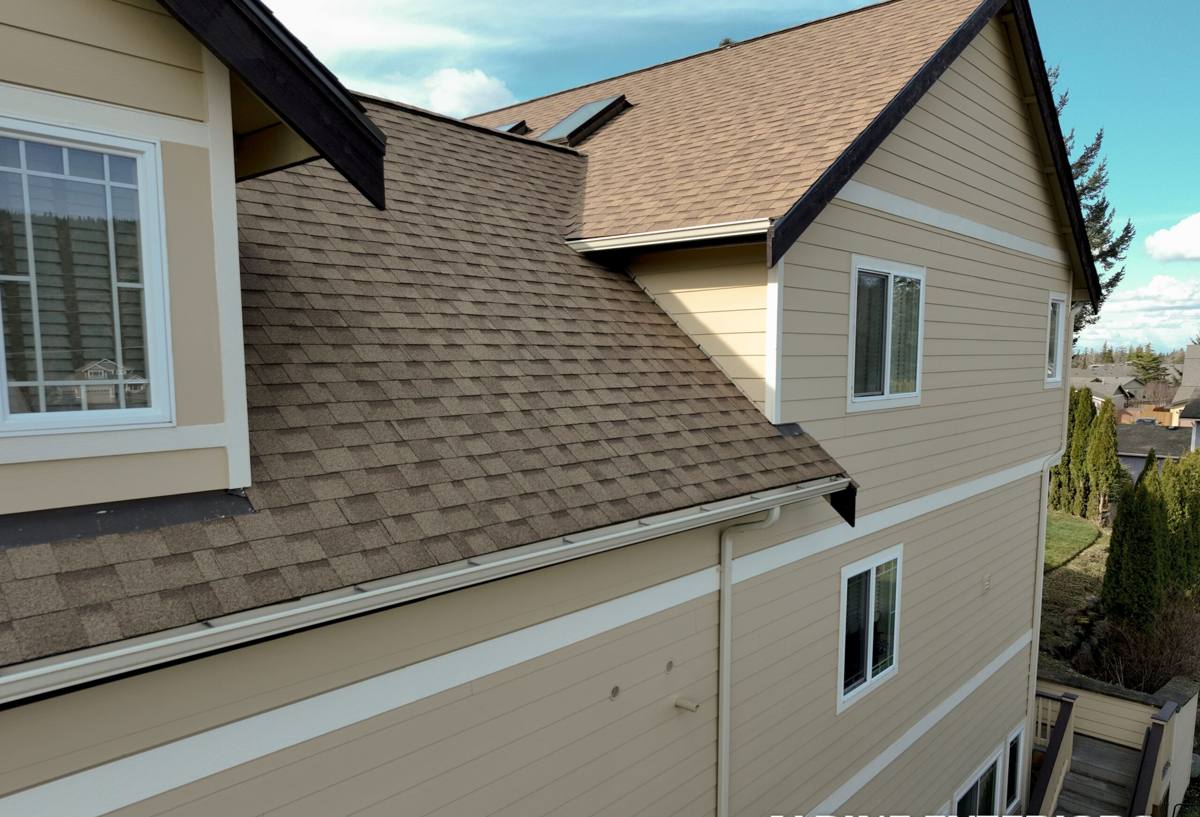
Signs It's Time for New Windows
Not every drafty window needs full replacement, and not every old window is a lost cause — but there are patterns we see often enough in Kirkland homes that they're worth checking for before winter storms roll through.
- Fogging or a visible haze between panes, which means the seal on a double-pane unit has failed and the insulating gas has escaped
- Soft or discolored wood at the sill, jamb, or exterior trim — a sign moisture has been getting behind the frame
- Windows that are difficult to open, close, or lock, often from swelling, warping, or a settling frame
- Visible daylight or a noticeable draft around the frame when it's windy
- Condensation that regularly forms on the inside of the glass, especially in cooler months
- A musty or mildew smell near the window that doesn't clear with ventilation
- Rising heating bills in a home where nothing else has changed
One or two of these on a single window is often a repair issue. Several of these across multiple windows, especially on the same exposure, usually points to a bigger moisture or age problem worth a full assessment.
What a Correct Window Installation Actually Involves
Setting a window into an opening looks simple from the outside. Getting it to perform for 20-plus years in a wet climate is a different job, and it's mostly about what happens before the window ever goes in.
Sill Pan Flashing and Moisture Barrier Integration
Any water that does get past the window frame — and over enough years, some always will — needs somewhere to go besides your wall framing. A correctly built sill pan creates a sloped, waterproof tray under the window that directs that moisture back outside instead of down into the wall cavity. The flashing around the sides and top then has to integrate properly with the house's water-resistive barrier, shingled so water is always directed downward and outward, never trapped behind a layer that pushes it inward. This layering matters more here than in drier regions, because Kirkland's windows see far more cumulative wet hours per year.
Insulation and Air Sealing
The gap between the window frame and the rough opening needs to be filled with a material that stays flexible and doesn't compress or settle over time — not stuffed tight with excess foam, which can bow the frame and cause the window to bind or stop sealing evenly. Air sealing on the interior side matters as much as flashing on the exterior side; a well-flashed window that still leaks air around the frame will still fog with condensation and cost more to heat.
Squaring, Shimming, and Structural Fit
A window that isn't square in its opening will bind, won't lock properly, and will develop uneven gaps that let water and air through in one spot even if the rest of the seal looks fine. Getting this right takes correct shimming at the right load points and checking level, plumb, and square before a single fastener goes in — not eyeballing it and moving on.
Choosing Window Materials and Glass for This Climate
There's no single "best" window brand or material — the right choice depends on the home, the budget, and how much upkeep you want to take on. What we focus on with Kirkland homeowners is how a given frame material actually behaves in a wet, temperate climate over time.
| Frame Material | Moisture Performance | Maintenance | Typical Lifespan |
|---|---|---|---|
| Vinyl | Won't rot; handles moisture well | Low — occasional cleaning | 20-30+ years |
| Fiberglass | Excellent; very stable in wet/dry cycles | Low | 30-40+ years |
| Wood-clad | Good if cladding stays intact; interior wood needs protection | Moderate — watch cladding seams and interior finish | 20-30 years with upkeep |
| Aluminum | Durable but conducts cold, prone to condensation without thermal breaks | Low | 20-30 years |
For most Kirkland homes we recommend vinyl or fiberglass frames because they don't absorb moisture and don't need repainting or resealing on a schedule. Wood-clad windows can still be a good fit for homes where the look matters more than minimizing upkeep, as long as the homeowner understands the maintenance commitment. We steer away from bare wood exterior frames in this climate — not because wood can't be a fine window material elsewhere, but because unprotected exterior wood in a region with this much sustained moisture is a maintenance burden most owners don't want.
Glass Packages
For the Puget Sound climate, double-pane windows with a low-E coating and argon fill are the practical standard — they handle our moderate temperature swings well without the added cost of triple-pane, which pays off more in climates with harsher winters. What matters more locally is a solid U-factor for heat retention during our long cool season and a glass package that resists condensation, since interior humidity plus cold glass is a common source of the fogging and moisture complaints we see on older single-pane and early double-pane installs.
Our Kirkland Installation Process
- Assessment: We look at each window opening, check the condition of the surrounding trim and sheathing, and talk through what's actually causing the problem — draft, fogging, rot, or just age.
- Removal: Old windows come out carefully, and we inspect the rough opening and framing underneath. This is often where hidden moisture damage from a prior installation shows up.
- Repair as needed: Any soft or damaged framing gets addressed before a new window ever goes in. Setting a new window into a wet or rotted opening just resets the clock on the same problem.
- Sill pan and flashing installation: We build the sill pan and integrate flashing with the existing water-resistive barrier so water sheds outward at every layer.
- Setting the window: The unit is shimmed, squared, and fastened per manufacturer spec, then insulated and air-sealed around the frame.
- Exterior and interior finish: Trim is reinstalled or replaced, sealant is applied at the appropriate joints, and the tie-in with your siding is finished cleanly.
- Walk-through: We test operation and locking, and go over care and warranty details before we consider the job done.
Permits and Older Kirkland Homes
Depending on the scope of the work, window replacement in Kirkland can fall under City of Kirkland building permit requirements, particularly if the new opening size changes, the work affects a bedroom's required egress dimensions, or it's part of a larger remodel. Straightforward like-for-like replacements are often more streamlined, but egress and safety glazing rules still apply in bedrooms and near stairs or bathtubs. We handle the permit question as part of the estimate so you're not left guessing, and we build the job to current code rather than just matching what was there before — which matters most in Kirkland's older housing stock, where original windows sometimes predate current energy and safety requirements.
Cost Factors for Window Installation in Kirkland
Every home is different, so we don't quote sight-unseen pricing, but the same handful of factors drive cost on nearly every job we look at.
| Factor | Why It Affects Cost |
|---|---|
| Number and size of windows | More openings and larger glass areas mean more material and labor |
| Frame material chosen | Vinyl, fiberglass, and wood-clad carry different material costs |
| Condition of the existing opening | Rot or moisture damage found during removal requires repair before installation |
| Access and story height | Second-story or hard-to-reach windows take more time and equipment |
| Trim and siding tie-in | Matching existing exterior trim or siding profiles adds labor |
| Glass package and energy rating | Higher-performance low-E and gas-fill options cost more upfront |
The one factor homeowners underestimate most is hidden damage. A quote based on a healthy opening can change once removal reveals soft framing — which is exactly why our process checks the opening early and flags anything unexpected before we're deep into the job.
Why a Local Crew That Already Works Kirkland Matters
Window installation isn't just about the window — it's about how that window integrates with the specific way a home was built. Kirkland's mix of older homes and newer construction means we run into a wide range of framing methods, siding types, and water-barrier systems from one job to the next. A crew that regularly works this area has already seen how local homes were built, what tends to fail first in this climate, and what the City of Kirkland typically expects on a permit application. That familiarity shows up as fewer surprises, a tighter timeline, and a finished install that's built for King County's weather rather than a generic climate assumption.
It also means someone who can actually show up when a warranty question comes up two or five years down the road — not a crew that did one job in the area and moved on. For a job that's fundamentally about keeping water out of your walls for the next few decades, that kind of continuity is worth as much as the window itself.
If you're weighing repair versus replacement, or just want a straight answer on what your current windows need, we're glad to take a look. Reach out for a free, no-pressure estimate using the form below.