 Seattle Siding
 Why Magnolia Roofs Need a Different Approach
Magnolia sits up on a bluff with water on three sides, and that position is a mixed blessing for a roof. The views are hard to beat, but the same exposure that gives you a look at the Sound also means salt-laden air moving off the water, wind-driven rain that hits roof planes at an angle instead of falling straight down, and a shaded, damp understory on the wooded lots that keeps moss growing nearly year-round. A roofing material that works fine in a drier inland King County suburb doesn't always hold up the same way here. Metal roofing, installed correctly for this specific exposure, is one of the more resilient answers to that mix.
We're not going to tell you metal is the only right choice for every Magnolia home — plenty of well-built roofs in this neighborhood use other materials successfully. What we will say is that when a homeowner asks us specifically about metal roofing for a Magnolia property, the climate factors above are exactly what shape our recommendations on panel type, underlayment, and detailing.
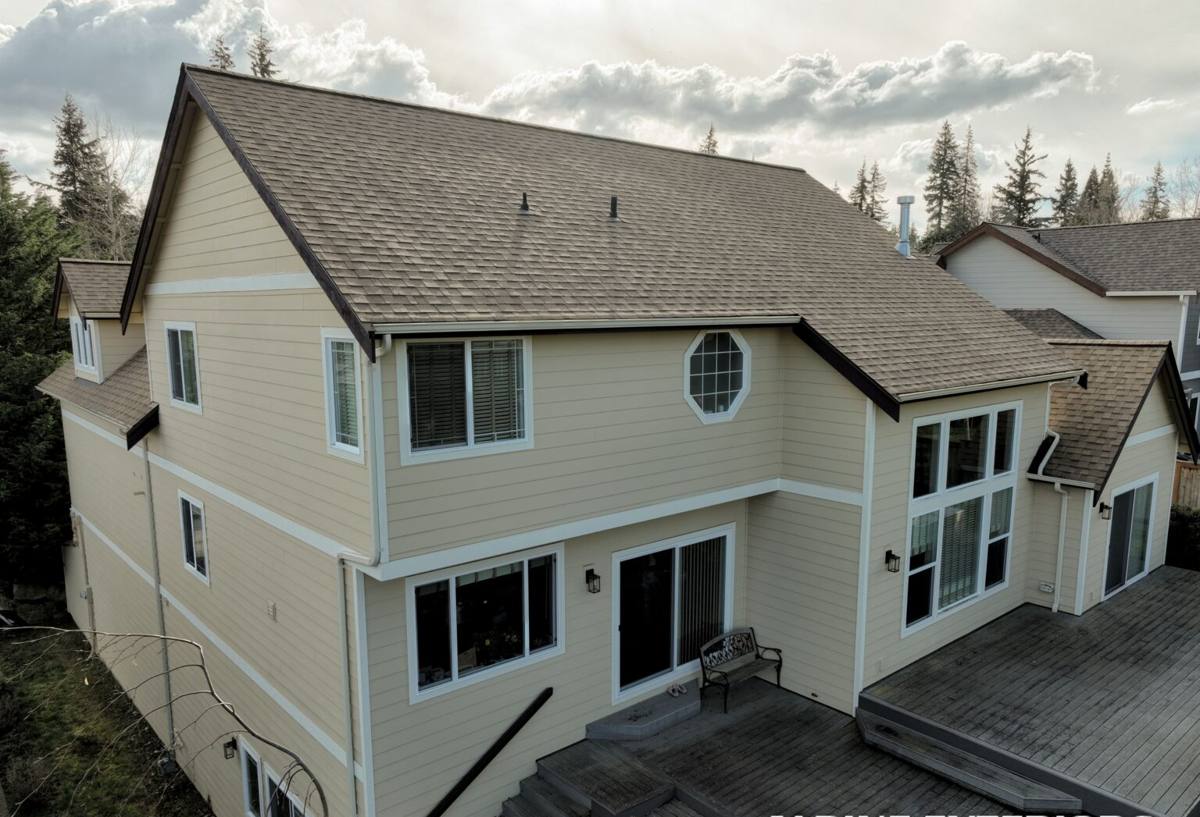
What Salt Air, Rain, and Moss Actually Do to a Roof
Salt Air and Corrosion
Homes closer to the water pick up airborne salt that settles on exposed metal surfaces — fasteners, flashing, panel edges — and accelerates corrosion over time if the materials and coatings aren't chosen for it. This isn't unique to Magnolia; it's a known consideration for any Puget Sound property near open water. The practical response is material selection: choosing coated steel or aluminum systems rated for coastal or near-coastal exposure, and using stainless or coated fasteners rather than standard hardware that will streak and weaken faster.
Driving Rain
Seattle's rain isn't usually the intense, short downpour you get elsewhere — it's long, steady, and often blown sideways by wind coming off the water. That matters for roofing because wind-driven rain can find its way under improperly lapped panels, around poorly flashed penetrations, or through fastener holes that weren't sealed correctly. A metal roof's actual water resistance comes down almost entirely to installation detail — panel overlap, seam type, flashing at valleys and walls, and underlayment quality — not just the metal itself.
Moss and Organic Growth
Magnolia's tree cover and the region's damp, mild winters create ideal conditions for moss, especially on north-facing slopes and shaded roof sections. Moss holds moisture against roofing material, and on some products that trapped moisture leads to granule loss, rot, or premature aging. Metal roofing has a real advantage here: it doesn't provide the porous surface moss needs to root the way some other materials do, and smooth-finish panels shed debris and dry out faster after rain. It's not moss-proof — organic debris can still build up in valleys and against trim — but it's meaningfully lower-maintenance in this regard.
Metal Panel Options for a Magnolia Home
Not all metal roofing is the same product wearing different colors. The panel type and finish matter for how the roof performs against this specific set of conditions.
| Option | Best For | Trade-Offs in This Climate |
|---|---|---|
| Standing seam steel (concealed fasteners) | Homes wanting maximum water resistance and a clean, modern look | Higher upfront cost; excellent performance against wind-driven rain since there are no exposed fastener penetrations |
| Exposed-fastener steel panels | Budget-conscious projects, outbuildings, simpler rooflines | Lower cost, but fastener seals need to be correct and checked over time — more vulnerable to slow leaks if installed carelessly |
| Aluminum panel systems | Properties with the most direct water exposure | Naturally corrosion-resistant since it doesn't rust, often a strong fit for closer-to-water sites; typically costs more than steel |
| Stone-coated steel | Homeowners wanting a shake or tile look with metal's durability underneath | Good moss resistance and impact resistance; more complex detailing at edges and penetrations |
For most Magnolia homes we look at, standing seam steel or an aluminum system tends to make the most sense given the wind and moisture exposure, but the right call depends on your specific lot, tree cover, and how close you sit to open water.
What a Correct Metal Roof Installation Actually Involves
A metal roof is only as good as what's underneath it and how the details are handled. The panels themselves are usually the easy part.
- Deck inspection and repair — any soft, rotted, or previously water-damaged decking gets addressed before anything goes on top of it
- High-quality underlayment — a synthetic or self-adhering underlayment rated for the exposure, giving you a second line of defense if wind-driven rain ever gets past the panels
- Proper panel overlap and seam sealing — laps and seams oriented and sealed to shed water in the direction our prevailing weather actually comes from
- Flashing at every penetration and transition — valleys, chimneys, skylights, and wall intersections are where most roof leaks actually originate, metal or otherwise
- Ventilation — correct intake and exhaust airflow so moisture doesn't get trapped in the attic space, which matters even more under a non-breathable metal surface
- Corrosion-appropriate fasteners and trim — matched to the panel material so you don't get galvanic corrosion between dissimilar metals
Skipping or rushing any one of these is how a metal roof underperforms its expected lifespan in a wet, coastal-adjacent neighborhood like Magnolia. It's rarely the panel that fails first — it's the flashing, the underlayment, or a fastener detail.
Our Process for Magnolia Metal Roofing Projects
1. On-Site Assessment
We walk the roof, check the current decking and ventilation, look at tree coverage and moss patterns, and note anything specific to the lot — slope orientation, shade, proximity to water — that should influence material choice.
2. Material and Scope Recommendation
Based on that assessment, we walk you through panel and finish options honestly, including cost trade-offs, rather than defaulting to whatever's easiest for us to install.
3. Written Estimate
You get a clear, itemized estimate before any work starts — no vague allowances, no surprise change orders for things we should have caught during the walkthrough.
4. Installation
Deck repair as needed, underlayment, panels, flashing, and trim — done in sequence, with attention to the detailing that actually determines whether the roof performs in this climate.
5. Final Walkthrough
We review the completed roof with you, cover basic maintenance expectations, and make sure you know what warranty coverage applies to the materials and the labor.
Maintenance: What a Metal Roof Still Needs From You
Metal roofing is lower-maintenance than a lot of alternatives, but "lower" isn't "none," especially under Magnolia's tree cover.
- Clear debris from valleys and against any trim or wall flashing a couple times a year, more often if you have heavy overhanging trees
- Check gutters and downspouts regularly — clogged gutters back water up under roof edges regardless of what the roofing material is
- Watch for moss or algae staining on shaded sections and address it gently rather than letting it build up for years
- Have penetrations and flashing points visually checked periodically, since that's where problems tend to start
- Avoid pressure washing the roof surface directly — it can damage coatings and force water under seams
Cost Factors for a Magnolia Metal Roof
We won't quote a number here because every roof is different, but the real cost drivers are worth understanding before you start getting bids.
| Factor | Why It Moves the Price |
|---|---|
| Panel material and finish | Aluminum and higher-end coated steel cost more than basic exposed-fastener steel |
| Roof complexity | Valleys, dormers, and multiple roof planes take more time and more flashing detail than a simple gable |
| Tear-off vs. overlay | Removing an existing roof down to the deck costs more upfront but lets us fully inspect and repair the decking underneath |
| Deck condition | Rot or water damage found once the old roofing is off adds repair cost, but it's cheaper to fix now than to build a new roof over it |
| Ventilation upgrades | Older Magnolia homes sometimes need attic ventilation improvements to perform well under a new roof |
Why a Crew That Already Works Magnolia Matters
Roofing in Magnolia isn't identical to roofing in a dry, inland part of King County, and it isn't identical to roofing right on the waterfront either — it's its own combination of tree cover, bluff exposure, and marine air. A crew that's worked this neighborhood knows which slopes tend to hold moss, which lots see the most wind-driven rain, and how the local permitting and inspection process runs in Seattle. That familiarity shows up in fewer surprises during the project and a roof detailed correctly the first time, rather than a generic installation that happens to be sitting on a Magnolia address.
If you're weighing metal roofing for your Magnolia home, we're happy to come take a look, walk the roof with you, and give you a straight, no-pressure estimate — you can request one through the form below.