 Seattle Siding
 Storm Damage Roof Repair in Magnolia
Magnolia sits on a peninsula, with water on three sides and very little to slow down wind coming off Puget Sound. That exposure is part of what makes the neighborhood beautiful, and it's also why roofs here take a different kind of beating than roofs a few miles inland. When a windstorm rolls through, Magnolia homes tend to catch it first and catch it hardest. We repair storm-damaged roofs across Seattle and King County, and Magnolia is one of the areas where we see the clearest pattern of wind, salt air, and moisture working together against a roof over time.
This page covers what storm damage actually looks like on a Magnolia roof, what a correct repair involves, and how our process works from the first call to the final inspection.
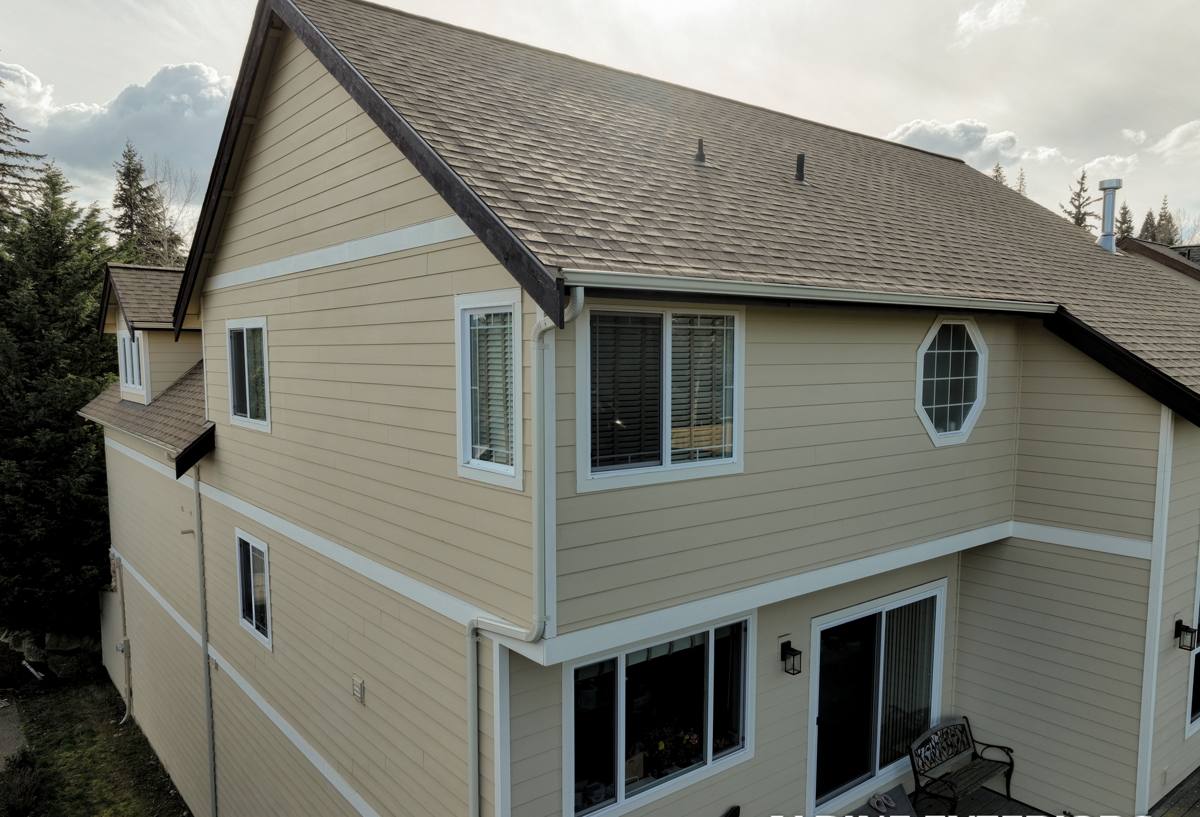
What Magnolia's Climate Does to a Roof
Salt Air and Wind Exposure
Homes closer to the water deal with salt-laden air more or less constantly. Salt accelerates corrosion on exposed metal — flashing, fasteners, gutter hardware, vent caps — well before it would fail on a roof further from the Sound. A storm doesn't have to be severe to finish off a piece of flashing that's already been quietly corroding for years.
Driving Rain and Wind-Driven Damage
Because Magnolia catches wind with little to break it up, rain during a storm often doesn't fall straight down — it drives sideways into roof edges, valleys, and anywhere shingles or panels meet a wall or chimney. That's a very different stress than steady vertical rain, and it's exactly the condition that finds the weak spot in a roofing system: a lifted shingle tab, an under-sealed nail, a flashing lap that's slightly short.
Moss and Prolonged Dampness
Seattle's moss season runs long, and Magnolia's tree cover and marine humidity keep roofs damp for extended stretches, especially on north-facing slopes that don't get much sun. Moss holds moisture directly against roofing material and works its way under shingle edges, which lifts them just enough that the next windstorm can get underneath and do real damage. A lot of what looks like "storm damage" after a big blow is actually storm damage finishing off what months of moss growth already started.
Common Storm Damage We See in Magnolia Homes
Not all storm damage looks dramatic. Some of it is obvious — a tarp-worthy hole or missing shingles you can see from the street. A lot of it is subtle and only shows up as a stain on a ceiling weeks later. Here's what we're typically called out to assess after a windstorm in this neighborhood.
| Damage Type | What It Looks Like | Typical Cause in Magnolia | Urgency |
|---|---|---|---|
| Lifted or torn shingles | Tabs bent back, cracked, or missing outright | Direct wind uplift, worse on ridge and eave lines | High — exposes underlayment immediately |
| Flashing failure | Rust streaks, gaps at chimneys/walls, loose valley metal | Salt-air corrosion plus wind-driven rain finding the seam | High — primary source of hidden leaks |
| Moss-related lifting | Raised shingle edges, dark streaking, spongy patches | Prolonged dampness and moss root intrusion | Medium — worsens with the next storm |
| Debris impact | Punctures, cracked shingles, dented metal roofing | Branches or debris carried by wind off nearby trees | Depends on depth — can expose deck instantly |
| Gutter and edge damage | Pulled fasteners, sagging runs, overflow staining on fascia | Wind load plus water volume exceeding capacity | Medium — drives water into fascia and soffit if ignored |
What a Correct Storm Damage Repair Involves
A rushed storm repair often just patches the visible symptom and leaves the underlying weak point untouched. Given how much repeat exposure Magnolia roofs get to wind and rain, that approach tends to fail again within a season or two. A correct repair does a few things every time:
Full Inspection, Not Just the Damaged Spot
If wind was strong enough to cause damage in one area, it was strong enough to stress the rest of the roof. We check the whole roof plane — not just the spot the homeowner pointed out — including flashing, ridge lines, and any north-facing sections where moss and moisture have likely already softened up the material.
Matching Materials and Fastening Method
Replacement shingles, flashing, or panels need to match the existing roofing's type, profile, and where possible, color — and just as importantly, they need to be fastened the way the manufacturer specifies for wind exposure, not just however's fastest. Under-nailing is one of the most common reasons a "repaired" roof loses shingles again in the very next storm.
Correct Flashing Detail
Most leaks trace back to flashing, not the shingle field itself. A repair that reseals a flashing joint without addressing corrosion or an undersized lap is a temporary fix. We rebuild flashing details properly — correct laps, correct fastening, corrosion-resistant materials given the salt air — rather than just caulking over the symptom.
Addressing the Cause, Not Just the Hole
If moss contributed to the failure, the repair should include moss removal and treatment on the affected slope, not just a shingle swap. Otherwise the same section is likely to lift again well before its expected lifespan.
Our Process for Magnolia Storm Repairs
1. Assessment
We inspect the roof in person, document the damage with photos, and identify both what the storm caused and any pre-existing weak points — like corroding flashing or moss buildup — that made the damage possible in the first place.
2. A Straight Answer on Scope
We tell you honestly whether this is a targeted repair, a larger section replacement, or something that's approaching full roof replacement territory. We're not incentivized to oversell a repair job into a full roof, and we're not going to undersell a roof that genuinely needs more than a patch.
3. Insurance Documentation, If You're Filing a Claim
If the damage is storm-related, we provide the photo documentation and written scope most insurance adjusters expect to see. We don't handle the claim for you, but we make sure the paperwork on our end supports it accurately.
4. The Repair
We do the work with matched materials, correct flashing details, and fastening appropriate for a wind-exposed site — not shortcuts that look fine until the next storm.
5. Final Check
Before we consider the job done, we walk the repaired area and the surrounding roof one more time to confirm there's nothing else that needs attention nearby.
Repair vs. Replacement — When Each Makes Sense
Storm damage doesn't automatically mean a new roof, but it's a fair moment to ask the question, especially if the roof was already getting old. Here's roughly how we think through it.
| Factor | Leans Toward Repair | Leans Toward Replacement |
|---|---|---|
| Roof age | Under roughly 15 years, in otherwise good shape | Near or past its expected service life |
| Extent of damage | Isolated to one section or slope | Spread across multiple slopes or the whole roof |
| Prior condition | No significant moss history or flashing wear elsewhere | Chronic moss issues, widespread flashing corrosion |
| Underlayment/deck | Dry, sound decking under the damaged area | Soft or water-stained decking found during repair |
| Material availability | Matching shingles or panels still available | Discontinued material, visible mismatch unavoidable |
We'll tell you plainly which category your roof falls into rather than defaulting to whichever job is bigger.
Insurance and Storm Claims
Most homeowners' policies cover sudden storm damage — wind, impact from debris, wind-driven rain intrusion — though coverage details and deductibles vary by policy. What insurers generally don't cover is gradual deterioration, like a roof that's been slowly failing from years of moss growth with no storm event tying it to a specific date. That's one more reason a full inspection matters: it separates what the storm actually caused from pre-existing wear, which affects both the repair plan and, if you're filing a claim, what's likely to be covered. We're happy to provide documentation to support a claim, but the coverage decision itself is between you and your insurer.
Why a Crew That Already Works Magnolia Matters
Roofing crews that mostly work drier, more sheltered parts of King County don't always account for how differently a Magnolia roof ages. Flashing that would last two decades a few miles inland can corrode noticeably faster here because of steady salt air off the Sound. Moss takes hold faster on shaded, damp slopes than it would in a sunnier location. And wind exposure on a peninsula lot is simply a different load case than a roof tucked into a sheltered block. A crew that repairs roofs in this neighborhood regularly recognizes these patterns immediately instead of treating every job as a blank slate — which means fewer surprises and a repair that's built for the conditions the roof will actually keep facing.
After a Storm: What to Check
You don't need to get on the roof yourself. From the ground and from inside the attic or top floor, here's what's worth checking after a windstorm:
- Ceiling stains, especially near chimneys, skylights, or exterior walls
- Shingle pieces or granules in the yard or gutters
- Visibly lifted, curled, or missing shingles from the street or a neighbor's upper floor
- Sagging or detached gutter sections
- Daylight visible through the attic roof deck, if you can safely check
- Musty smell or new dampness in attic insulation
- Debris resting directly on the roof surface, especially near valleys
If you see any of these, it's worth having the roof looked at before the next storm arrives, not after.
Get an Assessment
If a recent storm has you wondering whether your Magnolia roof needs attention — or you'd just like an honest opinion before the next system rolls in off the Sound — we're glad to take a look. The estimate is free, there's no pressure to move forward, and you'll get a straight answer about what's actually going on. Fill out the form below to get started.