 Seattle Siding
 Metal Roofing Built for Green Lake's Climate
Green Lake sits under a heavy tree canopy, surrounded by mature maples, alders, and conifers that drop needles, leaves, and seed pods onto rooflines nearly year-round. Combine that with King County's long wet season, the shade that keeps roofs damp for days after a storm, and the salt-tinged marine air that moves through the whole Seattle basin off Puget Sound, and you get a roofing environment that punishes anything less than a properly detailed system. Composition shingles in this kind of shade go dark with moss and algae within a couple of seasons. Metal roofing, installed correctly, handles it far better — but "correctly" is doing a lot of work in that sentence, and it's where a lot of installations in this neighborhood go wrong.
This page covers what a metal roof actually needs to perform well on a Green Lake home, what a correct installation looks like from underlayment to ridge, and how our process works for homeowners in this specific area.
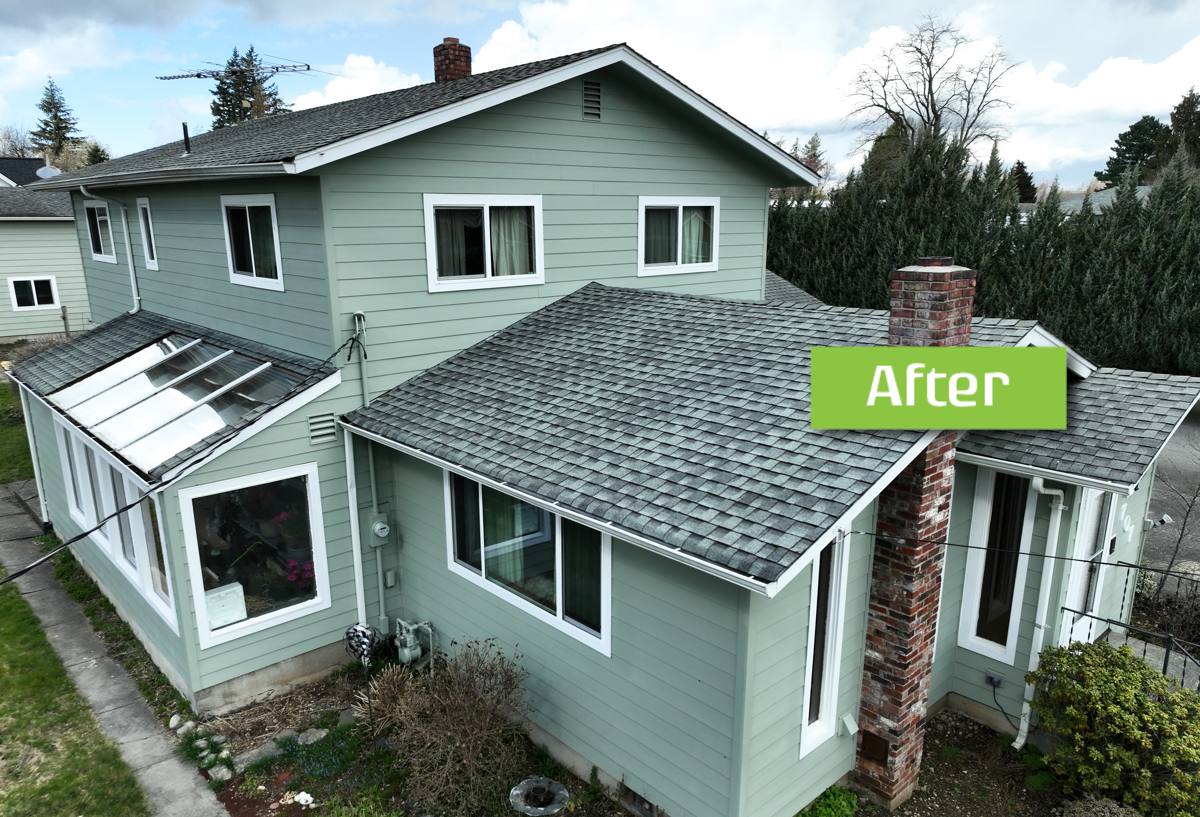
Why Green Lake Homes Are Hard on Roofs
Shade and Moss
The tree cover that makes Green Lake a nice place to live is the same reason roofs here stay damp longer than roofs in more open parts of the city. Moss doesn't just sit on the surface — on shingles it works into the granule layer and lifts tabs, which is how leaks start. Metal sheds standing moisture and gives moss almost nothing to grip, which is a real advantage here, but only if the panel finish and seams are done right. A cheap or poorly sealed metal roof can still trap debris at the eaves and valleys and grow moss in those pockets even while the field of the roof stays clean.
Driving Rain
Seattle's rain is rarely a straight-down soaking — wind off the lake and the broader Puget Sound weather pattern pushes it sideways, especially during fall and winter storms. That means flashing details at walls, chimneys, skylights, and valleys matter more here than in drier climates, because wind-driven rain finds gaps that gravity-fed water never would. Most metal roof leaks we're called out to inspect trace back to flashing or fastener issues, not the panels themselves.
Marine Air and Corrosion
Salt-influenced air moving through the Sound region accelerates corrosion on unprotected metal — fasteners, cut edges, and dissimilar-metal contact points are the vulnerable spots. It's a slower process here than on a waterfront home, but over 20-30 years it's enough to matter, and it's entirely preventable with the right fastener spec and finish.
What a Correct Metal Roof Installation Involves
Roof Deck and Underlayment
Before any panel goes down, the deck gets inspected for rot or soft spots — common on older Green Lake homes where a previous roof trapped moisture under shade for years. We use synthetic underlayment across the field and self-adhered ice-and-water membrane at valleys, eaves, and any low-slope transitions, since those are the spots where wind-driven rain backs up under panels.
Panel Type and Gauge
Standing seam is our default recommendation for Green Lake homes because the concealed fastener design has no exposed screw heads for water or debris to work against over time. Exposed-fastener panel systems cost less up front and are a reasonable option on secondary structures like garages and shops, but the fasteners are a maintenance item — the washers age and need occasional replacement, especially given how much rain this area sees.
Fasteners and Flashing
We spec stainless steel or other corrosion-resistant fasteners rather than standard galvanized, and we're deliberate about not mixing metals that cause galvanic corrosion — for example, avoiding copper flashing in direct contact with steel panels. Every penetration (vents, chimneys, skylights) gets custom-formed flashing, not a generic boot stretched to fit.
Ventilation
A sealed, well-insulated roof still needs to breathe. Proper ridge and soffit ventilation keeps moisture from condensing on the underside of the deck — a real risk under a metal roof if it's installed without airflow, particularly in a shaded, damp microclimate like Green Lake's.
Standing Seam vs. Exposed Fastener: Which Fits Your Home
| Factor | Standing Seam | Exposed Fastener |
|---|---|---|
| Fastener exposure | Concealed under seam, no surface penetration | Screws through the panel face, sealed with washers |
| Long-term maintenance | Minimal — no washers to inspect or replace | Washers age and should be checked periodically |
| Typical use | Primary residence, main roof | Garages, shops, accessory structures |
| Upfront cost | Higher | Lower |
| Performance in driving rain | Very strong — seam design sheds wind-driven water | Good, but relies on washer seal integrity |
Finish and Coating: What Actually Protects the Metal
The paint or coating system on a metal roof is what stands between the base metal and decades of Seattle rain, so it's worth understanding what you're paying for. High-performance PVDF-based coatings (often marketed under names like Kynar 500) hold color and chalk resistance far longer than basic polyester coatings, and they're the standard we recommend for a roof meant to last 30-50 years in this climate. Warranties on metal roofing usually come in two separate pieces — a substrate/paint-adhesion warranty from the manufacturer and a workmanship warranty from the installer. Read both; a strong material warranty doesn't cover a leak caused by bad flashing work, and vice versa.
Cost Factors on a Typical Green Lake Metal Roof
| Factor | Impact on Cost |
|---|---|
| Panel gauge (26 vs. 24) | Heavier 24-gauge costs more but resists denting and oil-canning better |
| Standing seam vs. exposed fastener | Standing seam typically runs higher due to labor and material |
| Roof complexity | Steep pitches, multiple valleys, and dormers common on Green Lake's older homes add labor |
| Tear-off vs. overlay | Full tear-off costs more but is often required and lets us address deck condition |
| Coating quality | PVDF finishes cost more than basic polyester but last significantly longer |
Tear-Off vs. Overlay: What Seattle Code Requires
Seattle building code and most manufacturer warranties don't allow layering a new metal roof directly over multiple existing layers of roofing, and we don't recommend it even where a single layer might technically be allowed. A tear-off lets us inspect and repair the deck, which matters on older Green Lake homes where you can't know what's underneath until you look. It also lets us start clean with underlayment and flashing rather than working around whatever's already there.
How Our Process Works
- Inspection: We walk the roof and attic, check deck condition, existing flashing, and ventilation, and look specifically for moss buildup and shaded areas that hold moisture.
- Written scope and pricing: You get a clear breakdown — panel type, gauge, finish, fastener spec, and what's included in tear-off and disposal.
- Permitting: We handle the City of Seattle permit process so you don't have to track it down yourself.
- Tear-off and deck prep: Old roofing comes off, the deck gets inspected and repaired as needed before anything new goes down.
- Underlayment and flashing: Ice-and-water membrane at vulnerable areas, synthetic underlayment across the field, custom flashing at every penetration.
- Panel installation: Installed to manufacturer spec with the correct fastener type and spacing.
- Final walkthrough and warranty registration: We review the finished roof with you and register manufacturer warranties in your name.
What to Check Before You Hire Someone for This Job
- Do they carry current Washington State contractor licensing and liability insurance?
- Will they put the panel gauge, finish type, and fastener spec in writing — not just "metal roof" as a line item?
- Do they perform a full tear-off rather than overlaying old roofing?
- Can they explain how they'll handle valleys and flashing around chimneys and skylights specifically?
- Do they register the manufacturer's material warranty in your name, and back their own labor with a separate workmanship warranty?
- Have they worked on homes in shaded, tree-heavy neighborhoods like Green Lake, where moss and moisture management is part of the job?
Why Local Experience in Green Lake Matters
A metal roof installed to generic spec will hold up fine in a dry climate. Green Lake isn't a dry climate — it's shaded, it's wet for months at a stretch, and it sits within a broader Seattle marine air pattern that slowly works on unprotected metal. A crew that installs roofs across King County day in and day out knows to spec corrosion-resistant fasteners, detail valleys for wind-driven rain, and vent the roof properly so moisture doesn't get trapped under the panels by the tree cover overhead. That local pattern recognition is the difference between a metal roof that looks good for five years and one that performs for thirty.
If you're weighing a metal roof for your Green Lake home, we're happy to walk the roof with you, look at what your specific tree cover and exposure are doing to it, and give you an honest, no-pressure estimate. There's no obligation — just a clear look at what the job actually involves and what it would cost to do right. Use the form below to get started.