 Seattle Siding
 Roofing a Shoreline Home Is Different From Roofing Anywhere Else
Shoreline sits right on Puget Sound in North King County, and that location shapes what a roof has to survive. Homes closer to the bluffs and open water take on salt-laden air and driving, wind-pushed rain for months at a time. Homes further inland, tucked under mature fir and cedar canopy, deal with a different problem: near-constant shade, damp debris, and a moss season that can run from October through May. Most Shoreline neighborhoods deal with some mix of both. A roof that's installed without accounting for that combination will show it within a few years — premature granule loss, soft decking under moss mats, streaking, and edges that fail before the field of the roof does.
A new roof installation here isn't just "pick a shingle and nail it down." It's a system: decking condition, underlayment type, ventilation balance, flashing detail, and material choice all have to work together for our climate, not a generic one. That's what this page walks through.
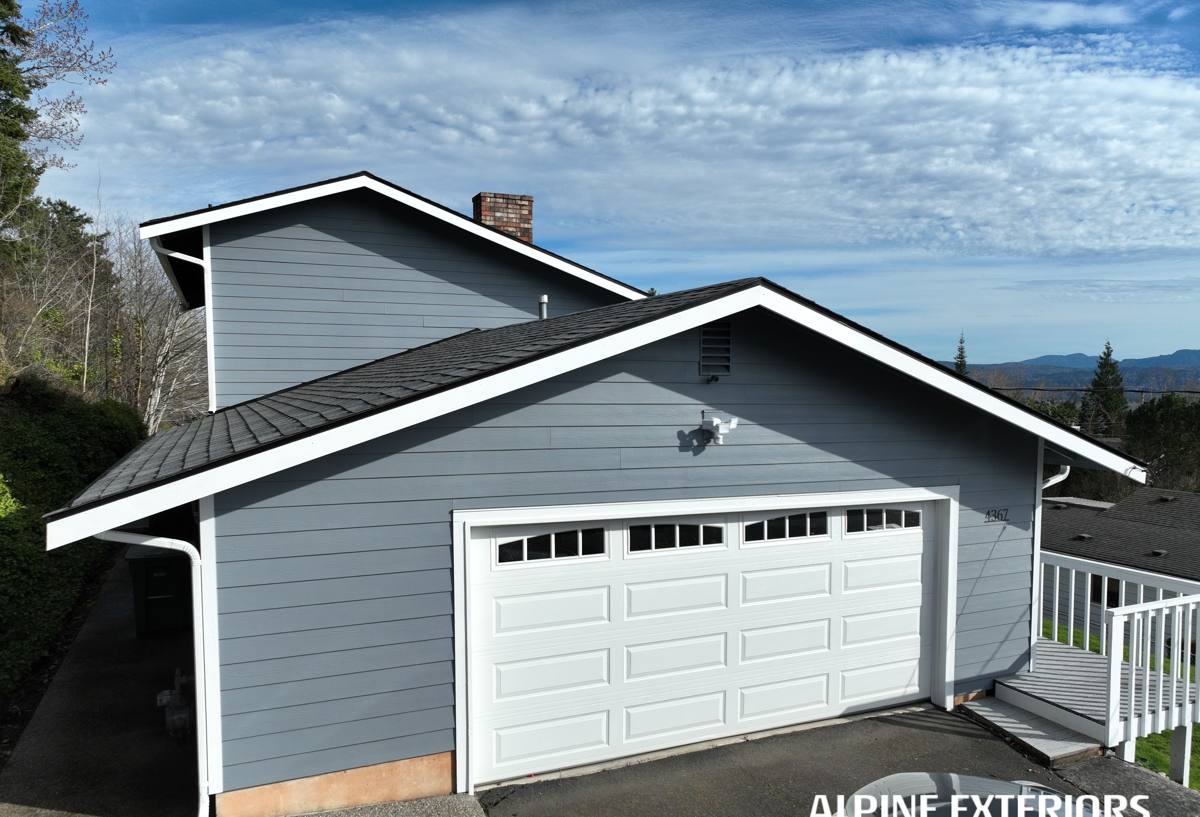
What Shoreline's Climate Actually Does to a Roof
Salt Air and Driving Rain
Roofs closer to the water see wind-driven rain that gets pushed sideways under poorly lapped shingles and around weak flashing points — valleys, chimneys, skylights, and wall-to-roof transitions. Salt air accelerates corrosion on unprotected metal fasteners, vents, and flashing, which is why fastener and flashing material selection matters more here than in a dry inland climate.
Moss, Shade, and Organic Debris
Douglas fir and cedar are everywhere in this part of King County, and they drop needles, cones, and pollen onto roofs year-round. Combined with our long wet season, that debris holds moisture against the roofing material and gives moss and algae exactly what they need to establish. Once moss takes hold, it works its way under shingle tabs, lifts them, and holds standing water against the deck — which is how a cosmetic moss problem turns into a rot problem.
Temperature Swings and Attic Moisture
Our winters aren't extreme, but the combination of cool nights, wet air, and warm interior heat creates real condensation risk in an under-ventilated attic. Poor ventilation shortens the life of a new roof no matter how good the shingles are, because moisture attacks the decking from underneath while the surface still looks fine.
Signs a Shoreline Roof Is Due for Replacement, Not Another Repair
- Granules collecting in gutters and downspouts, or bald patches visible on the shingle field
- Moss growth that returns within months of cleaning, or moss established across multiple slopes
- Shingles that are cupping, curling, or cracking, especially on south- and west-facing slopes
- Soft or spongy decking felt underfoot during inspection, or visible sagging between rafters
- Daylight visible through the roof deck from inside the attic, or water stains on attic sheathing
- A roof that's 20+ years old (asphalt) or showing widespread wear rather than isolated damage
- Repeated leaks around the same penetration despite prior patch repairs
If only one or two of these apply and they're isolated, a repair may still make sense. Once several apply, or the damage is spread across the roof rather than concentrated in one spot, replacement is usually the more honest recommendation — patching a roof that's failing systemically just delays the same conversation and adds cost.
What a Correct New Roof Installation Includes
A roof is only as good as what's underneath the visible layer. For every full replacement we do in Shoreline, the job includes:
Deck Inspection and Repair
Once the old roofing is stripped, the decking gets inspected board by board (or sheet by sheet on newer plywood/OSB roofs). Any soft, delaminated, or rotted decking is replaced before anything new goes down — installing new roofing over compromised decking just hides the problem and voids most manufacturer warranties.
Ice-and-Water Barrier at Vulnerable Points
Eaves, valleys, and roof-to-wall transitions are the points most exposed to wind-driven rain and ponding meltwater. Self-adhered ice-and-water membrane goes down at these locations as a second line of defense behind the primary roofing material.
Synthetic Underlayment
Across the rest of the roof, we use synthetic underlayment rather than older felt paper. It holds up better to the extended wet exposure common during a multi-day Pacific Northwest install, and it resists tearing during the job itself.
Balanced Ventilation
Intake at the eaves and exhaust at the ridge (or an equivalent system) need to be sized and balanced to each other — not just "add more vents." Unbalanced ventilation can pull moist air through the attic in the wrong direction and do more harm than no ventilation at all.
Corrosion-Resistant Flashing and Fasteners
Given the salt air exposure closer to the Sound, we use flashing and fastener materials chosen for corrosion resistance, not just whatever is cheapest to source. This matters most at chimneys, skylights, valleys, and any wall-to-roof step flashing.
Choosing a Roofing Material for a Shoreline Home
There's no single "best" roofing material — the right choice depends on your home's exposure, roof pitch, budget, and how much long-term maintenance you're willing to do. Here's how the common options stack up for this climate specifically:
| Material | How It Handles Our Climate | Maintenance | Typical Lifespan |
|---|---|---|---|
| Architectural Asphalt Shingle | Good moisture and wind performance when installed with proper underlayment and flashing; widely available in algae-resistant formulations | Periodic moss/debris removal recommended | 25–30 years |
| Standing Seam Metal | Sheds rain and moss buildup very effectively due to smooth, steep-shedding surface; strong wind performance | Low; occasional debris clearing | 40–50+ years |
| Synthetic/Composite Shingle | Mimics slate or shake appearance with better moisture resistance than natural wood products | Low to moderate | 30–50 years |
| Cedar Shake | Traditional Northwest look, but our extended wet season and shade-heavy lots accelerate moisture retention, rot, and moss compared to drier climates | High; regular treatment and inspection needed | Varies widely with maintenance |
We don't install cedar shake as a standard offering. It's a real, attractive product, but in the shaded, damp conditions common across Shoreline lots, it demands a level of ongoing maintenance and moisture management that most homeowners underestimate going in — and the trade-off isn't one we think is fair to sell without a very clear conversation about upkeep first. If you're set on that look, we'll talk through it honestly, including synthetic alternatives that get closer to the aesthetic with less maintenance burden.
Our New Roof Installation Process
- On-site inspection and estimate. We look at the existing roof, decking condition where visible, ventilation setup, and any problem areas you've noticed, then walk you through options in plain terms.
- Material selection. We go over the tradeoffs for your specific roof — pitch, sun/shade exposure, proximity to the water — so the choice fits the house, not just the budget.
- Permitting. Roof replacements in Shoreline require a permit through the City. We handle the permit process as part of the job.
- Tear-off and deck inspection. Old roofing is fully removed and the deck is inspected and repaired as needed before anything new is installed.
- Underlayment, flashing, and ventilation installation. Ice-and-water membrane, synthetic underlayment, corrosion-resistant flashing, and a balanced ventilation system go in first.
- Roofing installation. The chosen material is installed to manufacturer specification, with attention to exposure at valleys, edges, and penetrations.
- Cleanup and final walkthrough. Site debris and old materials are hauled off, and we walk the finished roof with you before calling the job done.
Cost Factors for a New Roof in Shoreline
Every roof is priced based on its own specifics, but the main variables that move the number are consistent:
| Factor | Why It Affects Cost |
|---|---|
| Roof size and number of planes | More square footage and more complex geometry (hips, valleys, dormers) means more material and labor |
| Pitch and accessibility | Steep or hard-to-access roofs require more safety setup and slow the work |
| Deck condition | Rotted or soft decking found during tear-off adds repair cost that can't always be predicted before the roof is opened up |
| Material choice | Standing seam metal and synthetic composites cost more up front than architectural asphalt but typically last longer |
| Layers to remove | Roofs with multiple existing layers take longer to strip and dispose of |
| Ventilation and flashing upgrades | Bringing an older, under-ventilated roof up to a properly balanced system adds material and labor |
We give a written estimate after seeing the roof in person — not a phone-quote number — because deck condition and access genuinely change the price, and we'd rather tell you upfront than surprise you at the end.
Why Hire a Crew That Already Works in Shoreline
A roofing crew that regularly works this part of King County already knows what to check for on a mid-century Shoreline roof versus a newer build, understands the City's permitting process, and has seen firsthand how moss and salt exposure actually play out on local roofs over time — not in a training manual, but on real jobs a few miles away. That local pattern recognition shows up in small decisions during the job: where to add extra ice-and-water protection, how to balance ventilation on a shaded lot, which flashing details tend to fail first in this specific climate. It's the difference between a roof that's technically installed to code and one that's actually built for where it sits.
We also stand behind the work with clear communication throughout — what we found once the old roofing came off, what it means, and what your options are, before we move forward with anything unexpected.
Before You Sign a Roofing Contract, Check For This
- A written, itemized estimate — not just a total number with no breakdown
- Proof of current WA state contractor licensing and insurance
- A clear statement on who pulls the permit and handles inspections
- Specifics on underlayment, ice-and-water barrier placement, and ventilation — not just "shingles and labor"
- A plan for deck repair pricing if rot is found once the old roof is off
- Manufacturer warranty terms and what voids them
- A cleanup and debris-haul plan included in the price
If your roof is showing wear, growing moss faster than it should, or you're just trying to plan ahead before the next wet season hits, we're happy to come take a look. The estimate is free, there's no pressure, and you'll get a straight answer about what your roof actually needs — just fill out the form below.