 Seattle Siding
 Why Queen Anne Siding Takes a Different Approach
Queen Anne sits high above the rest of Seattle, and that elevation cuts both ways. Homes up here get some of the best views in King County, but they also take a harder hit from wind-driven rain coming off the Sound and the Olympics. Add in the salt-laden air moving up from Elliott Bay and Puget Sound, plus the deep shade and constant dampness that some lots hold onto under mature tree canopy, and you have a siding environment that punishes shortcuts. Moss season here isn't a two-week nuisance — it's a long, slow siege on anything with a seam, a ledge, or a north-facing wall that never fully dries out.
Siding installation in a neighborhood like this isn't just about picking a product and nailing it up. It's about detailing every water path so the assembly behind the siding — the parts you never see again once the job is done — stays dry for decades, not years.
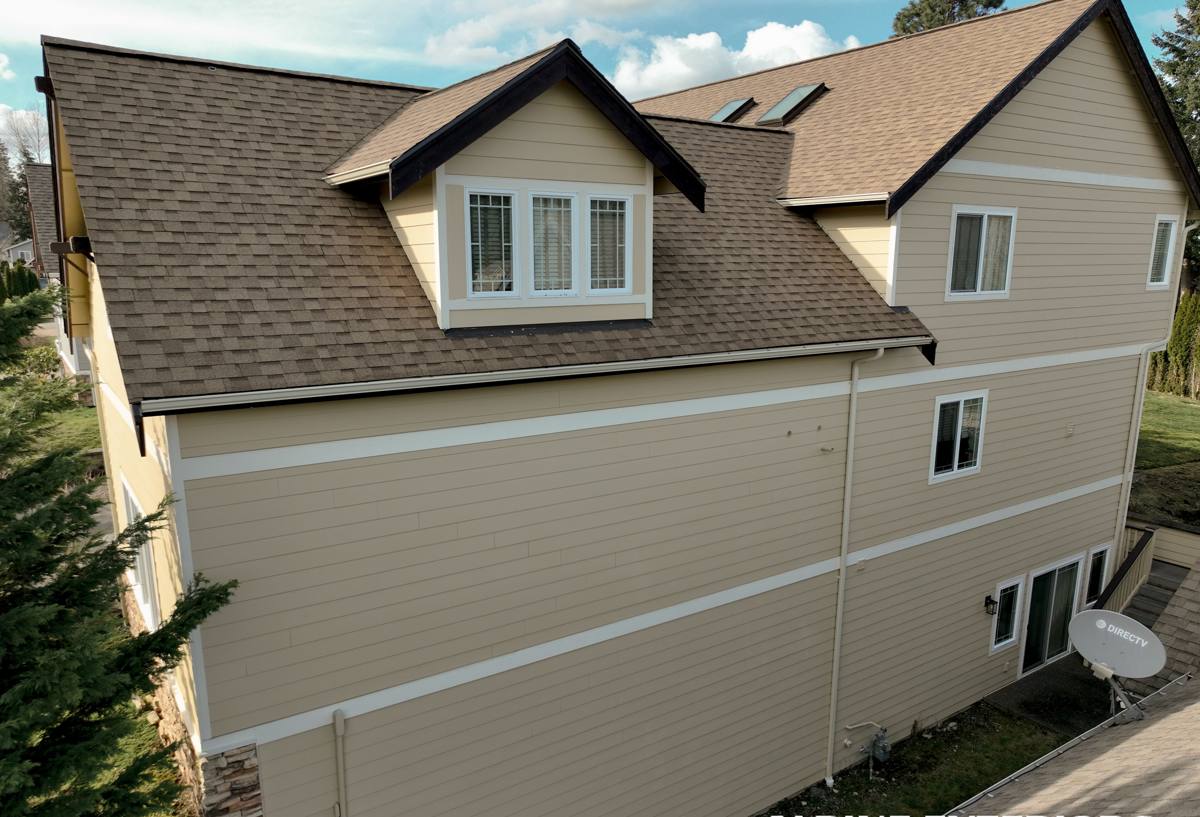
What Queen Anne's Climate Actually Does to a Wall
Salt Air and Corrosion
Homes closer to the water side of the hill deal with airborne salt that accelerates corrosion on fasteners, flashing, and trim. Cheap or mismatched metal at penetrations and joints corrodes faster here than it would twenty miles inland, and once flashing fails, water gets behind the siding regardless of how good the siding itself looks from the street.
Driving Rain and Wind Exposure
Because of the elevation and lack of wind breaks on some blocks, rain doesn't just fall here — it gets pushed sideways into walls, soffits, and window trim. Any gap, unsealed joint, or under-lapped piece of siding becomes an entry point during a real storm, not just a heavy shower.
Moss, Shade, and Moisture Retention
Tree cover and north-facing exposures common on Queen Anne lots keep certain wall sections damp far longer after rain than sunnier walls do. That prolonged dampness is exactly what moss, algae, and rot organisms need. Siding material and installation detailing both have to account for walls that simply don't dry out on the same schedule as the rest of the house.
What Correct Siding Installation Involves
A siding job is only as good as what's underneath it. On every Queen Anne project, that means:
- A continuous, properly lapped water-resistive barrier behind the siding — no gaps, no shortcuts at corners or penetrations
- Correct flashing at every window, door, deck ledger, and roof-to-wall intersection, integrated shingle-style so water sheds down and out, never in
- A drainage gap (rainscreen) where the wall assembly calls for one, so any incidental moisture behind the siding has somewhere to go
- Fastening at the manufacturer's specified pattern and depth — overdriven or underdriven nails are one of the most common causes of early siding failure
- Proper gapping and sealing at butt joints, corners, and trim, using sealants rated for the product and our climate
- Field-cut edges primed or sealed per manufacturer spec before installation, not left raw
Skip any one of these steps and the siding can look fine for a year or two while water quietly works behind it. On a hill exposed to salt air and driving rain, that's not a risk worth taking.
Why We Install Only James Hardie Fiber Cement
We don't install vinyl, LP SmartSide, Cemplank, Allura, primed spruce, or cedar. That's a deliberate standard, not a sales preference, and it comes down to how those products perform over time in a climate like ours.
Vinyl expands and contracts with temperature and can warp or crack under the kind of wind-driven rain and temperature swings Queen Anne sees; it's also fuel in a wildfire-adjacent event, which matters more each year in the Pacific Northwest. Wood-based products like primed spruce, cedar, and LP SmartSide are wood at their core — they need consistent maintenance to keep moisture out, and in the shaded, damp pockets common on this hill, that maintenance window shrinks fast. Cemplank and Allura are fiber cement competitors to Hardie, and while fiber cement as a category is the right call for this region, we standardized on Hardie specifically for its ColorPlus factory finish, its climate-engineered HZ product lines, and a warranty structure we're comfortable standing behind.
James Hardie fiber cement is non-combustible, doesn't absorb water the way wood products do, and holds paint and color far longer because ColorPlus finish is baked on at the factory rather than field-applied. For a hill neighborhood dealing with salt air, moss, and sideways rain, that combination matters more than it does in a drier, calmer climate.
HardiePlank, HardiePanel, and HZ Engineering
Hardie's HZ5 product line is engineered for climates like Seattle's — colder, wetter, and more humid than the HZ10 line built for hot, arid regions. Using the correct HZ designation for our zone isn't a marketing detail; it affects how the material handles moisture cycling over the life of the siding. We install lap siding, panel siding, and trim as a matched system so every component is designed to work together, rather than mixing manufacturers and hoping the details line up.
Our Installation Process
- On-site assessment. We walk the exterior, check current siding condition, look at flashing details, and note problem areas — especially shaded or wind-exposed walls.
- Tear-off and inspection. Old siding comes off and we inspect sheathing underneath for hidden rot or moisture damage before anything new goes up.
- Repair and prep. Any damaged sheathing gets replaced. We don't install new siding over a compromised wall.
- Water-resistive barrier and flashing. This is the step that determines how the house performs in a storm ten years from now, and we treat it that way.
- Hardie installation. Lap or panel siding goes up to manufacturer fastening and gapping specs, with trim and corners integrated correctly.
- Caulking and finish detail. Joints, penetrations, and trim get sealed with appropriate sealants — not just caulked over and called done.
- Final walkthrough. We review the completed exterior with the homeowner before calling the job finished.
Signs Your Current Siding Is Losing the Fight
On older Queen Anne homes, we regularly see the same failure patterns tied directly to the local climate:
- Moss or dark streaking concentrated on north-facing or shaded walls
- Soft, spongy spots near the base of walls or below window sills — often a flashing or grade issue, not just a siding issue
- Paint that's peeling or bubbling faster on one side of the house than the others, usually the side facing prevailing wind and rain
- Visible fastener corrosion or rust streaking below nail heads on metal trim or older siding
- Gaps opening at butt joints and corners from years of expansion and contraction
Any one of these is worth a look before it turns into sheathing repair on top of a siding job.
Cost Factors for Queen Anne Siding Projects
Every home and lot is different, but the following factors move the price up or down on most jobs we quote in this neighborhood:
| Factor | Why It Matters |
|---|---|
| Home size and wall complexity | More corners, dormers, and trim details mean more labor and cut material |
| Current siding removal | Full tear-off costs more than a rare re-side over sound sheathing, but is almost always the right call on older homes |
| Sheathing repair needs | Hidden rot found during tear-off adds cost but prevents sealing moisture damage behind new siding |
| Access and lot conditions | Steep driveways, retaining walls, and tight side yards common on this hill can affect staging and labor time |
| Siding profile and trim package | Lap width, panel use, and trim detailing all affect material cost |
| Color and finish choice | Factory ColorPlus finishes vs. field-applied paint carry different cost and longevity trade-offs |
We provide a detailed, itemized quote after the on-site assessment rather than a rough estimate over the phone — there's too much variation from house to house on this hill to do it any other way.
Why a Crew That Already Works Queen Anne Matters
A siding crew that's worked this hill before already knows which walls take the worst of the wind, where salt air corrosion shows up first, and how long a shaded wall actually stays wet after a storm. That experience shows up in small decisions — where to add extra flashing attention, which walls need closer inspection for hidden moisture, how to sequence work around steep or tight lots. A crew unfamiliar with the neighborhood is learning those lessons on your house instead of bringing them with them.
We also stand behind our work with James Hardie's manufacturer warranty backing the material and our own installation workmanship — a combination that matters more in a climate that doesn't forgive sloppy detailing.
Maintaining Your New Siding
James Hardie siding, installed correctly, is low-maintenance compared to wood alternatives, but "low" isn't "none" in this climate. A yearly rinse to knock down early moss growth on shaded walls, a periodic check of caulking at joints and trim, and prompt attention to any gutter or downspout issues that dump extra water on a wall will keep the siding performing for its full service life. None of this requires repainting on any regular cycle, thanks to the factory-applied ColorPlus finish.
If you're weighing a siding replacement on Queen Anne, or you've noticed moss, paint failure, or soft spots on your current siding, we're happy to come take a look. We offer a free, no-pressure estimate — walk the exterior with us, get a straight answer on what your home needs, and decide from there.