 Seattle Siding
 Why Storm Damage Hits Queen Anne Roofs Differently
Queen Anne sits on one of Seattle's most prominent hills, and that elevation is a double-edged sword. The views are great, but the roofs up there take a beating that flatter, more sheltered parts of King County don't see nearly as often. Wind gusts off Puget Sound get funneled and accelerated as they move up the slope, and during a winter storm that means more uplift force on shingles, ridge caps, and flashing than a roof at sea level would ever experience. Add in driving rain that comes in sideways during a real blow, and water gets pushed into laps and seams that were never designed to handle horizontal pressure.
A lot of the housing stock in this part of Seattle is older — Craftsman bungalows, Victorians, and early-to-mid-century homes with multiple roof planes, dormers, and valleys. Every one of those transitions is a place where storm damage likes to start. More roof geometry means more flashing, more valleys, and more opportunities for wind-driven rain to find a weak point. That's a very different risk profile than a simple gable roof on a newer build, and it's why a storm repair on a Queen Anne home usually takes more diagnostic care than a cookie-cutter patch job.
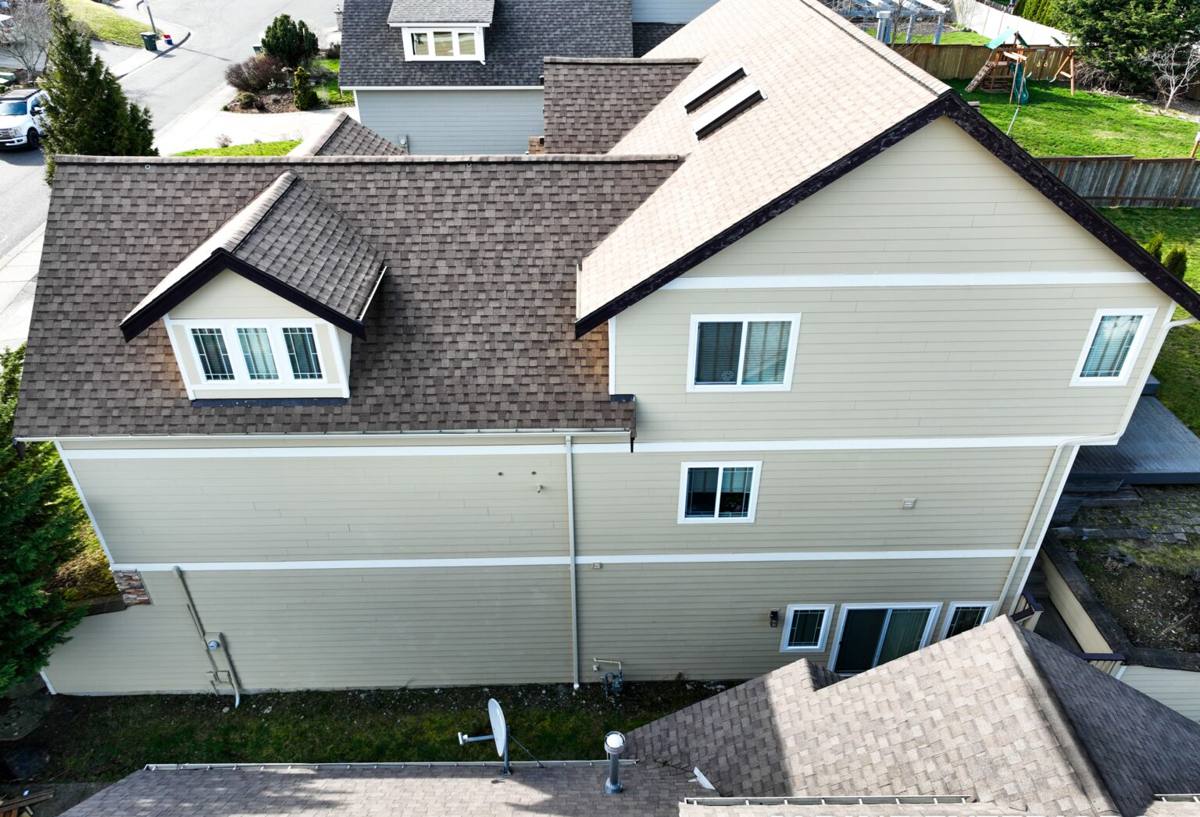
What Storm Damage Actually Looks Like Here
Not all storm damage announces itself with a missing shingle sitting in the yard. Some of the most costly damage is the kind homeowners don't notice until there's a stain on a ceiling months later. Here's what we look for after wind and rain events in this area:
- Creased or lifted shingles — wind doesn't always tear a shingle off, sometimes it just breaks the seal and leaves it looking almost normal from the ground
- Cracked, bent, or displaced flashing around chimneys, dormers, and valleys
- Granule loss from shingles pelted by wind-driven debris or hail
- Torn or lifted ridge cap shingles, which are the most exposed part of the roof in high wind
- Water intrusion at roof-to-wall transitions, common on the additions and dormers found on older Queen Anne homes
- Damaged or clogged gutters and downspouts that can't keep up with sudden heavy rain, backing water up under the roof edge
- Punctures or bruising from wind-thrown branches, which is more common on lots with mature trees
The tricky part is that a roof can look fine from the sidewalk and still have a compromised seal or hidden crease that will leak in the next storm. That's why a proper storm damage inspection means getting on the roof, not just looking up at it.
The Moss Factor: Why Storm Damage and Moss Season Overlap
Seattle's long, wet moss season complicates storm repair in a way that drier climates don't deal with. Moss and lichen hold moisture against the roof surface for weeks at a time, and that constant dampness softens shingle mat and accelerates granule loss even before a storm hits. A roof with moss buildup going into a windstorm is simply weaker at the point of impact — the shingles are already compromised, so wind that a clean, well-maintained roof would shrug off can do real damage to one that's been sitting under moss all winter.
This is also why we don't treat storm repair and moss maintenance as separate conversations on a Queen Anne roof. If we're up there fixing wind damage, we're also going to tell you honestly whether moss growth contributed to the failure and what it will take to keep it from happening again.
What a Correct Storm Repair Actually Involves
1. A Full Roof Assessment, Not Just a Spot Check
Storm damage rarely stays confined to the one spot that's visibly leaking. We check the whole roof plane, not just the area over the stain on your ceiling, because wind damage in one section is often a sign of similar stress elsewhere — especially on a roof with the kind of valleys and transitions common in this neighborhood.
2. Emergency Weatherproofing When Needed
If a roof is actively leaking or has an open area exposed to the weather, the first job is stopping water intrusion — tarping, temporary flashing, or sealing exposed decking — before anything else. This protects the interior of the home while a permanent repair plan gets sorted out, and it matters a lot in a climate where the next round of rain is rarely more than a few days away.
3. Matching Materials Correctly
Repairing storm damage on an older roof means matching shingle profile, color, and in some cases discontinued product lines as closely as possible. A repair that's structurally sound but visually mismatched isn't a job well done — it's a patch that will bother you every time you look at your roofline.
4. Flashing and Underlayment, Not Just Shingles
Most roof leaks trace back to flashing, not shingles. A repair that replaces damaged shingles but ignores bent or corroded flashing underneath is a repair that will fail again in the next storm. Correct storm repair means addressing the water barrier system as a whole — underlayment, flashing, and shingles working together — not just the visible surface layer.
Repair vs. Replacement: How We Help You Decide
Not every storm-damaged roof needs to be replaced, and not every roof can be reasonably patched. The right call depends on the roof's age, the extent of damage, and how much of the existing material is still sound. Here's how we generally think through that decision:
| Factor | Leans Toward Repair | Leans Toward Replacement |
|---|---|---|
| Roof age | Under 10-12 years, still within expected lifespan | Nearing or past the roofing material's rated life |
| Extent of damage | Isolated to one or two areas | Scattered across multiple roof planes |
| Underlying condition | Decking and structure solid, damage is surface-level | Soft decking, widespread granule loss, or prior water damage found underneath |
| Material availability | Matching shingles still available or close match exists | Discontinued product with no reasonable match |
| Storm history | First significant event in years | Repeated storm damage claims on the same roof |
We'll walk you through where your roof falls on that spectrum honestly. If a repair will hold up, we'll tell you that. If patching a roof that's already near the end of its service life is just going to mean another repair call next storm season, we'll tell you that too.
Working With Your Insurance Claim
Most storm damage repairs in this area involve an insurance claim, and the documentation matters as much as the repair itself. Our process includes photographing and detailing the damage before any work begins, so there's a clear record of what the storm caused versus normal wear. We can walk an adjuster through what we found and explain our repair scope in plain terms — our job is to give you an honest, accurate picture of the damage, not to inflate a claim or downplay one.
Our Process for Queen Anne Storm Repairs
- Inspection: A full roof walk-through, checking every plane, valley, and penetration — not just the area you called about
- Documentation: Photos and a written summary of findings, useful for both your records and any insurance claim
- Temporary protection: Tarping or emergency sealing if the roof is actively exposed to weather
- Written scope and estimate: A clear breakdown of what needs repair, what materials are involved, and what it will cost
- Repair work: Matched materials, correct flashing detail, and cleanup of the work area, including magnetic nail sweeps
- Final walkthrough: Reviewing the completed repair with you before we consider the job done
Why Local Experience on Queen Anne Roofs Matters
A crew that regularly works in this part of Seattle knows the roof styles here — the older framing, the dormers, the multiple-plane rooflines, and the moss and salt-air exposure that comes with the hill. That familiarity shows up in small but important ways: knowing which flashing details tend to fail first on a 1920s bungalow, knowing how permitting and inspection typically go with the City of Seattle, and knowing how to get a crew up a steep, tree-lined lot safely and without unnecessary damage to landscaping.
It also matters for response time. Storm damage doesn't wait, and neither should the tarp that's keeping water out of your attic. A contractor who's already working in King County and familiar with Queen Anne's streets and terrain can get eyes on your roof faster than one working from farther out.
After the Storm: A Quick Homeowner Checklist
- Check gutters and downspouts from the ground for obvious debris or damage
- Look for shingle granules collecting in gutters or at downspout outlets — a sign of storm abrasion
- Note any new water stains on interior ceilings or upper walls
- Photograph any visible damage from the ground before it's cleaned up or moved
- Avoid climbing onto the roof yourself, especially on a wet or steep surface
- Call for a professional inspection promptly — a small leak left unaddressed through another storm cycle gets expensive fast
Get an Honest Look at Your Roof
If your Queen Anne home has been through a recent windstorm or heavy rain event, it's worth having someone experienced take a look before the next system rolls in. We offer free, no-pressure estimates — we'll tell you plainly what we find, what it needs, and what your options are, with no obligation to move forward. Fill out the form below to get started.