 Seattle Siding
 Rainier Valley's Climate Is Harder on Siding Than It Looks
Rainier Valley sits in one of Seattle's more varied pockets of King County housing stock — older bungalows and Craftsman-era homes mixed with newer infill construction, many of them holding original siding that was never built for what this region actually throws at a house. The damage isn't dramatic. It's slow. Salt-tinged air drifting in off Puget Sound corrodes fasteners and trim hardware over years, not days. Driving rain off the Sound finds every unsealed seam, every gap where old caulk has shrunk and cracked. And the long moss season — stretching from fall through spring in this climate — turns north-facing walls and anything shaded by mature trees into a slow-growth surface for moisture-holding organic matter.
None of that is unique to one style of house. It's the baseline every exterior wall in Seattle and King County has to survive, year after year, for decades. Siding that can't shed water fast, resist fastener corrosion, and keep moss from getting a foothold isn't a cosmetic weak point — it's a moisture problem waiting to happen behind the wall, where you can't see it until it's expensive.
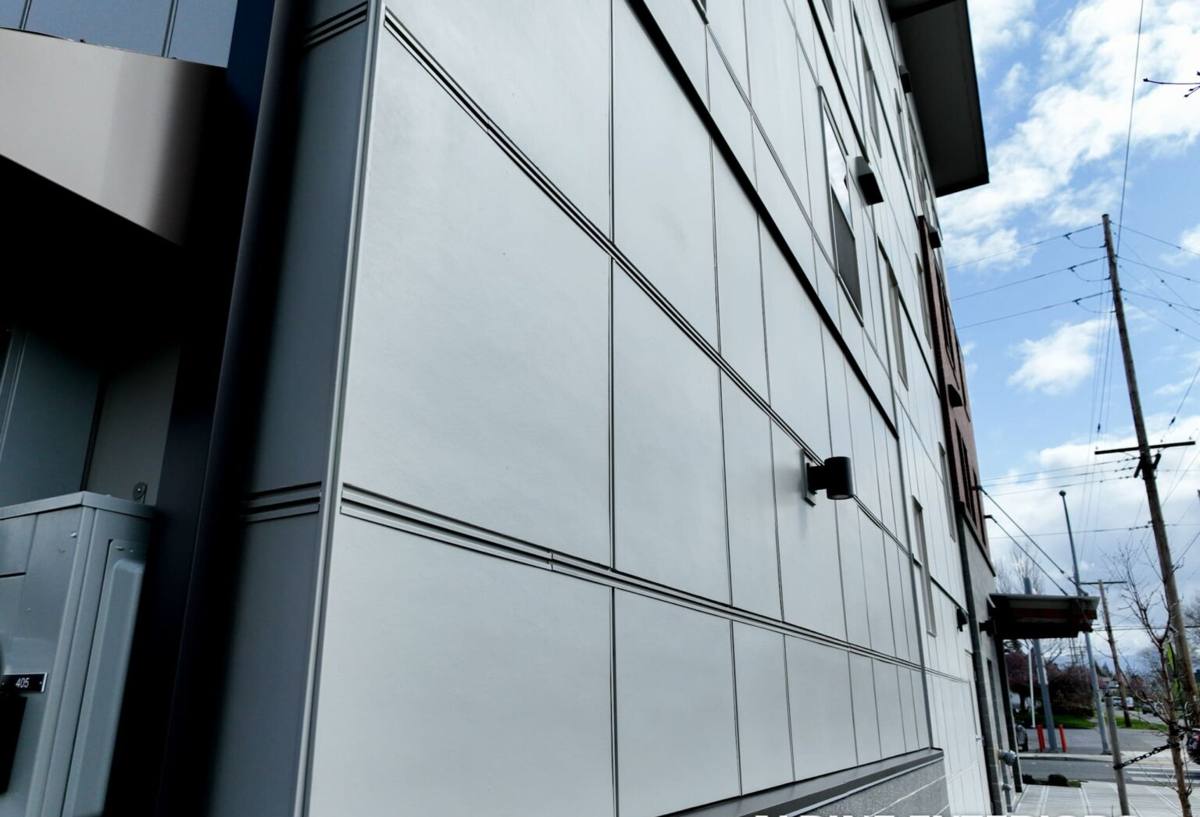
Why We Standardized on James Hardie for Homes Like These
We install James Hardie fiber cement siding exclusively. Not vinyl, not LP SmartSide, not Cemplank or Allura, not primed spruce or cedar. That's a deliberate professional standard, not a sales pitch — we've weighed the trade-offs of the alternatives and concluded that for the climate Rainier Valley homes actually live in, Hardie is the product that holds up correctly when installed correctly.
Fiber cement is non-combustible, which matters more each year as wildfire smoke seasons stretch longer across the Pacific Northwest. It doesn't feed insects or rot the way wood-based products can when moisture gets past the surface. And James Hardie engineers regional product lines — HZ5 for the Pacific Northwest's wetter, cooler climate zone — specifically so the plank composition and moisture resistance match what a Seattle wall actually faces, rather than a one-size-fits-all national spec.
ColorPlus Factory Finish
Most of what fails first on old siding isn't the substrate — it's the paint. Field-applied paint on wood or fiber cement is only as good as the prep, the weather on install day, and the number of coats. James Hardie's ColorPlus finish is baked on at the factory under controlled conditions, which gives it a more consistent, UV- and moisture-resistant bond than site-applied paint, and a longer repaint interval. In a region with this much rain and this little sun for curing paint properly outdoors, that factory-controlled finish is a real practical advantage, not a marketing detail.
What a Correct James Hardie Installation Actually Involves
The product is only half the equation. Fiber cement siding installed with shortcuts fails in the same ways any siding fails — water gets behind it and nobody notices until the sheathing is soft. A correct install on a Rainier Valley home includes:
- A weather-resistant barrier installed correctly behind the siding, with all seams and penetrations sealed before a single plank goes up
- Proper flashing at every window, door, and roofline intersection — the single most common source of hidden leaks on older homes we open up
- Correct fastener type, spacing, and depth per James Hardie's published installation specs, since under- or over-driven fasteners void warranty coverage and invite moisture
- Minimum clearance between the bottom of the siding and grade, decks, or roof lines, so splash-back and standing water can't wick into the plank edges
- Caulking only where James Hardie's spec calls for it — sealing every joint is not correct practice and traps moisture instead of shedding it
- Proper overlap and gapping at butt joints to allow for the material's minor expansion and contraction through wet and dry seasons
Every one of those items is inspectable. A homeowner who knows to ask about them can tell within minutes whether a crew is installing to spec or just nailing boards to a wall.
How We Approach Siding Work in Rainier Valley Specifically
Working across Rainier Valley's mix of home ages and styles means no two jobs start from the same condition. Older homes often have layers of prior siding or repairs hiding behind the visible surface, sometimes with moisture damage that only shows up once the old material comes off. Newer construction tends to have more consistent sheathing but can still have builder-grade flashing details that don't hold up to this region's rain volume over time.
Our process starts with a full tear-off and inspection, not a re-side over existing material. That's the only way to actually see the sheathing, catch soft spots or prior water damage, and correct any flashing issues before new Hardie panels go up. We install the weather barrier and flashing system first, verify it, then move to siding installation following James Hardie's fastening and clearance specs exactly — not "close enough," since those specs are what keeps the manufacturer's transferable warranty intact.
Why Local Experience Matters Here
A crew that already works Rainier Valley and the surrounding King County area knows what to expect before the tear-off starts — how moss tends to build on shaded north walls in this specific microclimate, which older home styles commonly hide dated flashing details, and how much drying window a given week of Seattle weather actually gives for a clean install. That's not something a crew unfamiliar with the area picks up on the first job. It shows up in fewer surprises mid-project and a tighter finished result.
James Hardie vs. the Alternatives: What the Trade-Offs Actually Are
We don't install the products below, but homeowners deserve an honest comparison rather than just being told "Hardie is better." Here's how the trade-offs actually break down for a home in this climate.
| Factor | James Hardie Fiber Cement | Vinyl Siding | Wood / Engineered Wood (LP, cedar) |
|---|---|---|---|
| Moisture resistance | Engineered for wet climates (HZ5 line); factory finish resists moisture intrusion | Sheds water but seams and fasteners can allow moisture behind panels | Vulnerable to moisture if finish is compromised; requires vigilant maintenance |
| Fire resistance | Non-combustible | Melts and deforms under heat exposure | Combustible |
| Finish longevity | Factory-baked ColorPlus finish, long repaint interval | Color is through-body but can fade and chalk over time | Field-applied paint/stain needs recoating every few years |
| Moss and organic growth | Dense, low-porosity surface resists buildup | Smooth surface resists growth but seams can trap debris | Porous surface can hold moisture and support growth |
| Warranty structure | Strong manufacturer warranty, transferable to new owners when installed to spec | Varies widely by manufacturer and thickness grade | Varies; often shorter on finish than on the substrate |
Vinyl has a real place in lower-cost projects and isn't a bad product on its own terms — it's just not what we choose to put on a home where we're accountable for the result. Wood and engineered wood products can look excellent when new, but the maintenance burden in a climate this wet is significant, and that burden tends to land on the homeowner years after the installer has moved on.
Signs a Rainier Valley Home Needs Siding Attention
Most siding problems announce themselves quietly. Worth checking for:
- Soft or spongy spots when you press on siding, especially near the bottom courses or under windows
- Persistent moss or dark streaking on north- or shade-facing walls that comes back soon after cleaning
- Visible gaps, cracking, or warping at butt joints and corners
- Peeling or bubbling paint, which often signals moisture trapped underneath rather than just an aging finish
- Rust staining around fasteners or trim hardware
- Interior signs — musty smell, discoloration, or bubbling drywall — near exterior walls, which can point to a moisture path from outside
Any one of these is worth a look. Several together usually means the siding has been letting water in for a while.
What Cost Actually Depends On
Every home is different, so we don't quote a number without seeing the house, but the real cost drivers on a Rainier Valley project are consistent:
| Cost Factor | Why It Matters |
|---|---|
| Condition behind existing siding | Hidden rot or old moisture damage found during tear-off adds sheathing repair work |
| Home size and wall complexity | More corners, dormers, and trim detail mean more cutting and flashing work |
| Hardie product line and profile chosen | Lap siding, shingle-style panels, and board-and-batten carry different material costs |
| Access and site conditions | Tight urban lots, mature landscaping, or multi-story walls affect labor time |
| Trim and accessory scope | Full trim replacement alongside siding is more thorough than siding alone |
Get a Straight Answer for Your Home
If your Rainier Valley home is showing any of the signs above, or you're just past due for a look at what's under the current siding, we'll come take a real look and give you a straight assessment — not a sales script. The estimate is free, there's no pressure attached to it, and you'll walk away knowing exactly what condition your walls are in and what a correct James Hardie installation would involve for your specific house.