 Seattle Siding
 Why Rainier Valley Roofs Age Differently Than You'd Expect
Rainier Valley sits in a part of Seattle where mature tree canopy, valley topography, and King County's wet-season rainfall combine to put unusual stress on a roof. It isn't just "it rains a lot here." It's the specific combination of factors: shaded, tree-lined streets that keep roof surfaces damp longer after a storm passes, driving rain that comes in at an angle during winter systems instead of falling straight down, and a moss season that can stretch from fall through spring in shaded yards. Add in the mild salt-air influence that reaches inland from Puget Sound, and you get a slow, steady corrosion and moisture cycle that many roofing products simply weren't designed to handle for 25-30 years without help.
A roof that would hold up fine in a drier, sunnier part of the country can fail early here — not because the material is bad, but because the installation didn't account for local conditions. That's the gap we focus on closing for Rainier Valley homeowners.
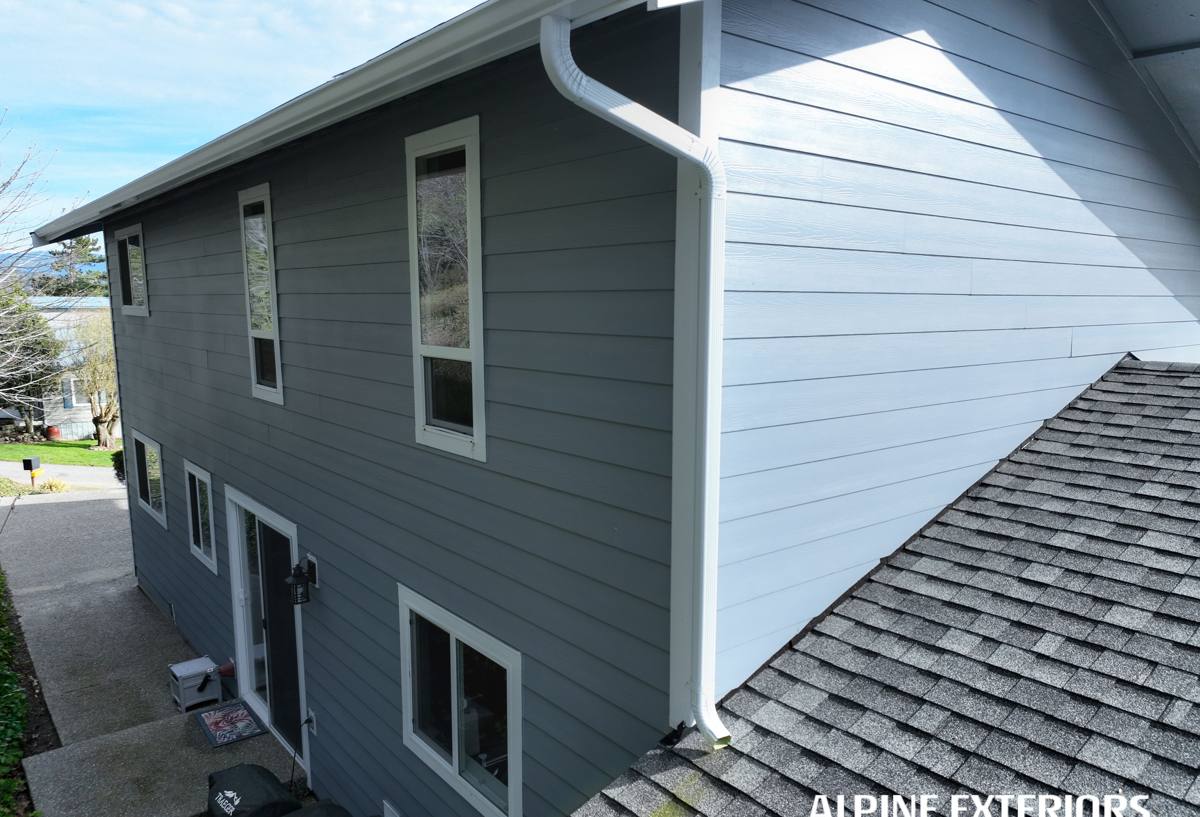
Signs a Rainier Valley Home Needs a New Roof, Not Another Patch
Roof repairs make sense for isolated damage. A full replacement becomes the honest recommendation when the underlying systems — decking, underlayment, flashing, ventilation — are failing together, not just the visible shingles. Common signs we see on Rainier Valley homes include:
- Moss and algae staining that returns within weeks of cleaning, especially on the shaded north and east-facing slopes
- Granule loss visible in gutters, leaving asphalt shingles bald and brittle
- Soft spots or visible sagging along the roof deck, often a sign of trapped moisture underneath
- Daylight visible through the attic at roof boards, or damp insulation after heavy rain
- Flashing around chimneys, skylights, and roof-wall intersections that's rusted, lifted, or was never properly step-flashed to begin with
- Interior ceiling stains that reappear each wet season, even after a repair
If more than two or three of these are present, patch repairs tend to become a repeating cost rather than a fix, and a full replacement is usually the more economical path over a 10-year horizon.
What a Correct Roof Installation Actually Involves
A new roof is more than shingles nailed to a deck. In a climate like ours, the layers underneath the visible surface do most of the real work of keeping a home dry. A correct installation includes:
Tear-off and deck inspection
We remove the existing roofing down to the deck rather than layering over it. This lets us inspect the actual wood underneath for rot, delamination, or soft spots — problems that are invisible from above and that no amount of new shingle can fix if left in place.
Underlayment built for wind-driven rain
Given how often Seattle winter storms push rain sideways under the shingle line, we install ice-and-water shield or synthetic underlayment at vulnerable transitions — eaves, valleys, around penetrations — not just a single layer of felt across the field.
Proper flashing at every intersection
Chimneys, skylights, dormers, and wall-to-roof transitions are where the majority of leaks originate, not the open field of the roof. Step flashing, counter-flashing, and properly lapped valley metal matter more to long-term dryness than the shingle brand.
Ventilation that actually balances
Intake at the eaves and exhaust at the ridge need to work together. Get this wrong and moisture gets trapped in the attic, which shortens shingle life from underneath and feeds the exact moss and mildew conditions that shaded Rainier Valley lots are already prone to.
Choosing the Right Roofing Material for This Climate
There's no single "best" roofing material — the right choice depends on your home's slope, tree exposure, budget, and how much upkeep you're willing to do. Here's how the common options actually perform under Seattle's wet, shaded conditions.
| Material | Moss & Moisture Behavior | Typical Lifespan (Local Conditions) | Maintenance Needs |
|---|---|---|---|
| Architectural asphalt shingle | Good with proper ventilation and algae-resistant granules; can hold moss on heavily shaded slopes | 20-30 years | Periodic moss treatment and gutter clearing |
| Standing seam metal | Sheds moss and water quickly due to smooth, low-friction surface | 40-50+ years | Low; occasional fastener and seam check |
| Cedar shake | Attractive but naturally moisture-absorbent; needs consistent upkeep in shaded, damp settings | 20-30 years with upkeep | High; regular treatment against moss and rot |
| Synthetic/composite shingle | Resists moisture absorption well; performance varies by manufacturer | 30-50 years | Low to moderate |
| Low-slope membrane (TPO/similar) | Used for flat or low-pitch sections; relies on correct seaming and drainage | 20-30 years | Periodic seam and drain inspection |
We don't push one product line across every home. On heavily tree-shaded Rainier Valley lots, we're often more conservative about cedar shake specifically because of the ongoing maintenance burden in a climate that rarely lets a roof fully dry out — that's a trade-off worth discussing honestly before you commit to a material, not after.
How Our Installation Process Works
- On-site assessment. We walk the roof and attic, check slope, ventilation, tree exposure, and existing damage before quoting anything.
- Written scope and material selection. You get a clear breakdown of tear-off, decking allowance, underlayment type, flashing detail, and the shingle or material chosen — no vague line items.
- Permitting. Most full roof replacements in Seattle and King County require a permit; we handle the filing so inspections aren't a surprise later.
- Tear-off and deck repair. Old roofing comes off, decking is inspected board by board, and any rot or soft sections are replaced before anything new goes down.
- Underlayment and flashing installation. This is where most of the long-term waterproofing performance is actually decided.
- Roofing material installation. Installed to manufacturer spec and local wind/moisture conditions, not just "code minimum."
- Ventilation check and final walkthrough. We confirm intake and exhaust are balanced, clean the site, and walk the finished roof with you.
Ventilation, Moss, and the Long Game
Because so many Rainier Valley properties sit under mature trees, moss isn't a one-time problem — it's an ongoing condition to manage. A new roof reduces the risk substantially when it's installed with algae-resistant materials and correct attic ventilation, but it doesn't eliminate the need for basic seasonal upkeep: clearing debris from valleys and gutters before the wet season, and keeping overhanging branches trimmed back where possible so roof surfaces get more light and air movement. We're happy to point out the specific problem areas on your roof during the estimate, whether or not you move forward with us.
Permits, Codes, and What King County Requires
Seattle and King County jurisdictions require permits for most full roof replacements, and inspections typically check deck condition, underlayment type at eaves and valleys, and flashing details — the same items that determine whether a roof actually performs in our climate. Skipping or shortcutting the permit process doesn't just create legal risk; it usually means skipping the inspection steps that catch problems before they're covered up. We handle permitting as a standard part of the job rather than an upsell.
What Affects the Cost of a New Roof Installation
| Factor | Why It Matters |
|---|---|
| Roof size and pitch | More steep-slope area means more labor, safety equipment, and material |
| Number of existing layers | Tear-off of multiple old layers adds disposal and labor time |
| Decking condition | Rotted or delaminated boards found during tear-off need replacement before installation can continue |
| Material choice | Asphalt, metal, and synthetic products carry different material and labor costs |
| Ventilation upgrades | Adding or correcting intake/exhaust venting adds work but pays off in roof lifespan |
| Roof complexity | Valleys, dormers, skylights, and chimneys all add flashing detail and time |
We give a firm, itemized quote after the on-site assessment rather than a phone estimate — decking condition especially can't be judged accurately until the old roofing is off, which is why we build a contingency allowance into the written scope up front instead of surprising you mid-project.
Questions to Ask Before Hiring a Rainier Valley Roofer
- Are you licensed and insured to work in Seattle and King County, and can you provide proof?
- Will you pull the required permit yourselves, or is that left to me?
- What underlayment and flashing details do you use at valleys and roof-wall intersections?
- How do you handle unexpected deck rot found during tear-off?
- What's your plan for attic ventilation, not just shingle brand?
- Do you have experience with the tree cover and moss conditions specific to this neighborhood?
- What does the workmanship warranty cover, separate from the manufacturer's material warranty?
Why It Matters That We Already Work in Rainier Valley
A roofing crew that already works this neighborhood knows which slopes hold moss longest, which older homes tend to have deck issues under the surface, and how local permitting and inspection actually run in practice — not just on paper. That familiarity shows up in fewer surprises during tear-off, more accurate quotes up front, and a roof that's built for the specific way rain, shade, and moss behave on your street, not a generic install.
If you're weighing a repair against a full replacement, or just want a straight answer about what your roof actually needs, we're glad to take a look. Reach out for a free, no-pressure estimate using the form below.