 Seattle Siding
 Roofing in Redmond Has Its Own Set of Problems
Redmond sits in a part of King County where roofs work overtime. It's not one dramatic weather event that wears out a roof here — it's the accumulation of small things, week after week, month after month, year-round. Long stretches of steady rain, a marine-influenced climate that keeps everything damp longer than homeowners in drier regions expect, and shade from mature trees that never quite lets a roof dry out fully between storms. Add in a moss season that can run most of the fall through spring, and you've got a set of conditions that asphalt shingles have to be installed and maintained correctly to handle.
We install and repair asphalt shingle roofs across the greater Seattle area, and Redmond homes get the same climate exposure as the rest of the region — persistent moisture, driving rain that comes in at an angle instead of straight down, and organic growth that doesn't stop just because it's cold out. A roof that would perform fine in a drier climate can fail early here if it's built or maintained like it's somewhere else.
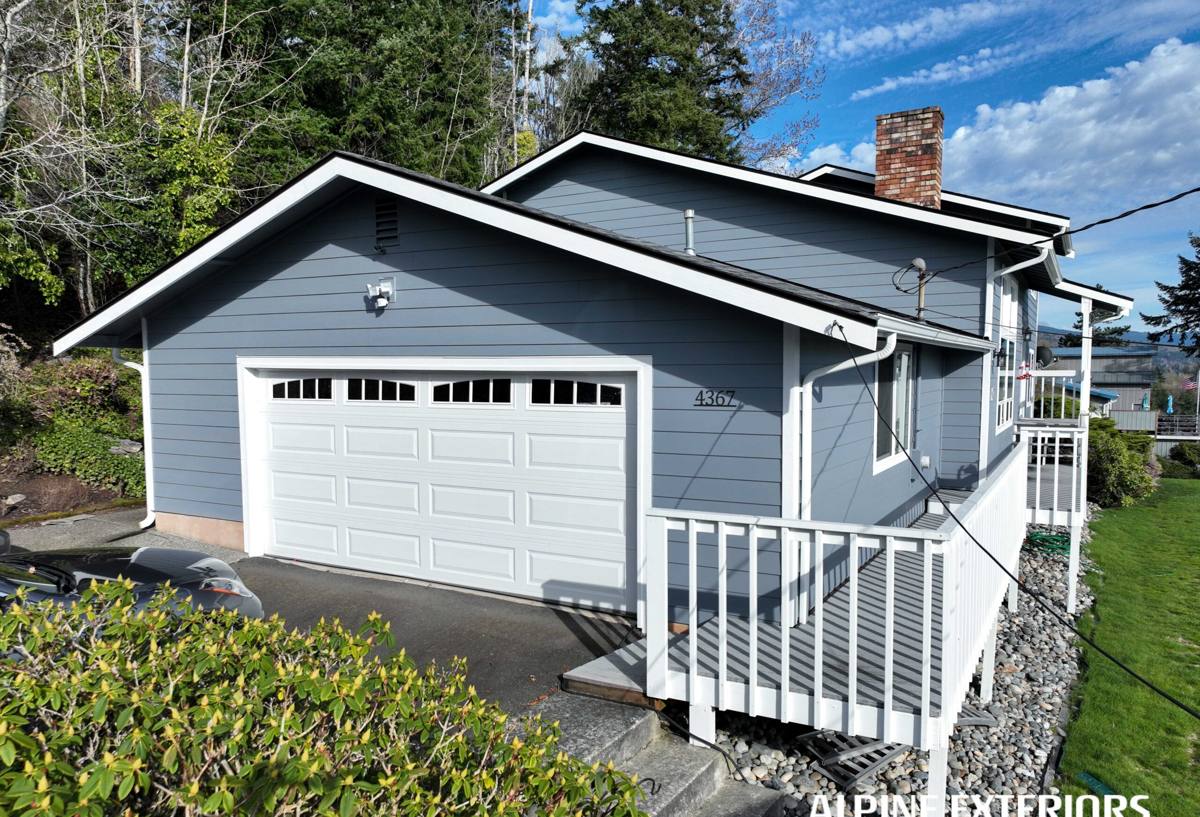
What Moss, Rain, and Debris Actually Do to a Shingle Roof
Moss doesn't just look bad. It holds moisture against the shingle surface long after the rest of the roof has dried, which softens the asphalt mat over time and lifts shingle edges. Once edges lift, wind-driven rain gets underneath them instead of running over them, and that's when leaks start — often at a spot far from where the water actually enters, which is part of why roof leaks are so frustrating to diagnose without pulling shingles.
Constant dampness also feeds granule loss. Granules are what protect the asphalt layer underneath from UV and weather; once a shingle starts shedding granules in the gritty runoff you see near downspouts, that section of roof is aging faster than the rest. Combine that with debris — needles, leaves, and small branches — collecting in valleys and behind chimneys, and you get spots that hold water and organic matter longer than the rest of the roof, which is exactly where premature failure tends to show up first.
None of this means asphalt shingles are a poor choice for this climate. They're the most common roofing material in the region for good reason: reasonable cost, a wide range of styles, and a strong track record when they're installed with the right underlayment, flashing, and ventilation details for a wet climate. The problems come from cutting corners on those details, not from the shingles themselves.
Why Ventilation Matters More Here Than People Think
A roof deck that can't breathe traps moisture from below — bathroom and kitchen exhaust, everyday humidity, and heat that rises from the living space. In a climate that's already damp outside, poor attic ventilation compounds the problem: the deck stays wet from both directions, shingles age faster from underneath, and in some cases you get sheathing rot that isn't visible until a shingle replacement crew pulls the old roof off. Correct intake and exhaust ventilation is one of the least visible parts of a roofing job and one of the most important for long-term performance here.
What a Correct Asphalt Shingle Roofing Job Actually Involves
A roof replacement is more than laying new shingles over what's there. Here's what we consider non-negotiable on any asphalt shingle job in this climate:
Tear-Off Versus Overlay
Overlaying new shingles over an existing layer is sometimes allowed by code and can save money up front, but it also traps whatever moisture or damage is already in the old layer and shortens the life of the new one. We recommend a full tear-off in almost every case in this climate, specifically because it lets us inspect the deck underneath for soft spots, rot, or prior water damage before anything new goes down. Covering up a problem doesn't fix it — it just delays the discovery.
Underlayment and Ice/Water Protection
Synthetic underlayment does the real waterproofing work beneath the shingles, and in a climate with this much sustained rainfall, we don't treat it as an afterthought. Self-adhered membrane in vulnerable spots — eaves, valleys, around penetrations — gives the roof a second line of defense in exactly the places where wind-driven rain and ice dams (on the rare cold snap) are most likely to force water backward under the shingle line.
Flashing Details
Chimneys, skylights, sidewalls, and roof-to-wall transitions are where most leaks actually originate — not out in the open field of the roof. Flashing has to be replaced, not reused, on a full roof job, and it has to be layered correctly with the underlayment and siding so water sheds down and out, never sideways into a wall cavity.
Ventilation and Attic Airflow
As covered above, balanced intake and exhaust venting isn't optional if you want the shingle warranty to mean anything and the deck to stay dry from the inside.
Choosing a Shingle That Makes Sense for This Climate
Not every asphalt shingle is built the same way, and the differences matter more in a wet, moss-prone climate than they would somewhere dry.
| Shingle Type | Typical Lifespan | Moss/Algae Resistance | Best For |
|---|---|---|---|
| 3-Tab | Lower end of the range | Standard granules only | Budget-conscious replacements, simple roof lines |
| Architectural / Dimensional | Mid to upper range | Often available with algae-resistant (AR) granules | Most Redmond homes — better wind rating and thicker mat |
| Impact-Resistant | Comparable to architectural | Available with AR granules | Homes wanting extra durability against debris and hail |
For most homes in this area, we lean toward architectural shingles with algae-resistant (copper-infused) granules. The AR granules slow down the algae and moss growth that causes those dark streaks and green patches, which means less strain on the roof surface between cleanings. It's not a substitute for maintenance, but it buys time and reduces how aggressively moss can take hold in shaded, north-facing sections of roof — which are common on wooded Redmond lots.
Signs Your Roof Needs a Look
Most roof problems in this climate develop slowly, which is exactly why they get missed until there's water damage inside the house. Watch for:
- Granules collecting in gutters or at the base of downspouts
- Shingle edges that look curled, cupped, or lifted rather than lying flat
- Dark streaking or green/black growth, especially on shaded or north-facing slopes
- Moss visibly growing on the shingle surface, not just in gutters
- Soft or spongy spots when walking the roof (if it's safe to do so) or sagging visible from the ground
- Water stains on interior ceilings, especially near chimneys, skylights, or exterior walls
- Daylight visible through the roof deck from inside the attic
- Missing or damaged shingles after a windstorm
Any one of these on its own might not mean an emergency, but they're worth a professional look rather than waiting until the next heavy rain finds the gap.
How We Handle a Roofing Project From Estimate to Cleanup
We start with an honest inspection — on the roof when conditions allow, not just a look from the ground — and we tell you what we actually find, including if the answer is "this roof has a few more years in it" rather than pushing a replacement it doesn't need yet. If a repair will genuinely solve the problem, we say so.
When a full replacement makes sense, we walk through material options, ventilation needs specific to your attic setup, and a realistic timeline before any work starts. Tear-off, deck inspection and repair as needed, new underlayment and flashing, then the new shingles — installed to the manufacturer's specifications so the warranty is actually valid, not just installed "close enough." We protect landscaping and gutters during the tear-off, run magnetic sweeps for stray nails, and do a final walk-through before we consider the job done.
Ongoing Maintenance in a Moss-Heavy Climate
A well-installed roof still benefits from periodic maintenance in this climate. Keeping gutters and valleys clear of debris prevents standing water from sitting against shingles. Trimming back overhanging branches reduces both debris load and the shade that keeps sections of roof damp longer than the rest. Gentle, low-pressure moss treatment and removal — done correctly, without damaging granules — extends the life of shingles that are otherwise sound. We're happy to point out what we see during any visit, whether that turns into work for us or just a heads-up for your own maintenance schedule.
Why It Matters That We Already Work in Redmond
Permit requirements, inspection expectations, and typical roof pitches and styles vary somewhat from one King County jurisdiction to the next, and a crew that already does regular work in the area isn't guessing at any of it. We know what a roof inspector here is going to check, we know how local weather patterns play out through a project timeline, and we're not learning the quirks of the area on your job. That familiarity shows up in fewer surprises, fewer delays, and a roof that's built for the conditions it actually has to survive — not a generic install dropped into a demanding climate.
If your roof is showing any of the signs above, or it's simply due for an honest look, we're glad to come out and give you a straightforward assessment — no pressure, no inflated urgency. Use the form below to request a free estimate.