 Seattle Siding
 Why Redmond Homes Need Siding Built for This Climate
Redmond sits in one of the wettest, greenest corners of King County, and that's exactly the environment that wears down the wrong siding material fastest. Homes here go through long stretches of steady rain, humid shoulder seasons, and shaded lots where moisture never fully dries between storms. Add in the marine-influenced air that moves through the greater Seattle area and you get a climate that's constantly testing the seams, fasteners, and finish of whatever is on your exterior walls. Siding that looks fine in a showroom in a dry climate can start failing here within a few seasons if it wasn't engineered for this kind of exposure.
This page is specifically about James Hardie fiber cement siding installed on Redmond homes — what the climate demands, what a correct installation actually involves, and why we only install this one product system rather than offering a menu of options.
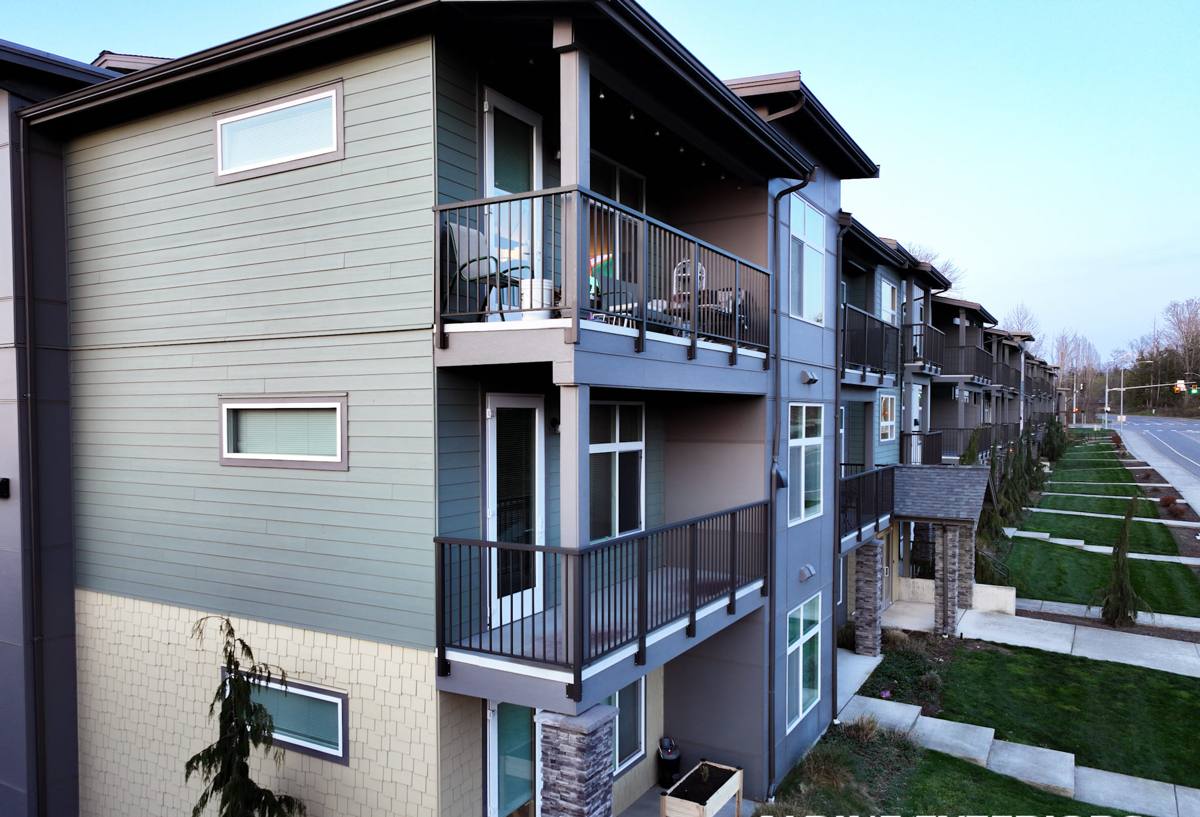
Salt Air, Driving Rain, and Moss: What They Do to Siding Over Time
Moisture That Doesn't Let Up
Driving rain in this region doesn't just fall straight down — wind pushes it sideways into wall assemblies, which means siding here has to handle water hitting it at an angle, not just from above. Over years, that constant wetting and drying cycle is what causes wood-based products to swell, delaminate, or rot at the seams if they aren't detailed correctly.
Moss and Organic Growth
The long moss season in the Pacific Northwest isn't just a roof problem. Shaded siding, north-facing walls, and anywhere water sits instead of shedding are all prone to moss, algae, and mildew staining. Porous or absorbent siding materials hold moisture longer, which gives organic growth more time to take hold and more opportunity to work its way into seams and fastener holes.
Salt-Influenced Marine Air
The marine air common to the Seattle area carries fine salt and moisture that settles on every exterior surface over time, accelerating corrosion on unprotected metal fasteners and trim, and slowly breaking down finishes that weren't built to resist it. It's a slow, cumulative effect — not dramatic, but it adds up over a couple of decades on a home that wasn't built with it in mind.
Why We Install Only James Hardie Fiber Cement
We don't offer vinyl, LP SmartSide, primed spruce, cedar, or other fiber cement brands. That's not a marketing angle — it's a standard we hold because we've seen what this climate does to siding that isn't matched to it. Wood-based products like LP SmartSide and cedar depend on an intact factory coating or paint film to stay dry; once that's compromised at a cut edge, a nail hole, or a joint, moisture gets into the wood substrate and the clock starts on rot, especially in a climate that rarely gives materials a long enough dry stretch to recover. Vinyl sheds water fine but expands and contracts with temperature swings, can warp, and doesn't offer the same fire resistance or long-term color stability.
James Hardie fiber cement is cement, sand, and cellulose fibers — it doesn't rot, it isn't a food source for moss or insects, and it's non-combustible. It holds up to sustained damp conditions far better than wood-based alternatives, and its factory-applied finish is built to last through PNW winters without the maintenance cycle that wood siding demands. That's the whole reason we standardized on one product line instead of installing whatever a homeowner asks for.
James Hardie's HardieZone System and Why It Matters Here
James Hardie engineers its products differently depending on regional climate, using what it calls the HardieZone system. Homes in wetter, more humid regions — which includes western Washington — call for the HZ5 product formulation, engineered for moisture resistance and freeze-thaw durability rather than the HZ10 formulation built for hot, dry climates. Installing the wrong zone product, or installing the right product incorrectly, is one of the most common ways siding underperforms in this region even when the brand on the box was the right one.
| Factor | Why It Matters in Redmond's Climate |
|---|---|
| HZ5 formulation | Formulated for consistent moisture exposure and cooler, wetter conditions typical of King County |
| ColorPlus factory finish | Baked-on finish resists fading and moisture intrusion better than field-applied paint, cutting down repaint cycles |
| Non-combustible core | Doesn't feed moss, algae, or insects the way wood-based siding can |
| Engineered for wind-driven rain | Designed to be installed with drainage detailing that manages water pushed sideways by storms |
ColorPlus Finish
Most Redmond installations we do use James Hardie's ColorPlus finish — a factory-applied, baked-on color coat that's more consistent and more weather-resistant than job-site painting. It matters here specifically because a finish that's already compromised by year three means more upkeep in a climate that doesn't give you many good painting weeks to begin with.
What a Correct James Hardie Installation Involves
The product is only half the equation. A lot of the siding problems we get called out to inspect on older homes weren't caused by bad material — they were caused by installation shortcuts that don't show up until years later, usually right around the time moisture damage becomes visible.
Rain Screen Gap
A proper rain screen — a small drainage gap between the siding and the water-resistive barrier — lets any moisture that gets behind the panels drain and dry out instead of sitting against the sheathing. In a climate with as much sustained rainfall as this one, skipping this detail is one of the fastest ways to create hidden rot.
Flashing and Water Management
Window heads, door trim, deck ledgers, and any horizontal transition need proper flashing so water is directed out and away from the wall assembly rather than trapped behind the siding. This is detail work, and it's where a lot of installation quality gets decided.
Fastening and Joints
James Hardie specifies fastener type, spacing, and placement for a reason — under-driven or over-driven nails, wrong fastener material, and improperly caulked joints are common failure points. Panel joints and butt seams need to be treated correctly to keep water from working its way behind the cladding.
Caulking and Sealants
Correct sealant use at joints and penetrations, paired with the manufacturer's specifications, keeps the whole system watertight without trapping moisture where it shouldn't be.
Our Redmond Installation Process
1. On-Site Assessment
We look at your home's exposure — which walls take the most wind-driven rain, where shade and moss are already a problem, and what condition the existing sheathing and trim are in before we ever quote the job.
2. Tear-Off and Substrate Check
Removing the old siding lets us check the sheathing underneath for hidden moisture damage. This is often where older homes reveal problems that were invisible from the outside — catching it now is far cheaper than dealing with it in five years.
3. Moisture Barrier and Rain Screen Installation
We install a proper water-resistive barrier and rain screen system before any Hardie panel goes up, so the assembly is built to drain and dry from day one.
4. Siding Installation to Manufacturer Spec
Panels, fasteners, flashing, and joints are installed to James Hardie's published specifications — not shortcuts, not "close enough." This is what keeps the warranty valid and the wall assembly performing the way it's designed to.
5. Final Inspection
We walk the finished job checking fastening, caulking, flashing, and finish quality before calling it done.
Cost Factors for a Redmond Siding Project
Every home is different, but these are the main variables that move the price on a James Hardie installation in this area. We give exact numbers only after seeing the home in person.
| Factor | How It Affects the Job |
|---|---|
| Home size and wall complexity | More corners, gables, and trim detail mean more labor and cutting |
| Substrate condition | Hidden rot found during tear-off adds repair work before new siding can go on |
| Siding profile chosen | Lap, shingle, and panel styles vary in material and labor cost |
| Trim and accessory scope | Fascia, soffit, and trim replacement alongside siding changes total project cost |
| Access and site conditions | Steep lots, tight setbacks, or multi-story walls affect staging and labor time |
Why a Crew That Already Works Redmond Matters
Installation quality is what determines whether James Hardie siding performs the way it's engineered to, and installation quality comes down to the crew, not just the brand on the truck. A crew that regularly works Redmond and the surrounding Seattle area already understands how local moisture and shade patterns affect where rot and moss show up first, knows what King County inspectors look for, and has seen firsthand what happens when rain screens or flashing get skipped on a home like yours. That local repetition is what turns a correct installation into a fast, clean, no-surprises one.
Checklist: What to Ask a Contractor Before You Hire
- Do they install to James Hardie's published fastening, flashing, and rain screen specifications — not just "however we usually do it"?
- Will they check the sheathing condition during tear-off before quoting a final price?
- Do they use the HZ5 product formulation appropriate for western Washington's climate?
- Can they explain how they'll flash windows, doors, and horizontal trim transitions on your home specifically?
- Do they offer a factory ColorPlus finish option, or will you be responsible for future repainting?
- Are they familiar with King County permitting requirements for siding replacement?
If your Redmond home's siding is showing moss staining, soft spots, or paint that won't hold anymore, we'll come take a look and give you a straight assessment — no pressure, no upsell. Use the form below to request a free estimate.