 Seattle Siding
 Why Redmond Roofs Need a Different Conversation Than Roofs Elsewhere
Redmond sits in the wetter half of a wet region. Tree cover is heavy in a lot of neighborhoods, humidity stays high for months at a stretch, and the rain that falls here is rarely the short, hard kind — it's the long, soaking kind that finds every weak seam and every gap in flashing over time. Add in the marine air that moves inland off Puget Sound through King County, and you've got a climate that's genuinely tough on roofing, just not in the dramatic way hail or heavy snow is tough. It's a slow, patient kind of wear.
Metal roofing holds up well against exactly this kind of weather, which is part of why we install more of it every year. But "metal roofing" isn't one product — panel type, coating, fastening method, and underlayment choice all matter, and getting any one of them wrong on a Redmond roof shows up faster than it would in a drier climate. This page is about what a correctly done metal roof looks like specifically for homes here, not metal roofing in general.
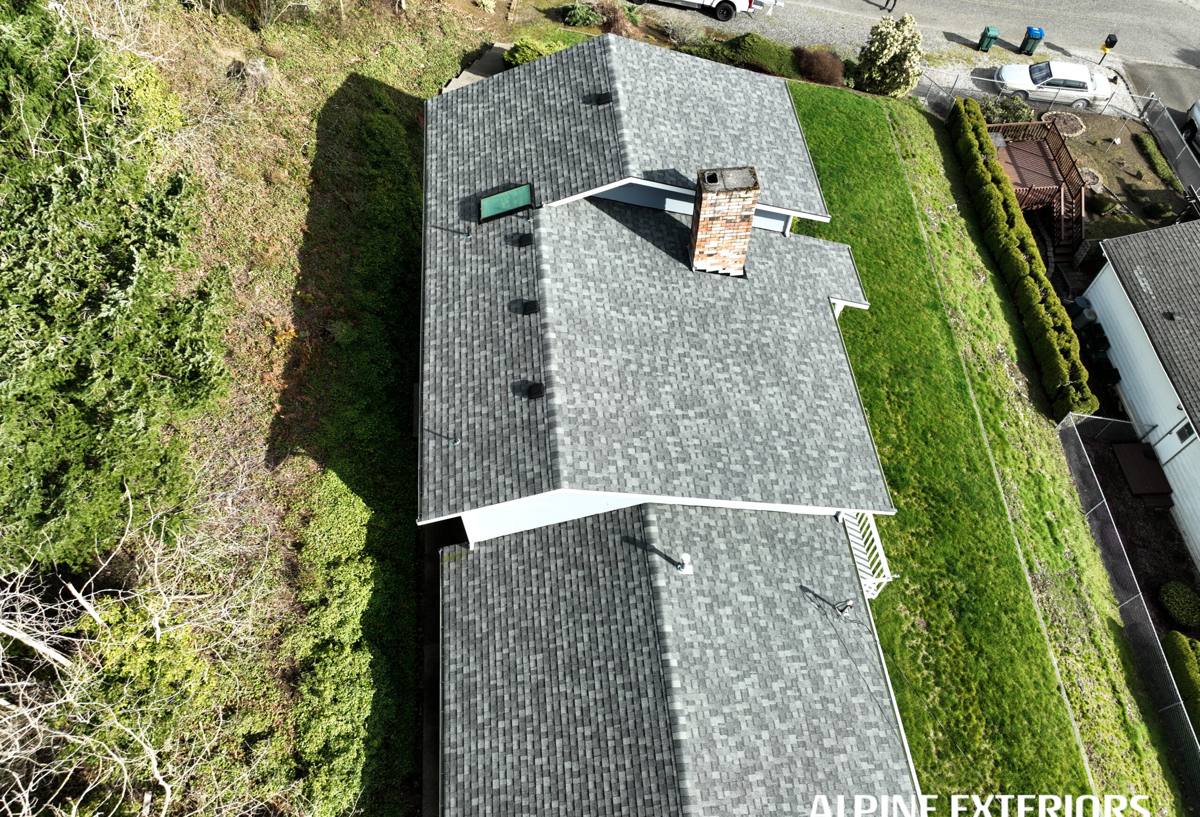
What Redmond's Climate Actually Does to a Roof
Moss and Organic Growth
Redmond's tree canopy is a blessing for shade and a headache for roofs. Shaded, north-facing slopes stay damp for days after a storm, and that moisture combined with organic debris — needles, leaves, seed pods — is exactly what moss needs to get established. On composition shingles, moss roots into the granule surface and lifts shingle edges as it grows, which is how a lot of "just cosmetic" moss problems turn into leaks. Metal doesn't give moss the same foothold; there's no porous surface for it to grip, and standing water simply doesn't sit on a properly sloped metal panel the way it can on shingles.
Driving Rain and Wind-Driven Water
Storms moving through the Puget Sound corridor often bring rain at an angle, not just straight down. That matters because wind-driven rain gets pushed up under laps, around penetrations, and into any transition where flashing wasn't detailed correctly. A metal roof's water resistance comes almost entirely from how the panels overlap and how the flashing is integrated — the panel itself is nearly always watertight; the seams and transitions are where a roof succeeds or fails.
Marine Air and Corrosion
Redmond isn't waterfront, but the marine air that moves through the broader Seattle and King County area still carries more moisture and salt-adjacent humidity than an inland climate would. Over years, that environment is harder on unprotected metal and on fasteners than most homeowners expect. It's a real factor in which metal type and coating we recommend, not a reason to avoid metal roofing altogether.
What a Correct Metal Roofing Job Actually Involves
A metal roof is only as good as what's underneath it and around it. The panels get the attention because they're visible, but the parts that actually determine whether the roof performs for the next few decades are mostly things you won't see once the job is done.
- Deck inspection and repair — any soft, rotted, or delaminated sheathing gets replaced before anything goes down, not covered over.
- Ice-and-water or synthetic underlayment at eaves, valleys, and low-slope transitions — the backup layer that matters most in a climate with sustained rain.
- Correct panel fastening — exposed-fastener systems and concealed-fastener (standing seam) systems have different tolerances, and mixing techniques between them is a common source of leaks.
- Flashing at every penetration and transition — chimneys, skylights, vent pipes, sidewalls, and valleys, custom-fit rather than pieced together from stock trim.
- Proper overlap and slope-matched panel runs so water sheds the way it's designed to, especially on the lower-slope sections common on additions and porches.
- Ventilation continuity — a new roof surface shouldn't choke off the attic airflow the rest of the house depends on.
Skip or shortcut any one of these and the panels themselves can be flawless while the roof still leaks. This is why we walk every Redmond estimate through what's actually happening at the deck and flashing level, not just the panel style and color.
Choosing a Panel and Coating System for This Climate
There's no single "best" metal roof — there's a best fit for the house, the slope, and the budget. Here's how the common options compare for a Redmond home specifically:
| System | Best For | Climate Notes |
|---|---|---|
| Standing seam (concealed fastener) | Main roofs, visible slopes, long-term ownership | Best water-shedding performance in driving rain; no exposed fasteners to maintain |
| Exposed-fastener panel (corrugated/ribbed) | Outbuildings, shops, budget-conscious main roofs | Solid performer if fasteners and gaskets are maintained; more seams to detail correctly |
| Steel with quality factory coating | Most residential applications | Good corrosion resistance for marine-influenced air when coating is intact |
| Aluminum | Homes closer to water or with higher corrosion exposure | Naturally corrosion-resistant, slightly more forgiving of coating wear over time |
For most Redmond homes, a mid-to-heavier gauge steel standing seam system with a quality factory finish is the workhorse choice — it handles the moss, the sustained rain, and the humidity well without pushing the budget into aluminum or copper territory. We'll walk through where your specific roof lands on this table during the estimate rather than defaulting to one answer for every house.
Our Process for a Redmond Metal Roofing Project
1. On-Site Assessment
We look at the whole roof system — deck condition, existing ventilation, tree cover and shading, slope, and any trouble spots from past leaks or moss buildup — before recommending a system.
2. Straightforward Proposal
You get a written scope covering panel type, gauge, coating, underlayment, and flashing plan — not just a per-square-foot number. If there are deck repairs likely needed, we tell you up front instead of surprising you mid-job.
3. Tear-Off and Deck Prep
Old roofing comes off, the deck gets inspected and repaired as needed, and we confirm ventilation is adequate before anything new goes down.
4. Underlayment and Flashing First
This is the layer that protects the house even if a panel is ever compromised down the road. It goes down correctly, especially at valleys, eaves, and any low-slope section.
5. Panel Installation
Panels are run, fastened, and seamed according to the manufacturer's specifications for this climate zone — not shortcuts to save labor time.
6. Final Walkthrough
We go over the finished roof with you, including basic maintenance expectations, before considering the job done.
Maintenance: What a Redmond Metal Roof Actually Needs
One of the real advantages of metal in this climate is how little ongoing maintenance it demands compared to shingles — but "little" isn't "none."
- Clear debris (needles, leaves, seed pods) from valleys and gutter lines once or twice a year, especially under heavy tree cover.
- Check sealant at penetrations (vent pipes, chimney flashing) every couple of years — sealant is the one component that ages faster than the metal itself.
- Keep gutters and downspouts flowing; standing water at the eave is a bigger risk to fascia and trim than to the panels themselves.
- After major windstorms, a quick visual check for lifted trim or debris impact is worth the five minutes.
Why Hiring a Crew That Already Works in Redmond Matters
Metal roofing installation isn't forgiving of guesswork, and every region has its own quirks that don't show up in a manufacturer's install manual. A crew that already works Redmond and the broader King County area knows which slopes hold moisture longest, which older subdivisions tend to have deck issues under the original roofing, and how local permitting and inspection expectations typically run. That familiarity shows up in fewer surprises during the job and a roof that's detailed for the conditions it'll actually face — not generic instructions applied to a specific house.
It also matters for accountability. A contractor with an established local presence has a reputation in the community to stand behind, which is worth more than a low bid from a crew passing through.
What to Ask Before You Sign a Metal Roofing Contract
- What gauge and coating are specified, and why for this particular roof?
- Is the underlayment ice-and-water shield, synthetic, or felt — and where specifically is it required on this roof?
- How is flashing handled at valleys, chimneys, and skylights — custom-fabricated or stock trim?
- What's the fastening method, and does it match the panel system being quoted?
- Is deck repair included as a contingency, or a separate change order if problems are found?
- What warranty covers the coating versus the installation labor, and who honors each?
A contractor who answers these clearly and specifically is worth trusting more than one who just quotes a total price.
Getting Started
If you're weighing metal roofing for a Redmond home, we're glad to come take a look, walk the roof, and give you a straightforward assessment — no pressure, no upsell script. Use the form below to request a free estimate and we'll get a time on the calendar.