 Seattle Siding
 Why Renton Decks Take a Beating
A deck in Renton lives outside year-round, and the Puget Sound region doesn't make that easy. Driving rain moves sideways in a winter storm, humidity off Lake Washington and the surrounding waterways keeps wood surfaces damp long after the rain stops, and salt-tinged marine air from the Sound corrodes unprotected metal faster than most homeowners expect. Add tree cover, which is common on Renton's wooded lots, and you get a long moss and algae season that starts in fall and doesn't really let go until late spring.
None of that means a deck can't hold up here. It means a deck has to be built for this specific climate, not assembled from generic plans that work fine in a dry state and fail quietly in western Washington. The failures we see most often aren't dramatic — they're a soft ledger board, a rusted joist hanger, or a stair stringer that's been sitting in standing water for a few winters. All of it is preventable with the right materials and the right details at the framing stage.
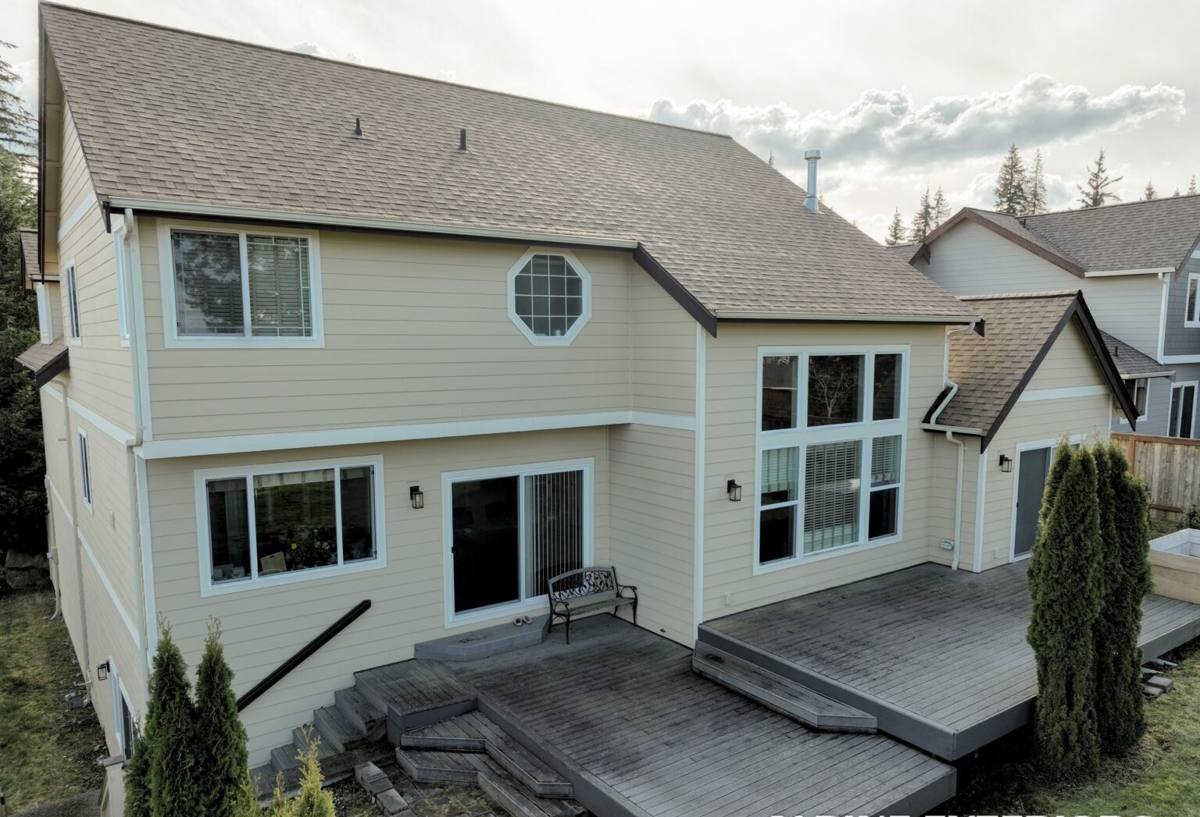
What a Deck Actually Needs to Survive Here
Moisture Management Comes First
Every long-term deck problem we run into traces back to water that had nowhere to go. That means proper slope on the decking surface so water sheds instead of pooling, gaps between boards sized for drainage and seasonal wood movement, and flashing at every point where the deck meets the house. The ledger board — the framing member bolted to your house that carries a huge share of the deck's load — is the single most important place to get flashing right. A poorly flashed ledger lets water track behind it and into the house framing, which is a much more expensive problem than anything happening on the deck surface.
Fasteners and Hardware
Standard steel fasteners corrode quickly in our climate, especially anywhere near the marine air that reaches inland through the Sound and connected waterways. We use hot-dip galvanized or stainless connectors and structural screws rated for exterior and ground-contact use, and we make sure fastener metal is compatible with the lumber's chemical treatment — mixing the wrong metals causes galvanic corrosion that can eat through hardware from the inside, long before it shows on the surface.
Decking Material Options
There's no single right answer here — it depends on your budget, how much upkeep you want to do, and how the deck will be used. Here's how the common choices actually perform in a wet, moss-prone climate like Renton's.
| Material | Upfront Cost | Maintenance | How It Handles Our Climate |
|---|---|---|---|
| Pressure-treated wood | Lowest | Annual cleaning, periodic sealing | Good if sealed regularly; moss and graying happen fast without upkeep |
| Cedar | Moderate | Sealing every 1-2 years | Naturally rot-resistant, but softens and grays without maintenance in shaded, damp yards |
| Composite | Higher | Occasional washing, no sealing | Doesn't rot or splinter; still needs cleaning to keep moss and algae from staining the surface |
| PVC/vinyl decking | Highest | Minimal | Fully moisture-resistant surface; best long-term option for heavily shaded or low-airflow decks |
We don't push one product over another. What we will tell you honestly is that in a shaded, tree-covered lot with limited airflow, a wood deck is going to demand more of your time than a composite or PVC deck will. That's a maintenance tradeoff, not a defect in the wood — it's just how organic material behaves in a wet climate. If you want low-maintenance and have the budget, composite or PVC makes sense. If you like the look and feel of real wood and don't mind cleaning and resealing it, cedar or treated lumber is a perfectly good choice as long as it's maintained.
What Composite Doesn't Fix
Composite and PVC decking solve the surface problem, but they don't solve a bad substructure. The framing underneath still needs to be pressure-treated lumber, still needs proper flashing, and still needs corrosion-resistant fasteners. A beautiful composite deck built on an under-protected frame just hides the problem for a while — it doesn't prevent it.
Substructure, Ledger Attachment, and Footings
The part of the deck nobody sees is the part that determines how long it lasts. In Renton, that means:
- Footings set below frost depth and sized for the soil conditions on your lot
- Post bases that keep wood off concrete and out of standing water
- Ledger flashing that directs water away from the house sheathing, not just a bead of sealant
- Joist hangers and structural screws rated for exterior, ground-contact use
- Beam and joist spans sized to current code load requirements, not just "what looks about right"
Renton and King County require permits for most deck construction, particularly anything attached to the house or built above a certain height, and inspections check exactly these structural details. A crew that treats permitting as a formality rather than a safety check is a crew cutting a corner that matters.
Railings, Stairs, and Code Requirements
Guardrail height, baluster spacing, and stair rail requirements are set by code for a reason — they're what keeps a deck safe for kids, pets, and anyone carrying something down the stairs in the rain. We build railings to current code as a baseline, not an upsell, and we pay attention to the same moisture details on rails and stair stringers that we do on the deck frame: proper end-grain sealing, corrosion-resistant fasteners, and hardware that won't streak or stain the wood as it ages.
Stairs deserve particular attention in our climate. A stair tread that holds water or grows moss is a fall risk, not just a maintenance issue. We build stair treads with the same drainage principles as the main deck surface and use grip-conscious material or finishes on stairs specifically, since wet wood and wet composite can both get slick.
Moss, Algae, and Long-Term Maintenance
Moss and algae aren't cosmetic problems in this climate — they hold moisture against the deck surface and, over years, contribute to rot in wood decking and staining that's hard to remove from composite. Shaded decks under tree cover, which describes a lot of Renton properties, are especially prone to it because sun and airflow that would normally dry the surface between rains just aren't there.
A few habits go a long way regardless of material:
- Sweep leaves and debris off the deck surface and out of board gaps before they compost in place
- Wash the deck at least once a year with a deck-safe cleaner, more often under heavy tree cover
- Keep gutters and downspouts near the deck clear so runoff doesn't dump directly onto or under it
- Check and reseal wood decking on the manufacturer's recommended schedule, typically every 1-2 years
- Trim back overhanging branches where practical to improve airflow and sun exposure
Our Deck Building Process
Design and Site Assessment
We start by walking the site and talking through how you actually plan to use the deck — entertaining, grilling, a quiet spot with morning sun, direct access from a kitchen or living room. We look at drainage patterns, tree cover, sun exposure, and how the deck will tie into the house, because those factors drive material and layout decisions more than aesthetics alone.
Permitting and Structural Planning
We handle the permit process with the City of Renton or King County as applicable, sizing footings, beams, and joists to the actual load requirements for your deck's dimensions and use.
Construction
Framing goes in first, with ledger flashing, corrosion-resistant hardware, and footings done to code — this is the stage that determines the deck's lifespan, so we don't rush it. Decking, railings, and stairs follow, finished to the standard we'd want on our own home.
Final Walkthrough
We walk the finished deck with you, cover basic maintenance for the material you chose, and make sure everything meets code before we call the job done.
Why Hire a Crew That Already Works in Renton
A deck built from a plan that ignores local conditions will look fine on day one. The problems show up two, five, or ten winters later — a soft ledger, rusted hardware, a stair stringer that never fully dries out. Working regularly in Renton and the greater Seattle area means we've seen how driving rain, moss season, and marine air actually affect decks over time, not just in a showroom or a spec sheet. That shows up in the flashing details, the fastener choices, and the drainage planning we build in from the start, not as extras but as the baseline.
Signs Your Current Deck May Need Attention
If you already have a deck and aren't sure whether it needs repair, replacement, or just maintenance, watch for these:
- Soft or spongy spots in the decking or around the ledger board
- Visible rust streaks running from fasteners or hardware
- Persistent moss or algae that comes back within weeks of cleaning
- Gaps or separation where the deck meets the house
- Wobbly railings or stairs, or visible cracking in support posts
- Standing water that doesn't drain within an hour or two after rain stops
Any one of these is worth a closer look before it turns into a structural repair. Some of these issues are simple fixes; others mean the deck was built without the right details for this climate in the first place.
If you're planning a new deck or trying to figure out whether your current one is worth repairing, we're happy to come take a look. Reach out for a free, no-pressure estimate using the form below.