 Seattle Siding
 What Renton Roofs Are Actually Up Against
Renton sits low along the south end of Lake Washington, in a pocket of King County that gets the full Pacific Northwest weather package: long stretches of steady rain from fall through spring, humid air moving off the Sound and the lake, and short, intense windstorms that roll through a handful of times a year. None of that is dramatic on its own, but it adds up differently than it does in drier climates. A roof here isn't dealing with occasional storms between long dry spells — it's dealing with near-constant moisture exposure for eight or nine months of the year.
That combination of salt-tinged marine air, driving rain, and shaded, damp roof planes is exactly what feeds moss. Moss doesn't just look bad on a roofline — it holds water against the roofing material, works into shingle laps and butt joints, and can lift edges enough for wind-driven rain to get underneath. A roof that would last three decades in a dry inland climate can lose years off its service life here if it wasn't installed with this climate in mind, or if moss and moisture were allowed to sit unaddressed.
New roof installation in Renton has to account for all of this from the start — not as an afterthought, but in the underlayment choice, the ventilation design, the fastening pattern, and the material itself.
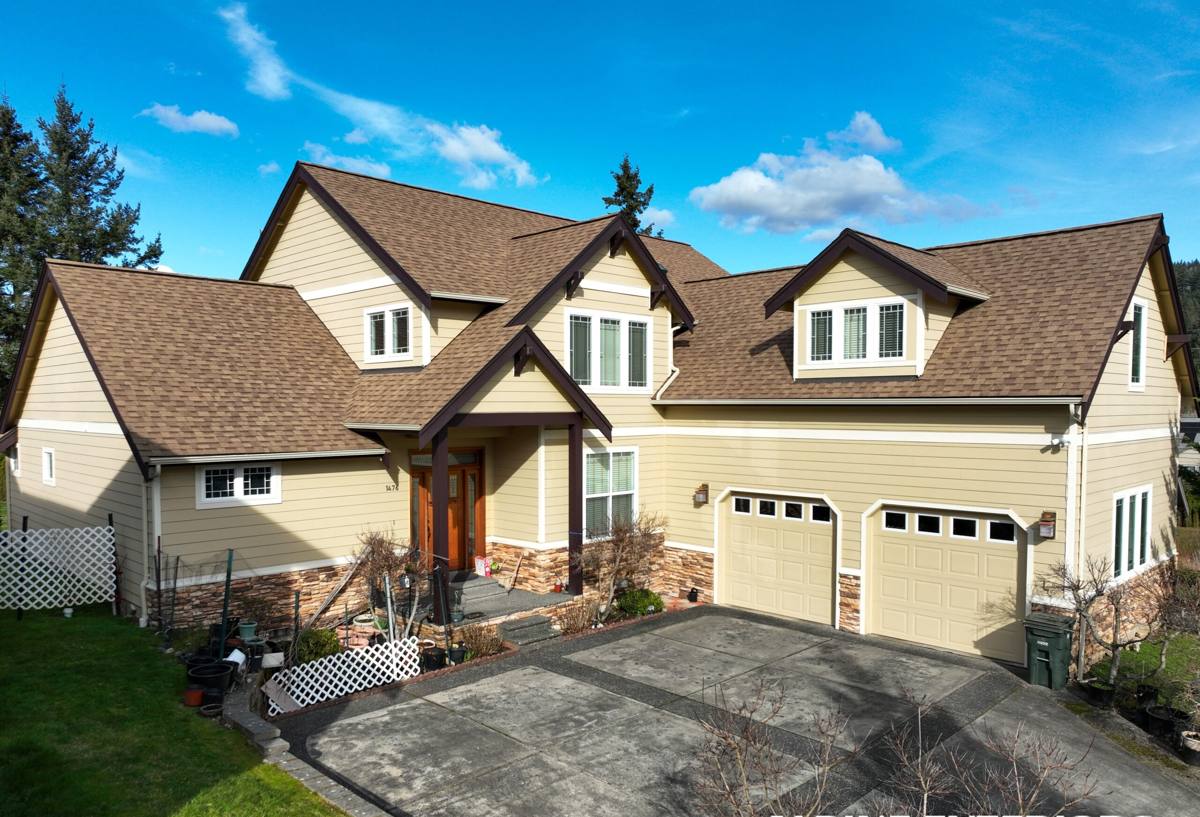
Signs a Renton Home Needs a New Roof, Not Another Repair
Repairs make sense when a roof is otherwise sound and the damage is localized. Replacement makes sense when the underlying material or deck has aged out or been compromised broadly. Homeowners in Renton typically start looking seriously at replacement when they notice:
- Granule loss heavy enough to show bare, shiny patches on asphalt shingles
- Shingles that are cupping, curling at the edges, or cracking in multiple areas rather than just one spot
- Moss or algae staining that keeps returning within a season or two of cleaning
- Daylight visible through the attic sheathing, or damp insulation after a heavy rain
- Repeated leaks in different spots — a sign the underlayment has failed broadly, not just one flashing detail
- A roof that's already had two or more patch repairs in the last few years
If only one or two of these apply and the roof is otherwise in the first half of its expected lifespan, a repair is usually the more honest recommendation. We'll say so. Replacement is worth it when the roofing system as a whole — not just the shingles, but the deck, underlayment, and ventilation — is at or past the point where repairs are just delaying the inevitable.
What a Correct New Roof Installation Actually Involves
Tear-Off and Deck Inspection
We remove the old roofing down to the deck rather than layering over it. That's the only way to actually see the plywood or plank sheathing underneath, which is where Renton's moisture problems tend to show up first — soft spots, delamination, or rot around old flashing and vent penetrations. Any damaged decking gets replaced before anything new goes down. Installing new roofing over a compromised deck just hides the problem for another few years.
Underlayment Built for Wet Climates
This is one of the most overlooked parts of a roof, and one of the most important in a climate like ours. We use synthetic underlayment rated for extended weather exposure, with self-adhered ice-and-water membrane at the eaves, valleys, and any low-slope transitions — the areas most prone to wind-driven rain working backward under the shingles. This layer is what actually keeps water out if wind ever lifts a shingle edge during a storm.
Ventilation That Matches the Attic
A roof that can't breathe traps moisture underneath it, which shortens the life of the decking and the roofing material both. We balance intake at the eaves with exhaust at the ridge or through properly sized vents, sized to the specific attic — not a one-size-fits-all approach. Poor ventilation is a quiet cause of premature roof failure that has nothing to do with the shingles themselves.
Flashing and Penetration Details
Chimneys, plumbing vents, skylights, and roof-to-wall transitions are where most leaks actually start, not in the open field of the roof. We install new step flashing, counter-flashing, and pipe boots at every penetration rather than reusing old metal, and we seal transitions with materials rated for long-term UV and moisture exposure.
Final Material Installation
Whatever material is chosen, it goes down to the manufacturer's specified nailing pattern, exposure, and overlap — not a faster approximation. In a climate that gets this much sustained rain, small shortcuts in fastening or overlap show up as leaks within a few years, not decades.
Choosing a Roofing Material for Renton's Climate
There isn't one universally "best" roofing material — there's a best fit for the home, the roof's slope and exposure, and the owner's budget and maintenance appetite. Here's how the common options actually compare for a Renton house:
| Material | Typical Lifespan Here | Moss/Moisture Behavior | Maintenance |
|---|---|---|---|
| Architectural asphalt shingle | 25–30 years | Moss-resistant algae-shield versions help; still benefits from periodic cleaning on shaded slopes | Low to moderate |
| 3-tab asphalt shingle | 15–20 years | More prone to moss buildup and granule loss over time | Moderate |
| Metal (standing seam or panel) | 40–50+ years | Sheds water and moss well due to smooth surface and slope | Low |
| Composite/synthetic shake or slate | 30–50 years | Good moisture resistance; installation quality matters more than with asphalt | Low to moderate |
For most Renton homes, a quality architectural shingle with an algae-resistant coating is the practical middle ground — durable, well-tested in this climate, and reasonably priced. Metal roofing is worth serious consideration on homes with lower-pitch sections or heavy tree cover, since it sheds moisture and resists moss more effectively than any shingle. We'll walk through the honest trade-offs for your specific roof rather than pushing whatever's easiest to install.
Our Process for a Renton Roof Replacement
- On-site inspection. We get on the roof (not just a drive-by look) to check the deck, ventilation, flashing, and current material condition.
- Written estimate. A clear scope of work and material options, with pricing broken out so you know what you're paying for and why.
- Material selection. We go over the realistic options for your roof's slope, sun/shade exposure, and budget — no upsell pressure.
- Scheduling around the weather. We plan installation windows with realistic buffer for King County's rain patterns rather than rushing a job into a forecast that doesn't hold.
- Tear-off, deck repair, and installation. Done in the sequence above — deck inspected and repaired before anything new goes on.
- Final walkthrough. We review the finished roof with you, including ventilation and flashing details, before calling the job complete.
What Drives the Cost of a New Roof in Renton
Every roof is priced on its own specifics, but the main variables are consistent. A straightforward, single-story Renton home with a simple roofline and architectural shingles often lands somewhere in the low-to-mid five figures; steeper pitches, multiple roof planes, metal roofing, or extensive deck repair push that higher. Rather than quote a number that won't mean much without seeing your roof, here's what actually moves the price:
| Factor | Why It Matters |
|---|---|
| Roof size and number of planes | More material, more flashing detail, more labor time |
| Pitch and accessibility | Steep or hard-to-access roofs require more safety setup and slower work |
| Deck condition | Rot or soft sheathing found during tear-off adds material and labor |
| Material choice | Asphalt, metal, and composite materials carry different per-square costs |
| Ventilation upgrades | Adding proper intake/exhaust venting where none existed adds scope |
A written, itemized estimate is the only reliable way to know what your specific roof will cost — we won't guess a number before seeing it in person.
Why Local Renton Experience Matters
Roofing crews who work Renton and the surrounding King County area regularly know how this climate actually behaves on a roof over time — which slopes hold moss longest, which older neighborhoods tend to have particular decking or ventilation quirks, and how to sequence a tear-off around a wet forecast instead of getting caught mid-job. That's different from general roofing knowledge; it's familiarity with how this specific climate wears on a roof year after year. It also means being reachable afterward if a question comes up, rather than a crew that did one job in the area and moved on.
Keeping a New Roof Performing Long-Term
A correctly installed roof still benefits from basic upkeep, especially in a climate this wet. After installation, we recommend:
- Having gutters cleaned at least twice a year so water isn't backing up under the eaves
- Checking for moss growth each spring and having it treated before it spreads, rather than after
- Trimming back overhanging branches that keep roof sections shaded and damp
- Scheduling a quick visual inspection after any major windstorm
- Watching the attic for any musty smell or moisture, which can signal a ventilation or flashing issue early
None of this is complicated, but it's the difference between a roof that hits its full expected lifespan and one that doesn't.
If your Renton home is due for a new roof, or you're not sure whether repair or replacement is the right call, we're happy to take a look and give you a straightforward, no-pressure estimate. There's a form below — reach out and we'll get you scheduled.