 Seattle Siding
 Renton's Climate Is Harder on Siding Than Most Homeowners Realize
Renton sits where the Cedar River meets Lake Washington, tucked into a corner of King County that gets the full weather pattern of the Puget Sound region: long wet winters, a short dry summer, and a swing between the two that stresses exterior building materials more than people expect. Add the moisture that drifts in off Puget Sound and Lake Washington, and siding here is doing real work every single day, not just sitting there looking good.
Three things define what siding has to survive in Renton: near-constant moisture exposure for much of the year, salt-tinged marine air pushing in from the Sound, and a moss season that can run from fall through spring. None of these are dramatic on their own. Together, over ten or fifteen years, they're what separates a home with siding that still looks sharp from one that's chalky, streaked, and starting to fail behind the surface.
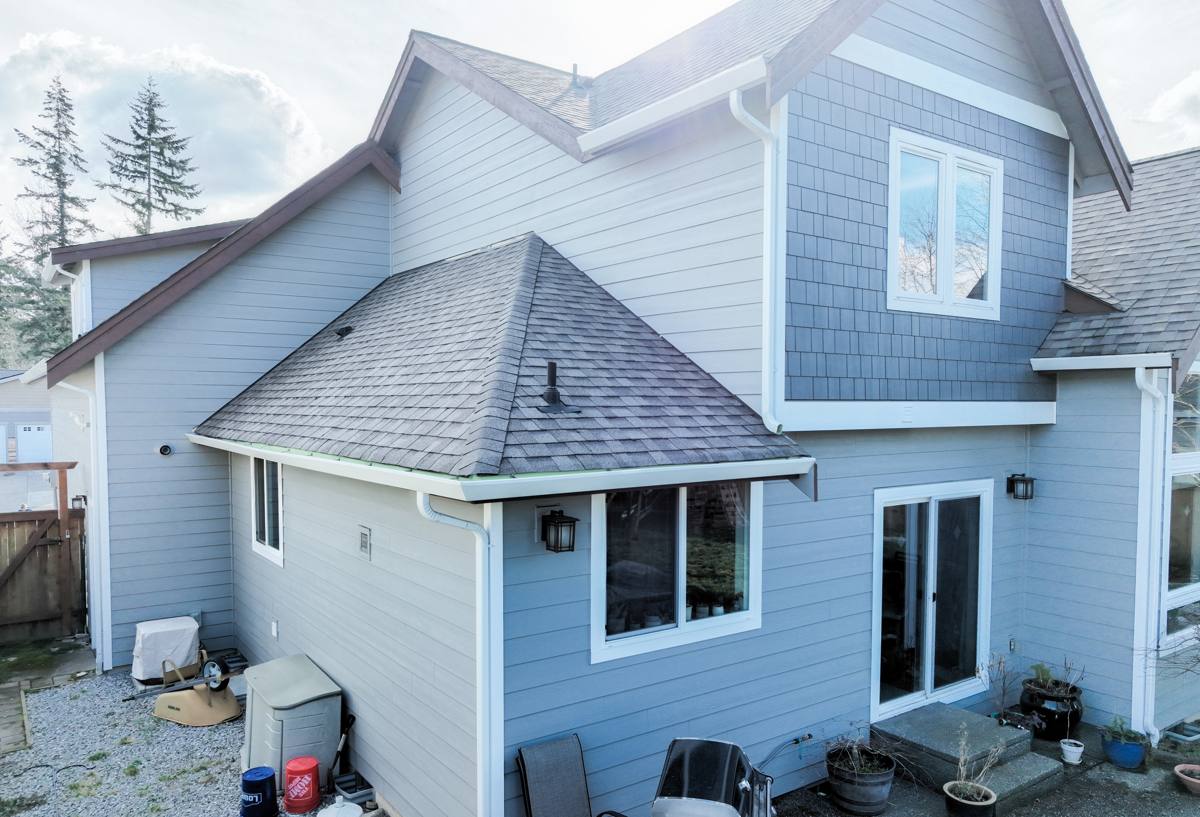
What the Pacific Northwest Actually Does to a Wall System
Driving Rain and Constant Dampness
Renton doesn't get flash floods, it gets months of steady, wind-driven rain that hits siding at an angle and finds every gap, seam, and fastener hole. Materials that can absorb even a small amount of water and don't dry out quickly stay damp for days at a time during the wet season. That sustained dampness is what causes rot, delamination, and paint failure — not any single storm.
Salt Air and Corrosion
Homes closer to Puget Sound and Lake Washington deal with airborne moisture carrying trace salt, which is harder on fasteners, trim, and any siding product with metal components or a finish that isn't built to resist it. It's a slower process than what you'd see right on the waterfront, but it's real, and it shows up first at the fastener heads and cut edges most homeowners never think to check.
Moss, Mildew, and Organic Growth
King County's wet season gives moss and algae months of shade, moisture, and cool temperatures to establish themselves — exactly the conditions they need. Siding with any texture or porosity gives spores somewhere to grip. Once moss takes hold on a wall, it holds moisture directly against the material underneath it, which accelerates whatever damage the rain alone would have caused.
Temperature Swings
Renton doesn't get brutal cold, but it does get repeated freeze-thaw cycles through the winter. Materials that swell when wet and then contract when temperatures drop are working against themselves twice a season, every season, for as long as they're on the house.
Signs a Renton Home Needs Siding Replacement, Not Another Repair
Not every issue calls for a full replacement, but there's a point where patching stops making sense. Walk your exterior and look for these:
- Soft, spongy, or crumbling spots when you press on the siding, especially near the bottom courses and around windows
- Persistent moss or dark streaking that comes back within weeks of being cleaned
- Paint or finish that's peeling, bubbling, or chalking heavily rather than just fading evenly
- Visible warping, cupping, or gaps opening up between boards or panels
- Rusted or popped fasteners, especially on walls that face prevailing wind and rain
- A musty smell or unexplained moisture inside walls near exterior corners
- Siding that's original to a home built more than 20-25 years ago and was never a fiber cement or masonry product
If you're seeing two or three of these at once, especially on the same wall, that's usually a sign the damage has moved past the surface and into the sheathing or framing behind it — which changes the scope of the job.
Why We Only Install James Hardie Fiber Cement
We get asked regularly why we don't offer vinyl, LP SmartSide, or a primed wood option alongside Hardie. The honest answer is that in a climate like this one, the differences between products aren't cosmetic — they show up as callbacks five, ten, and fifteen years down the road, and we'd rather stand behind one system we know performs than sell several and hope.
James Hardie fiber cement is non-combustible, doesn't absorb water the way wood-based or engineered-wood products do, and holds up to the wet-dry, warm-cool cycling that defines a King County winter. It's also manufactured in climate-specific formulations — Hardie's HZ5 product line is engineered for regions like ours that see extended damp periods and freeze-thaw cycling, as opposed to the version built for hot, humid southern climates. That distinction matters more here than most homeowners realize.
The other piece is the factory finish. Hardie's ColorPlus coating is baked on under controlled conditions before the boards ever reach a job site, which gives it a more even, durable finish than a coat of paint applied on-site — and a longer color warranty as a result. Combined with Hardie's product warranty on the material itself, homeowners get a documented, transferable warranty structure instead of relying entirely on workmanship alone.
None of this means other siding products are without merit — vinyl is inexpensive and low-maintenance in the right climate, cedar has real aesthetic appeal, and LP SmartSide has improved over the years. But we made a decision to specialize in one system that we can install to spec every time and stand behind fully, rather than spread ourselves across several products with different failure points. For a deeper look at how specific alternatives compare, we cover those trade-offs on their own pages.
| Factor | Why It Matters in Renton's Climate |
|---|---|
| Moisture absorption | Fiber cement resists water intake far better than wood-based or vinyl products, reducing rot and warping risk through the wet season |
| Fastener and finish durability | Marine-influenced air corrodes weaker fasteners and finishes faster than in inland climates |
| Resistance to moss and mildew | Surface texture and coating quality affect how easily organic growth establishes and how well it cleans off |
| Freeze-thaw stability | Materials that don't expand and contract significantly hold their seams and finish longer |
| Warranty structure | A manufacturer-backed, transferable warranty protects the investment beyond the installer's own workmanship guarantee |
What a Correct Siding Replacement Actually Involves
Replacing siding is not a matter of pulling off the old boards and nailing up new ones. Done right, on a Renton home, the job includes several steps that don't show up in a driveway estimate but determine whether the new siding lasts 30 years or ten.
Tear-Off and Inspection
Once the old siding is off, the sheathing underneath gets inspected for water damage, soft spots, and rot — issues that are invisible from the outside but common on homes that have had failing siding for a while. Any damaged sheathing or framing needs to be addressed before anything new goes up, not covered over.
Weather-Resistive Barrier and Drainage
A correctly installed weather-resistive barrier, properly lapped and sealed, is what keeps incidental moisture from reaching the sheathing in the first place. In a climate that sees as much sustained rain as ours does, a drainage plane behind the siding that lets any moisture that does get through drain and dry out is what prevents the slow, hidden rot that shows up years later.
Flashing at Every Penetration
Windows, doors, vents, and any other wall penetration are where the vast majority of water intrusion problems start. Proper flashing at each of these points, integrated correctly with the weather-resistive barrier, is non-negotiable in a wet climate — it's also one of the easiest details to shortcut if a crew is moving fast.
Installation to Manufacturer Spec
James Hardie publishes specific fastening patterns, gap and clearance requirements, and caulking guidelines for a reason — following them is what keeps the manufacturer's warranty valid and what actually gives the product its rated performance. Correct nail spacing, proper clearance from grade and roof lines, and appropriate gaps at butt joints all matter more in a wet climate than a dry one.
Trim, Caulking, and Finish Work
The finish details — corner boards, trim around openings, caulked joints — are what most people notice, but they're also functional. Poorly caulked joints or trim that traps water against the wall undoes a lot of the protection built into the system underneath.
Our Process for Renton Projects
- On-site assessment: We look at your current siding, the condition of the sheathing where visible or accessible, drainage around the foundation, and any trouble spots specific to your home's exposure.
- Scope and product selection: We walk through the right James Hardie profile, texture, and ColorPlus color for your home, and give you a clear, honest scope of what the job involves.
- Permitting: Siding replacement in King County jurisdictions typically requires permitting, and we handle that as part of the process rather than leaving it to the homeowner.
- Removal and inspection: Old siding comes off, sheathing gets inspected, and any necessary repairs are identified and priced before we move forward — no surprises buried in a change order later.
- Installation: Weather-resistive barrier, flashing, and Hardie siding go in to manufacturer spec, with attention to the details that matter most in our climate.
- Final walkthrough: We go over the finished work with you directly and make sure everything meets the standard we'd want on our own homes.
What Drives Cost on a Renton Siding Replacement
Every home is different, and we'll always give you a specific number after seeing the property rather than a number that doesn't account for your actual conditions. That said, a few factors consistently move the price up or down:
| Cost Factor | How It Affects the Job |
|---|---|
| Home size and wall complexity | More square footage and more corners, dormers, and roof lines mean more material and labor |
| Condition of existing sheathing | Hidden water damage found during tear-off adds repair scope that can't always be predicted upfront |
| Siding profile and texture | Lap siding, shingle-style panels, and board-and-batten each carry different material and install costs |
| Trim and detail work | Homes with more window and door openings, corner detail, or architectural trim take more labor per square foot |
| Access and site conditions | Multi-story walls, tight lot lines, and limited staging space all affect labor time |
We'll walk you through where your home falls on each of these during the estimate, so the number you get reflects your actual house rather than a generic average.
Why It Matters to Hire a Crew That Already Works in Renton
Siding installation isn't identical everywhere, and a crew that mostly works in drier inland climates can install a product correctly by the book and still miss the details that matter most here — drainage plane continuity, flashing sequencing around the amount of rain we get, and fastening practices suited to a wall system that's rarely completely dry for months at a time.
A crew that already works Renton and the surrounding King County area knows the permitting process locally, has already seen how different exposures around the city hold up over time, and has a working relationship with James Hardie's product line rather than treating it as one option among several. That familiarity shows up in fewer surprises during the job and a better outcome once the siding's been through a few full wet seasons.
Keeping New Siding Looking Right in This Climate
One of the practical advantages of a factory-applied finish is how little upkeep it needs compared to site-applied paint. Even so, a few habits go a long way in a climate like ours:
- Rinse siding down once or twice a year to keep moss and mildew from establishing, especially on shaded, north-facing walls
- Keep gutters clear and downspouts directed away from the foundation so water isn't sheeting down walls
- Trim back vegetation and tree cover that keeps sections of the wall shaded and damp longer than the rest of the house
- Check caulked joints and trim periodically and have any cracked or failing caulk addressed before it lets water behind the siding
If you're seeing signs of wear on your current siding, or you're just planning ahead for a home that's due, we're happy to take a look and give you a straightforward, no-pressure estimate — no obligation, just an honest read on where your house stands and what it would take to get it right.