 Seattle Siding
 Why Ravenna Roofs Wear Differently Than You'd Expect
Ravenna is one of Seattle's older, more established neighborhoods, and that shows up on the roofs as much as anywhere else — mature tree canopy, homes built across many different decades, and a housing stock that ranges from early-1900s bungalows to mid-century additions and newer infill. Each of those eras brought different roof framing, different ventilation habits, and in some cases different materials layered on top of each other over the years. A repair that works on one roof in the neighborhood won't automatically be right for the house next door.
What ties them together is the climate. Seattle and King County sit in a marine environment with a long wet season, moisture-laden air moving in off Puget Sound, and driving, wind-pushed rain that doesn't fall straight down the way a lot of homeowners picture "rain." That sideways component matters — it's what pushes water under laps, flashing edges, and shingle tabs that would otherwise shed water fine in a calmer storm. Add in salt-tinged marine air working on fasteners and metal flashing over years of exposure, and you get slow, cumulative wear that's easy to miss until it shows up as a stain on a ceiling.
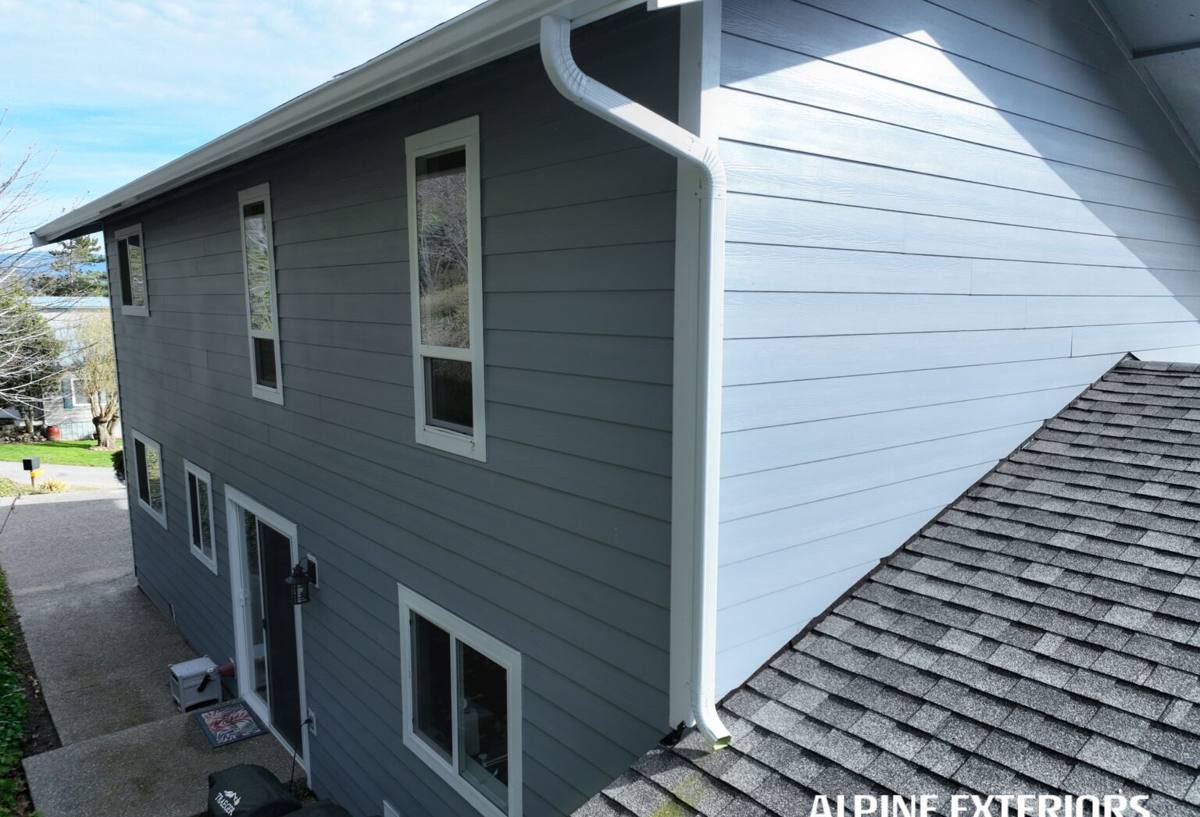
The Roof Repair Issues We See Most Often in Ravenna
Most of the repair calls we get in this part of Seattle fall into a handful of categories. None of them are exotic — they're the predictable result of a wet climate meeting an aging roof.
- Moss and organic growth lifting shingle edges and holding moisture against the roof deck far longer than the material was designed to tolerate.
- Flashing failures around chimneys, skylights, roof-to-wall transitions, and vent penetrations — almost always the actual leak point, even when the shingles nearby look fine.
- Wind and storm damage from the fall and winter systems that move through the region, especially on older shingles that have already lost some flexibility.
- Clogged or undersized gutters backing water up under the roof edge during heavy, sustained rain events.
- Nail pops and fastener failure as roof decking expands and contracts through repeated wet-dry cycles.
- Ventilation problems that trap moisture in the attic, which shows up as premature decking rot or mold long before the roofing material itself has failed.
What Correct Roof Repair Actually Involves
A roof repair done right isn't just "patch what's leaking and move on." That approach treats the symptom and leaves the cause in place, which means you're paying for the same repair again in a year or two. A proper repair starts with figuring out why water got in, not just where.
Diagnosis Before Anything Else
Most leaks show up on the ceiling in one spot but originate somewhere else entirely — water can travel along rafters or decking before it finds a gap to drip through. A competent repair starts by tracing the path, checking flashing, checking the roof deck for soft spots, and checking attic ventilation and insulation for signs of trapped moisture, before a single shingle gets pulled.
Matching the Repair to the Roof's Age
Repairing a 6-year-old roof and repairing a 20-year-old roof are different jobs even when the visible damage looks similar. On a newer roof, matching shingles is usually straightforward and the fix is often permanent. On an older roof, the surrounding material may be brittle enough that pulling and replacing a section causes more damage than it fixes — in that case, an honest repair conversation includes telling you when a section is close enough to the end of its life that the smarter money is a targeted replacement of that section, or in some cases a broader conversation about the roof's remaining years.
Getting the Flashing Right
Flashing is where most repairs succeed or fail. It has to be layered correctly with the roofing material — not just caulked over the top of it — so that water is shed in the direction it's designed to flow. Caulk and sealant have a place as a secondary defense, but they are not a substitute for properly lapped, mechanically sound flashing. A repair that relies on sealant alone is a repair that's going to need to be redone.
Our Roof Repair Process in Ravenna
- Inspection. We look at the roof from the ground and, where it's safe and useful, up close — checking shingles, flashing, valleys, penetrations, and gutter condition together, since they all affect each other.
- Attic and interior check. Where there's an active leak, we check the attic side too. Staining, damp insulation, and daylight through the decking tell us things the exterior alone won't.
- Written scope and estimate. You get a clear explanation of what's actually wrong, what we recommend, and why — not just a number.
- The repair itself. Removal of damaged material, deck inspection and repair if needed, correct flashing installation, and matched roofing material installed to manufacturer specification.
- Cleanup and check. Debris and old material hauled off, work area checked, and the repair explained so you know what was done and why.
Repair or Replace? How We Help You Decide
Not every roof problem in Ravenna needs a full replacement, and we don't push one when a repair will hold. But there's a point where repeated small repairs cost more over a few years than doing the job once. Here's how we think through it:
| Factor | Leans Toward Repair | Leans Toward Replacement |
|---|---|---|
| Roof age | Well within the material's expected service life | At or near the end of the roofing material's typical life |
| Extent of damage | Localized — one flashing point, one wind-damaged section | Spread across multiple areas or slopes |
| Decking condition | Solid, dry decking under the damaged area | Soft, delaminating, or repeatedly wet decking |
| Repair history | First or second repair on this roof | Third or later repair to the same general area |
| Moss/organic buildup | Surface growth, shingles still intact underneath | Growth has been lifting shingles or holding moisture for years |
Materials We Repair With — and Why
Most homes in Ravenna are roofed in asphalt composition shingle, with some cedar, metal, and flat or low-slope sections on additions and older homes mixed in. Our standard for repair material is straightforward: match the existing roofing as closely as manufacturer specifications allow, use flashing metal and fasteners rated for our climate's moisture exposure, and never rely on a shortcut that will need to be revisited in a year.
| Material | Repair Considerations | Where It Fits |
|---|---|---|
| Asphalt composition shingle | Most common, straightforward to match on newer roofs; older roofs may have discontinued colors/profiles | Most Ravenna homes |
| Cedar shake/shingle | Higher maintenance burden in a wet climate; repairs must account for moisture behavior of the surrounding wood | Older homes with original cedar roofing |
| Metal roofing/flashing | Durable but repair requires matching profile and proper fastening to avoid new leak points | Accent roofs, additions, and flashing details on any roof type |
| Low-slope/flat membrane | Different repair approach entirely — seams and terminations are the usual failure point | Additions, porch roofs, some mid-century homes |
Moss, Trees, and Year-Round Roof Maintenance
Ravenna's mature street trees are part of what makes the neighborhood look the way it does, but they also mean roofs collect needles, leaves, and shade — exactly the conditions moss needs. Once moss establishes, it doesn't just sit on the surface; it holds water against the shingle and works into the granule layer, shortening the roof's life well before its rated age. King County's long, mild, wet season gives moss months at a time to keep growing, longer than drier parts of the country ever see.
Preventive maintenance is the cheapest repair you'll ever pay for, because it's the one that stops a problem before it becomes a leak. A simple seasonal checklist covers most of it:
- Clear debris and needles from valleys and behind chimneys, where they trap moisture longest.
- Check and clean gutters before the fall storm season and again mid-winter if trees are nearby.
- Have visible moss treated or removed before it spreads across a slope, rather than after.
- Look for granules collecting in gutters or downspouts — a sign shingles are breaking down.
- Check attic ventilation isn't blocked by insulation, which traps moisture that shortens roof life from underneath.
- Walk the roofline after major windstorms and note anything that looks lifted, cracked, or missing.
Cost Factors for Roof Repair in Ravenna
We don't quote roof repair pricing sight unseen, because the range is genuinely wide — a single flashing repair is a very different job from a section of decking replacement after a long-term leak. In general, cost is driven by how much of the roof is affected, whether the decking underneath is sound, how steep and accessible the roof is, and whether matching material is easy to source. Small, localized repairs on an accessible roof tend to fall in the low hundreds of dollars; repairs involving decking replacement, multiple flashing points, or difficult access run well beyond that. The only honest way to get a real number is a look at the actual roof.
Why a Crew That Already Works in Ravenna Is Worth It
Roof repair isn't just a technical skill — it's a judgment call about how a specific roof, in a specific climate, is going to behave over the next several years. A crew that regularly works Ravenna and the surrounding Seattle neighborhoods has already seen how this area's tree cover, roof ages, and rain patterns interact, which means fewer surprises mid-job and a repair scope that's realistic from the estimate stage instead of growing once the shingles come off. It also means someone who understands King County permitting and code requirements when a repair crosses into replacement territory, and who's around locally if a repair needs a follow-up look after the next big storm.
If you've got a leak, storm damage, or a roof that just needs a straight answer about what's actually wrong, we're happy to take a look. Fill out the form below for a free, no-pressure estimate — no obligation, just an honest assessment of what your roof needs.