 Seattle Siding
 Board & Batten Siding Built for Shoreline's Weather, Not Just Its Look
Board and batten has become one of the most requested siding profiles for homeowners in Shoreline, and it's easy to see why — the vertical lines, deep shadow reveals, and clean modern-farmhouse look upgrade a home's curb appeal more than almost any other exterior change. But in Shoreline, this profile has to do more than look good. Sitting along the Puget Sound corridor north of Seattle, homes here take on salt-laden air off the water, long stretches of driving rain through fall and winter, and a moss season that can run half the year under the tree canopy that shades so many King County lots. A board and batten system that isn't built and installed for those conditions will show it within a few years — cupping boards, staining battens, and moisture creeping in behind the joints. This page covers what a board and batten job actually needs to hold up in Shoreline, how we install it, and why we only do this work in James Hardie fiber cement.
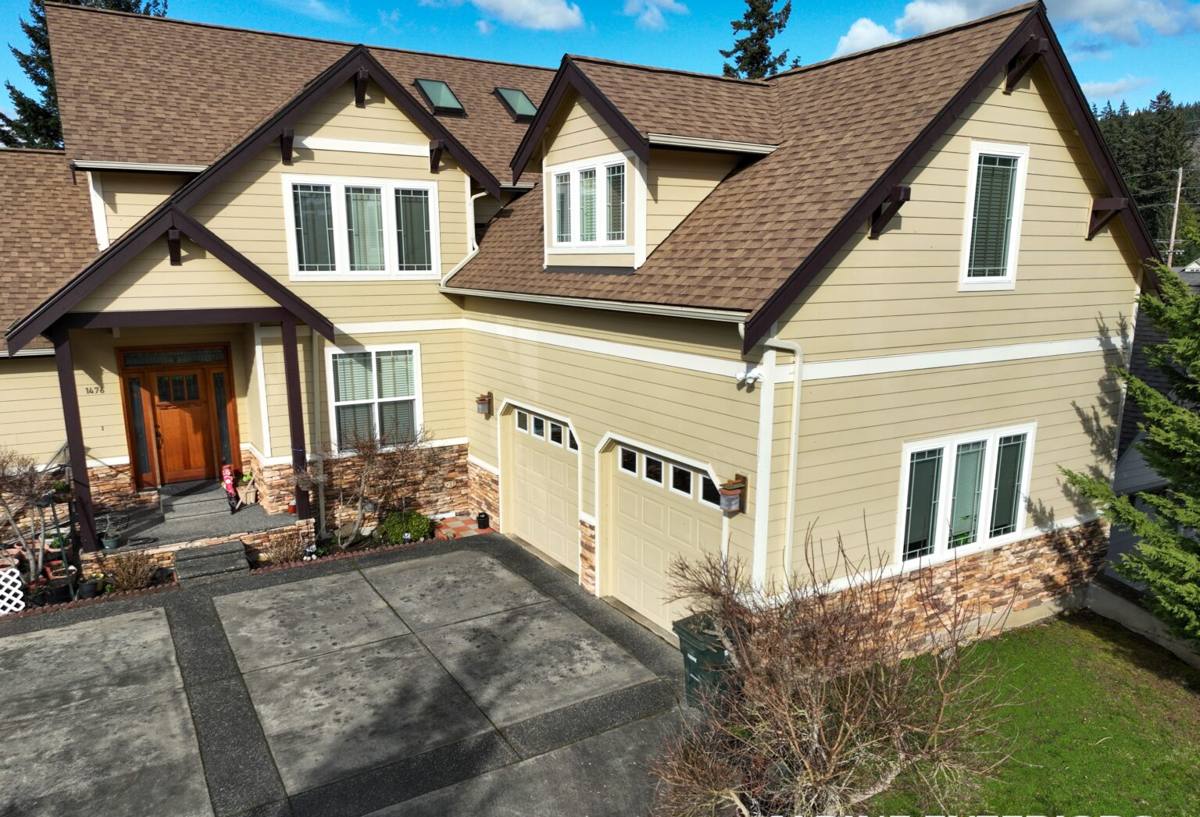
What Shoreline's Climate Actually Does to a Board and Batten Wall
Board and batten is a demanding profile by design. It relies on vertical boards or panels covered at the seams by narrow battens, which means more linear feet of joints and fasteners exposed to weather than a standard lap siding job. In a drier climate that's a minor consideration. In Shoreline, it's the whole ballgame.
Salt Air
Proximity to Puget Sound means airborne salt settles on exterior surfaces, especially on homes with a westward or water-facing exposure. Salt accelerates corrosion on exposed metal fasteners and trim, and it can degrade some paint and coating systems faster than manufacturers' inland test data would suggest.
Driving Rain
Shoreline doesn't just get rain — it gets wind-driven rain that hits walls at an angle instead of falling straight down. That matters enormously for a vertical siding profile, because horizontal battens and board edges are natural places for water to be pushed sideways and upward if the drainage plane behind the siding isn't done correctly.
Moss Season
Mature tree cover across much of Shoreline keeps many walls shaded and damp for long stretches of the year. Moss and algae don't just grow on roofs — they take hold on siding surfaces, board edges, and especially in the tight reveal lines that give board and batten its look, unless the material and finish resist it.
Why We Only Install This Profile in James Hardie Fiber Cement
Board and batten is available in several materials, and we get asked regularly why we don't offer it in vinyl, primed wood, or engineered wood alternatives. The honest answer is that this specific profile amplifies the weaknesses of those materials in a climate like Shoreline's.
Wood board and batten — cedar or primed spruce — can look great on day one, but every seam and batten is an entry point for moisture, and wood expands and contracts with humidity in ways that open up those joints over time. In a climate with this much sustained rain and shade, that means repainting cycles, caulk maintenance, and a real risk of rot at the battens and bottom edges if upkeep slips even one season.
Vinyl board and batten is low-maintenance in the sense that it doesn't need paint, but it's a thin, flexible material that was never engineered for a true rainscreen assembly the way fiber cement is, and it can visibly warp or fade under UV and temperature swings. It also isn't fire-resistant, which matters more each year as wildfire smoke and regional fire risk become a bigger part of Pacific Northwest summers.
James Hardie fiber cement is what we install instead, in every profile including board and batten, because it's engineered specifically for this. It's non-combustible, it's manufactured with a factory-applied ColorPlus finish that's baked on and warrantied against fading, and Hardie's HZ5 product line is engineered for exactly the wet, marine-influenced climate Shoreline sits in. It doesn't rot, it doesn't feed moss the way bare wood does, and it holds a straight, crisp reveal line for decades instead of cupping or twisting.
Material Comparison for This Profile
| Factor | James Hardie Fiber Cement | Cedar / Primed Wood | Vinyl |
|---|---|---|---|
| Moisture resistance | Engineered for wet climates (HZ5) | Absorbs water at joints/end cuts | Doesn't absorb, but seams can trap moisture |
| Moss / algae resistance | Dense, factory-finished surface resists growth | Porous surface, prone to moss in shade | Resists moss but can trap it at overlaps |
| Fire rating | Non-combustible | Combustible | Combustible, can melt/deform near heat |
| Finish life | Factory ColorPlus, 15-year finish warranty typical | Repaint every 3-7 years | Color molded in, fades and chalks with UV |
| Dimensional stability | Stable, minimal expansion/contraction | Expands/contracts with humidity, can cup | Expands/contracts with temperature, can warp |
What a Correct Board and Batten Installation Actually Involves
The vertical profile looks simple, but it's less forgiving of shortcuts than lap siding. Getting it wrong doesn't show up on install day — it shows up two or three winters later, once water has had time to find the gaps.
The Drainage Plane Comes First
Before any siding goes up, the wall needs a properly lapped weather-resistant barrier and a rainscreen gap — a small vertical air space between the wall and the siding that lets any moisture that gets past the surface drain and dry out instead of sitting against the sheathing. This is the single biggest factor in whether board and batten survives Shoreline's driving rain long-term, and it's also the step that's easiest for an unfamiliar crew to skip or shortcut.
Flashing at Every Horizontal Transition
Windows, doors, decks, and any horizontal trim need proper flashing detail so water is directed out and away from the wall assembly, not just caulked and hoped for. Caulk is a backup, never the primary line of defense.
Fastening and Panel Layout
Boards or panels need to be fastened per manufacturer spec into framing, with batten strips placed to properly cover the seams and shed water down and away rather than channeling it into the joint. Panel and batten spacing has to account for expansion allowance even with a stable material like fiber cement.
Finish and Field-Cut Sealing
Every field cut edge needs to be primed or sealed per Hardie's installation requirements before it's closed up, since a factory finish only protects the surfaces it was applied to at the plant.
Our Process for a Shoreline Board and Batten Project
- On-site assessment of the existing wall assembly, including checking for hidden moisture or rot from the current siding before we ever propose a plan
- Confirming whether the project is a full siding replacement or an addition/accent wall in board and batten, since scope changes the flashing and transition detailing needed
- Installing or verifying the weather-resistant barrier and rainscreen gap before any siding goes on
- Installing Hardie panels and battens with correct fastening, spacing, and flashing at every window, door, and horizontal transition
- Sealing and priming all field cuts per manufacturer specification
- Final walk-through so the homeowner can see the completed reveal lines, trim work, and finish before we consider the job done
Because we work in Shoreline regularly, we already know which parts of the area sit closer to the water and take more salt exposure, and which lots have enough tree canopy that moss resistance and drainage detailing need extra attention. That's not something a crew coming from outside the area can match on a first visit — it comes from having done this work here before.
Living With Board and Batten Through a Shoreline Winter
One advantage of switching to James Hardie fiber cement is how little ongoing maintenance it asks for compared to wood board and batten, but "low-maintenance" isn't "no-maintenance." A short seasonal routine keeps the system performing the way it was installed to.
- Rinse siding periodically, especially shaded and north-facing walls where moss and algae are most likely to establish
- Keep gutters and downspouts clear so water isn't overflowing directly onto wall sections during heavy rain
- Trim back vegetation and tree limbs that keep sections of wall shaded and damp for extended periods
- Inspect caulking at trim and penetrations annually and have any cracked or missing sealant addressed promptly
- Watch for any staining or discoloration at the base of the wall, which can indicate a drainage or grading issue rather than a siding problem
Why Hiring a Crew That Already Works in Shoreline Matters
Board and batten is a profile where installation quality is the difference between a siding system that lasts decades and one that needs early repair. In King County's marine climate, a crew that hasn't spent real time on wet-climate rainscreen detailing, salt-exposure considerations, and moss-prone shaded walls is learning on your house. We install exclusively in James Hardie fiber cement, to manufacturer spec, because it's the material we trust to hold up to what Shoreline's weather does to a home year after year — and because doing one system correctly, consistently, matters more to us than offering every material on the market.
If you're considering board and batten siding for a Shoreline home, we're glad to take a look at your project and walk through what it would involve. There's a form below to request a free, no-pressure estimate — we'll assess your specific wall conditions and give you a straight answer on scope and approach.