 Seattle Siding
 Composite Decking in Shoreline: What the Climate Actually Demands
Shoreline sits right on Puget Sound, which means homes here deal with a combination most inland Seattle neighborhoods don't: salt-tinged air blowing in off the water, driving rain that comes in sideways more often than straight down, and a moss season that can stretch from October through May. A deck built to a generic spec sheet doesn't always hold up to that combination. A deck built with Shoreline's actual weather in mind does.
Composite decking is a good fit for this climate when it's specified and installed correctly. It's a poor fit when it's treated like any other decking product and installed the way you'd install it in a dry climate. The difference shows up in year three or four, not on install day, which is exactly why it matters to get it right the first time.
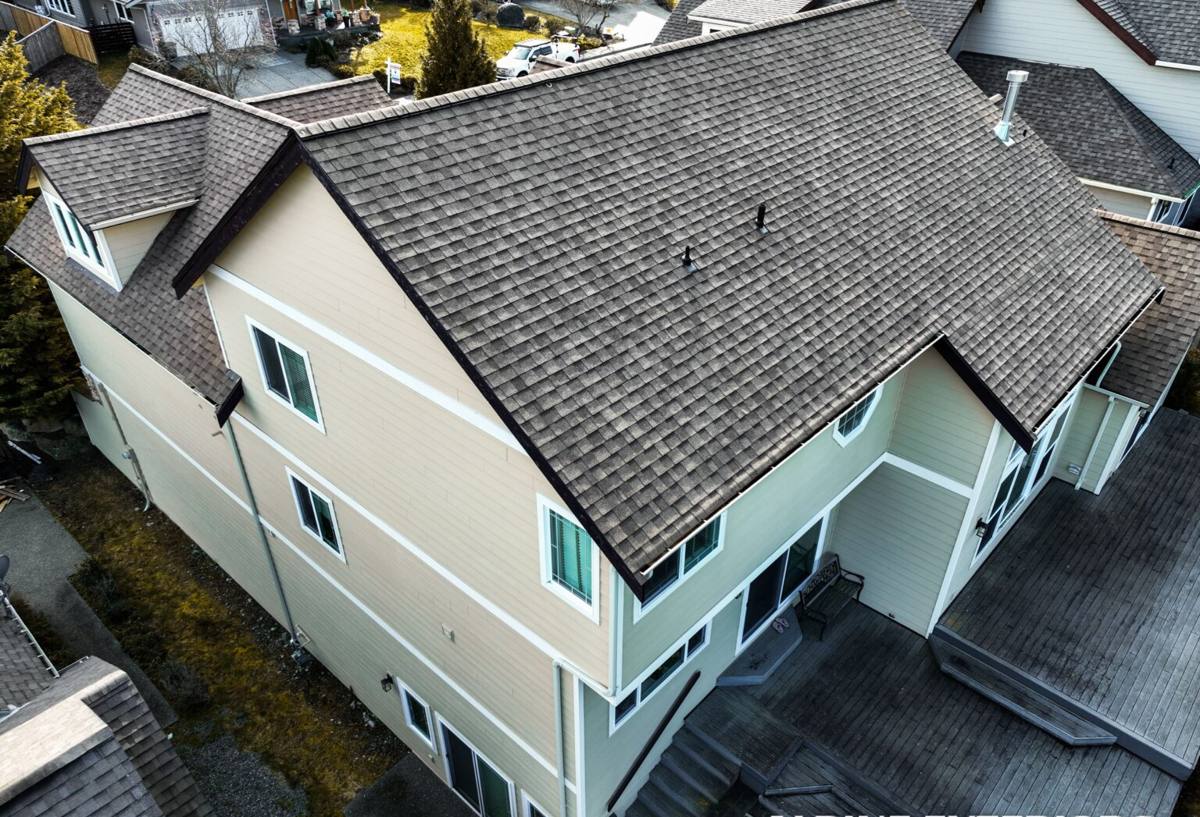
Why Composite Makes Sense for Shoreline's Weather
Wood decking isn't a bad product, but it asks a lot of a homeowner in a wet, salt-air environment: annual staining or sealing, constant vigilance against moss and algae, and a real risk of rot at fastener points and board ends if maintenance slips even one season. Composite decking removes most of that maintenance burden because the boards don't absorb water the way wood does and won't rot.
That said, composite isn't maintenance-free — it's maintenance-different. The cap layer on quality composite boards sheds water and resists staining, but moss and algae will still grow on any exterior surface in King County if it stays damp and shaded long enough. The advantage is that cleaning composite is straightforward (a wash, not a strip-and-reseal job), and there's no substrate underneath that rots if you fall behind on it.
The Salt Air Factor
Homes closer to the Sound get low-level salt exposure in wind-driven air and spray, particularly on decks facing west or northwest. Salt doesn't damage composite decking boards themselves the way it corrodes bare metal, but it does mean fastener and hardware selection matters more here than it would on a deck built ten miles inland. We spec corrosion-resistant fasteners and hardware for anything within range of Sound-driven air, and we say so plainly if a homeowner's existing ledger board or framing hardware needs upgrading as part of the job.
The Moss Season Factor
Shoreline's moss season is long, and it's not just a rooftop problem. Any horizontal wood or composite surface that stays shaded and damp for weeks at a stretch — north-facing decks, decks under tree cover, decks tucked against a house with limited sun exposure — will grow moss and algae film if it isn't sloped and ventilated to drain and dry out. This is a design and installation issue as much as a maintenance issue, which is why the framing and drainage details below matter as much as the board choice.
What a Correct Composite Deck Install Involves
The composite boards get the attention because they're what you see, but most of what determines whether a deck performs well in this climate for fifteen-plus years happens underneath them.
Framing and Drainage
- Joists spaced and sized to the manufacturer's spec for composite (composite typically needs tighter joist spacing than wood, especially on diagonal or picture-frame patterns)
- Proper slope away from the house — usually a slight pitch built into the framing, not something you can fix after the fact
- Joist tape or another moisture barrier on top of the framing, since trapped moisture under the boards is what eventually rots joists even when the decking on top never will
- Ledger board flashing done correctly at the house connection — this is the single most common point of water intrusion into a structure on any deck, composite or wood
- Airflow underneath the deck so the framing can dry out between Shoreline's frequent rain events
Fasteners and Hardware
Hidden fastener systems are standard on quality composite installs now, and they matter more in a marine-influenced climate because they minimize exposed metal on the surface. Where fasteners or brackets are exposed — stair stringers, railing posts, ledger connections — we use stainless or otherwise corrosion-rated hardware given the proximity to the Sound, not the cheapest galvanized option that's fine for a drier, inland job.
Board Layout and Expansion Gaps
Composite boards expand and contract with temperature more than wood does, and Seattle's temperature swings between a dry summer afternoon and a cold, wet winter night are real, even if they're mild compared to other parts of the country. Gaps at board ends and around fixed obstructions (posts, house walls) need to be sized to the manufacturer's spec, not eyeballed. Get this wrong and boards buckle or gap unevenly within a couple of years.
Choosing a Composite Product for This Site
Not every composite board on the market is built the same way, and the differences matter more in a wet, shaded climate than they would somewhere dry. We look at a few things when helping a Shoreline homeowner pick a product:
| Factor | Why It Matters Here |
|---|---|
| Cap layer quality | A full poly cap (all four sides) resists moisture uptake and staining far better than boards with capped surfaces but exposed sides or bottoms |
| Surface texture | A slip-resistant, textured surface matters on a deck that's wet from October to May, not just after a storm |
| Color and fade rating | Darker boards show water spotting and pollen film differently than lighter ones; UV fade resistance still matters even in a cloudy climate |
| Manufacturer warranty structure | Look at what's actually covered — fade, staining, structural integrity — and for how long, not just the headline number of years |
| Board profile (grooved vs. solid edge) | Grooved-edge boards pair with hidden fastener systems for a cleaner look but require correct spacing to avoid water pooling in the groove |
We don't push one brand as universally "the best" — we match the product to the site conditions, the homeowner's budget, and the honest trade-offs of maintenance, appearance, and warranty coverage. If a product has a known moisture-sensitivity issue at cut ends or a warranty that excludes coastal/marine environments, we tell you that before you buy it, not after.
Our Process for a Shoreline Composite Decking Project
- Site assessment — we look at sun exposure, existing drainage, proximity to the Sound, tree cover, and the condition of any existing structure before recommending anything
- Framing evaluation — if we're replacing decking on an existing structure, we check joist spacing, ledger flashing, and moisture damage before deciding whether the substructure can be reused or needs rebuilding
- Product selection — we walk through board options, colors, and cap types against your budget and how the space will be used
- Written estimate — a clear scope covering framing work, decking, railing, fasteners, and any hardware upgrades, with no vague allowances
- Install — framing and drainage first, then decking to spec, with attention to expansion gaps and fastener corrosion resistance given the site's exposure
- Walkthrough — we go over basic maintenance (cleaning cadence, what not to use on the boards) before we consider the job done
Why Local Experience with Shoreline Sites Matters
A contractor who's worked decks in Shoreline and along the rest of the Puget Sound shoreline knows which slopes, exposures, and older framing patterns tend to cause problems before they see the site. That's not something you get from a spec sheet — it's from having stood on enough decks in this specific stretch of King County, in this specific weather, to know what actually holds up. A crew that mostly builds decks in a drier climate and treats Shoreline like any other job site is more likely to under-spec fastener hardware, skip the drainage detailing that matters here, or not flag a moss-prone layout before it becomes the homeowner's problem.
Maintenance Realities: What Composite Actually Needs Here
- Rinse or wash the deck a few times a year, more often in shaded or moss-prone areas — a stiff broom and mild soap and water handles most buildup
- Keep gutters and downspouts near the deck clear so runoff isn't dumping extra water onto the surface
- Trim back overhanging vegetation where possible to cut down on shade and debris that feed moss growth
- Avoid pressure washing at close range or high PSI directly into the cap surface, which can damage it over time
- Check railing hardware annually for corrosion, especially on decks with direct water views or exposure
None of this is heavy maintenance compared to a wood deck, but "low maintenance" isn't "no maintenance," and a homeowner who understands what composite actually needs in this climate gets a lot more life and looks out of it.
What This Costs
Composite decking costs more upfront than pressure-treated wood and less than many hardwood or high-end material options. Within composite itself, pricing spreads across a wide range depending on board tier, railing choice, framing condition, and deck size and complexity (multiple levels, built-in seating, stairs all add cost). Rather than quote a number that doesn't reflect your actual site, we'd rather walk your property and give you a real range based on what we see.
If you're weighing composite decking for a home in Shoreline, we're happy to take a look and talk through what your specific site needs — no pressure, no obligation. Fill out the form below for a free estimate.