 Seattle Siding
 Building Decks That Hold Up in Shoreline
Shoreline sits close enough to Puget Sound that salt-laden air, wind-driven rain, and a long, damp moss season are part of daily life for any deck built here. A deck design that works fine in a drier inland suburb can fail early in Shoreline if it wasn't built with this specific exposure in mind. We build and replace custom decks for homeowners throughout Shoreline and the surrounding King County area, and the details we focus on are shaped directly by what this climate does to wood, fasteners, and finishes over time.
A custom deck here isn't just about layout and railing style, though we spend real time getting those right too. It's about choosing framing lumber, fasteners, and decking materials that resist moisture intrusion, specifying drainage and airflow so water doesn't sit and breed rot or mildew, and building connections that won't corrode or work loose under years of freeze-thaw cycling and constant humidity swings.
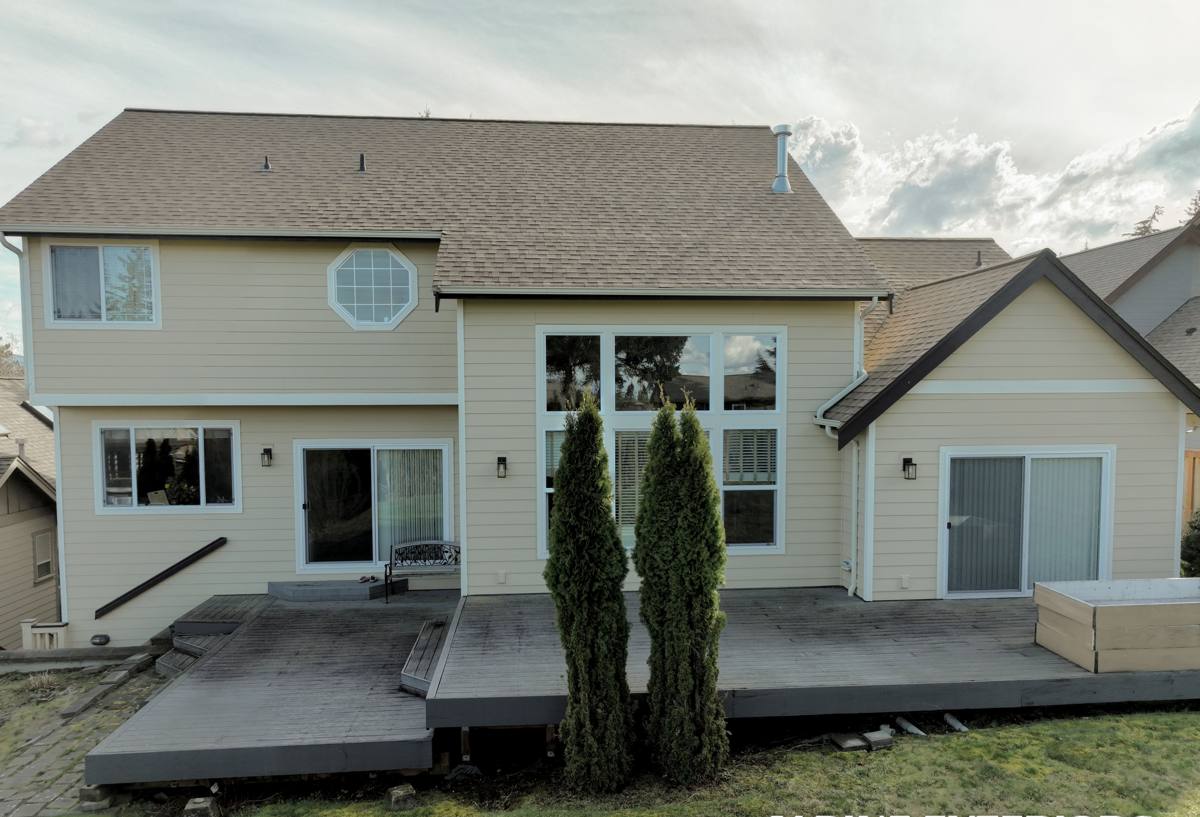
What Shoreline's Climate Does to a Deck
Shoreline gets the same marine-influenced weather pattern as the rest of the Puget Sound basin, but its proximity to the water intensifies a few specific stresses on outdoor structures.
Salt Air and Metal Fatigue
Airborne salt from Puget Sound accelerates corrosion on any exposed metal — screws, post bases, joist hangers, and railing hardware. Standard galvanized fasteners can start showing rust streaks and pitting years before they should in this environment. We spec stainless steel or high-grade coated fasteners rated for coastal exposure on every deck we build here, because a deck is only as strong as the connections holding it together.
Driving Rain and Water Intrusion
Wind-driven rain doesn't fall straight down here — it gets pushed sideways into ledger connections, under railing posts, and into any gap in the decking that isn't properly flashed or spaced. Water that gets trapped behind a ledger board or pools under a post base is the single most common cause of hidden structural rot we find when we're asked to inspect or rebuild an older deck.
Moss, Algae, and a Long Wet Season
King County's wet season stretches long, and Shoreline's tree cover and cloud cover keep decking surfaces damp for extended stretches. That moisture, combined with shade from mature landscaping, is exactly what moss and algae need to take hold. Beyond the slip hazard, moss holds moisture directly against the decking surface, which speeds up wood decay and can stain or degrade composite surfaces if it's not addressed.
What a Correctly Built Shoreline Deck Includes
There's a real difference between a deck that looks good on installation day and one that's actually engineered for this climate. The difference shows up in the parts you can't see once the project is finished.
- Ledger board flashing that properly sheds water away from the house rim joist, not just a bead of caulk
- Joist tape or flashing on top of every framing member to keep standing water out of end grain
- Stainless steel or coastal-rated structural screws and connectors throughout
- Post bases that hold posts above the deck surface and off standing water, not buried in concrete or sitting flush on grade
- Deck board spacing calculated for the specific material's expansion and drainage needs
- Proper slope away from the house for water runoff
- Ventilation under low-clearance decks so framing can dry out between rain events
- Railing post connections engineered to meet current structural load requirements, not just fastened for appearance
Skipping any one of these doesn't usually cause a visible problem on day one. It shows up two, five, or ten years later as soft framing, rusted-through hardware, or a railing that's gone loose — usually discovered when it's already expensive to fix.
Choosing Decking Material for This Climate
There's no single "best" decking material for every homeowner — it depends on budget, maintenance appetite, and how the deck will be used. What matters is picking with Shoreline's climate honestly factored in, not just going with whatever's cheapest or trendiest.
| Material | How It Handles This Climate | Maintenance Reality |
|---|---|---|
| Pressure-treated wood | Affordable and structurally solid when detailed correctly, but end grain and cut edges need re-sealing to resist moisture intake | Annual cleaning, re-staining or sealing every 1-3 years |
| Cedar | Naturally resists some decay and looks warm, but is softer and needs consistent finish maintenance to hold up to constant damp exposure | Regular cleaning, re-staining every 1-2 years to prevent graying and moisture uptake |
| Composite decking | Resists moisture absorption and won't rot, though lower-quality boards can still support surface mold or algae growth in shaded, damp spots | Periodic washing; no staining or sealing required |
| PVC decking | Fully moisture-resistant with no organic material for rot or insects to feed on; performs well in consistently wet, shaded areas | Occasional washing; lowest ongoing maintenance |
We'll walk through these trade-offs honestly during your estimate — including what each option actually costs to own over ten or fifteen years in a climate like Shoreline's, not just the upfront material price.
Framing and Structure: The Part That Actually Determines Lifespan
The decking surface is what you see and walk on, but the framing underneath is what determines whether your deck is still safe and solid in fifteen years. In a climate that stays damp for months at a time, framing choices matter as much as, if not more than, the visible decking material.
We build with pressure-treated framing lumber rated for ground contact where applicable, and we don't cut corners on flashing or fastener grade to save time. We also design footings and post placement based on actual soil conditions and drainage on your property, since Shoreline's terrain and drainage vary a fair amount from lot to lot. A deck that's engineered around the site it's actually built on holds up better than one built to a generic template.
Our Process for Shoreline Deck Projects
1. On-Site Consultation
We come out, look at the site, talk through how you want to use the space, and assess drainage, sun exposure, and structural factors specific to your property.
2. Design and Material Selection
We help you land on a layout, railing style, and decking material that fits your budget and how much upkeep you actually want to do, with honest trade-offs laid out for each option.
3. Permitting
Most custom decks in this area require a permit, particularly for elevated structures or anything attached to the house. We handle the permitting process so it's not something you have to navigate on your own.
4. Construction
We build to the structural and flashing details outlined above, not just to what's visible on the surface. Framing, flashing, and fastener choices are treated as seriously as the finished look.
5. Final Walkthrough
Before we consider the job done, we walk the finished deck with you, point out anything you should know about care and maintenance, and make sure it matches what we agreed on.
Deck Care Checklist for Shoreline Homeowners
Whatever material you choose, a little seasonal attention goes a long way in this climate. Here's what we recommend to homeowners after a new deck build:
- Sweep debris and standing leaves off the deck regularly, especially in fall
- Clean moss and algae off the surface before it builds up a foothold, particularly in shaded areas
- Check railing posts and stair connections annually for looseness
- Inspect fasteners and hardware periodically for rust staining or corrosion
- Re-seal or re-stain wood decking on the schedule recommended for that species
- Keep gutters and downspouts clear so roof runoff isn't dumping extra water onto or near the deck
- Watch for soft spots or discoloration on wood framing, which can signal trapped moisture
Why Local Deck-Building Experience Matters
A contractor who mostly works in drier parts of the country, or who hasn't built decks specifically in this stretch of King County, can miss the details that matter here — the flashing details, the fastener grade, the drainage planning. We work in Shoreline and the greater Seattle area regularly, so we're specifying materials and building details based on what actually holds up in this exact climate, not a generic build-anywhere approach.
We also know the practical side of building here: navigating local permitting requirements, working around Shoreline's lot sizes and drainage patterns, and building decks that are ready for the kind of weather this area sees every single year, not just an average dry-season photo-op.
If you're planning a new custom deck or need to replace one that's showing its age, we'd be glad to take a look and talk through what makes sense for your property. Reach out for a free, no-pressure estimate using the form below.