 Seattle Siding
 Why Shoreline Roofs Wear Out the Way They Do
Shoreline sits close enough to Puget Sound that salt-laden air is a real factor for roofing materials, not just a coastal-town cliché. Combine that with the long, wet stretch of fall through spring that King County gets every year, and you have two forces working against a roof at the same time: corrosion on metal fasteners and flashing, and near-constant moisture sitting on shaded, north-facing slopes. Add the tree canopy common in this area and you get the third piece — moss. Shoreline's roofs spend more months of the year damp than dry, and that changes what "normal wear" looks like here compared to a drier climate.
None of this means a roof in Shoreline is doomed to fail early. It means the materials, the underlayment details, and the ventilation have to be chosen and installed with this specific climate in mind. A roof that would be fine in eastern Washington can underperform here if it's installed the same way.
The Three Big Local Stressors
- Salt air: accelerates corrosion on exposed nails, staples, and unprotected metal flashing over time.
- Driving rain: wind-driven rain off the Sound pushes water sideways into laps, valleys, and flashing details that a calmer climate wouldn't test as hard.
- Moss and shade: tree cover keeps roof sections damp for days after a storm, which is exactly what moss and algae need to take hold.
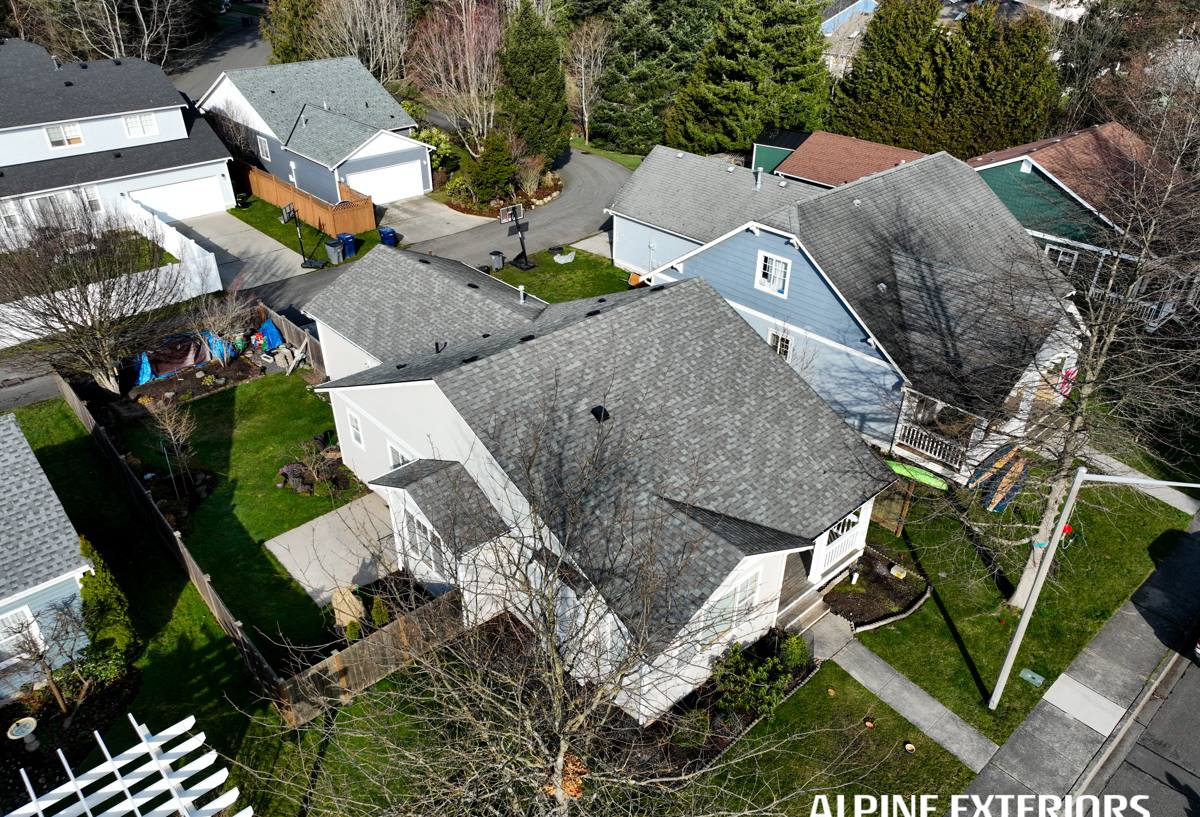
Signs a Shoreline Roof Needs Replacement, Not Another Repair
Most homeowners call us after a leak, but the leak is usually the last symptom, not the first. In this climate, the earlier warning signs tend to show up as surface changes long before water gets inside.
What We Look For
- Granule loss on composition shingles, visible as bald or shiny patches, especially on south and west-facing slopes
- Moss growth thick enough to hold moisture against the roof deck, not just cosmetic staining
- Curling, cupping, or cracked shingles, particularly on older roofs past 18-20 years
- Rusted or lifting flashing around chimneys, skylights, and valleys
- Soft or spongy decking felt underfoot in the attic, a sign moisture has already reached the sheathing
- Daylight visible through the roof deck from inside the attic
A roof with one or two of these issues in isolated spots can often be repaired. A roof with several of them, or with widespread granule loss and moss coverage, is usually past the point where patching makes financial sense — you're paying for repeated repairs on a roof that's already lost its ability to shed water evenly.
What a Correct Roof Replacement Actually Involves
A roof replacement isn't just stripping old shingles and nailing down new ones. In a climate like Shoreline's, several steps matter more than they would elsewhere, and skipping them is where problems come back a few years later.
Full Tear-Off and Deck Inspection
We remove the existing roofing down to the deck rather than layering over it. This is the only point in the job where the sheathing is fully visible, so it's the only chance to find and replace any wood that's been softened by long-term moisture — something that's more common here than in drier regions given how long roofs stay wet after a storm.
Underlayment Built for Wind-Driven Rain
Because rain here often arrives at an angle rather than straight down, underlayment coverage and lap direction matter more than a quick install would account for. We pay particular attention to valleys, eaves, and any low-slope transitions where wind-driven water tends to find its way under standard shingle coverage.
Flashing That Won't Corrode Prematurely
Given the salt air exposure, we use flashing and fasteners rated to hold up over time rather than the minimum-cost option, especially around chimneys, skylights, and roof-to-wall intersections where a failure means water directly into the structure.
Ventilation Sized for a Wet Climate
Balanced intake and exhaust ventilation keeps the underside of the deck drier, which matters for both moss prevention and the lifespan of the shingles themselves. An underventilated attic in a climate this damp traps moisture that has nowhere to go, and that shows up later as premature shingle failure or deck rot that has nothing to do with the roof's surface age.
Choosing a Roofing Material for a Shoreline Home
There's no single "best" material for every house — slope, tree cover, budget, and how long you plan to stay in the home all factor in. Here's how the common options actually perform in this specific climate.
| Material | Moss/moisture resistance | Wind/rain performance | Maintenance |
|---|---|---|---|
| Architectural composition shingle | Good with zinc/copper strips at ridges | Strong when properly fastened and sealed | Periodic moss treatment recommended |
| Standing seam metal | Excellent — sheds moisture, little for moss to grip | Excellent in driving rain and wind | Low; occasional fastener/sealant check |
| Cedar shake | Requires diligent upkeep in a wet climate | Good when installed with proper spacing | Higher — regular treatment and inspection |
| Synthetic composite shingle | Very good, resists moisture absorption | Strong, engineered for wind uplift | Low |
We don't install every product on this list on every roof. Cedar, for example, can look great and perform well, but it demands a level of ongoing maintenance in a shaded, damp climate that not every homeowner wants to commit to — that's a trade-off we'll talk through honestly rather than sell around.
Our Replacement Process
1. On-Site Assessment
We walk the roof and the attic, not just look at it from the driveway. Slope, tree cover, existing ventilation, and deck condition all factor into the recommendation.
2. Written Scope and Material Selection
You get a clear breakdown of what's being replaced, what material is recommended and why, and what it costs — before any work starts.
3. Tear-Off and Deck Repair
Old roofing comes off, decking is inspected, and any compromised sheathing is replaced before anything new goes down.
4. Underlayment, Flashing, and Ventilation Install
This is the layer that determines how the roof performs in wind-driven rain over the next few decades, so it gets the same attention as the visible shingles.
5. Final Roofing Install and Cleanup
Shingles or panels go down to manufacturer specification, followed by a full site cleanup including magnetic sweep for stray nails.
6. Walkthrough
We review the finished roof with you, including where any moss-preventive strips were installed and what maintenance, if any, we recommend going forward.
Permits, Timing, and Weather Windows
Roof replacements in Shoreline and the broader King County area typically require a permit, and we handle that as part of the job rather than leaving it to the homeowner. Scheduling around this region's weather is also part of doing the job right — dry-in work needs a real weather window, and rushing a tear-off ahead of an incoming system is how roofs end up with water damage before the new material is even on. We plan the job around the forecast, not just the calendar.
What Drives the Cost of a Roof Replacement
Every roof is priced on its own specifics, but the same handful of factors move the number up or down on nearly every job we quote in this area.
| Factor | Why it matters here |
|---|---|
| Roof pitch and access | Steeper slopes and limited access (common with mature trees) increase labor and safety requirements |
| Deck condition | Long-term moisture exposure sometimes means hidden sheathing damage found at tear-off |
| Material choice | Metal and synthetic composites cost more upfront but resist this climate's moisture and moss pressure longer |
| Layers to remove | Homes with a shingle-over-shingle history take longer to tear off and dispose of |
| Ventilation upgrades | Older homes often need added intake/exhaust venting to meet current moisture-control standards |
Exact numbers depend on your roof's size, pitch, and condition — a real quote comes after we've actually looked at it, not from a square-footage estimate over the phone.
Why Local Experience on Shoreline Roofs Matters
A crew that regularly works this area already knows which slopes tend to hold moss, how the tree canopy in different pockets of the neighborhood affects drying time, and what flashing details actually hold up against Puget Sound's driving rain over the long run. That's not something you get from a national franchise crew working from a generic spec sheet. It shows up in small decisions — where we add an extra course of underlayment, which fastener we use near the water, how we size ventilation for a shaded roof versus a sun-exposed one — and those decisions are the difference between a roof that needs attention again in eight years and one that doesn't.
Before You Commit to Any Roofing Contractor, a Quick Checklist
- Do they inspect the attic and decking, or just the shingles from the ground?
- Do they explain material trade-offs honestly, including maintenance requirements?
- Is the permit included in their scope, or left for you to sort out?
- Do they talk about ventilation, or only the visible roofing surface?
- Can they explain how their approach accounts for this area's moss and rain exposure specifically?
If your roof is showing moss, granule loss, or aging signs, we're happy to take a look and give you a straight answer about whether it's a repair or a replacement situation — no pressure either way. Fill out the form below for a free estimate.