 Seattle Siding
 The Shoreline Climate Challenge for Windows
Shoreline sits right along Puget Sound, which means homes here take a different kind of weather beating than houses further inland. The combination of salt-laden air off the Sound, driving rain that comes in sideways during winter storms, and a moss season that can stretch from fall through spring puts real stress on window frames, sills, and seals. Salt air is corrosive to metal hardware and can dull finishes over time. Persistent moisture feeds moss and algae growth on sills and trim, which holds water against wood and vinyl far longer than a dry surface would. None of this is dramatic on its own, but year after year it adds up to premature seal failure, soft wood at the corners, and windows that just don't perform the way they did when they were installed.
Window replacement done right in this part of King County has to account for that reality from the start — not just swap old glass for new, but address how water and moisture move around the opening in the first place.
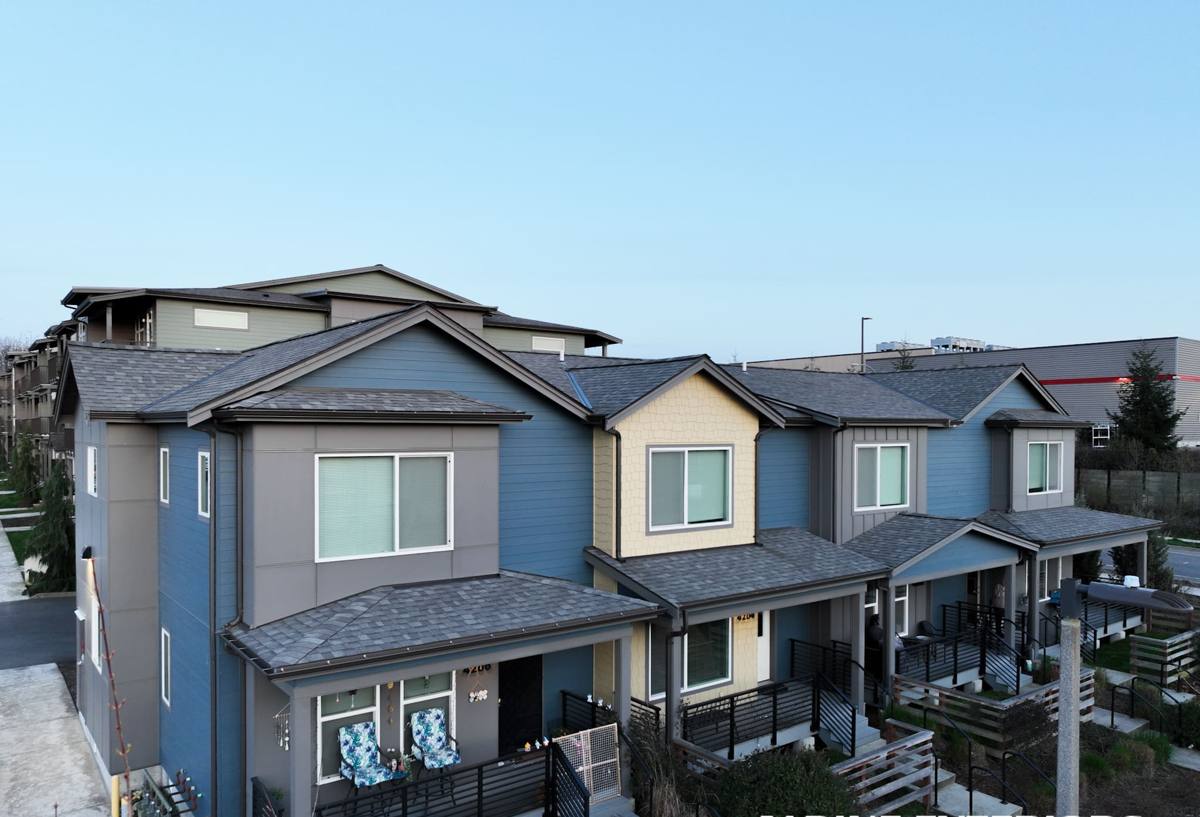
Signs It's Time to Replace Your Windows
Most homeowners don't wake up one day and decide they need new windows — the signs build gradually. Common ones we see on Shoreline homes include:
- Fogging or a hazy film between panes, which means the seal has failed and the gas fill (or air gap) is gone
- Noticeable drafts near the frame, even with the window fully closed and locked
- Windows that stick, won't stay open, or are hard to latch — often a sign the frame has shifted or swollen
- Soft or discolored wood at the sill or lower corners, a common early sign of rot in this climate
- Moss or dark algae staining building up on the sill or exterior trim that keeps returning after cleaning
- Condensation forming on the inside of the glass regularly, especially in cooler months
- Original single-pane windows still in place on an older home — these were never built for today's energy expectations
Any one of these on its own might just need a repair. Several at once, especially on windows that are original to an older home, usually means replacement is the more honest answer.
What a Correct Window Replacement Job Involves
The window unit itself gets most of the attention, but in a climate like ours, how it's installed matters just as much as what's installed. Most window failures we're called out to inspect trace back to installation shortcuts — not a bad product.
Proper Flashing and Water Management
Every window opening needs to be built to shed water downward and outward, the same way shingles on a roof overlap so water always flows over the layer below rather than behind it. That means a proper sill pan at the bottom of the opening, flashing tape integrated with the home's weather-resistive barrier, and sealant placed in the right spots — not everywhere, since trapping water behind a window is often worse than letting it drain. This step is invisible once the trim goes back on, which is exactly why it's the step that gets skipped by crews trying to move fast.
Air Sealing and Insulation
The gap between the window frame and the rough opening needs to be filled with a low-expansion foam or backer rod and sealant — enough to stop air movement and insulate, without overfilling and bowing the frame out of square. Done poorly, this is a common source of both drafts and interior condensation on cold, wet days, which is a big part of our fall and winter here.
Choosing Materials and Glass for Local Conditions
There's no single "best" window material — it depends on the home, the budget, and how much upkeep you want to take on. Here's how the common options compare for a Puget Sound climate:
| Material | Moisture Resistance | Maintenance | Typical Fit |
|---|---|---|---|
| Vinyl | Good — won't rot, resists salt air well | Low — occasional cleaning | Most homes; strong value for the performance |
| Fiberglass | Very good — stable in temperature swings and moisture | Low | Homes wanting a higher-end frame with minimal upkeep |
| Wood-clad | Good on the exterior-clad side, but the interior wood face still needs care | Moderate to high | Homes prioritizing an interior wood look, willing to maintain finish |
| Aluminum (older stock) | Poor — conducts cold, prone to condensation, corrodes near salt air over time | Moderate | Common in original Shoreline mid-century homes, generally due for replacement |
For glass, a dual-pane, low-E coated unit with argon gas fill is the standard we recommend for this area. Our climate is defined more by heat retention and moisture control than by intense summer sun, so the coating package should be selected for keeping warmth in and condensation down, not just blocking solar heat. Triple-pane glass is available and does offer an incremental performance gain, but for most Shoreline homes the added cost doesn't pencil out the way it might in a colder inland climate — we'll walk through that trade-off honestly rather than upsell it by default.
Matching New Windows to Shoreline's Housing Stock
Mid-Century and Post-War Homes
A good share of Shoreline's housing stock dates to the post-war boom — ranch and split-level homes with original single-pane wood or aluminum windows. On these houses, we pay close attention to matching sightlines and proportions so the replacement doesn't look out of place against the home's original character. Whether a full-frame replacement or an insert (pocket) replacement makes more sense depends on the condition of the existing frame — if there's rot or the frame has shifted out of square, an insert just traps the problem behind new glass.
Newer Construction and Remodels
Newer builds and additions come with their own considerations — current code requires tempered (safety) glass near doors, in wet locations like bathrooms, and at certain heights above the floor, and bedrooms need windows that meet egress size and operation requirements. We check these details as part of every job so a remodel doesn't fail inspection over something easy to catch up front.
Our Window Replacement Process
- On-site assessment of your current windows, framing condition, and any moisture or rot issues
- Measurement and selection of window type, material, and glass package for your home and budget
- Permitting, when required by the jurisdiction or scope of work
- Careful removal of the old windows, checking the rough opening as we go
- Repair of any hidden rot or water damage found in the framing before the new window goes in
- Installation with proper flashing, air sealing, and insulation around the frame
- Interior and exterior trim finished to match your home
- Final walkthrough, operation check on every window, and full cleanup
What Affects the Cost
We don't quote window jobs off a flat per-window number, because too many variables change the real cost. The honest answer is "it depends," but here's what it depends on:
| Factor | Why It Matters |
|---|---|
| Window size and count | Larger openings and more windows mean more material and labor |
| Material and glass package | Vinyl, fiberglass, and upgraded low-E or triple-pane glass carry different price points |
| Full-frame vs. insert replacement | Full-frame involves more labor but is often necessary when the existing frame is compromised |
| Hidden rot or framing repair | Not discovered until the old window is out, but common in older homes exposed to years of moisture |
| Accessibility | Second-story or hard-to-reach windows take more time and equipment |
| Trim and finish work | Matching existing interior or exterior trim adds labor beyond the window unit itself |
The only way to get a real number is a walkthrough of your specific windows — anything else is a guess.
Maintenance Checklist for Long-Lasting Windows
New windows are a real investment, and a little upkeep goes a long way toward protecting it in our climate:
- Clean weep holes and tracks a couple times a year so drainage paths don't clog and trap water
- Wipe down sills and frames to keep moss and algae from getting established, especially on shaded, north-facing windows
- Check exterior caulking annually and re-seal any spots that have cracked or pulled away
- Lubricate hardware — locks, hinges, rollers — so mechanisms don't seize up from moisture and disuse
- Watch for condensation between panes, which signals a seal failure worth addressing early
- Keep vegetation trimmed back from windows so surfaces can dry out between rain events
Why Hire a Crew That Already Works in Shoreline
Window installation practices that work fine in a drier climate can fall short here. A crew that regularly works in Shoreline and the rest of King County already knows how local moisture patterns, salt exposure near the Sound, and the area's mix of older and newer housing stock affect what a correct installation looks like. That familiarity shows up in the details — the flashing sequence, the material choices, the fact that a rotted sill under an old window doesn't come as a surprise. It also means there's a local, accountable crew to call if a question comes up after the job is done, not a name from a directory that only shows up once.
If you're weighing whether it's time to replace your windows, we're glad to take a look and give you a straightforward, no-pressure estimate — just fill out the form below and we'll get in touch.